
Slice into a whole scamorza and the interior springs back slightly under the knife - dense, supple, and faintly glossy, like a drier version of fresh mozzarella with real structural backbone.
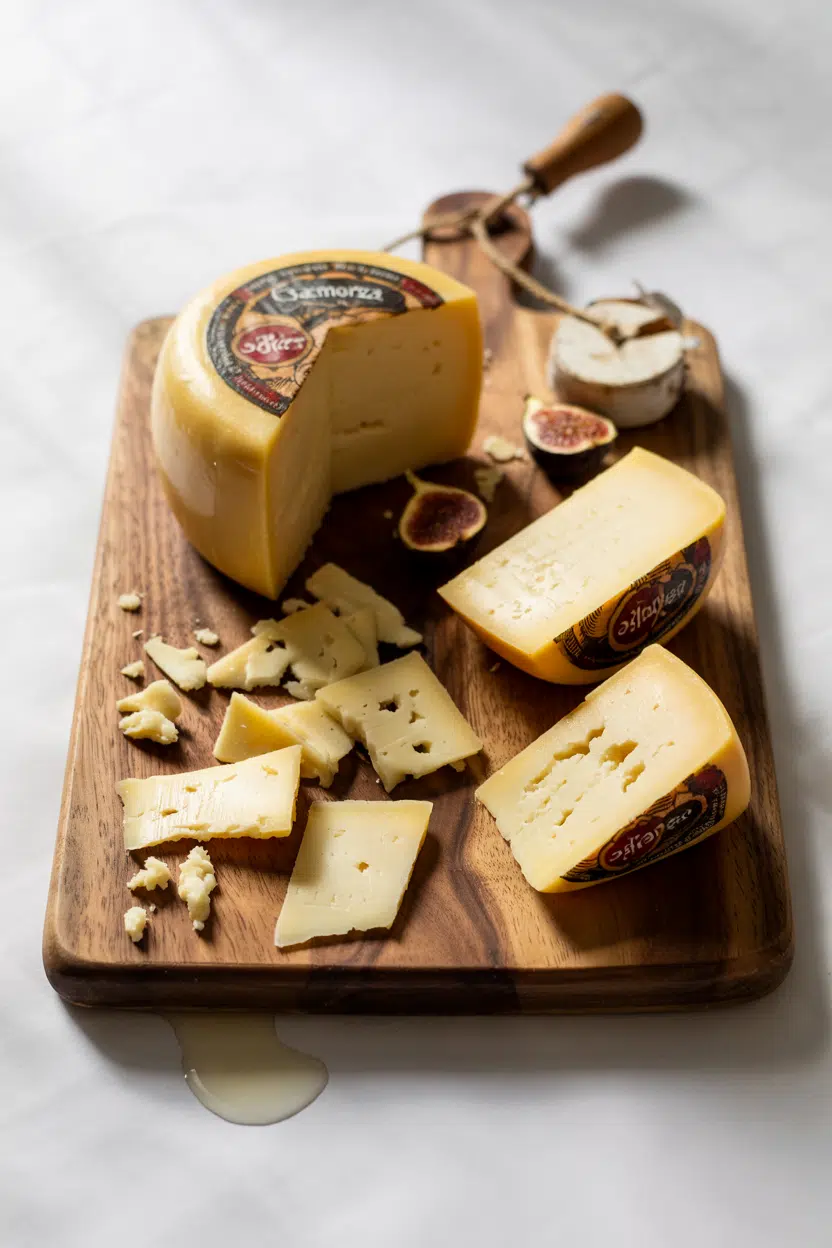
Heat it in a skillet and the exterior browns and blisters while the inside pulls into long, creamy strings.
That contrast between firm skin and molten core is what makes scamorza worth knowing, and it's why Southern Italian cooks reach for it where a softer cheese would simply collapse.
If you already know caciocavallo cheese swaps that work, scamorza sits in a similar stretched-curd tradition and is worth comparing directly.
Scamorza is a semi-soft pasta filata cheese from Southern Italy, shaped like a small pear and sold plain or smoked. It has a mild milky sweetness and a firm, springy texture that melts cleanly into strings - well-suited to grilling, pizza, and baked pasta.
What Is Scamorza Cheese?
Scamorza is a pasta filata - a pulled or stretched curd - cow's-milk cheese made in the Southern Italian regions of Apulia and Campania.
Remember it later
Planning to try this recipe soon? Save it for a quick find later!
Like mozzarella and provolone, it's formed by kneading hot curds into a smooth mass, then shaping them by hand into a distinctive pear form with a narrow neck where a cord is looped for hanging during aging.
Two main varieties exist. Scamorza bianca is the plain, unsmoked version with a pale ivory rind. Scamorza affumicata is cold-smoked over wood - typically straw or chestnut - giving the rind a light tan color and the interior a subtle aromatic depth.
Compared to fresh mozzarella, scamorza is pressed and dried for longer, removing more moisture and producing a firmer, more concentrated cheese. It's sometimes confused with provolone, but provolone cheese swaps that work show how the two differ in aging time and fat content.
Scamorza is younger, milder, and more pliable.
What Does Scamorza Cheese Taste Like?
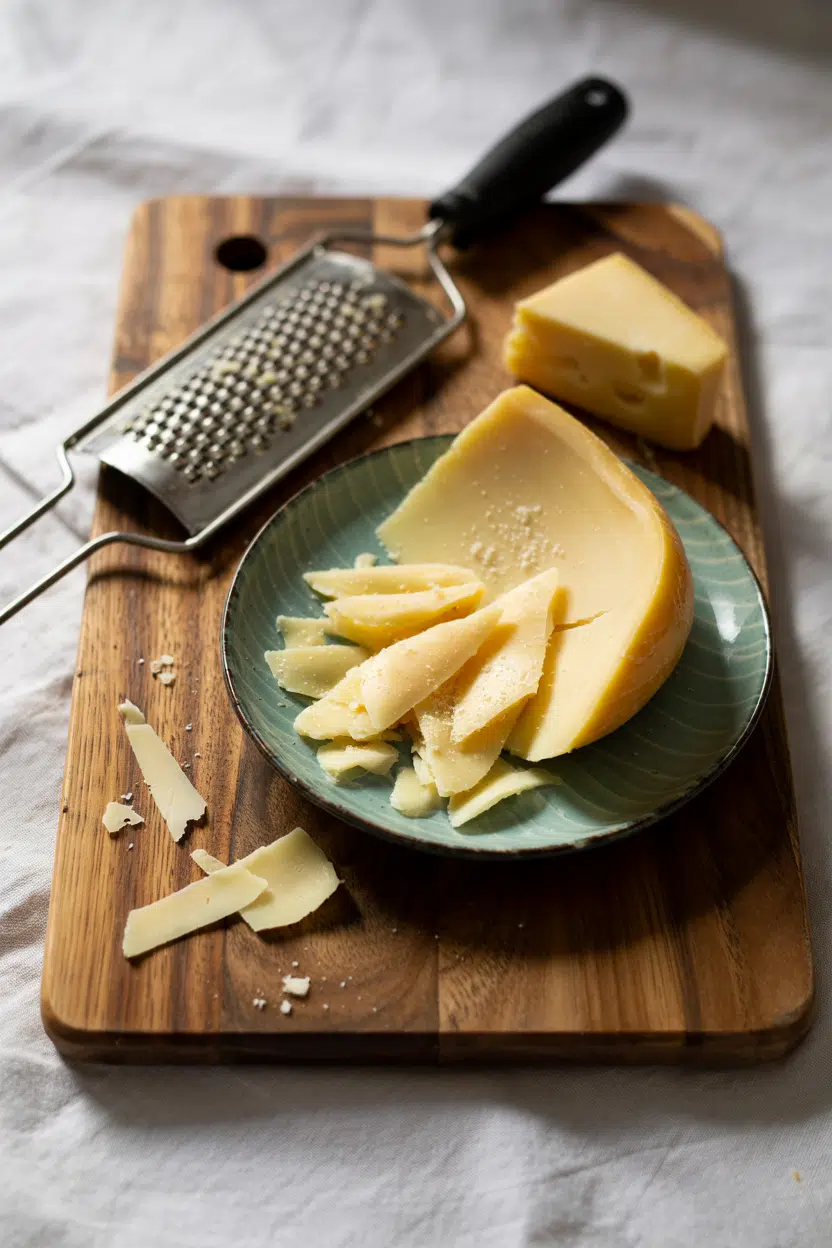
Scamorza bianca tastes closest to low-moisture mozzarella, but with a rounder, more developed milkiness and a slightly firmer bite. The lactic tang is gentle - present enough to give the cheese character, not sharp enough to dominate.
Heat changes it noticeably. Cold from the fridge, scamorza is firm and sliceable.
Warm it and the interior softens into long, creamy pulls, while the outer skin firms and caramelizes slightly. Scamorza affumicata adds a clean wood-smoke note that sharpens the otherwise mild profile without overpowering it - closer in spirit to a young smoked provolone.
How to Use Scamorza Cheese
Scamorza's low moisture and firm pasta filata structure make it one of the more adaptable cheeses in the Italian repertoire.
It doesn't weep water onto a pizza base the way fresh mozzarella can, and it doesn't seize into a rubbery mass under high heat.
| Method | Best For | Tip |
|---|---|---|
| 🔥 Grilling | Scamorza alla griglia; antipasti boards | Slice 1 cm thick; sear dry pan on high heat until blistered |
| 🫕 Baking | Pasta al forno; stuffed vegetables; flatbreads | Cube it - don't shred - for distinct molten pockets |
| 🥗 Cold sliced | Antipasti platters; salads; charcuterie boards | Pair with sun-dried tomatoes and prosciutto for balance |
| 🍕 Pizza topping | Neapolitan-style pizza; focaccia | Shred over the base for a milkier, cleaner melt than provolone |
For scamorza alla griglia, no oil is needed - the rind firms up fast in a dry cast-iron pan, sealing in the molten interior. On pizza, shredded scamorza gives a milkier result than provolone and holds together better than fresh mozzarella at high temperatures.
Cubed into pasta al forno, it creates pockets of molten cheese without the dish becoming watery.
Scamorza affumicata pairs especially well with bold partners: sun-dried tomatoes, roasted red peppers, prosciutto, and rustic sourdough or focaccia. For wine, a Primitivo from Puglia matches the smoked version's weight.
If you're building a melt-focused sandwich, the cheese behaves similarly to using scamorza cheese for creaminess in other applications - the stretched-curd structure is the constant.
How to Buy and Store Scamorza Cheese
A good scamorza loaf feels firm but not rigid and has a smooth, slightly tacky rind with a pale straw color.
For scamorza affumicata, expect a uniform light tan exterior - avoid anything with a slimy surface, a strong ammonia smell, or rind that's visibly cracking and dried out.
Storage is straightforward, though worth doing properly.
Whole, uncut scamorza keeps about 2-3 weeks refrigerated.
Once cut, use it within 5-7 days before the exposed interior dries and loses its melt quality.
For a comparison point, how long mozzarella keeps is a useful frame - scamorza outlasts fresh mozzarella by a significant margin due to its lower moisture.
Full guidance on keeping scamorza cheese fresh covers freezing and portioning if you're buying in bulk.
Start With the Smoked Version
If scamorza is new to you, scamorza affumicata is the better entry point. The smoke note anchors the mild base flavor, making it more immediately distinctive on a plate or panino.
- 🍕 First cook - grill thick slices in a dry pan and serve with roasted peppers and bread
- 🧀 First buy - look for it at Italian delis or specialty grocers; vacuum-packed imports are widely available
- 🔁 Already cook with mozzarella? - swap scamorza anywhere you want less moisture and more structure in the melt
Scamorza bianca works better where you want a neutral backdrop - in pasta al forno or on a pizza where other toppings carry the flavor.
Both versions reward high heat, so don't treat them like a fresh cheese that needs gentle handling.
Frequently Asked Questions
No - both are pasta filata cheeses, however scamorza is pressed and dried longer, making it firmer and lower in moisture. Fresh mozzarella releases water when heated; scamorza melts cleanly into strings without pooling.
Yes, and it performs better than fresh mozzarella in most home ovens because it doesn't release excess moisture. Shred it over the base and it melts into a smooth, creamy layer without making the crust soggy.
Scamorza affumicata is the same cheese cold-smoked over wood - typically straw or chestnut - after shaping. The smoke tans the rind and adds a clean aromatic note to the interior without significantly changing the melt behavior.
Cut it into slices at least 1 cm thick and place them in a dry, very hot cast-iron or non-stick pan. Cook 2-3 minutes per side until the exterior is browned and blistered; serve immediately while the interior is still molten.
No. Scamorza is made from cow's milk and retains lactose. It contains less lactose than fresh mozzarella due to its lower moisture, however people with lactose intolerance should treat it the same as other semi-soft cheeses.



