You're halfway through a risotto and realize the Sauvignon Blanc bottle is empty. The recipe needs that wine for a reason-it's not just flavor.
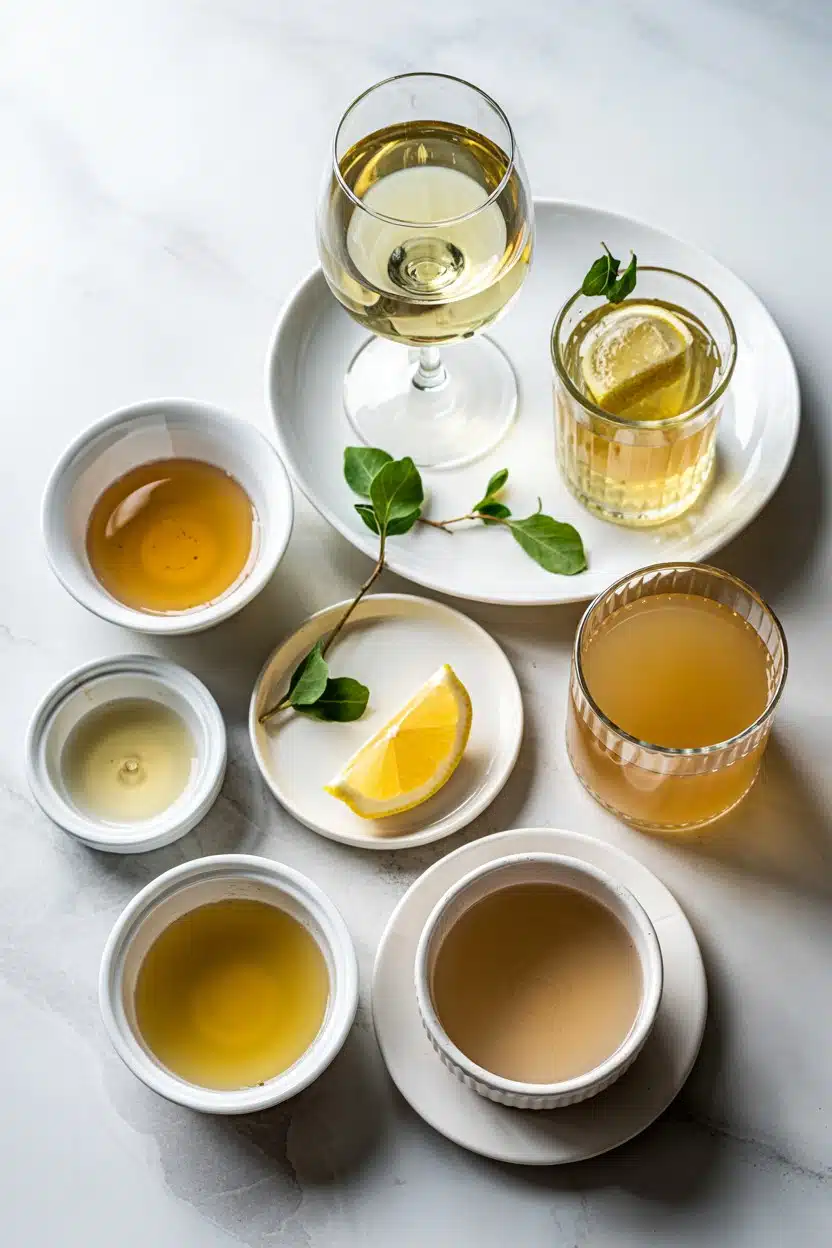
White wine adds acidity to deglaze the pan and brings moisture that helps the rice release its starch. Without it, risotto can taste flat and heavy.
A few pantry swaps can fill that gap. Some match the crispness, others bring acidity without alcohol.
Out of Sauvignon Blanc? Dry vermouth mimics the acidity and fruitiness in most cooked dishes. For non-alcoholic options, white wine vinegar diluted with water or broth with lemon juice handle deglazing and moisture.
| # | Substitute | Best For | Ratio | Key Note |
|---|---|---|---|---|
| 1 | Dry Vermouth | 🍳 Cooking | 1:1 | Slightly herbal finish |
| 2 | White Wine Vinegar Mix | 🍳 Cooking | 1 tbsp:2 tablespoon water | No alcohol present |
| 3 | Unoaked Chardonnay | 🍳 Cooking | 1:1 | Less grassy notes |
| 4 | Broth Lemon Mix | 🍳 Cooking | 3:1 ratio | Adds savory depth |
| 5 | Sparkling Water Mix | 🍳 Cooking | ½ cup + zest | Light finishing touch |
1. Dry Vermouth 🍷
Dry vermouth brings the same crisp acidity and fruity notes as Sauvignon Blanc with a hint of herbal complexity. The alcohol content matches, so it deglazes pans and thins sauces just like wine.
Remember it later
Planning to try this recipe soon? Save it for a quick find later!
Use it 1:1 in white sauces, risotto, or any recipe calling for a splash of white wine. The herbal undertones work well with seafood and poultry but can overpower delicate dishes.
- ✅ Matches acidity and alcohol content
- ✅ Deglazes pans effectively
- ⚠️ Slightly more herbal than Sauvignon Blanc
If you're out of vermouth too, we've tested Dry Vermouth substitutes for cooking that work.
2. White Wine Vinegar Mix 💧
White wine vinegar diluted with water replicates the acidity and moisture without any alcohol. The sharpness of straight vinegar gets toned down while still brightening your dish.
Mix 1 tablespoon white wine vinegar with 2 tablespoon water for every tablespoon of Sauvignon Blanc. This ratio keeps the tang balanced without overpowering other flavors.
The mix lacks the fruity aroma wine brings, so it's better for dishes where acidity matters more than complexity-think seafood, salad dressings, or pan sauces that cook down quickly.
- Acidity: Matches wine's tang after dilution
- Use in: Pan deglazing, dressings, light sauces
- Skip if: Wine's fruity notes are central to the recipe
More White Wine substitutes for cooking cover broader wine swaps.
3. Unoaked Chardonnay 🍾
Unoaked Chardonnay provides similar acidity and fruit flavors with a rounder, less grassy profile. It won't bring Sauvignon Blanc's herbal snap, but the moisture and alcohol content work the same way.
Use it 1:1 in white sauces, braised chicken, or creamy pasta dishes. Chardonnay's mild character blends into the background rather than announcing itself.
Unoaked Chardonnay
Works for: white sauces, poultry, cream-based dishes
Skip if: you need Sauvignon Blanc's grassy, herbal bite
4. Broth + Lemon Juice 🥣
Broth mixed with lemon juice adds moisture and acidity without alcohol. Chicken or vegetable broth brings savory depth, while lemon supplies the tang.
Combine 3 parts broth with 1 part fresh lemon juice for every part of Sauvignon Blanc. Stir it in early so the flavors have time to meld-this combo needs a few minutes to blend properly.
The broth adds umami that wine doesn't have, so this works best in dishes where that savory note fits-deglazing pans for chicken, finishing seafood stews, or moistening grains. It won't carry a dish where wine flavor is front and center.
If you're low on lemon, Lemon Juice replacements that work can help.
5. Sparkling Water + Zest 🫧
Sparkling water with lemon zest provides moisture and a subtle citrus lift without alcohol or strong acidity. The carbonation helps lighten sauces just like wine would.
Use ½ cup sparkling water with the zest of half a lemon per cup of Sauvignon Blanc. Add it near the end of cooking-the bubbles dissipate quickly, so timing matters.
- 🍳 In finishing sauces: Adds moisture without weight
- ⚠️ Limited use: Can't deglaze or handle recipes needing strong acidity
This swap is best for light applications where you need liquid but not much flavor punch. Skip it if your recipe depends on wine's depth-check swaps when Lemon Pepper runs out for citrus-forward seasoning options.
Match Your Pantry
Got vermouth? That's your go-to for nearly any recipe calling for Sauvignon Blanc. The acidity and alcohol match almost exactly.
Cooking without alcohol? White wine vinegar diluted with water handles pan deglazing and adds tang. Broth mixed with lemon juice works for dishes where savory depth fits the flavor profile.
Chardonnay steps in when you've got another white wine open. Sparkling water with zest fills the moisture gap in light finishing sauces but can't handle recipes where wine does heavy lifting.
Frequently Asked Questions
Apple cider vinegar works but brings a sweeter, fruitier tang than white wine vinegar. Dilute it the same way-1 tablespoon vinegar to 2 tablespoon water. It fits better in dishes where that apple note won't clash, like pork or fall-flavored recipes.
Cooking wine contains added salt, which throws off your seasoning balance. If it's your only option, use it but reduce or skip added salt in the recipe. Regular drinking wine gives you better control over flavor.
You can replace it with extra broth and a squeeze of lemon juice, but risotto won't taste the same. The wine's acidity helps the rice release starch properly and adds depth. Broth alone makes it heavier and less bright.
Red wine changes both the flavor and color of your dish-it brings tannins and deeper fruit notes that don't match Sauvignon Blanc's crisp profile. Save it for recipes specifically calling for red wine instead.
White wine stays good for cooking about 3-5 days after opening if you keep it sealed in the fridge. Once it starts tasting too vinegary to drink, it's past its cooking prime too. Dry vermouth lasts longer-up to a few months refrigerated.
5 Best Substitutes for Sauvignon Blanc
Ingredients
Method
- Choose the substitute based on availability and recipe needs.
- Prepare substitutes as needed: dilute vinegar, mix broth and lemon, or zest lemon with sparkling water.
- Apply the substitute using the recommended ratios to match the original wine amount.
- Adjust final seasoning and acidity to taste before finishing the dish.
Notes
- Dry vermouth is best for cooking with alcohol and deglazing pans.
- Diluted white wine vinegar and broth-lemon are excellent alcohol-free options.
- Sparkling water with lemon zest works well for light sauces needing moisture but not acidity.