Saltimbocca puts sage front and center - a single fresh leaf pressed between veal and prosciutto, fried in butter until the herb turns crisp and its resinous oils release into the fat. That one technique reveals everything about how sage works: it doesn't blend into the background.
It announces itself. Whether you're reaching for a bundle of fresh leaves or a jar of dried flakes, understanding sage's intensity is the difference between a well-seasoned dish and one that tastes like potpourri.
Sage is a woody Mediterranean herb with leathery gray-green leaves and a strong, resinous flavor. Use it sparingly - with butter, pork, beans, and squash - either fried whole for crisp texture or dried for slow-cooked depth. Fresh leaves last about a week in the fridge.
What Is Sage?
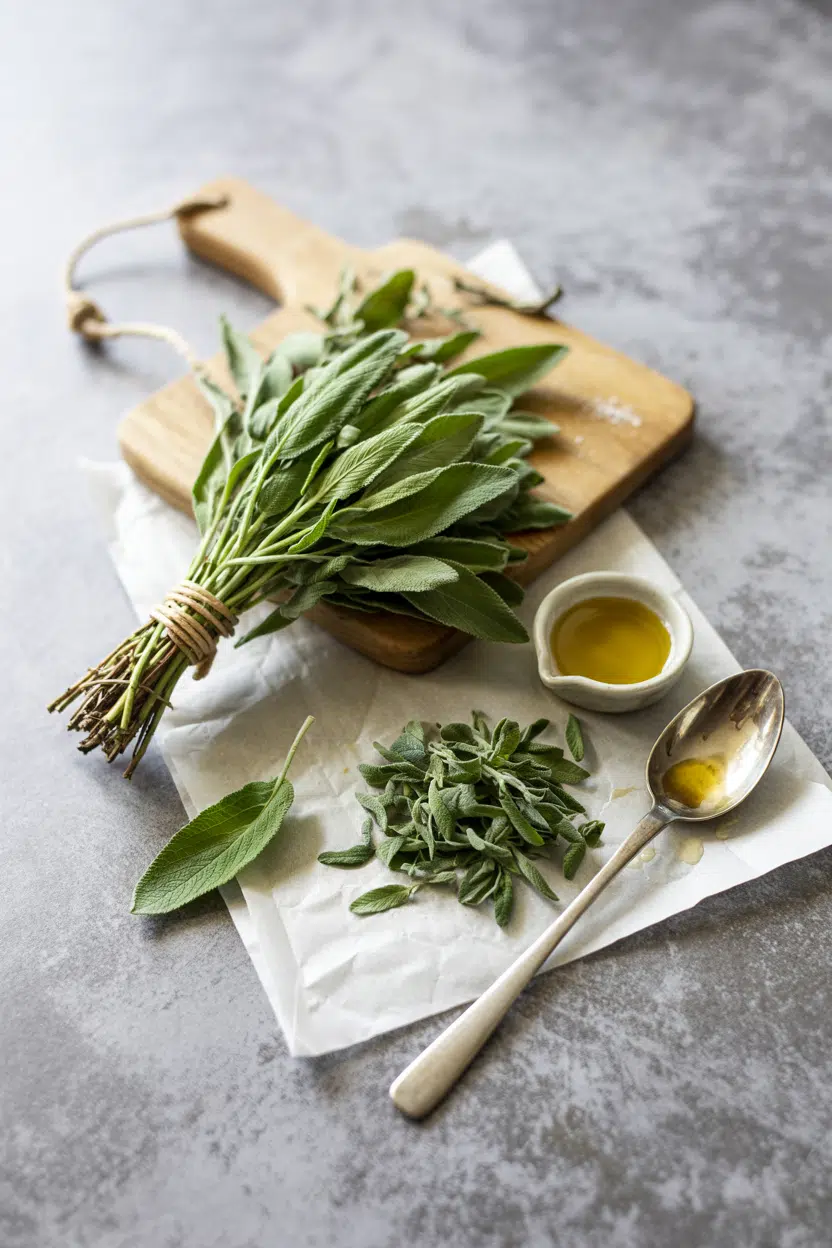
Sage (Salvia officinalis) is a perennial shrub native to the Mediterranean, grown for its oblong, gray-green leaves covered in soft, velvety fuzz.
Remember it later
Planning to try this recipe soon? Save it for a quick find later!
That fuzz isn't decoration - the fine hairs trap the herb's volatile oils, which is why rubbing a fresh leaf between your fingers releases such an immediate, concentrated scent.
It belongs to the mint family, though it shares little in common with its relatives flavor-wise. Most markets sell common culinary sage, but you'll occasionally encounter purple sage, which has a milder profile, and pineapple sage, which is mainly ornamental.
Clary sage is a related species sometimes mislabeled in stores - it's coarser and less suited to cooking.
Dried sage has a longer history in British and American kitchens, especially in poultry stuffing and pork roast seasoning blends. Fresh sage arrived later in broader home cooking, largely through Italian influences.
Both forms are useful - they just behave differently in the pan.
What Does Sage Taste Like?
Think of a milder rosemary with more bitter, tea-like back notes. Sage is resinous and earthy, but where rosemary skews sharp and piney, sage has a broader, almost medicinal warmth with a faint citrus edge underneath.
Heat changes sage significantly. Raw, the bitterness is sharp and can be abrasive. Fried or toasted, the volatile compounds mellow and sweeten, and the leaf itself becomes crisp enough to eat whole.
Long braising softens it further into the background - useful in beans and stews, where you want warmth without the edge.
How to Use Sage
Sage works best when paired with fat. Butter is the classic vehicle - brown it with whole leaves until the leaves crisp and the butter smells nutty, then spoon the whole thing over gnocchi, ravioli, or roasted squash.
The fat absorbs the herb's oils and carries them through the dish evenly.
Italian and British cooking use it most heavily. Roman cuisine built the saltimbocca around it.
British stuffing relies almost entirely on sage and onion to season bread-based mixtures for poultry. Eastern European cooks work it into bean soups and braised pork.
Across all of these, sage pairs naturally with pork and sausage, cannellini beans, roasted squash, garlic, lemon, and pecorino.
| Method | Best For | Tip |
|---|---|---|
| 🍳 Fried | Crisp garnish for pasta, gnocchi, risotto | Use medium heat; leaves burn fast in butter |
| 🫕 Braised | Bean soups, slow-cooked pork, greens | Add early - long cooking tames the bitterness |
| 🥩 Rubbed | Fatty roasts - lamb, pork shoulder, duck | Combine with garlic and oil for a dry paste |
| 🧈 Infused | Brown butter, cream sauces, compound butter | Steep over low heat; strain before serving |
Two things sage doesn't suit: delicate white fish and light leafy salads. Its resinous intensity overwhelms subtle flavors.
If you need something less aggressive, sage alternatives include marjoram and thyme, which share savory warmth without the same bite.
How to Buy and Store Sage
Good sage stems are compact with many intact leaves - gray-green color, velvety texture, no black spots. Yellowing or limp leaves signal age.
A sour smell means the batch has started to turn; skip it.
Store fresh sprigs unwashed, wrapped in a slightly damp paper towel inside a perforated plastic bag in the crisper drawer. For dried sage, keep it in an airtight container away from light and heat - it holds well for up to a year before the oils fade noticeably.
A full guide on sage storage life covers signs of spoilage in detail.
Starting Points With Sage
Sage rewards cooks who treat it as a main flavor rather than a background note.
- New to sage? - Start with brown butter. Fry four or five whole leaves in butter over medium heat for 90 seconds, then pour over pasta or roasted vegetables immediately.
- Using dried sage - Stir it into fat at the beginning of a braise or soup, not at the end. Heat unlocks the oils that raw dried sage won't release.
- Going bold - Rub a mixture of minced sage, garlic, and olive oil under the skin of a chicken or onto a pork shoulder before roasting. The fat bastes the herb into the meat as it cooks.
Frequently Asked Questions
No. Both are Mediterranean herbs with resinous, piney qualities, but rosemary is sharper and more needle-like in flavor. Sage is broader and earthier, with more bitter back notes. They can work as [substitutes for each other](https://forkliftkitchen.com/rosemary-substitutes/) in some recipes, but the result tastes noticeably different.
Yes, in most savory applications. Thyme is less resinous and bitter, so the swap produces a milder result. Use slightly more thyme than the sage quantity called for, and expect to lose some of the characteristic earthy depth.
About 5-10 days when stored correctly - unwashed, wrapped in a damp paper towel, in the crisper drawer. Leaves that turn black or smell sour should be discarded.
Technically yes, but the raw flavor is sharp and quite bitter. Most people find it unpleasant without some form of heat or fat to mellow it. Thin-sliced raw sage works occasionally in compound butters, where it softens as the butter melts.
Rarely, but it can. Sage infused into a simple syrup or steeped in cream adds herbal warmth to caramel, honey desserts, or custards. The key is using it very lightly - it's easy to cross the line from interesting to medicinal.