
Saffron hits you before it even reaches the pot. Crush a few threads between your fingers and the scent rises immediately - floral and hay-like, with something resinous underneath that no other spice quite replicates.

That singular aroma is the first clue that saffron earns its reputation as the world's most expensive spice, not through mystique alone, but through genuine sensory complexity. A single pinch steeps into deep golden warmth that shifts a dish's color, scent, and flavor in ways even a well-stocked pantry otherwise can't achieve.
Saffron is the dried stigma of the Crocus sativus flower - hand-harvested, intensely aromatic, and used in tiny pinches. It delivers a floral, slightly bitter, honey-like flavor with earthy warmth. Essential to risotto, paella, and biryani, with whole threads keeping quality for up to three years.
What Is Saffron?
Saffron comes from Crocus sativus, a small flowering plant cultivated primarily in Iran and Mediterranean regions including Spain and Kashmir.
Remember it later
Planning to try this recipe soon? Save it for a quick find later!
Each flower produces just three stigmas - the thread-like strands we call saffron - and every one must be picked by hand during a narrow autumn harvest window.
The labor involved is exactly why saffron commands such high prices. It takes roughly 75,000 flowers to yield a single pound of dried threads.
Known as zafferano in Italian, kesar in Hindi, and safran in French and Spanish, the spice travels under several names depending on the cuisine. You'll also see it listed as saffron threads or Crocus sativus threads on specialty packaging.
Three chemical compounds define saffron's character:
- Crocin - the carotenoid pigment responsible for saffron's golden-yellow color in food
- Safranal - the volatile compound producing its distinctive floral, hay-like aroma
- Picrocrocin - the glycoside that delivers saffron's characteristic bitter note
These three compounds together produce an effect no single substitute can fully copy. Turmeric mimics the color but shares none of the floral depth.
If you need a closer swap for a specific recipe, saffron replacements range from annatto to a turmeric-and-floral combination, though none are exact.
What Does Saffron Taste Like?
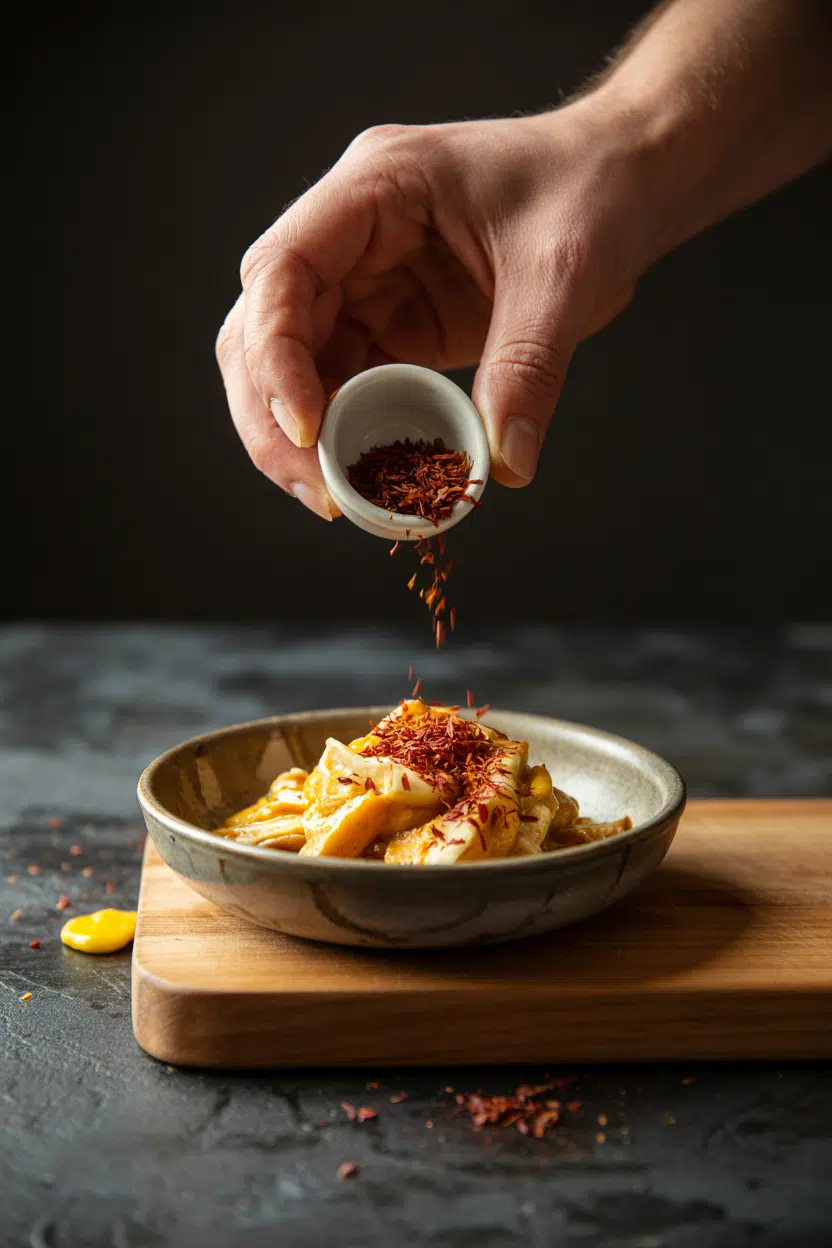
Saffron's flavor is genuinely unlike anything else in a spice rack. The closest description: mild floral honey crossed with light hay and a faint metallic minerality - present but never sharp.
That mineral edge is what surprises most first-time users. It reads almost like warm iron, gentle enough to sit underneath the floral notes rather than overpower them.
Heat changes the profile significantly. Bloomed in warm liquid, saffron opens into its fullest expression - brighter, more floral, with the bitterness smoothing out into background depth. Used dry and direct, the flavor stays muted and slightly grassy.
How to Use Saffron
Blooming saffron before adding it to a dish is the standard approach, and it exists for good reason. Steeping the threads in a few tablespoons of warm (not boiling) water, stock, or milk for 15-30 minutes extracts crocin and safranal far more completely than dropping dry threads into a pot.
Persian, Spanish, and Indian cooks have built entire flavor architectures around this technique. Iranian rice dishes use saffron-steeped water poured over the finished crust for both color and aroma.
Spanish paella blooms saffron in warm stock before the rice goes in. Risotto alla Milanese stirs infused saffron through the final ladle of broth, giving the dish its signature amber hue.
| Method | Best For | Tip |
|---|---|---|
| 💧 Warm liquid steep | Rice, risotto, broths, custards | Use 2-3 tablespoon liquid at 80-90°C; steep 15-30 min |
| 🧈 Bloomed in warm butter | Paella, pilaf, baked goods | Keep heat low; swirl off direct flame once fragrant |
| 🔨 Ground then steeped | Sauces, dressings, delicate custards | Grind with a pinch of sugar to protect the threads |
| 🍲 Slow infusion in simmering broth | Bouillabaisse, fish stews | Add early; long simmering develops deeper color |
Saffron pairs naturally with short-grain rice varieties like Arborio and Basmati, and with proteins such as seafood and lamb. On the dairy side, cream, milk, and mascarpone all carry the flavor well - saffron-steeped milk appears in Indian kulfi and Scandinavian saffron buns alike.
Citrus zest (lemon or orange), cardamom, and pistachios are classic companions across Persian and Indian cooking.
Avoid pairing saffron with large amounts of bitter greens like radicchio or dandelion - the competing bitterness drowns out saffron's subtler floral notes without adding anything useful.
How to Buy and Store Saffron
Deep-red threads with slight orange tips and a strong floral scent are the marker of quality saffron. Dull brown strands signal age and low potency; anything labeled "saffron color" or "saffron powder" in unmarked sachets is often adulterated with safflower, marigold, or dyed corn silk.
For storage, an opaque airtight container in a cool, dark cupboard is the right setup. Avoid clear glass jars on a sunny counter - light degrades crocin faster than almost anything else.
Keep whole threads intact until you're ready to use them.
The full saffron freshness guide runs 1-3 years for threads at peak quality; ground saffron loses most of its potency within 6-12 months, which is why pre-ground versions rarely offer value despite the lower price.
Where to Start With Saffron
New to saffron? Start with a rice dish - the format is forgiving and the results are immediate.
- Begin with a steep - crush 4-5 threads into 3 tablespoons of warm water and let it sit for 20 minutes before using
- Use sparingly - ¼ teaspoon of loosely packed threads is enough for a four-serving rice dish or risotto
- Pick one classic - risotto alla Milanese or a simple saffron pilaf will show you exactly what the spice does without distraction
Once you're comfortable with the bloom technique, you'll find saffron works in contexts beyond rice - from custards to fish broths to baked goods.
The same pinch that colors a pot of biryani golden works just as well steeped into warm cream for a panna cotta.
Frequently Asked Questions
A small pinch - about 8 to 10 threads - per cup of dry rice is sufficient. Steep them in warm water first and stir the infused liquid into the cooking water for even color and flavor distribution.
No - they're entirely different plants with different flavors. Turmeric is a root with earthy, slightly bitter flavor; saffron is a flower stigma with floral, honeyed notes. They share a yellow-gold color but are not interchangeable in most recipes.
Drop a thread into cold water - real saffron releases color slowly over several minutes and the thread itself stays red. Fake saffron (dyed corn silk or safflower) bleeds color almost instantly and the strand turns white or pale.
For color only, yes - a small pinch of turmeric mimics the golden hue. It won't replicate the floral or honeyed notes at all, so the swap works best in heavily spiced dishes where saffron's subtlety would be lost anyway.
The threads don't fully dissolve - they soften into silky strands that you can leave in or strain out. The pigment and aroma compounds release into the liquid fully, which is what matters for flavor and color.



