
That first whiff when you strip a rosemary sprig - sharp pine, a thread of resin, something almost medicinal - tells you exactly what you're dealing with. Rosemary is one of the few herbs that announces itself before it even hits the pan, and that confidence is precisely why cooks have leaned on it for centuries.
If you've been reaching for alternatives to bay leaf or browsing focaccia swaps that work, knowing rosemary's full character helps you decide when it belongs and when something else serves better.
Rosemary is a woody Mediterranean herb with piney, resinous flavor and strong aroma. Used fresh or dried, it suits roasted meats, breads, and infused oils. Fresh sprigs last 1-2 weeks refrigerated; dried rosemary keeps 6-12 months in a sealed container.
What Is Rosemary?
Rosemary (Rosmarinus officinalis) is an evergreen shrub native to the Mediterranean basin, where it grows wild on rocky hillsides from Spain to Lebanon.
Remember it later
Planning to try this recipe soon? Save it for a quick find later!
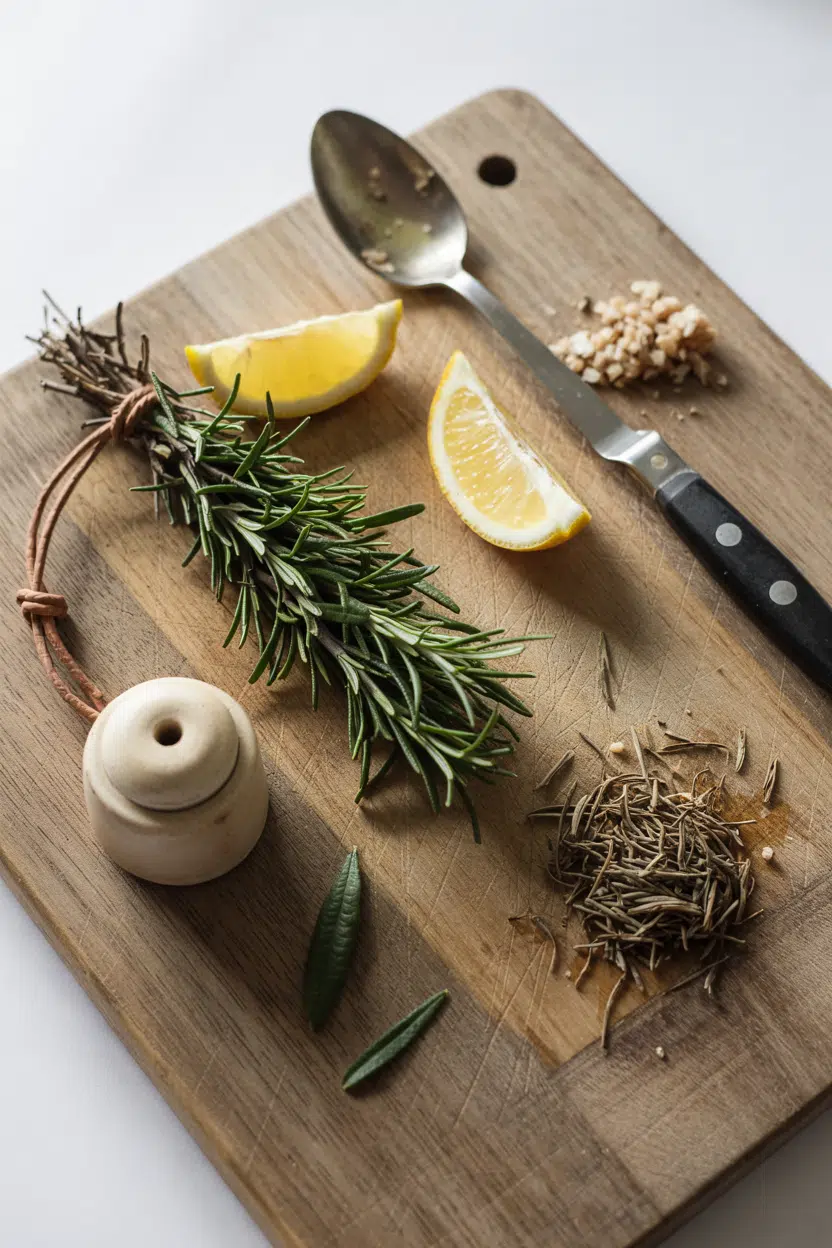
Its leaves are stiff, needle-like, and coated in resinous oils that give the herb its characteristic punch - those oils don't fade easily, which is why rosemary holds up under heat better than most fresh herbs.
The plant belongs to the mint family, though you'd be forgiven for missing the family resemblance. Most home cooks encounter two main forms: fresh sprigs with their waxy needles still attached, and dried rosemary, which is more concentrated and easier to crush.
Serious growers also seek out named varieties.
- 🌱 Tuscan Blue - tall, upright variety with broad needles and intense flavor, popular in Italian cooking
- 🌱 Arp rosemary - cold-hardy cultivar with slightly lighter flavor, good for northern gardens
- 🌱 Prostrate rosemary - low-growing, ornamental form; milder in flavor, less common in cooking
For the kitchen, Tuscan Blue is the standard reference point. It's also sold simply as "garden rosemary" at most markets.
What Does Rosemary Taste Like?
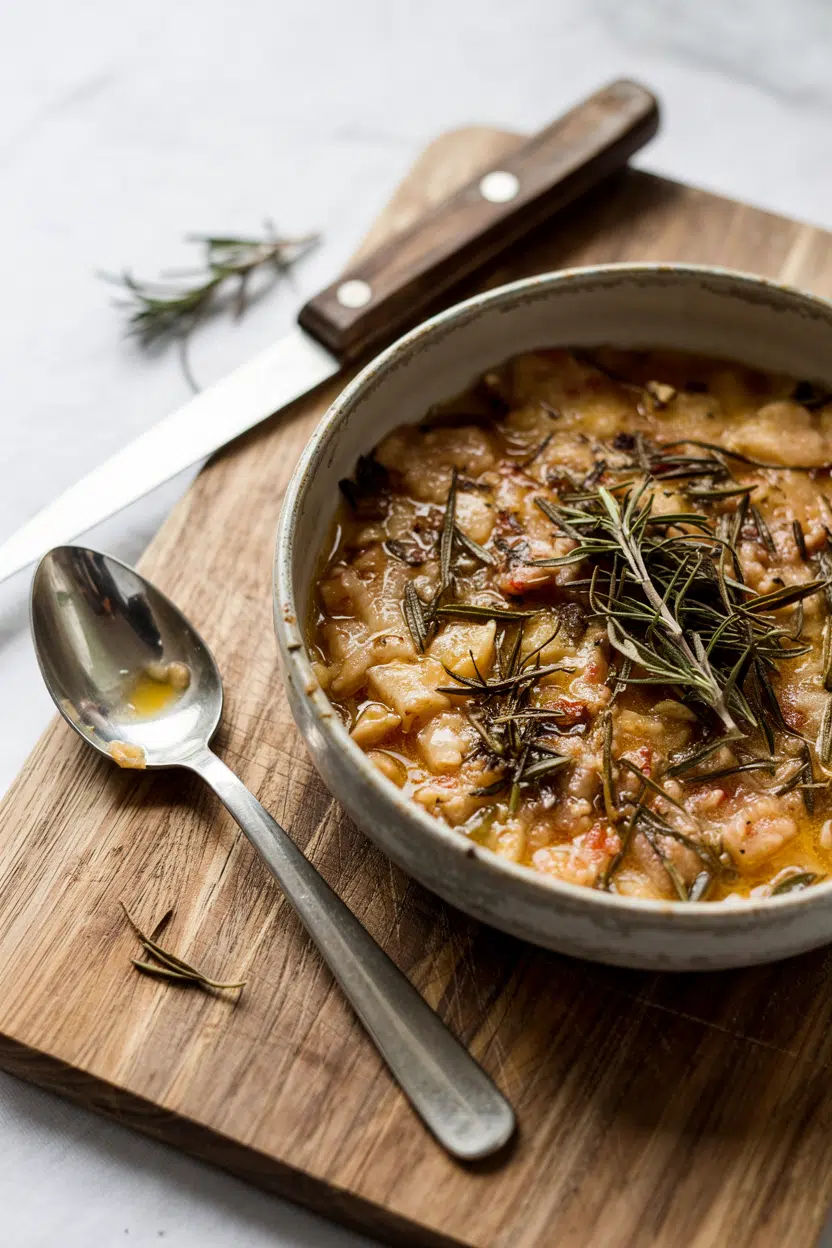
Rosemary tastes closest to pine and eucalyptus - that same sharp, resinous quality - with a savory lift that recalls thyme.
Underneath the pine note sits a herbaceous bitterness and a faint camphor quality that gives the herb a slightly medicinal edge.
Heat softens the camphor edge and draws out more of the sweet, woody character. Long, slow cooking - a braise, a simmered tomato sauce - mutes rosemary's sharper top notes and leaves something gentler behind.
For a direct side-by-side on how it differs from a close relative, comparing sage vs rosemary options breaks down where each one fits.
How to Use Rosemary
Rosemary earns its place across Italian, Provençal, and broader Mediterranean cooking, showing up in everything from a Tuscan arista pork roast to a Provençal lamb shoulder rubbed down with garlic and herb. Lamb is the single most natural pairing - the herb's resin cuts through the meat's fat in a way few other herbs manage.
Olive oil, garlic, roasted potatoes, and lemon all complement it well, and pork takes rosemary just as readily as lamb does.
The method matters as much as the pairing.
| Method | Best For | Tip |
|---|---|---|
| 🥗 Herb Rub | Leg of lamb, pork shoulder, chicken | Chop finely with garlic and salt; press into scored fat before roasting |
| 🔥 Whole Sprig in Pan | Cast-iron steaks, pan sauces, roast potatoes | Add to hot oil and baste over meat; remove before serving |
| 🍞 Dough Seasoning | Focaccia, flatbreads, crackers | Press needles into dough surface; they crisp up and mellow in the oven |
| 🫙 Oil Infusion | Vinaigrettes, dipping oil, finishing oil | Steep sprigs in warm olive oil for 30 minutes; strain before use |
| 🍲 Slow Simmer | Tomato sauces, braises, soups | Add whole sprig early; remove before serving or needles become tough |
Rosemary also goes into savory custards and cream-based soups when steeped in warm cream.
If a recipe calls for a neutral herb oil and you need a different fat base, knowing about replacements for olive oil keeps the infusion technique intact.
How to Buy and Store Rosemary
Fresh rosemary should have bright green, pliable needles with a strong resinous smell when you pinch them. Avoid stems with brown or brittle needles, and skip any bunches showing fuzzy white spots, which signal mold. For dried rosemary, shake the jar - if the aroma is faint and dusty, the herb has already lost most of its carnosic acid content and won't deliver much flavor.
Dried rosemary keeps best in an airtight dark container away from the stove's heat. A full breakdown of timing and signs of degradation is covered in rosemary's shelf life.
And if you're mid-recipe without any on hand, there are several rosemary swaps that work depending on what the dish actually needs.
Start Here With Rosemary
Rosemary rewards confident use, not timid use. Start with a leg of lamb or roast potatoes - high-heat applications that showcase its pine character without risk of over-extraction.
Once you know how it behaves at high heat, work backward to slower methods like braised sauces and oil infusions. If a dish already has strong acidic or delicate herb elements, hold off - rosemary doesn't share the stage gracefully.
Frequently Asked Questions
Yes, rosemary needles are edible. Raw, they're quite tough and intensely piney, so most cooks chop them finely before eating them uncooked. In slow-cooked dishes, the needles soften slightly but remain chewy - whole sprigs are usually removed before serving.
Dried rosemary is more concentrated by weight - use roughly half the amount a recipe calls for if substituting dried for fresh. Fresh sprigs, however, release flavor more gradually and leave a brighter, less dusty impression in the finished dish.
They share a savory, herbaceous quality but rosemary is considerably more assertive. Thyme is earthy and subtle; rosemary brings a resinous pine note and camphor edge that thyme lacks entirely.
Rosemary's volatile oils begin releasing within the first 10-15 minutes of cooking, and the flavor peaks early in a braise or sauce. Extended cooking past 2 hours gradually strips the herb's brightness, leaving only the deeper, woodier base notes.
Thyme, oregano, and sage hold up alongside rosemary without being overwhelmed. Avoid pairing it with delicate herbs like tarragon, chervil, or fresh basil - rosemary's intensity drowns them out.



