
Caesar salad built romaine lettuce's reputation in American kitchens, but the leaf does far more than anchor a bowl of croutons and dressing. Romaine's thick central rib delivers a crunch that holds up where softer greens collapse, and its mild green bitterness gives dishes a backbone that iceberg simply doesn't offer.
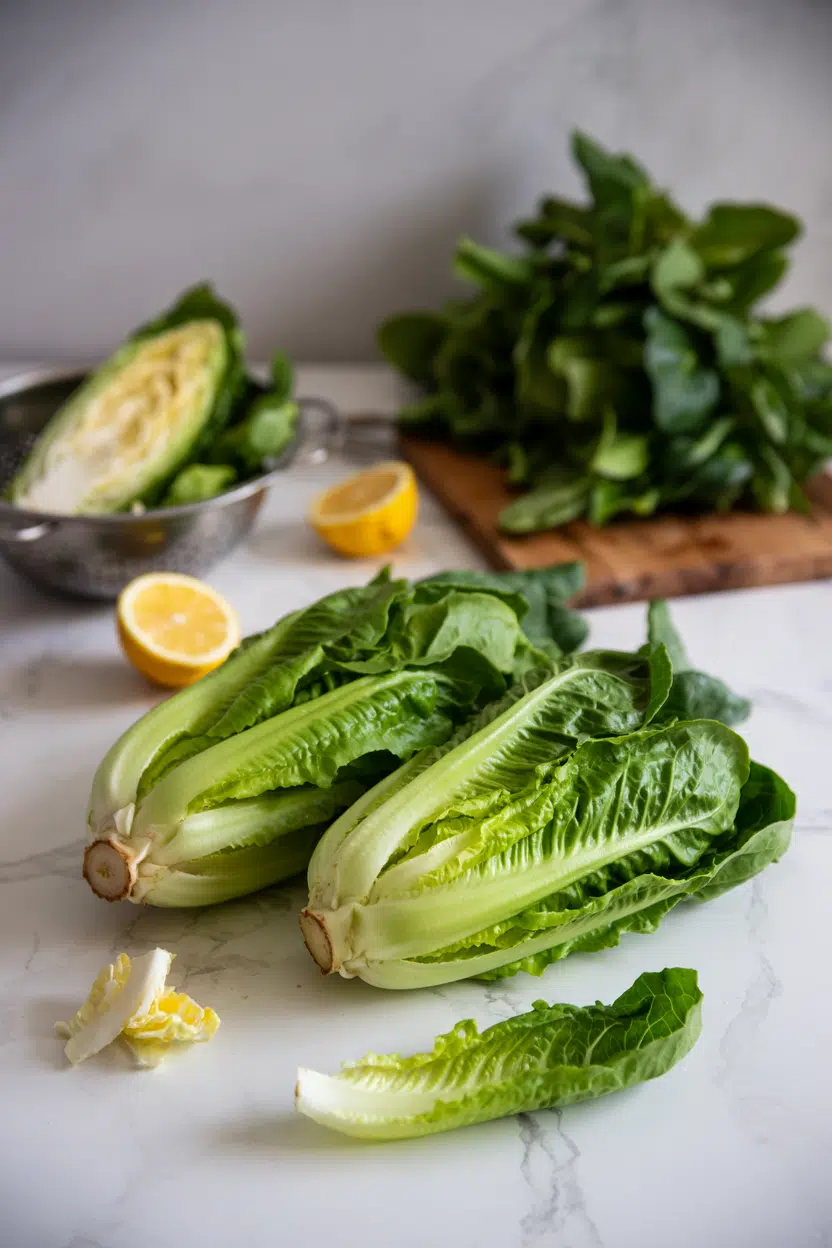
Understanding what this lettuce actually tastes like - and how to treat it - separates a good salad from a forgettable one.
Romaine lettuce is a crisp, mildly bitter leafy green from the Eastern Mediterranean. Its sturdy leaves and pale heart work raw in salads and wraps, or briefly grilled for smoky depth. Shelf life runs 7-10 days for a whole head, shorter once cut.
What Is romaine lettuce?
Romaine - also called cos lettuce or Roman lettuce - is a tall, elongated head lettuce with long, upright leaves and a prominent pale midrib running the full length of each leaf.
Remember it later
Planning to try this recipe soon? Save it for a quick find later!
It originated in the Eastern Mediterranean and Near East, with its name tracing to Rome through trade routes that carried it west.
Today it's one of the most widely grown lettuces in the world.
The plant is typically harvested as a full head with tightly packed inner leaves forming the romaine heart - the portion sold separately in most supermarkets. Those heart leaves are paler, more tender, and slightly sweeter than the dark outer leaves.
The outer leaves carry more of the green bitterness that defines the variety's character.
Romaine hearts are what most Caesar salad recipes call for, since they offer concentrated crunch with less soil and less sharp bitterness. You'll also see romaine sold whole, pre-chopped, or as individual large leaves.
The spelling "romain" occasionally appears but is simply a common misspelling - the correct form retains the final "e."
What Does romaine lettuce Taste Like?
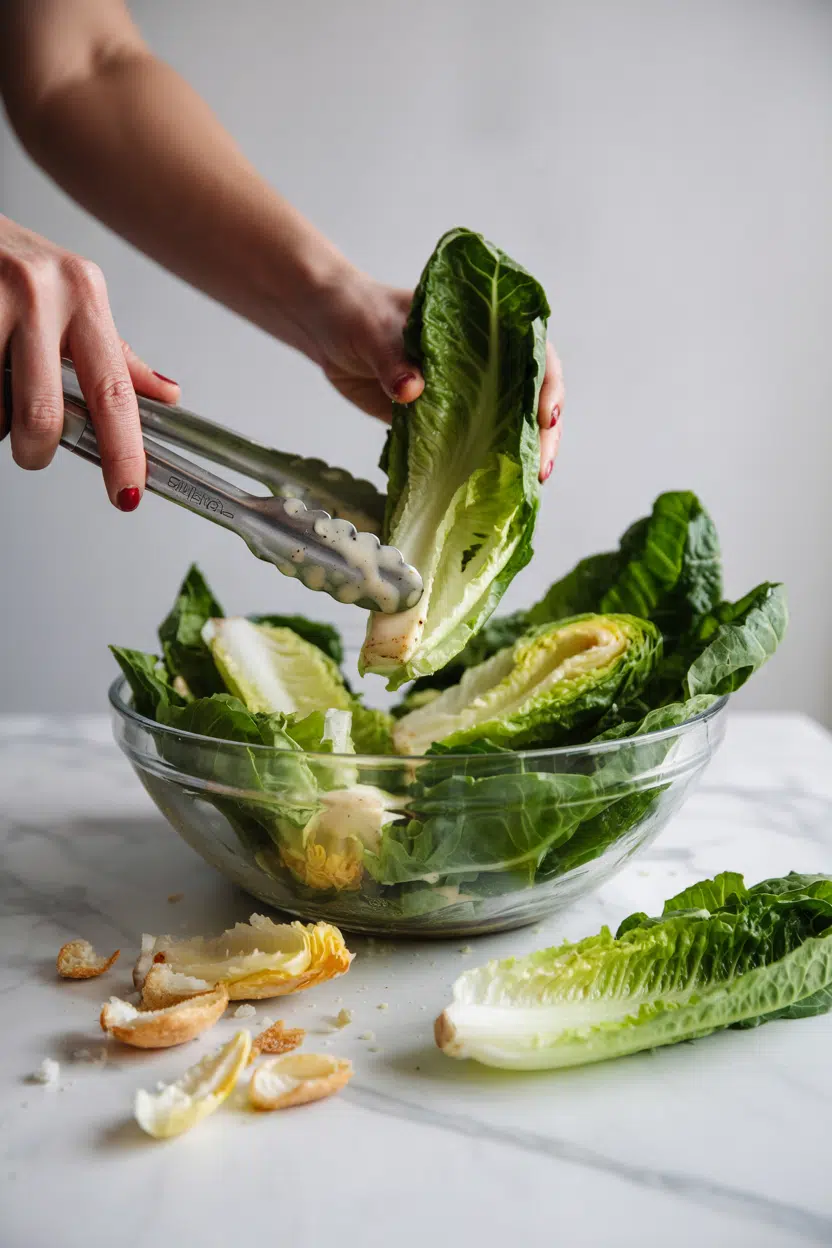
Romaine reads as mild and clean on first bite, with the bitterness arriving as a gentle green note rather than anything harsh. That bitterness concentrates near the core and in the inner base of each leaf - the pale yellow section closest to the stem.
Mid-leaf, the flavor softens and turns slightly sweet.
Compared to iceberg, romaine has noticeably more depth - iceberg is neutral to the point of being watery, while romaine gives you a real green flavor to work with.
Butterhead is softer and more delicate; romaine sits between the two in intensity.
When grilled or briefly charred, the outer leaves take on a smoky bitterness that works well against fatty dressings and rich proteins.
Heat doesn't mellow the flavor so much as add a second layer to it.
How to Use romaine lettuce
Raw preparation is where romaine performs best, and the Caesar salad is the obvious benchmark. Romaine hearts torn or roughly chopped hold Parmesan and anchovy dressing without going limp - if you're working without the cheese, parmesan cheese stand-ins can preserve that salty, umami edge in the bowl. Beyond Caesar, whole leaves work as sturdy cups for fillings like spiced ground meat or grain-based salads.
Grilling is romaine's most underused method.
Halving a head lengthwise, brushing it with olive oil - or, if needed, using olive oil stand-ins like avocado oil - and charring it on a hot grill produces something genuinely different: smoky, slightly wilted outer leaves with a warm, crisp rib at the center.
It pairs well with lemon juice and a sharp vinaigrette.
| Method | Best For | Tip |
|---|---|---|
| 🥗 Raw | Caesar salad, chopped salads, wraps, tacos, sandwiches | Tear rather than cut hearts to preserve crunch at the edges |
| 🔥 Grilled | Warm salads, side dishes with grilled meats | Use high direct heat, 2-3 minutes per side max; don't move it |
| 🍳 Braised | Quick warm side dish with broth and olive oil | Keep it under 5 minutes or leaves turn mushy and lose structure |
| 🥙 Wrap leaf | Lettuce cups, hand-held wraps for meze or Asian fillings | Use large outer leaves - they cup better than heart leaves |
Romaine pairs cleanly with bacon and blue cheese, avocado and tomato, grilled chicken or steak, and toasted nuts for textural contrast. Creamy dressings and yogurt-based sauces work well because the leaf's bitterness cuts the richness.
Avoid very sweet dressings - they flatten everything this lettuce has to offer.
How to Buy and Store romaine lettuce
Choose heads with bright green outer leaves, firm pale yellow hearts, and thick central ribs that show no browning. Limp outer leaves, brown-edged tips, or any foul smell at the stem base are all reasons to skip it.
Romaine hearts sold pre-packaged are worth buying when you want concentrated crunch and less prep work.
Store romaine unwashed in the fridge crisper, wrapped loosely in a paper towel to absorb excess moisture, then placed in a perforated bag.
The paper towel step makes a real difference.
For full guidance on storing lettuce correctly, the method extends to most leafy greens.
A whole head stays good for 7-10 days; for specifics on how long romaine lettuce keeps under different conditions, the window tightens once you've cut or separated the leaves.
Start With the Heart
If romaine is new to your rotation, buy a bag of hearts first.
They're cleaner, less bitter, and immediately ready for a Caesar or a quick grilled half.
Once you're comfortable with the flavor, move to whole heads - the outer leaves add more bitter character and work well shredded into tacos or sandwiches.
When you need a swap, replacements for romaine lettuce cover the closest structural matches, and replacements for iceberg lettuce are worth checking if crunch - rather than flavor - is the priority.
Frequently Asked Questions
Yes. Romaine is low in calories and high in vitamin A (as beta-carotene), vitamin K, and folate. Its high water content also contributes to hydration, and it fits vegan, keto, and paleo diets without modification.
The bitterness comes from lactucin, a naturally occurring compound in lettuce. It concentrates in the inner base and core - which is why heart leaves near the stem taste more bitter than mid-leaf sections.
Romaine has more flavor - mild bitterness and a subtle nutty note - while iceberg is nearly neutral and mostly water. Romaine's leaves are longer, sturdier, and hold dressings better than iceberg's thin, round leaves.
Yes - grilling and quick braising both work well. Grilled halves hold their shape under direct heat and develop a smoky flavor. Avoid long cooking; anything past 5 minutes turns the leaves mushy and dull.
Three to five days in the fridge, wrapped in a paper towel inside a loose bag. Once the cut ends brown or the leaves feel wet and limp, texture and flavor have already declined past the point of using them raw.



