
You spot rambutan at an Asian grocery and pause - the fruit looks almost fictional, a red globe bristling with soft rubbery spines like something designed by a special effects crew.
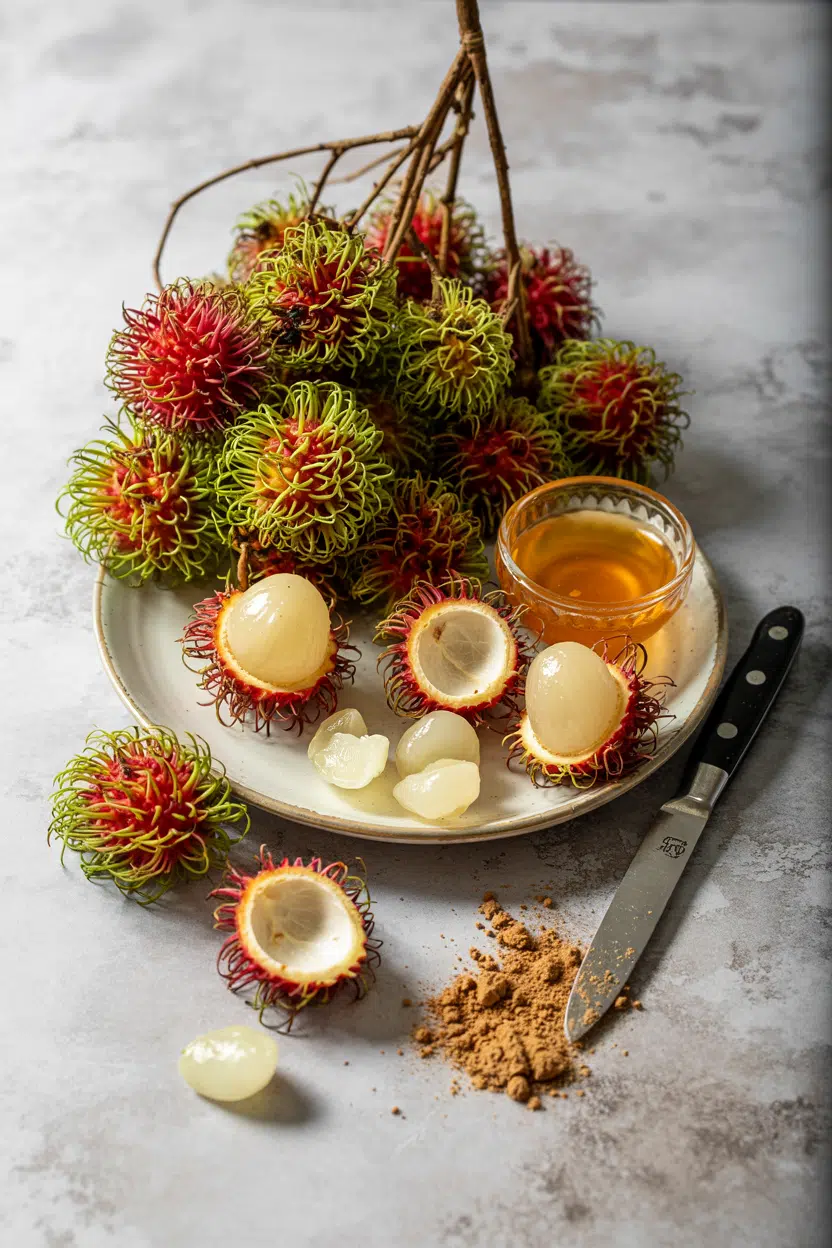
Peel back the leathery shell, though, and you'll find clean, translucent flesh that works in fruit salads, sorbets, and sweet-sour sauces with equal ease.
If you're already comfortable making retro ambrosia fruit salad at home, rambutan slots in naturally as a more tropical alternative to the usual canned fruit.
Acidic citrus pairings are central to how this fruit is used - if you're ever short on calamansi, the guide to swapping out calamansi covers your options.
Rambutan is a tropical Southeast Asian fruit with juicy, translucent flesh and a mildly sweet, floral flavor. Eat it fresh, macerate it with citrus for drinks, or simmer it in syrup for desserts. Refrigerate whole and peel just before eating to keep its aroma intact.
What Is Rambutan?
Rambutan (Nephelium lappaceum) is a tropical fruit native to the Malay Archipelago and widely grown across Southeast Asia, including Malaysia, Indonesia, Thailand, and the Philippines.
Remember it later
Planning to try this recipe soon? Save it for a quick find later!
It belongs to the Sapindaceae family, which puts it in the same botanical neighborhood as lychee and longan - both close relatives in flavor and structure.
The fruit is small and round, roughly the size of a golf ball. Its most distinctive feature is the leathery outer shell covered in soft, hair-like spines, which is exactly what the name signals: rambut means "hair" in Malay.
Inside, the edible portion is the translucent white pulp that clings around a single glossy brown seed. You may also see it called buah rambutan in Malay or rambután in Spanish-speaking markets.
Two main color forms exist in commerce:
- 🔴 Red rambutan - the most common type; bright crimson shell, widely available fresh and canned
- 🟡 Yellow rambutan - milder and slightly less sweet; found more often at specialty markets and farm stalls in Southeast Asia
Canned rambutan in syrup is the easiest form to find outside Southeast Asia, though fresh fruit appears seasonally at Asian groceries year-round.
What Does Rambutan Taste Like?
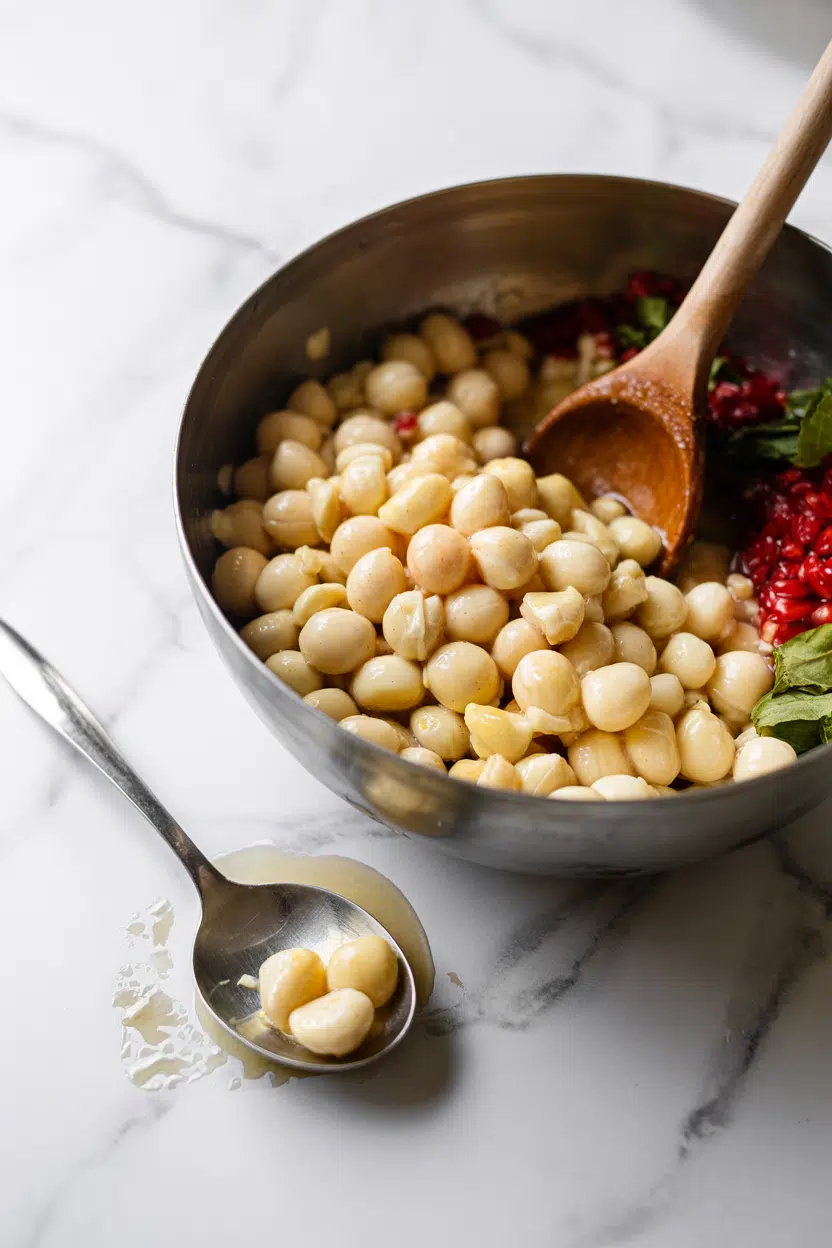
Rambutan flesh is mildly sweet with a light floral note and a finish that leans creamy and citrusy rather than sharply tangy.
The sweetness is gentle - think of a grape that's been softened by a faint perfume and a squeeze of something bright.
The closest comparison is lychee, though rambutan is noticeably less intensely floral and more subtly creamy.
The lychee fruit taste explained in detail, but the short version is that lychee hits harder on the rose-water note where rambutan stays quieter and rounder.
Heat dulls rambutan's floral character quickly. Short cooking in syrup preserves sweetness while softening the flesh; anything longer strips out the delicate fragrance that makes it worth using.
How to Use Rambutan
Fresh rambutan needs no preparation beyond peeling and removing the seed. That makes it a natural fit for fruit platters, chilled desserts, and anything where you want clean tropical flavor without cooking. Indonesian es buah - a cold fruit and coconut milk drink - uses rambutan alongside jackfruit and grass jelly for a sweet, cooling effect.
| Method | Best For | Tip |
|---|---|---|
| 🥗 Raw | Snacking, fruit salads, garnish for ceviche | Peel just before serving to preserve juice and aroma |
| 🍳 Macerated | Cocktails, mocktails, lime-sugar syrups | Let sit 20-30 minutes with lime and sugar; don't over-macerate or flesh turns mushy |
| 🫕 Simmered | Fruit syrup, minatamis-style candied rambutan, chutneys | Keep to a short simmer (5-8 minutes) to retain floral flavor |
| 🧊 Pureed/Frozen | Sorbets, sherbets, frozen desserts | Freeze puree in flat layers; thaws faster and blends more evenly |
Rambutan pairs especially well with coconut milk, lime, chili, and ginger - the flavor profile common across Malaysian and Thai preparations.
A simple sweet-sour sauce with rambutan, ginger, and rice vinegar works well spooned over roasted pork or grilled prawns.
Coconut milk desserts like panna cotta benefit from rambutan's light acidity cutting through the richness - though if you're working with extra coconut milk, the guide to freezing coconut milk will help you avoid waste.
How to Buy and Store Rambutan
Fresh rambutan signals quality through its spines. Flexible, vividly colored hairs mean the fruit was recently harvested; dry, brown, or brittle spines indicate age. Pass on anything with blackened tips, large soft spots, or visible seeping liquid.
For storage, keep whole rambutans unwashed in a breathable bag in the fridge. Sealed plastic traps moisture and accelerates mold.
Peeled flesh keeps for one to two days refrigerated but fades fast. For longer storage, puree the flesh and freeze it flat in bags.
- Whole, refrigerated - 3 to 7 days depending on freshness at purchase
- Peeled flesh, refrigerated - 1 to 2 days maximum
- Pureed, frozen - up to 3 months with minimal flavor loss
Canned rambutan in syrup keeps unopened for over a year and is a reliable off-season option - rinse before using to reduce sweetness.
Where to Start With Rambutan
New to this fruit? Eat it fresh first. Peel one, remove the seed, and taste the flesh as-is before building any recipe around it.
That baseline tells you how sweet and floral your batch is, which matters when you're balancing it with lime, chili, or coconut milk.
From there, maceration with lime and sugar is the lowest-effort way to build real flavor. Use that syrupy result in cocktails, spoon it over vanilla ice cream, or stir it into a coconut panna cotta.
Once you're comfortable with those applications, the step up to sweet-sour sauces and sorbets is a short one.
Frequently Asked Questions
No, though both belong to the Sapindaceae family and share a similar structure. Lychee has a more intense floral flavor; rambutan is milder, creamier, and slightly less sweet. The outer skin is completely different - rambutan has soft spines, lychee has a rough, bumpy shell.
No. The raw seed contains compounds that are mildly toxic and should be discarded. Some traditional preparations roast or boil the seed to neutralize these compounds, but for everyday eating, remove and discard it.
Score the skin around the middle with a knife and twist the two halves apart. Pull away the shell, then pop the flesh into your mouth and work around the seed - or cut the flesh away from the seed before serving.
Whole, unpeeled rambutan lasts 3 to 7 days refrigerated in a breathable bag. Peeled flesh deteriorates quickly - use within 1 to 2 days. Pureed rambutan frozen in an airtight bag holds for up to 3 months.
Not quite. Canned rambutan in syrup loses most of its floral aroma during processing and tastes notably sweeter. It works fine in cooked desserts and sauces, however fresh rambutan is far better for raw applications where fragrance matters.



