
Most people grab provolone without a second thought - it's just "the Italian cheese" in the deli case.
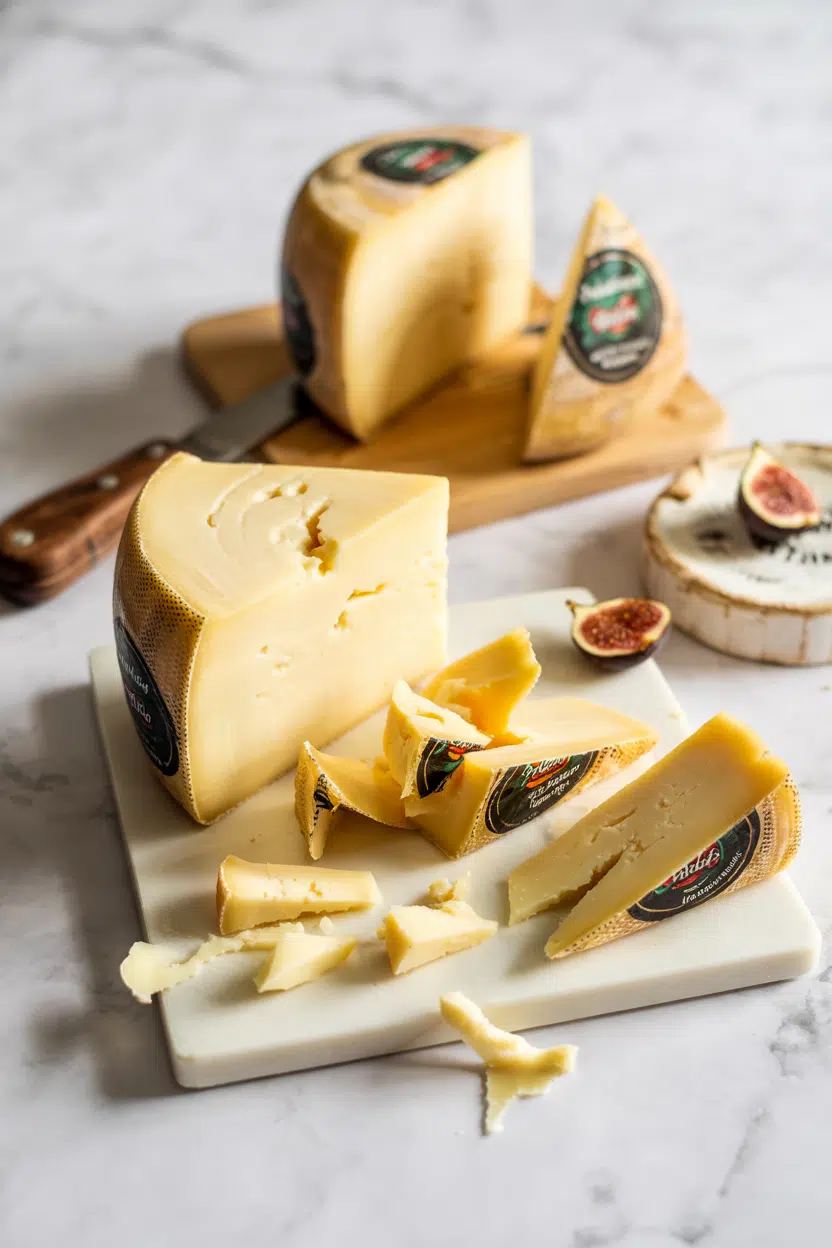
What they miss is that provolone dolce and provolone piccante are almost different cheeses entirely, and choosing the wrong one can make a sandwich taste flat or a melt turn greasy.
Provolone is a stretched-curd Italian cow's milk cheese that comes in mild (dolce) and sharp (piccante) styles. It slices cleanly, melts smoothly, and suits everything from deli sandwiches to baked pasta - with the style you pick changing the flavor significantly.
What Is provolone cheese?
Provolone is a stretched-curd (pasta filata) cheese made from whole cow's milk, originating in Southern Italy and later standardized in Northern Italy's Po Valley. The name covers a family of related cheeses, not a single recipe.
Remember it later
Planning to try this recipe soon? Save it for a quick find later!
You'll see it labeled as provolone Valpadana (the protected PDO version), provola (a smaller regional form), and provolone affumicato, which is cold-smoked after molding.
The two main styles are dolce and piccante. Dolce ages for about two to three months, producing a pale, smooth paste with a mild flavor. Piccante ages six months to over a year, developing a firmer texture, a deeper yellow color, and a noticeably sharper bite.
Both styles share the same elastic, waxy rind and the characteristic pulled-curd structure that gives provolone its clean slice and smooth melt.
That stretched-curd method - the same used for mozzarella - is why provolone and mozzarella are often compared, though provolone is firmer and more aged.
What Does provolone cheese Taste Like?
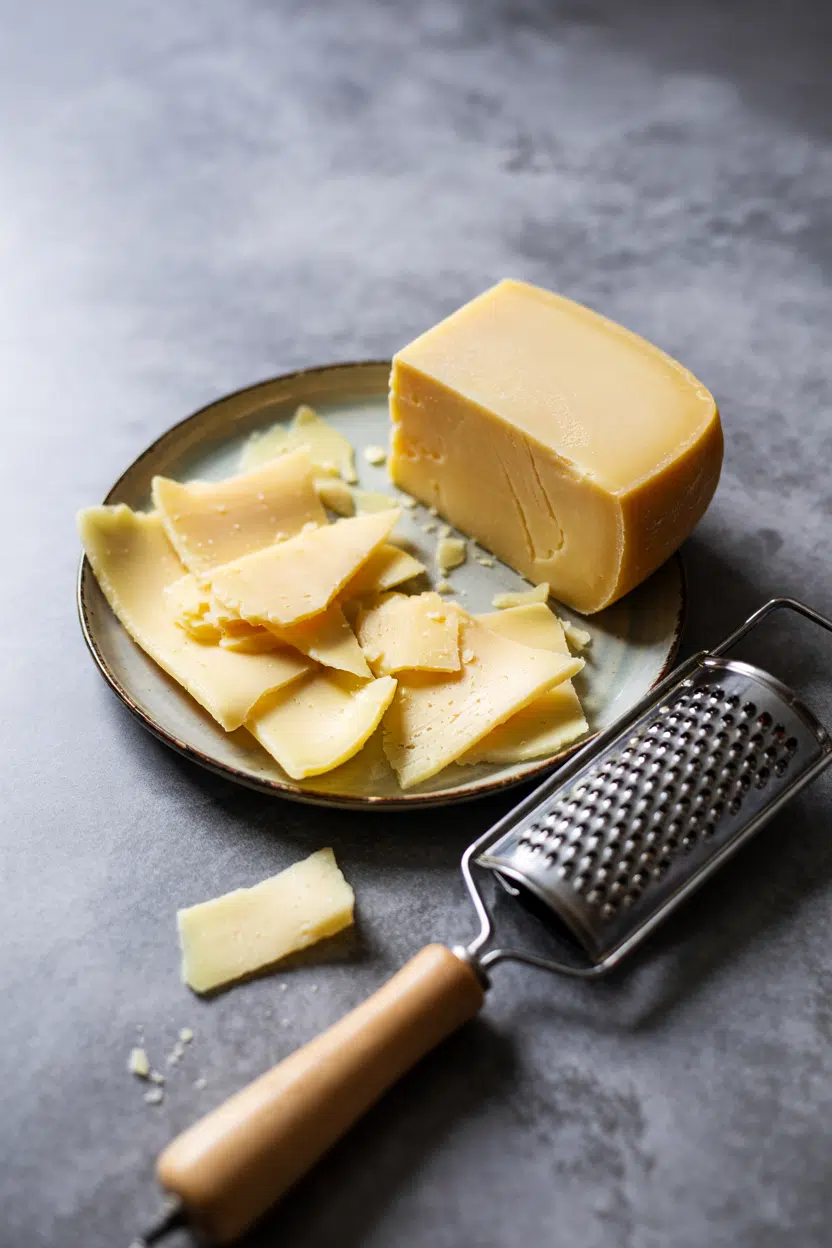
Dolce tastes closest to a mild cheddar or young gouda - soft milkiness with a gentle cream finish. Piccante is a different story.
It has the sharper, drier bite of aged manchego or a medium cheddar, with a faint nuttiness that develops from the extended aging.
Heat changes both styles meaningfully. Melted provolone turns creamy and develops a savory, almost buttery umami quality that you don't fully get when eating it cold. Piccante holds more of its sharpness through heat, while dolce softens into a nearly neutral richness.
Affumicato adds a light wood-smoke layer that comes through clearly on warm dishes.
How to Use provolone cheese
Provolone's most well-known role in American kitchens is as the melting cheese on a Philly-style cheesesteak. Dolce is the standard choice there - it melts fast, stays creamy, and doesn't compete with the beef and onions.
Beyond sandwiches, provolone works across several distinct cooking contexts.
| Method | Best For | Tip |
|---|---|---|
| 🥗 Raw/Sliced | Antipasto platters, deli sandwiches, cheese boards | Use piccante for boards; dolce for sandwiches with cured meats |
| 🔥 Baked | Chicken parm, veal parm, pasta bakes, pizza topping | Layer over sauce - it browns without turning rubbery |
| 🍳 Pan-Melted | Open-face melts, grilled sandwiches, egg dishes | Medium heat; high heat can cause the cheese to separate |
| 🧂 Shredded/Grated | Mac and cheese, pasta bakes, risotto finish | Mix with mozzarella for extra stretch and mild flavor depth |
Provolone pairs well with prosciutto, salami, and roasted red peppers - flavors strong enough to stand alongside piccante's sharpness. On the drink side, it goes with bold reds like Chianti and holds its own against a cold lager.
Avoid pairing aged piccante with very sweet fruit or dessert accompaniments; the salt-and-sharpness clash is noticeable.
If you need a swap, there are solid provolone cheese replacements that cover both the melt and the flavor profile depending on your dish.
How to Buy and Store provolone cheese
At the counter, check for even pale-yellow color and a smooth, intact rind. The surface should feel firm and slightly springy under light pressure.
Avoid pieces with sticky patches or a greasy film - both signal improper storage or age.
Once opened, wrap the cut surface tightly in parchment first, then plastic wrap or foil. This two-layer method keeps moisture in without trapping condensation directly against the cheese.
- Whole unopened wheel - several months refrigerated, depending on style
- Opened wedge or slices - 2-3 weeks; check our provolone cheese storage life guide for specifics on signs of spoilage
- Shredded provolone - 7-10 days; use sooner for best melt quality
Which Provolone Should You Buy?
The choice comes down to what you're cooking. Two quick rules cover most decisions.
Go with dolce if you're melting the cheese, building a mild sandwich, or cooking for people who find sharp cheeses too strong. It's the lower-commitment option and the safer default for hot dishes.
Reach for piccante if you want the cheese to contribute its own flavor -
on a board, grated into a pasta bake, or layered into something that needs sharpness to cut through richness. Affumicato fits the same sharp-flavor situations but adds a smoky edge that works especially well on grilled sandwiches and flatbreads.
Frequently Asked Questions
No. Both are stretched-curd cheeses made from cow's milk, but provolone is aged, firmer, and significantly sharper in flavor. Mozzarella is fresh, higher in moisture, and much milder - the two aren't interchangeable in most recipes.
Piccante is the long-aged style of provolone, typically matured for six months to over a year. It has a firmer texture, drier paste, and a pronounced sharp, nutty bite that intensifies with age.
Yes - dolce melts smoothly and evenly, making it a reliable choice for hot sandwiches and baked dishes. Piccante melts too, but its lower moisture content means it can turn slightly oily at very high heat.
Most traditional provolone is made with animal rennet, so it's not suitable for vegetarians. Some commercial versions use microbial rennet - check the label if this matters for your diet.
Bold reds work best with piccante - Chianti and Barbera d'Asti both complement its sharpness. Dolce is flexible enough for lighter reds, dry whites, or a cold lager.



