
Most cooks reach for poultry seasoning without knowing exactly what's in the jar.

That's a small gap worth closing, because the blend does something specific - it delivers the concentrated, roast-herb character of a well-seasoned turkey without the fuss of measuring five separate dried herbs every time.
Poultry seasoning is a sage-forward dried herb blend with thyme, marjoram, rosemary, and trace warm spices. It adds savory, herbaceous depth to roast chicken, turkey stuffing, gravies, and slow-cooked soups - and keeps the spice cabinet simpler.
What Is Poultry Seasoning?
Poultry seasoning is a pre-mixed dried herb blend formulated specifically for chicken, turkey, and other fowl. It's a North American pantry staple, though its components - sage, thyme, marjoram, rosemary - are rooted in European roasting traditions.
Remember it later
Planning to try this recipe soon? Save it for a quick find later!
Sage leads every reputable blend, typically making up the largest share. Thyme and marjoram add brightness, rosemary contributes a faint piney note, and small amounts of nutmeg or mace round out the warm undertones.
You'll find it sold under names including chicken seasoning, poultry spice, and poultry blend. Despite the name, the blend contains no actual meat or fat - just dried herbs and, in some commercial versions, black pepper or salt.
Most jars are finely ground to a unified powder. A few artisan blends keep the herb fragments coarser and more distinct, which affects both visual appeal and how quickly the flavors release during cooking.
- 🌿 Core herbs - sage, thyme, marjoram, rosemary (always present)
- ♨️ Warm spice add-ins - nutmeg or mace, occasionally ginger or allspice
- 🧂 Optional additions - black pepper, salt, or anti-caking agents in commercial versions
- 🏺 Homemade advantage - skip the fillers entirely by blending your own
What Does Poultry Seasoning Taste Like?
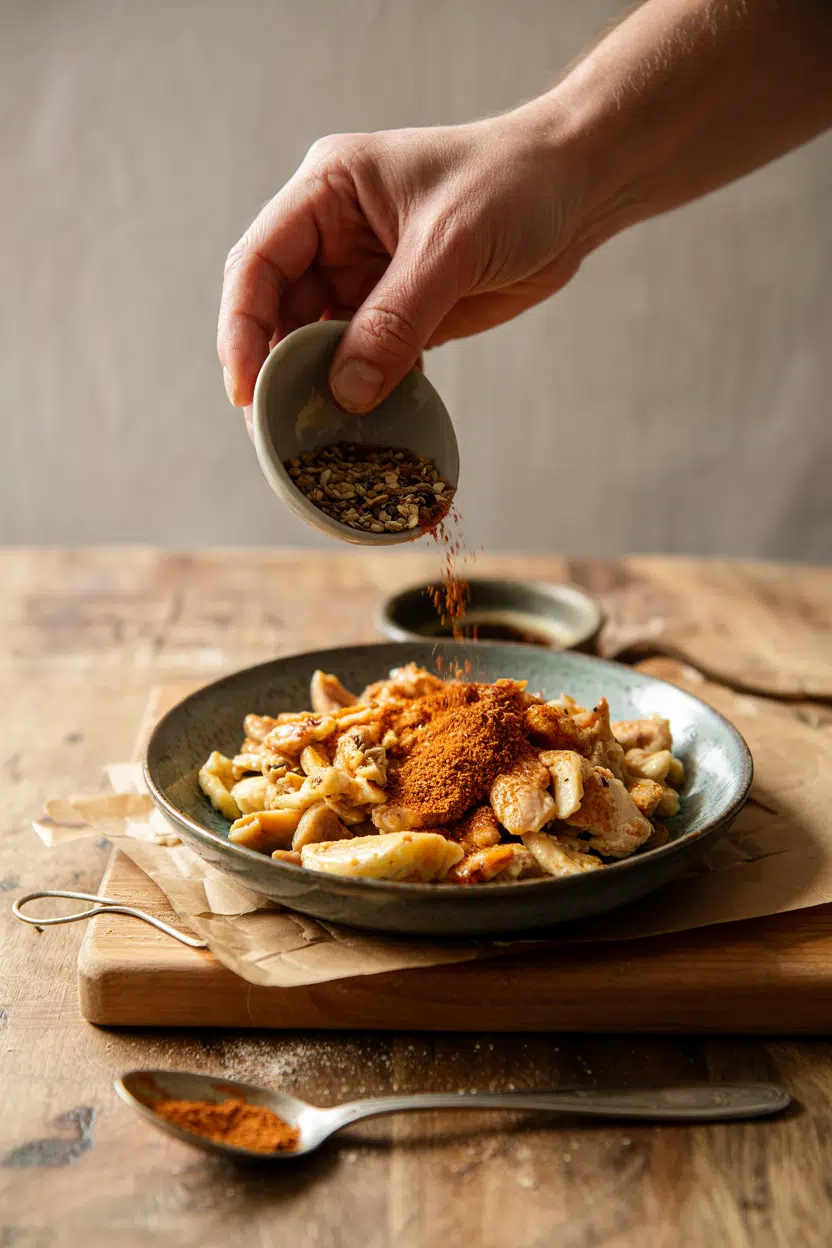
Dried sage is the dominant note - earthy, slightly camphor-like, and unmistakably savory. Behind it, thyme and marjoram push brightness and a faint floral quality that keeps the blend from tasting heavy.
Rosemary keeps a low profile in most blends - piney and resinous, but subtle enough that it doesn't dominate. The nutmeg or mace, where present, adds a whisper of sweetness that ties the savory herbs together.
Raw from the jar, the blend tastes sharp and concentrated. Once it hits heat - especially fat like butter or oil - the flavors open and mellow, and the characteristic Thanksgiving roast-herb quality comes forward.
How to Use Poultry Seasoning
The most direct application is a dry rub under the skin of roast chicken or turkey, pressed directly against the meat so the herbs bloom in the rendered fat during roasting.
Mixing the blend into compound butter with herbs works even better - the fat carries the flavor deeper and keeps the meat moist.
For stuffing and dressing, stir one to two teaspoons into the bread-and-celery base early, before you add broth. The herbs need time and moisture to fully hydrate and distribute.
| Method | Best For | Tip |
|---|---|---|
| 🔥 Roasting | Whole chicken, turkey, root vegetables | Mix into softened butter; rub under skin and over the surface |
| 🍲 Braising / slow-cooking | Chicken stew, slow-cooker soups | Add early - long cooking unlocks full herb flavor |
| 🥘 Sautéing | Aromatics for gravy, pan sauces | Add to onions and garlic in the pan before deglazing |
| 🍞 Baking / mixing | Stuffing, meatloaf, poultry burgers | Stir in with dry ingredients; give it time to hydrate in wet mix |
| 🥣 Marinade | Grilled chicken, spatchcocked bird | Combine with oil and lemon juice; marinate at least two hours |
Gravies and pan sauces benefit from a pinch stirred in during the deglazing step. It reinforces roast-bird flavor in dishes where gravy forms the backbone of the plate.
Don't overlook non-poultry applications. Mashed potatoes, roasted parsnips and carrots, and even meatloaf take well to the blend.
A slow cooker roast chicken is one of the easiest ways to see the blend at its most effective.
How to Buy and Store Poultry Seasoning
Look for visible herb texture in the jar - distinct flecks of sage and thyme indicate a fresher blend. If the contents look uniformly gray and powdery, the herbs have aged out and the blend will taste flat.
Check the label for added salt or sodium before you season aggressively - some commercial versions are closer to a seasoned salt than a pure herb blend. Pure herb blends give you full control over salt separately.
- Pantry storage - keep in a cool, dark spot away from the stove; heat accelerates flavor loss
- Container - transfer supermarket packets to a sealed glass jar after opening
- Shelf life - peak flavor at 6-12 months; still usable at 24 months but noticeably weaker
After about a year, the sage character flattens and the blend loses its ability to anchor a dish.
Check your poultry seasoning freshness guide if the jar has been in the cabinet a while - just as roast chicken itself has a defined usable window, so does the spice that seasons it.
Where to Start With Poultry Seasoning
New to the blend? Start with a whole roast chicken. Rub one teaspoon per pound under the skin mixed with softened butter, and roast as usual. That single cook will show you exactly what the blend does and how strong you want to go.
If you find the sage too assertive in a given blend, look at poultry seasoning alternatives - you can dial back the sage dominance by building your own mix, or find sage swaps if that herb is the sticking point.
One jar handles the entire Thanksgiving table - the turkey, the stuffing, the gravy. That's the case for keeping it stocked year-round.
Frequently Asked Questions
The core herbs are sage, thyme, marjoram, and rosemary, with black pepper common in most blends. Many commercial versions add small amounts of nutmeg or mace for warmth. Some cheaper blends include salt or anti-caking agents - check the label.
No - sage is one component in the blend, just the dominant one. Substituting straight sage for poultry seasoning will give you the earthy base note but none of the herbal brightness from thyme and marjoram.
About one teaspoon per pound is a reliable starting point for roasting. For stuffing, one to two teaspoons per four cups of bread is standard - the bread absorbs and mutes the herb intensity.
Yes - the sage-thyme profile works well on pork shoulder, pork chops, and sausage blends. The herb combination has a long history with pork in British and European cooking, well beyond its North American poultry association.
Combine 2 teaspoons dried sage, 1 teaspoon thyme, 1 teaspoon marjoram, ½ teaspoon rosemary, ¼ teaspoon nutmeg, and ¼ teaspoon black pepper. Grind briefly if you want a finer texture, then store in a sealed jar.



