
Pollock turns up everywhere - inside every fish stick your kids demand, folded into the surimi that fills grocery store seafood salads, and at the center of a quietly good weeknight fillet that most home cooks overlook.
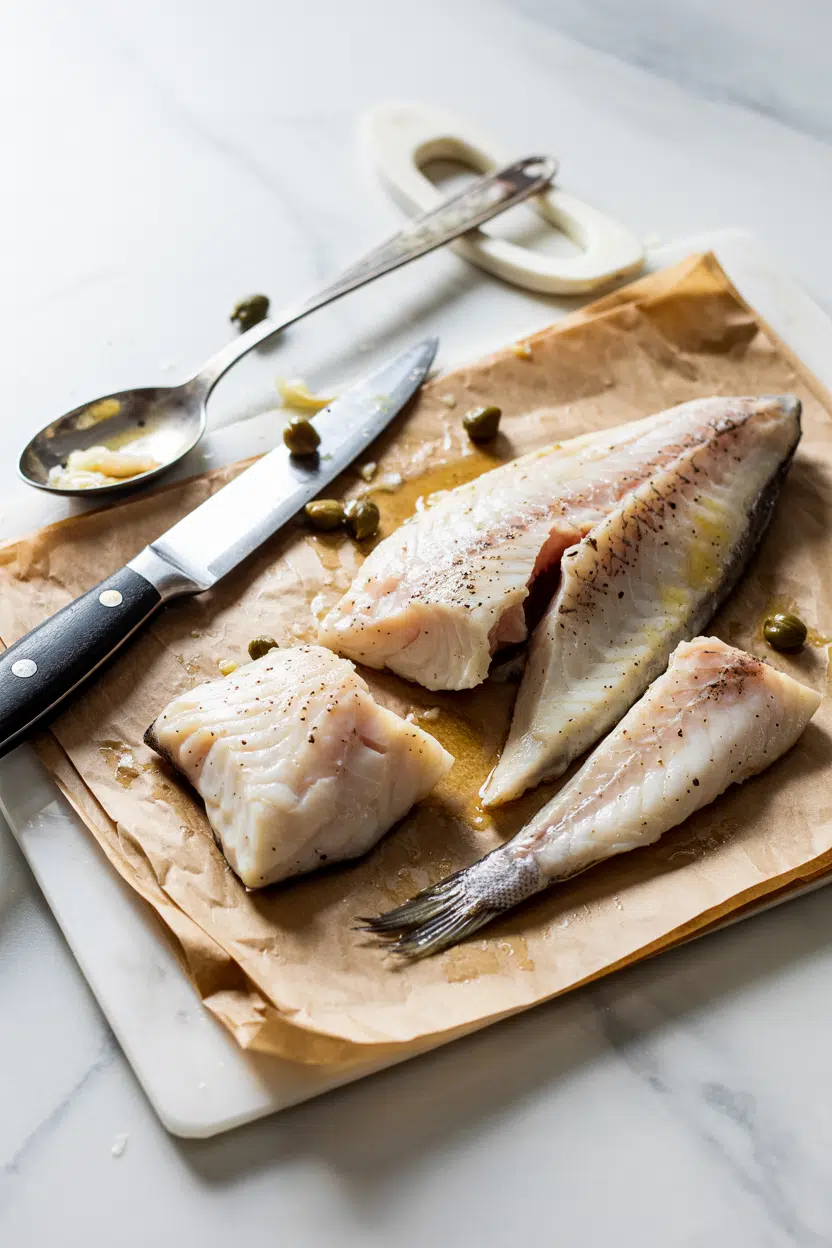
It does the work of cod or haddock at a lower price and with pairing ideas for haddock that translate almost directly to this fish.
If your usual go-to is mild white fish for tacos or swapping out tilapia, pollock deserves a closer look.
Pollock is a lean, mild white fish from the cod family. It has clean, lightly sweet flavor, fine delicate flakes, and a very low fat content. Used in fish sticks, surimi, tacos, and baked fillets, it suits nearly any simple preparation.
What Is Pollock?
Alaska pollock (also called walleye pollock) is the most commercially fished species on the planet, pulled primarily from the Bering Sea and Gulf of Alaska. Atlantic pollock is a related but distinct species caught in the North Atlantic, slightly richer in flavor, and less common in supermarkets.
Remember it later
Planning to try this recipe soon? Save it for a quick find later!
Both belong to the cod family - the same group that includes haddock and true cod.
Wild Alaska pollock in particular drives two massive industries: the frozen white-fish fillet market and surimi production, where processed pollock paste is shaped and flavored to mimic crab legs and other shellfish.
You'll see it sold under several names - pollack, walleye pollock, or simply "white fish" on processed labels.
Understanding walleye's shelf life gives useful context for how all lean white fish behave after harvest, since the handling rules are nearly identical.
- 🐟 Alaska pollock - the dominant commercial species; fine flakes, very mild
- 🌊 Atlantic pollock - slightly stronger flavor; less widely available fresh
- 🦀 Surimi base - the raw material behind most imitation crab and seafood sticks
- 📦 Processed labels - often listed as "white fish" in frozen meals and fish sticks
What Does Pollock Taste Like?
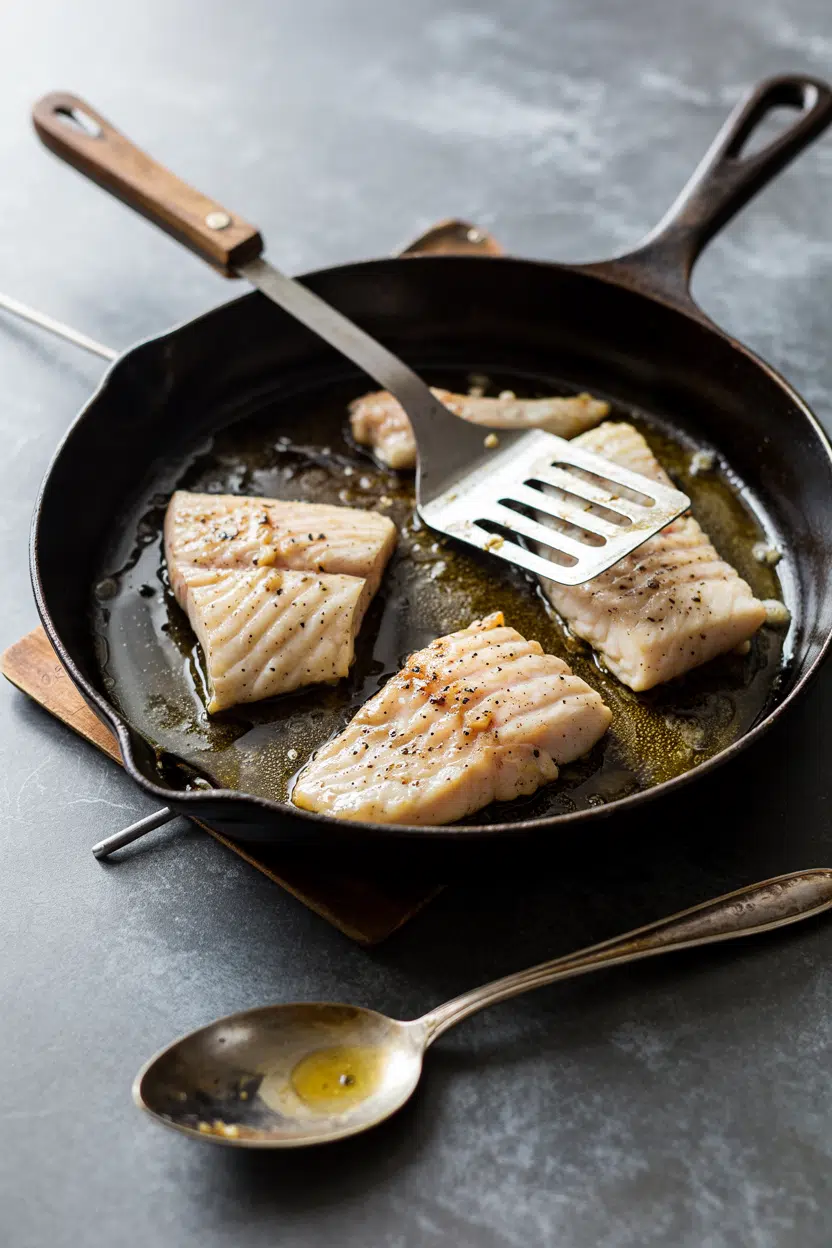
Pollock sits at the mild end of the white-fish spectrum. The flavor is clean and lightly sweet, with a very faint brine that signals the ocean without announcing it.
Raw, it smells almost neutral - a slight sea scent, nothing more. A quick pan-sear over high heat coaxes out a subtle savory depth that the raw fillet doesn't show.
It tastes closest to cod or haddock, with finer flakes and a slightly less pronounced flavor than either.
Overcooking is where things go wrong. The flakes firm up fast, then turn dry and chalky - a texture problem, not a flavor one.
Pull pollock off heat the moment it turns opaque.
How to Use Pollock
Pollock handles nearly every standard white-fish preparation well. Its neutral flavor means it absorbs marinades, coatings, and sauces without competing - making it one of the better choices when a sauce or crust is the focus.
Pan-searing is the fastest route to real flavor. A hot skillet, a little butter, and two minutes per side builds a golden crust while keeping the center moist. Baking with a panko-herb crust adds texture without the oil of deep-frying and works well for weeknight meals.
| Method | Best For | Tip |
|---|---|---|
| 🍟 Fried | Fish and chips, fish sticks, tacos | Use panko or seasoned cornmeal for a crisp crust that holds |
| 🫙 Baked | Herb-crusted fillets, family dinners | 375°F for 12-15 min; brush with butter to prevent drying |
| 🍳 Pan-Seared | Quick weeknight fillet with sauce | Pat very dry before hitting the pan - moisture kills the sear |
| 💧 Poached | Light broths, fish stews, flaking into chowder | Keep the liquid below a simmer; boiling toughens the flesh |
For cuisines, pollock covers a lot of ground. American fish-and-chips and Korean braised fish dishes both rely on it.
Japanese surimi production uses it as the primary base, and Northern European coastal cooks bake or poach it with root vegetables.
Strong, heavily spiced sauces tend to overwhelm what makes pollock useful - its clean neutrality. Keep pairings simple: lemon, butter, dill, capers, or a light white wine sauce.
Mild root vegetables like potato or parsnip sit alongside it without conflict.
How to Buy and Store Pollock
Fresh pollock fillets should look translucent white with a slight sheen. Avoid anything with dried-out edges, browning, or a strong odor - fresh pollock smells barely of anything.
The flesh should spring back when pressed. For whole fish, clear bright eyes and red gills are the reliable markers; cloudy eyes and brownish gills mean age.
At the counter, most pollock is sold as frozen-at-sea fillets, which is actually a quality advantage - modern vessels freeze within hours of catch.
The guidance on storing pollock correctly covers the fridge-to-freezer transition in detail, including vacuum-sealing tips that extend frozen shelf life to six months.
- Fridge - Use fresh fillets within 1-2 days, kept on ice or at the coldest shelf
- Freezer - Wrap tightly or vacuum-seal; best texture within 3-6 months
- Thawing - Overnight in the fridge; never on the counter at room temperature
Start Here for Mild White Fish
If you're deciding between pollock and a similar species, go with pollock when price and availability matter and the recipe uses a coating, sauce, or broth.
Its neutral flavor and low cost make it the practical call for high-volume cooking - fish tacos, fish cakes, chowder.
When you want something with a bit more character on its own, browsing alternatives to pollock or replacements for cod will show where the flavor steps up.
For a direct swap into haddock recipes, checking alternatives to haddock confirms pollock fits in most cases without adjustment.
Pollock rewards simplicity. Keep the heat short, the seasoning clean, and the sauce light.
Frequently Asked Questions
No, though both belong to the cod family. Pollock has finer flakes and a milder, slightly less pronounced flavor than true cod. They swap well in most recipes, but pollock costs less and cooks a little faster due to thinner fillets.
Very mild and clean, with a faint sweetness and almost no fishy character. It's one of the most neutral white fish available, which is why it's used as the base for surimi and processed seafood products.
Yes. Pollock is a lean, high-protein fish with good levels of vitamin B12 and selenium. It contains omega-3 fatty acids, though at lower levels than oily fish like salmon or mackerel.
Pull it off heat the moment the flesh turns opaque - that's the cutoff. Basting with butter during a pan-sear or covering loosely during baking also helps retain moisture in the thin fillets.
Yes, on thicker portions with care. Use a well-oiled grill grate or a grill basket - pollock's fine flakes make it prone to sticking and breaking apart on open grates. Keep the heat medium-high and flip only once.



