
Cracking open a jar of piquillo peppers releases a smell that signals something already done right - smoky, faintly sweet, and edged with the char of an open flame.
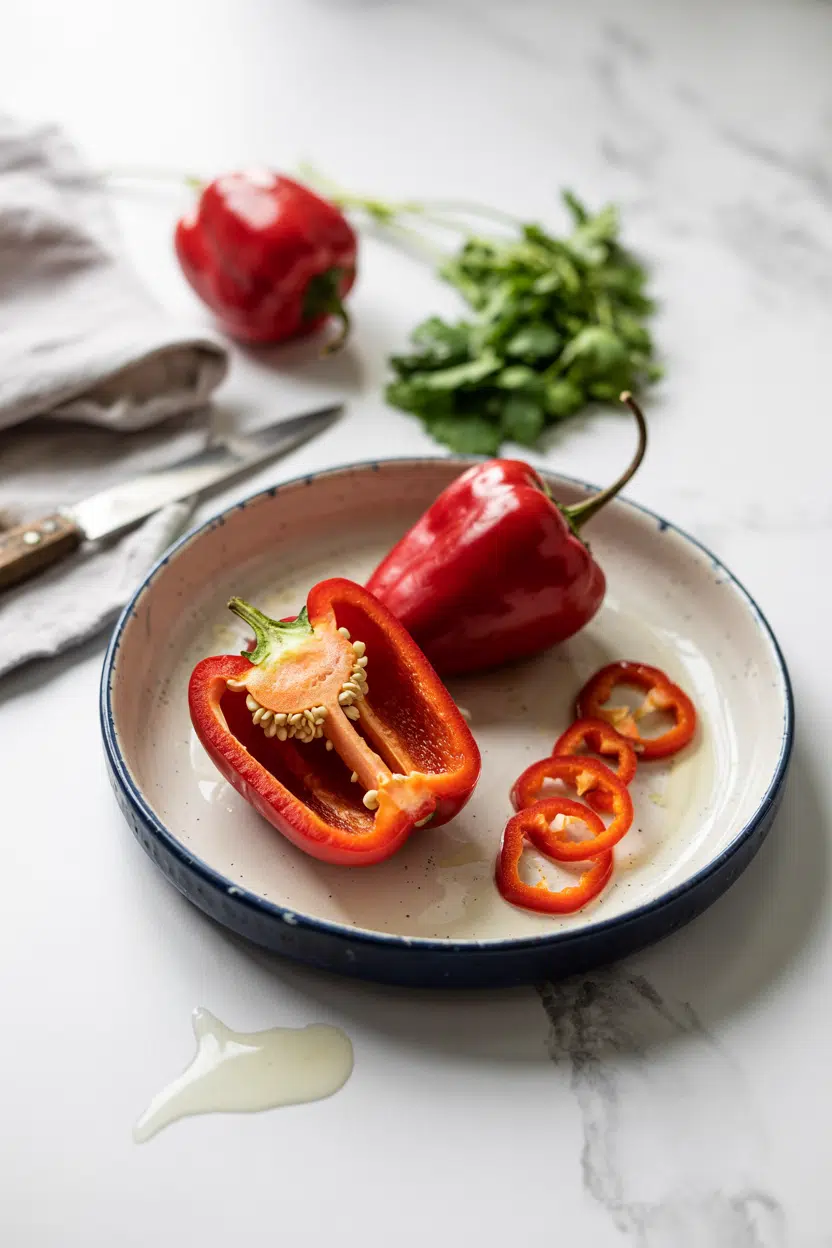
These small Spanish peppers arrive fully roasted and hand-peeled, ready to use in everything from tapas spreads to stuffed appetizers, and making spanish romesco sauce at home becomes noticeably easier with them on hand.
If you cook with smoked ingredients regularly, knowing your smoked paprika stand-ins is useful context for understanding what piquillos bring to a dish on their own.
The piquillo pepper is a small, heart-shaped Spanish pepper that is char-roasted, hand-peeled, and sold jarred or canned. It tastes sweet and mildly smoky with a bright acidic finish. Use it stuffed, blended, or served cold in tapas. Unopened jars last up to a year.
What Is Piquillo Pepper?
Pimiento del piquillo is a variety of sweet pepper native to northern Spain, cultivated primarily in Navarra and La Rioja. The name translates roughly to "little beak," a reference to the pepper's narrow, pointed tip. Unlike standard bell peppers, piquillos are small - typically 3 to 4 inches long - and heart-shaped, with a thin wall that crisps and blackens easily over a wood flame.
Remember it later
Planning to try this recipe soon? Save it for a quick find later!
Every commercial piquillo you'll find has been char-roasted and peeled by hand, a process that defines both its texture and flavor profile. They're packed in their own juices or olive oil, sometimes with a light brine.
The most prized designation is piquillo de Lodosa, a protected geographical indication (PGI) label tied to peppers grown in Lodosa, Navarra.
You won't often find them fresh outside Spain. Jarred piquillos - sometimes labeled pimiento piquillo - are the standard form, and they're sold at Spanish specialty shops, well-stocked grocery stores, and online.
- 🌍 Origin - Navarra and La Rioja, northern Spain
- 📐 Shape - Small, pointed, heart-shaped; 3-4 inches long
- 🏷️ Top designation - Piquillo de Lodosa carries a protected geographical indication
- 🫙 Standard form - Jarred or canned, already roasted and peeled
What Does Piquillo Pepper Taste Like?
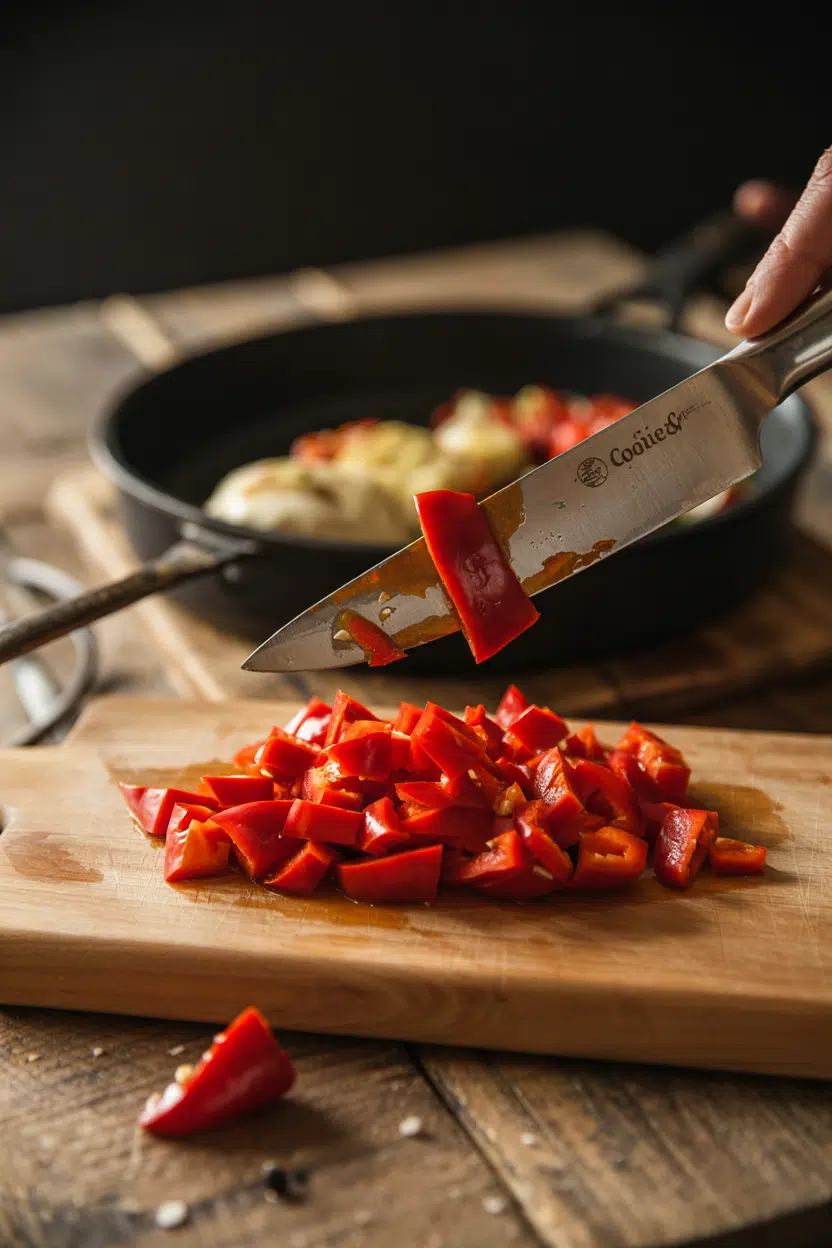
Piquillos taste closer to a roasted red bell pepper than anything else, but the comparison only goes so far. Sweeter and more complex, they carry a brightness - a mild acidic tang - that bell peppers don't develop even after roasting.
The smokiness is subtle, not aggressive. It's the kind of background note that keeps the flavor from reading as purely sweet, and it lingers briefly after each bite.
There's also a whisper of roasted caramel that emerges from the high-heat char, which gives piquillos a slight depth that jarred roasted bells rarely match.
Texture matters here too. Jarred piquillos are silky and yielding - meaty enough to hold a stuffing, but delicate enough to melt into a sauce.
Heat doesn't dramatically change the flavor, however it does soften them further and pulls the smokiness forward.
How to Use Piquillo Pepper
Spanish cooks in Navarre and the Basque region have built entire dishes around the piquillo. The most iconic is pimientos rellenos de bacalao - peppers stuffed with a creamy salt cod filling and baked until just set.
The pepper's thin wall holds the filling without overwhelming it.
Blending is equally common. Piquillos puree smoothly into sauces, spreads, and aioli, contributing color and a rounded sweetness. They work well paired with olive oil, garlic, and anchovy in tapas; layered cold on crostini with goat cheese; or folded into eggs.
| Method | Best For | Tip |
|---|---|---|
| 🥗 Cold / Jarred | Tapas, salads, crostini toppings | Drain well and pat dry before layering |
| 🍳 Pan-seared | Warming for side dishes or garnish | High heat, 60-90 seconds only - they color fast |
| 🫙 Stuffed and baked | Pimientos rellenos, appetizer plates | Fill loosely; overstuffing splits the skin |
| 🌀 Blended | Romesco-style sauces, aioli, dips | No need to peel further - they blend completely smooth |
Avoid pairing piquillos with strong anise or licorice-forward ingredients - those flavors overpower the pepper's gentle smokiness.
When you need a different pepper profile, there are piquillo pepper swaps that work if jarred piquillos aren't available.
For a broader look at substitution decisions, the guide on swapping out bell pepper helps clarify when a roasted sweet pepper can and can't do the same job.
How to Buy and Store Piquillo Pepper
Look for jars or tins labeled "piquillo" or, ideally, "piquillo de Lodosa" for the protected designation. The peppers should appear deep red and plump - avoid anything with cloudy packing liquid or shriveled flesh.
Fresh piquillos are rare outside Spain, however specialty markets occasionally stock them in late summer.
Unopened jars hold well in a cool, dark pantry.
For a full breakdown of timelines and signs of spoilage, check the guide on piquillo pepper's shelf life.
Jarred piquillos are gluten-free and low in calories, though sodium levels vary - worth checking if you're monitoring salt intake.
The oil used in packing adds fat content, and olive oil swaps that work can matter if you're transferring peppers to a fresh container.
Start With the Jar
If piquillos are new to you, the jar is the best entry point - no roasting, no peeling, no prep.
Drain a few, lay them over toast with goat cheese and a pinch of salt, and you'll understand immediately why Spanish cooks treat them as a pantry staple rather than a specialty item.
From there, try blending them into a quick sauce or using a seasoning with roasted red pepper hummus dip as a template for how piquillo puree behaves in dips. Their flavor earns the shelf space -
once you've used them, a pantry without a backup jar starts to feel like a gap.
Frequently Asked Questions
No. Piquillos are a sweet pepper variety with no significant heat. Occasionally a jar will contain one slightly hotter pepper due to natural variation, but as a category they register no detectable spice.
Piquillos are sweeter, smaller, and have a more pronounced smoky-tangy finish. Bell peppers have thicker walls and a milder, more watery flavor even after roasting.
Yes, with some trade-off. Jarred roasted red peppers work in most recipes but lack piquillo's smokiness and concentrated sweetness. The texture is also slightly softer and less meaty.
Kept submerged in oil in an airtight container, they last 5-7 days. Peppers stored in brine degrade faster - use those within 3-4 days and check for off smells before using.
It's a protected geographical indication (PGI) label for piquillos grown in Lodosa, Navarra. These peppers must meet strict standards for variety, cultivation, and hand-peeling - making them the most regulated and often highest-quality form available.



