
You spot a bottle of Pernod on the shelf - pale straw, that distinctive anise label - and wonder whether it belongs in your glass, your stockpot, or both.

The answer is genuinely both, and understanding what makes anise distinct helps explain why this French spirit punches well above its small-measure use in cooking.
Pernod sits closer to pastis than to sambuca, and if you've ever needed replacements for sambuca in a recipe, you've likely already brushed against this category.
Pernod is a French anise spirit with a licorice-forward, herbal flavor. Used in cocktails and cooking, it adds a sweet anise note to seafood, cream sauces, and vinaigrettes. Store sealed in a cool, dark spot and use within 12-24 months of opening.
What Is Pernod?
Pernod is a French anise-flavored spirit produced under the Pernod Ricard brand, sitting firmly in the pastis family of aperitifs rooted in Provençal drinking culture.
Remember it later
Planning to try this recipe soon? Save it for a quick find later!
Its key flavoring compound is anethole, the same molecule responsible for the characteristic taste in star anise and fennel.
The spirit runs at roughly 40% ABV, which places it in standard liqueur territory rather than high-proof digestif land.
Botanicals beyond star anise - including angelica root and citrus peel - give Pernod a more layered profile than a single-note anise extract would.
It's sometimes confused with pastis, ouzo, or sambuca, but each is distinct in origin and production. If you're navigating that confusion, our guide to ouzo swaps that work covers where these spirits overlap and where they don't.
- 🇫🇷 Origin - Provence, France; part of the pastis aperitif tradition
- Main botanical - Star anise (anethole compound)
- Supporting botanicals - Angelica root, citrus peel, fennel
- ABV - Approximately 40%, standard for the category
- Common aliases - Pastis-style liqueur, anise spirit; sometimes misspelled as "pernods"
What Does Pernod Taste Like?
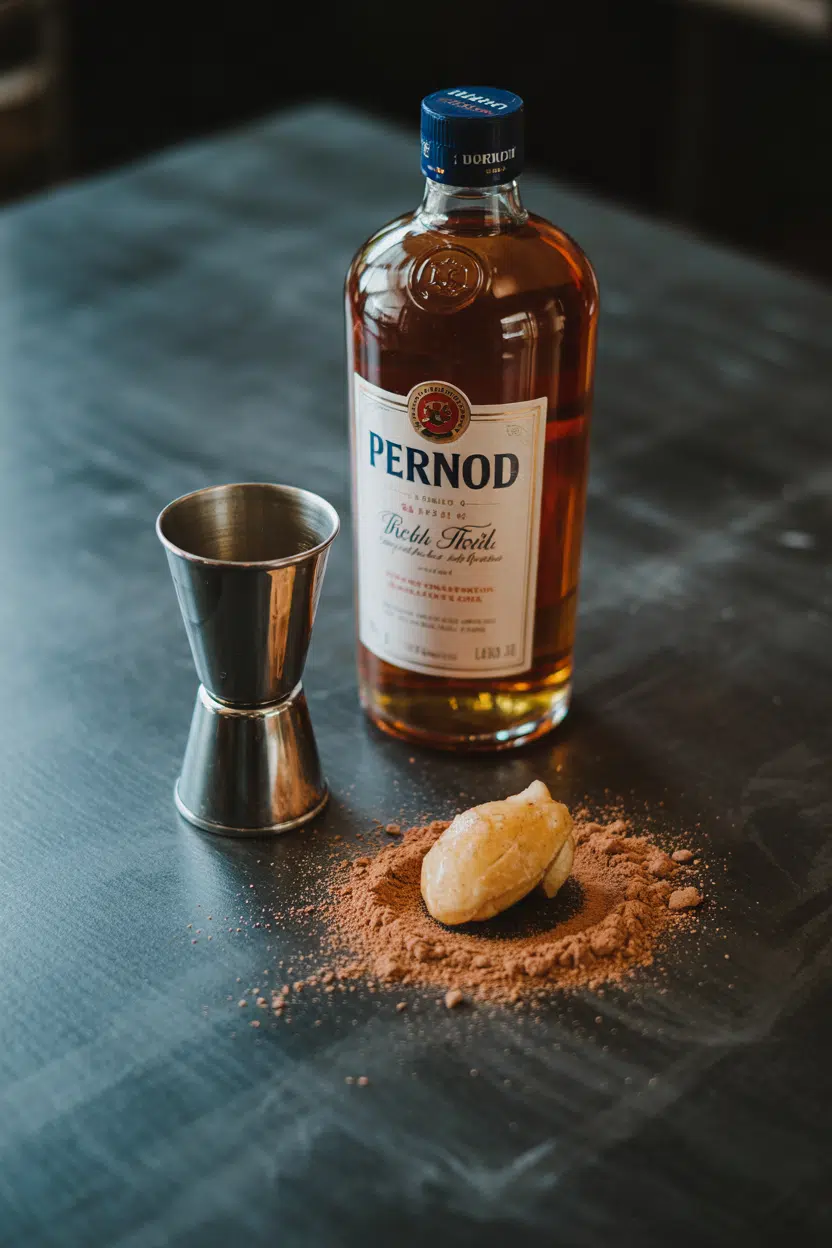
Pernod leads with licorice, full stop. The sweetness is present but not cloying - it reads herbal rather than candy-like, with fennel and angelica adding a subtle bitterness on the back end.
Heat changes it noticeably. In a hot pan during deglazing, the sharpest alcohol edges cook off quickly, leaving a rounded anise sweetness that melds with butter or cream far better than the raw spirit suggests.
Served neat or diluted with water, it goes pleasantly cloudy - the louche effect - and the flavor softens considerably.
Compared to sambuca it's less syrupy, and compared to ouzo it's more herbal with less raw alcohol heat. Pastis is its closest relative - see our replacements for pastis if you need a direct swap in either direction.
How to Use Pernod
Pernod earns its place in French coastal cooking because anise and seafood have a natural affinity.
The spirit lifts briny flavors without masking them, which is why a small splash goes into bouillabaisse near the end of cooking rather than at the start.
| Method | Best For | Tip |
|---|---|---|
| 🔥 Deglazing | Mussels, clams, white wine sauces | Add off heat briefly, then return to flame to cook off alcohol |
| 🍳 Flambé | Shrimp, scallops, pork medallions | Warm gently first; cold spirit flambés unevenly |
| 🥘 Finishing splash | Bouillabaisse, cream sauces for veal | Stir in at the very end - heat kills aroma if added too early |
| 🥗 Vinaigrette | Fennel salads, citrus-dressed dishes | A few drops balance a sharp lemon base |
| 🍹 Cocktail base | Ricard-style aperitifs, anise spritzes | Dilute 1:5 with cold water; add ice after dilution |
Pernod pairs especially well with fennel, orange, and black pepper - combinations that echo its own botanical makeup. For mussels specifically, it slots into white-wine broth cleanly, and the pairing ideas for mussels on this site show how anise-forward sides reinforce that broth character.
When you need a swap mid-recipe, pernod swaps that work covers the closest functional alternatives.
How to Buy and Store Pernod
At the store, look for bottles labeled Pernod with a clear ABV around 40% and a pale straw color.
Avoid bottles with murky sediment unless the label explicitly credits natural botanicals - cloudiness in an unopened bottle usually signals age or poor storage, not craft production.
Store upright in a cool, dark spot away from direct light; heat accelerates aroma loss faster than almost anything else. Full guidance on storing pernod correctly covers edge cases like partial bottles and long-term pantry storage.
- Unopened shelf life - Years, if the seal is intact and storage is cool and dark
- Opened shelf life - Best within 12-24 months; aroma fades after that
- Signs of decline - Flat anise, dull color, weak louche when water is added
Where to Start with Pernod
Pernod is a single-bottle answer to a range of Provençal cooking needs, but it doesn't belong in every dish.
Start with mussels or a cream sauce for pork - those two uses show off what the spirit actually does without requiring much technique.
If you're making a fish stew and wondering about bouillabaisse's shelf life after cooking ahead, note that a Pernod-finished broth holds its flavor about as well as one without - the alcohol cooks off and doesn't affect storage.
One bottle, used with restraint, goes a long way.
Frequently Asked Questions
Not exactly. Both are French anise spirits, however Pernod uses a slightly different botanical blend and has a cleaner, less aggressively sweet profile than some traditional pastis styles. Ricard is the pastis most often compared directly to Pernod.
Yes, and it's one of its strongest uses. A tablespoon or two deglazes seafood pans, finishes cream sauces, or adds anise depth to bouillabaisse. The alcohol cooks off quickly, leaving only the herbal-anise flavor.
Pernod is flavored with star anise, not licorice root, though the two share the same anethole compound - which is why they taste similar. Traditional absinthe used wormwood alongside anise; modern Pernod skips wormwood entirely.
Very strong neat, but water tames it fast. The standard French serve is one part Pernod to five parts cold water, which drops the intensity to a soft, herbal drink. In cooking, even less is needed - start with one tablespoon.
Pastis or a dry anise-flavored spirit works closest in cooking applications. For alcohol-free substitutions, a small amount of fennel frond juice or star anise-steeped water can stand in for the anise note, though intensity will be lower.



