
Crack open a fresh jar and that warm, toasty hit reaches you before the spoon does. Peanut butter carries a roasted earthiness that sits somewhere between a dry-roasted peanut and a more refined nut paste - recognizable, grounding, and surprisingly complex once you start cooking with it.

It works equally well spread cold on bread or whisked into a hot Thai-style sauce, and using peanuts for creaminess explains why the ground paste adds body to dishes in a way whole nuts simply can't.
Whether you're debating natural versus stabilized or figuring out how far a jar will take you, this guide covers the full picture.
Peanut butter is a roasted-nut spread with a rich, earthy flavor, moderate intensity, and a texture ranging from silky smooth to coarsely crunchy. Natural varieties offer purer flavor; stabilized commercial jars trade complexity for convenience. Both work across baking, sauces, and savory applications.
What Is Peanut Butter?
Peanut butter is a ground nut paste made by roasting peanuts and milling them until the natural oils release and bind the solids into a cohesive spread.
Remember it later
Planning to try this recipe soon? Save it for a quick find later!
Its roots trace back to pre-Columbian South America, where peanuts were first domesticated in the Andes, though the modern jarred product was commercialized in North America in the late nineteenth century.
Two main forms exist in most kitchens. Natural peanut butter contains only peanuts (and sometimes salt) -
the oils separate and float to the top when the jar sits undisturbed, which signals no added stabilizers. Stabilized commercial versions use partially hydrogenated or fully hydrogenated oils to keep the spread homogeneous straight from the shelf.
Beyond those two camps, texture creates further distinctions:
- 🥜 Creamy / smooth - finely milled, no peanut pieces; best for sauces and baking where texture uniformity matters
- 🥜 Crunchy / chunky - creamy base with chopped peanut pieces folded in; adds bite to cookies and sandwiches
- Powdered peanut butter - defatted peanut flour pressed into powder; lower calories, dissolves easily into smoothies or sauces
- Peanut paste - often darker, less sweetened, and less processed than commercial spreads; common in African and Southeast Asian cooking
You may also see it labeled groundnut paste or peanut spread, depending on the country of origin.
What Does Peanut Butter Taste Like?
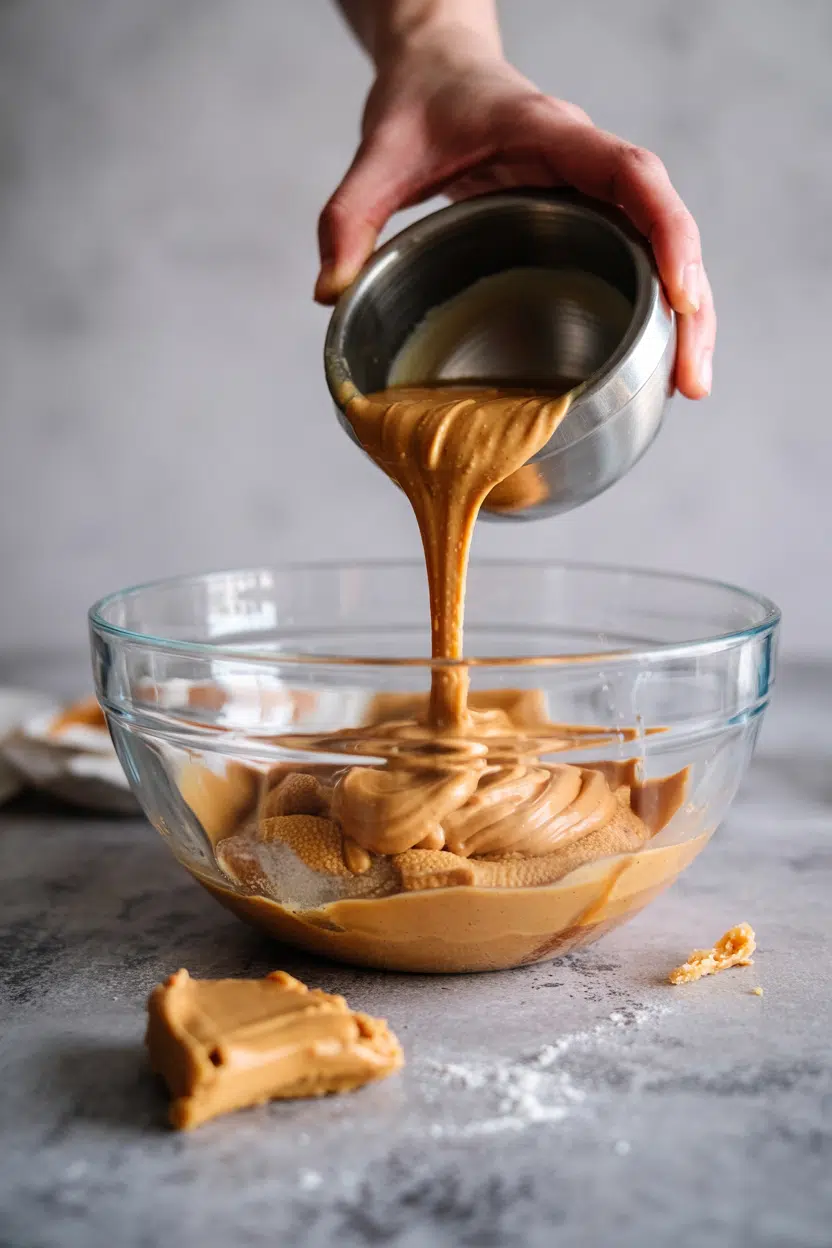
The dominant note is warm, roasted nuttiness - a flavor built from the Maillard reaction during roasting, which develops earthy, slightly caramelized tones you don't get from raw peanuts.
Salted varieties layer in a savory contrast that amplifies the roast.
Sweetened commercial jars push the profile toward candy-adjacent, while unsweetened natural versions let a mild, almost bitter edge from roasted skins come through.
Compared to other nut pastes, it sits close to toasted almond butter or hazelnut paste in richness.
The difference is in the peanut-specific savory quality - a pronounced earthiness that almond and hazelnut spreads don't fully match.
Heat intensifies the roasted notes; cold dulls them slightly, which is why peanut sauce made with warm liquid tastes noticeably deeper than one stirred together cold.
How to Use Peanut Butter
Peanut butter moves between sweet and savory with very little effort, which is part of why it appears across so many distinct food cultures.
In American kitchens, the classic application is the PB&J - peanut butter on bread, paired with jam - and it also shows up folded into cookie and brownie batters for dense, nutty baked goods.
For baking applications where you need a fat substitute, butter swaps that work can inform how peanut butter stands in for other fats when you want added flavor.
In Thai and Southeast Asian cooking, it's whisked with soy sauce, lime, and chili into satay dipping sauce or cold noodle dressings. West and Central African groundnut stews use peanut paste as a thickener and flavor base - a very different technique from the Western sandwich spread.
Caribbean cooks use it in peanut-based sauces and snacks where the earthy base grounds sweeter or spicier elements.
| Method | Best For | Tip |
|---|---|---|
| 🥗 Spread | Toast, sandwiches, crackers | Room-temperature butter spreads without tearing bread |
| 🍳 Stirred into sauce | Satay, noodle dressing, groundnut stew | Add off-heat; thin with warm broth or coconut milk |
| 🫙 Baked in | Cookies, brownies, blondies, bars | Use creamy for even dispersion; crunchy adds texture pockets |
| 🥤 Blended | Smoothies, oatmeal, ice cream base | Powdered peanut butter blends cleaner without fat separation |
| 🍗 Glazed | Roasted chicken or pork | Mix with soy and honey; apply in the last 15 minutes of roasting |
Strong pairings include chocolate, jam, banana, chili or sriracha, honey, soy sauce, and rice vinegar.
If your dish calls for a different nut spread, a quick look at alternatives to peanut butter lays out what substitutes hold up in both sweet and savory contexts.
Avoid using it near delicate fish - the roasted, fatty profile overwhelms mild white fish without exception.
How to Buy and Store Peanut Butter
At the store, check the ingredient list first.
A natural peanut butter should list only peanuts - or peanuts and salt.
If you see hydrogenated oils, sugar high on the list, or multiple stabilizers, you're buying a sweetened commercial spread, which behaves differently in recipes.
For commercial stabilized jars, look for even color and no pooled oil under the lid, which can signal age.
Storage splits along type:
- Unopened commercial jars - pantry, up to 9-12 months; no refrigeration needed
- Opened natural peanut butter - refrigerate immediately; good for 1-3 months; stir before each use
- Opened stabilized commercial jars - pantry is fine for 3-6 months; refrigerating extends that further
Know the peanut butter spoilage signs before relying on a jar that's been sitting open for a while - off smell, grayish color, or a very dry, crumbly texture all signal the oils have oxidized.
Where to Start With Peanut Butter
If you've only ever used it in sandwiches, start with a simple peanut sauce - equal parts peanut butter, soy sauce, and lime juice, thinned with warm water.
That single test reveals how the roasted notes shift when acid and salt enter the picture.
From there, the divide that matters most is natural versus stabilized.
Natural gives you purer flavor in sauces and savory dishes.
Stabilized commercial versions hold their texture better in baked goods and don't require refrigeration.
Pick based on how you cook, not just what's familiar.
Just as replacements for cashew butter hinge on how the butter is being used, the same logic applies here - context drives the choice.
Frequently Asked Questions
Oil separation happens in natural peanut butter because there are no stabilizers binding the oils to the solids. Gravity pulls the liquid peanut oil to the top over time. Stirring before use recombines them; storing the jar upside-down slows separation between uses.
Natural peanut butter tastes more intensely roasted and earthy, with a subtle bitter note from peanut skins. Commercial stabilized versions taste milder, sweeter, and slightly saltier due to added sugar and salt smoothing out the sharper edges.
Yes - peanut butter freezes well for up to 6 months without significant texture or flavor loss. Thaw it in the refrigerator overnight; natural varieties may need a stir after thawing as some oil can separate during the freeze-thaw cycle.
Peanut paste is typically coarser, darker, and less sweet than commercial peanut butter - it's closer to a pure ground-peanut product. Peanut butter, especially stabilized commercial versions, includes added oil, sugar, and salt to produce a smoother, milder, shelf-stable spread.
It provides about 7-8 g of protein and substantial monounsaturated fats per two-tablespoon serving, along with vitamin E and magnesium. Natural varieties with no added sugar or hydrogenated oils offer the cleanest nutritional profile, though all forms are calorie-dense.



