Peach schnapps does one job in a glass - it pulls bright, candied stone-fruit sweetness into any drink it touches, doing what brandy swaps that work and vodka swaps that work cannot quite replicate on their own.

It's the reason a Fuzzy Navel tastes like a ripe summer peach rather than just orange juice with a kick. Few liqueurs carry that immediate, recognizable fruit hit as cleanly - and that specificity is exactly what makes it worth understanding.
Peach schnapps is a sweet, peach-flavored liqueur made from neutral spirit infused with peach extract or natural flavors. It tastes like candied peach syrup with a soft alcoholic edge, runs moderate intensity, and works best in fruity cocktails, glazes, and quick fruit macerations.
What Is Peach Schnapps?
Peach schnapps is a fruit-flavored liqueur that originated in the schnapps tradition of Central Europe - specifically Germany and Switzerland - where distillers made dry, spirit-forward fruit brandies.
Remember it later
Planning to try this recipe soon? Save it for a quick find later!
The American and modern commercial version took a different turn, becoming much sweeter and more candy-like than its European forebears.
Most bottles you'll find today are made by infusing a neutral grain spirit with peach extract or natural peach flavoring, then sweetening the blend with added sugar.
A smaller number of premium products use actual distilled peach mash as the base, which delivers a more genuine stone-fruit character.
It also goes by the names peach liqueur and sometimes simply "peach schnapps liqueur," with the spelling alternating between schnapps and schnaps depending on the brand's origin.
ABV typically sits between 15% and 20%, which puts it below most spirits but well above wine. That moderate alcohol level matters - it's strong enough to carry cocktails but mild enough that a splash doesn't overpower a drink.
- 🍑 American-style schnapps - sweetened, extract-based, syrupy; the dominant commercial category
- 🌿 European-style schnapps - drier, distilled from fermented fruit, lower sugar content
- ✨ Premium peach liqueur - uses real peach distillate, labeled as "peach brandy" or "crème de pêche" in some markets
What Does Peach Schnapps Taste Like?
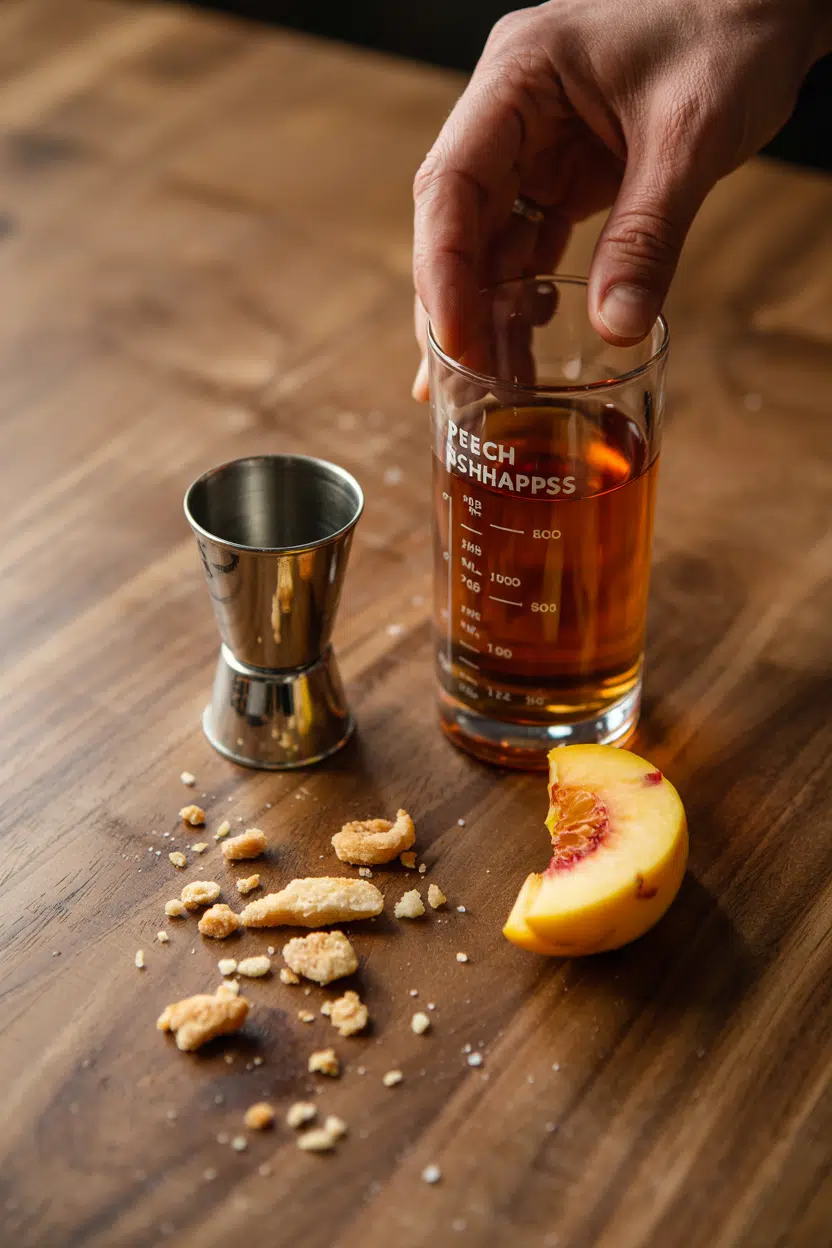
The clearest way to understand the flavor is to picture peach nectar mixed with simple syrup, then add a soft alcoholic warmth at the back of the throat.
The sweetness hits first - unmistakably candy-like, closer to canned peach syrup than a fresh-picked fruit.
Some brands carry a faint almond or marzipan note, which comes from trace compounds in the peach pit.
That subtle bitterness keeps the sweetness from feeling flat.
Heat softens the alcoholic edge and lets the fruit character come forward, which is why a warm peach glaze on grilled fruit smells more genuinely peachy than the liqueur does straight from the bottle.
On the palate, the body is smooth and slightly oily - syrupy without being thick. Chilling it in a cold cocktail sharpens the fruit note and reduces the sweetness perception just enough to make it more drinkable.
How to Use Peach Schnapps
Cocktail work is the primary role.
Peach schnapps mixes cleanly with orange juice and citrus - the brightness of the citrus cuts through the sweetness and creates contrast.
The Fuzzy Navel is the textbook example.
For something more layered, try making bellini prosecco peach at home, where a small pour floated into sparkling wine creates a lightly peachy aperitif without overwhelming the bubbles.
It also pairs well with vodka and light rums, which provide a neutral mixing base - the replacements for rum in a fruity cocktail often shift the flavor profile enough that you'll notice the peach schnapps working harder.
Ginger beer adds spicy balance when you want complexity beyond sweetness.
Outside the bar, peach schnapps earns a place in the kitchen.
A quick pour over cut fruit macerates it in minutes, drawing out natural juices with a candy-peach boost.
Brushed onto grilled peaches or nectarines during the final minutes of cooking, it builds a light glaze that caramelizes at the edges.
Use it sparingly in dessert applications - poached fruit, ice cream sauces - because the sugar content climbs fast.
| Method | Best For | Tip |
|---|---|---|
| 🍹 Mixing | Cocktails, shooters, sparkling wine additions | Start with 1 oz; adjust for sweetness preference |
| 🔥 Glazing | Grilled peaches, nectarines, fruit skewers | Brush on in the last 2-3 minutes to avoid burning |
| 🍑 Maceration | Fresh stone fruit, berry mixes, fruit salads | 15-30 minutes is enough; longer dulls fresh fruit flavor |
| 🍨 Sauce | Ice cream topping, poached fruit finishing | Reduce gently with butter to temper sweetness |
How to Buy and Store Peach Schnapps
Read the label before you buy.
A bottle listing real peach distillate or natural flavors will taste noticeably cleaner than one built purely on artificial extract.
Color is also a signal - some peach schnapps is clear, while others are amber-tinted from added coloring or an aged base spirit.
Neither is automatically better, however, so match your choice to the application: clear bottles tend to look cleaner in layered drinks.
Once opened, keep the cap tight and use it within 1-2 years for peak aroma. Unopened bottles hold well for several years without meaningful flavor loss.
If you're wondering about freezing peach schnapps, the sugar and alcohol content keeps it from freezing solid at standard freezer temperatures, which some bartenders use as a chilling trick.
Start with a Cocktail, Then Branch Out
If peach schnapps is new to your shelf, a Fuzzy Navel or Sex on the Beach is the right entry point - simple ratios, immediate payoff.
From there, try it as a glaze on grilled peaches where the sugar concentration becomes an asset rather than a challenge.
When swapping out peach schnapps isn't an option and you need to understand how the sweetness compares to other liquids, checking out the differences between agave vs simple syrup can help you calibrate balance in a recipe.
Keep one bottle on hand for summer - it earns its place.
Frequently Asked Questions
Yes. Most commercial peach schnapps runs between 15% and 20% ABV. That's lower than spirits like vodka or rum but still well above wine or beer.
In practice, the terms are used interchangeably in most markets. Technically, "peach liqueur" covers a broader category including premium products like crème de pêche, while "schnapps" often signals the sweeter, extract-based American style.
Yes, in short applications. Glazing grilled fruit and macerating fresh stone fruit work well. Avoid long cooking times - the high sugar content burns before the alcohol cooks off properly.
Peach nectar with a small amount of simple syrup works in non-alcoholic applications. For cocktails, peach juice plus a neutral spirit covers most of the flavor without an exact match. Some bartenders use [apricot swaps that work](https://forkliftkitchen.com/apricot-substitutes/) when peach schnapps isn't available.
Refrigeration isn't required - the alcohol content preserves it at room temperature. A cool, dark cabinet works fine; just keep the cap tight to prevent the aroma from fading.