The jar is empty and the store is closed. Montasio cheese is a staple in risotto, polenta, and gratins because of its nutty flavor and smooth melt.
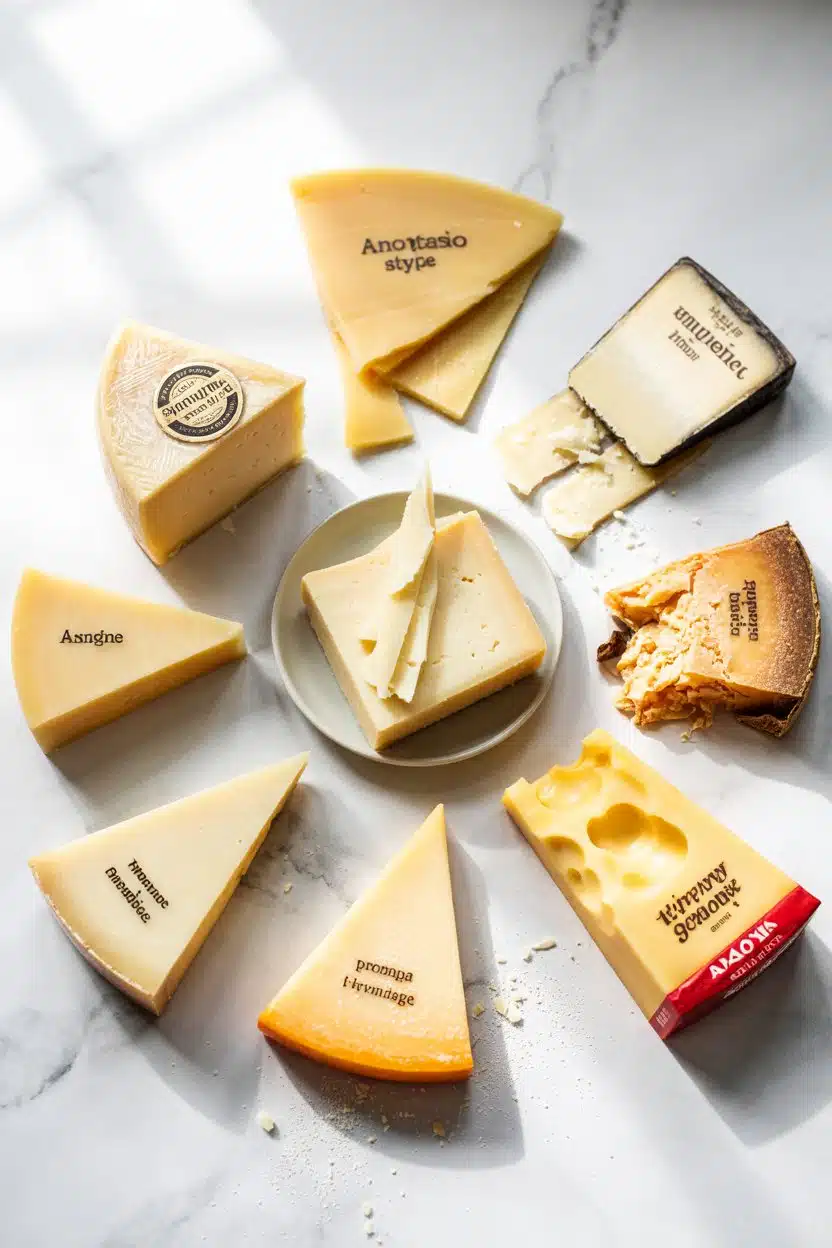
Not every Italian cheese behaves the same. Some melt smoothly; others have more bite.
The best swap depends on your recipe.
These seven alternatives cover most uses, from melting to grating.
Montasio melts smooth and savory, with a nutty finish that works in pasta bakes and panini. For cooking, match melt + salt first, then adjust sharpness so it stays balanced.
7 Best Montasio Cheese Swaps for Melting
Some of these swaps are close in texture, others in flavor. Start with the closest option for your dish, then adjust the amount as needed.
Remember it later
Planning to try this recipe soon? Save it for a quick find later!
| # | Substitute | Best For | Ratio | Key Note |
|---|---|---|---|---|
| 1 | Asiago Cheese | ✨ Both | 1:1 | Sharper and tangier |
| 2 | Provolone Cheese | 🍳 Cooking | 1:1 | Milder, creamier melt |
| 3 | Fontina Cheese | 🍳 Cooking | 1:1 | Buttery, earthy notes |
| 4 | Gruyère Cheese | 🍳 Cooking | 1:1 | Nuttier, sweeter profile |
| 5 | Aged Manchego | ✨ Both | ¾ cup | More intense, firmer |
| 6 | Parmesan | 🍳 Cooking | ⅔ cup | Much sharper, saltier |
| 7 | Monterey Jack | 🍳 Cooking | 1:1 | Much milder, creamier |
1 - Asiago
Asiago is sharper than Montasio, especially when aged. The nutty flavor is similar, but with a bit more bite.
It works well for grating over pasta, risotto, and polenta when you want a stronger flavor. Match the cheese to what your dish needs most-melting or grating.
Here's what to know:
- Ratio: Use 1:1 as a direct replacement for Montasio
- Best for: Grating over pasta, risotto, polenta
- Texture: Similar when young, firmer and grainier when aged
- Flavor: Sharper tang, more pronounced nutty notes
Use aged Asiago for a stronger taste. Young Asiago is milder and melts better.
Skip if: You need a very mild, delicate flavor that won't take over your dish.
2 - Provolone
Provolone melts more smoothly than Montasio. Its creamy texture is great for panini, casseroles, and gratins.
Young provolone is mild, while aged provolone picks up sharper, smoky notes. Choose based on the flavor you want in your dish.
Skip if: You need a hard grating cheese for finishing dishes at the table.
Fontina is creamier and more buttery, with earthy, mushroom-like flavors. It melts well for fondues and creamy sauces.
The texture is softer than Montasio. If you need that rich melt, Fontina is a solid choice.
Quick specs:
Skip if: Your recipe calls for a firm grating cheese that holds its shape.
Gruyère is nuttier and sweeter, with a bit of fruitiness. The texture is a little firmer, which works well in gratins and French onion soup.
It's best in cooked or melted dishes where you want more complex flavor.
3 - Fontina
Skip if: You want a classic Italian flavor for regional recipes.
Aged Manchego is more intense, with buttery and caramel notes. The texture is firmer and drier than Montasio.
- Ratio: Use 1:1 for melting applications
- Best for: Fondues, melted dishes, creamy sauces
- Texture: Creamier and more buttery than Montasio
- Flavor: Earthy, mushroom-like notes, less tangy
It's good for cheese boards and grating over vegetables and soups when you want something bolder. Start with less and add more to taste.
4 - Gruyère
Skip if: You want a milder cheese that blends in.
Parmesan is much sharper and saltier, with a crystalline texture. It has more umami than Montasio.
- Ratio: Use 1:1 in cooked and melted preparations
- Best for: Gratins, French onion soup, baked dishes
- Texture: Slightly firmer, melts smoothly
- Flavor: Nuttier, sweeter with fruity notes
It's best for grating over pasta, soups, and salads when you want a strong, salty flavor.
| Use | Ratio | Notes |
|---|---|---|
| Gratins | 1:1 | Melts smoothly, browns well |
| Fondues | 1:1 | Blends easily with wine |
| Grating | 1:1 | Firmer texture than Montasio |
5 - Manchego
Skip if: You need a cheese for melting or a mild flavor.
Monterey Jack is much milder and creamier, with a buttery sweetness. It doesn't have Montasio's tangy complexity.
Use it for quesadillas, nachos, and mild melting needs where you want the cheese to stay subtle. It's best for swapping in young, mild Montasio recipes that don't need nutty depth.
- Ratio: Use ¾ cup Manchego for every 1 cup Montasio
- Best for: Cheese boards, grating over vegetables and soups
- Texture: Firmer, drier, more crumbly
- Flavor: More intense, buttery with caramel notes
What to expect:
Add extra seasonings to boost the flavor. A pinch of garlic powder or dried herbs helps.
6 - Parmesan
Skip if: You need nutty depth or a firm cheese for grating.
Most of these swaps work without big changes to your recipe. The right choice depends on whether you're melting or grating.
Asiago is the closest match for both flavor and texture.
Skip if: You need something for melting applications or when mild flavor is required.
7 - Monterey Jack
Monterey Jack brings a much milder, creamier profile with buttery sweetness. It lacks the tangy complexity of Montasio.
Use this for quesadillas, nachos, and mild melting needs where you want the cheese to stay in the background. Works best when swapping for young, mild Montasio in applications that don't require nutty depth.
What to expect:
- Ratio: Use 1:1 for mild, young Montasio applications
- Best for: Quesadillas, nachos, mild melting needs
- Texture: Much creamier, softer melt
- Flavor: Buttery, mild, lacks complexity
Add extra seasonings to compensate for the milder flavor. A pinch of garlic powder or dried herbs helps.
Skip if: You need nutty depth or a firm grating texture that holds shape.
Making Montasio Cheese Substitutes Work
Most of these swaps work without major recipe changes. The right choice depends on grating, or serving at the table.
Start with Asiago for the closest match in both flavor and texture.
- Closest match - Asiago brings similar nutty notes
- Easiest grab - Provolone melts smooth and mild
- Bold alternative - Manchego adds caramel depth
Frequently Asked Questions
Mozzarella works for melting but lacks the nutty flavor and firmness. Use it in dishes where texture matters more than taste-pizza, baked pasta, or casseroles. Fresh mozzarella adds moisture; low-moisture versions melt closer to Montasio's consistency.
Asiago or Gruyère work best. Both melt smoothly and add nutty depth without overwhelming the dish. Use aged Asiago for sharper flavor or young Asiago for milder results. Gruyère brings a slightly sweeter note that pairs well with mushroom or butternut squash risotto.
Aged Montasio is milder and less salty than Parmesan. It has a smoother, less crystalline texture and more balanced nutty notes. Parmesan brings sharper umami punch and works better as a finishing cheese. Use Parmesan when you want intensity; use aged Montasio when you want subtlety.
Yes. Use Asiago, Fontina, or Gruyère for similar creamy results. Asiago matches the nutty flavor closest. Fontina adds buttery richness. Gruyère brings sweeter, fruity notes. All three melt smoothly into polenta without separating or turning grainy.
You likely used aged Asiago, Manchego, or Parmesan without adjusting the amount. These cheeses pack more intensity per ounce. Start with two-thirds of the recipe amount, taste, then add more if needed. Mixing a sharper cheese with a milder one like Monterey Jack balances the flavor.
7 Best Substitutes for Montasio Cheese
Ingredients
Method
- Choose your substitute based on your dish's needs: grating, melting, or serving.
- Prepare the substitute cheese appropriately by shredding or slicing as required for your recipe.
- Apply the suggested ratio when replacing Montasio: 1:1 for most cheeses, adjusting to ¾ cup for Manchego or ⅔ cup for Parmesan per cup of Montasio.
- When using sharper cheeses like Asiago, Manchego, or Parmesan, add gradually and taste-test to avoid overpowering your dish.
- In melting dishes, use creamier cheeses like Fontina or Provolone for a smooth texture, and for grating, use firmer cheeses like Asiago or Parmesan.
- Adjust seasoning or add herbs to milder cheeses like Monterey Jack to compensate for less complex flavor.
- Finalize by tasting your dish to ensure balance and consistency before serving.