
Open a tin of milk powder and the scent that rises is unmistakably dairy - warm, faintly sweet, with a subtle cooked-cream note that fresh milk never quite delivers.

That concentrated character is exactly what makes it useful far beyond emergency pantry backup.
Bakers add it dry to enrich bread dough; confectioners rely on it for stable ganache; South Asian cooks fold it into burfi and peda where it becomes the structural backbone of the sweet.
If you're already navigating shelf-stable dairy, understanding sweetened condensed milk stand-ins or buttermilk powder swaps that work gives you a clearer picture of where milk powder sits in that landscape.
Milk powder is dehydrated dairy - liquid milk reduced to a fine, shelf-stable powder via spray or drum drying. It tastes like concentrated, slightly cooked milk, reconstitutes easily with water, and works both dry and liquid in a wide range of recipes.
What Is milk powder?
Milk powder is liquid cow's milk with virtually all moisture removed, leaving behind milk solids - protein, fat, lactose, and minerals - in a dry, free-flowing form.
Remember it later
Planning to try this recipe soon? Save it for a quick find later!
Two main methods produce it: spray drying, which atomizes liquid milk into a hot-air chamber and is the global standard, and drum drying, which presses milk onto heated rollers and yields a slightly coarser product.
Several distinct types exist, and the label matters for cooking:
- 🥛 Nonfat dry milk (NFDM) - Fat removed; longest shelf life; standard for baking and protein shakes.
- 🧈 Whole milk powder (WMP) - Full fat retained; richer flavor with nutty caramel notes; shorter shelf life due to fat oxidation.
- ⚡ Instant milk powder - Agglomerated particles for faster, lump-free dissolution; the type most commonly sold for household drinking use.
It's also sold under the names powdered milk and, in industrial contexts, NFDM or WMP. Unlike evaporated milk, which retains moisture, milk powder is fully dry and shelf-stable at room temperature until opened.
What Does milk powder Taste Like?
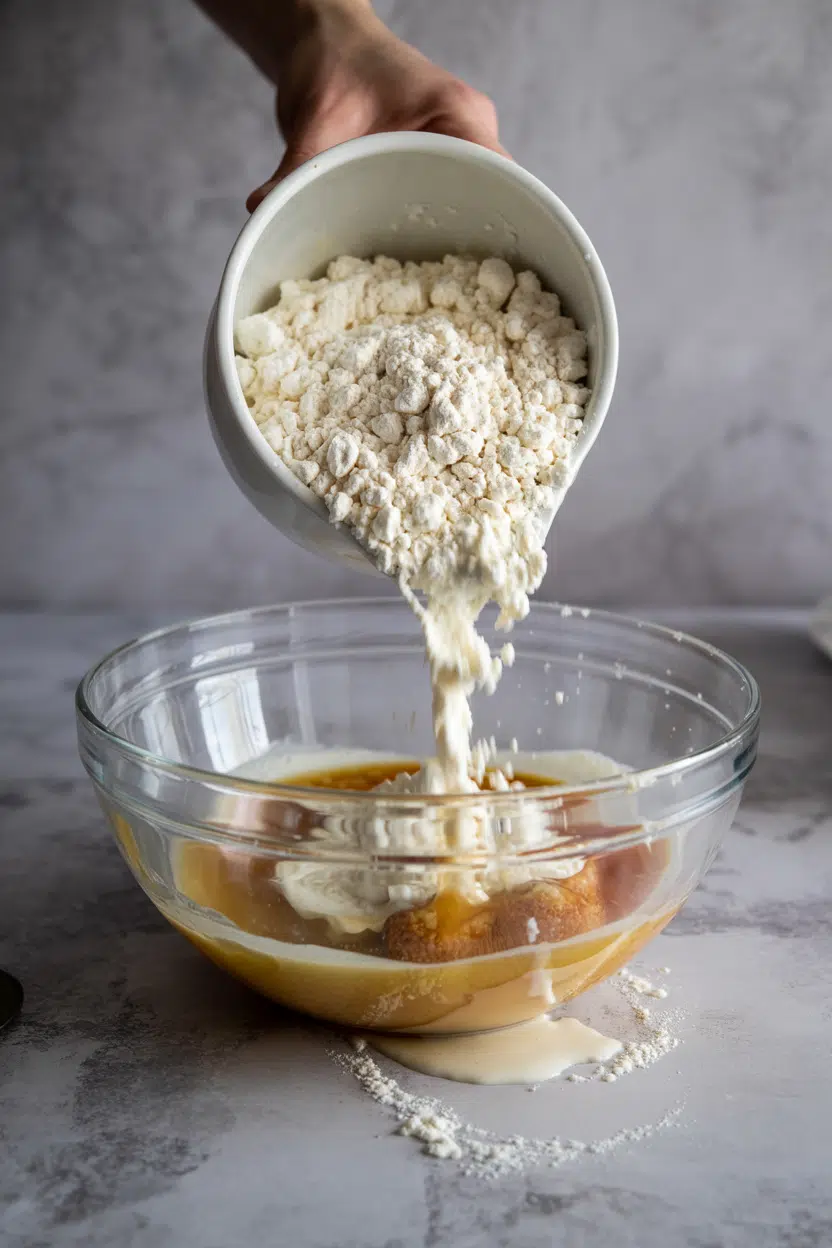
Reconstituted milk powder tastes like a slightly cooked version of fresh whole milk - the heat used in processing creates mild dairy-caramel notes that fresh milk lacks.
Think of it as sitting between fresh milk and evaporated milk on a flavor scale: more concentrated than the former, less intensely cooked than the latter.
Whole milk powder leans noticeably nuttier and creamier because its retained fat carries more volatile aromatic compounds.
Nonfat dry milk is cleaner and more neutral - useful precisely because it doesn't introduce extra flavor.
One important caveat: oxidized or stale milk powder develops a flat, cardboard-like taste that no amount of reconstitution will mask, which is why storage conditions matter as much as expiry date.
How to Use milk powder
Milk powder works in two distinct modes: dry, added directly to a mix, and reconstituted into liquid milk before use. Which route you choose changes both the texture and flavor contribution.
Adding it dry to bread dough is one of the most efficient applications - the lactose accelerates browning via Maillard reaction, and the casein and whey proteins tighten gluten structure without adding extra liquid.
The same logic applies to dry spice rubs and soup mixes, where it adds dairy body with zero moisture.
| Method | Best For | Tip |
|---|---|---|
| 🧂 Dry addition | Bread, cake batter, pancake mix, spice rubs | Sift in with dry ingredients; 2-4 tablespoon per cup of flour is standard |
| 💧 Reconstituted | Drinking, coffee, sauces, yogurt boosting | Use warm water (40-50°C) and whisk well; instant powder dissolves faster |
| 🍫 Bloomed in warm liquid | Ganache, chocolate tempering, confectionery | Whisk into warm cream or melted chocolate before adding other solids |
| 🥛 Boosted into dairy | Homemade yogurt, ricotta, paneer | Add 2-4 tablespoon per litre of fresh milk to increase solids and improve yield |
In South Asian sweets, whole milk powder is the primary ingredient in burfi and peda - cooked with ghee and sugar until the mixture forms a fudge-like mass.
When you don't have fresh milk on hand, swapping out milk entirely is also an option, but reconstituted milk powder handles most baking jobs cleanly.
It pairs naturally with cocoa, cardamom, cinnamon, butter, and yeast-based doughs.
How to Buy and Store milk powder
Start with the label. Instant milk powder dissolves fastest and suits everyday household use; NFDM works better for baking and protein applications; WMP delivers richer flavor for confectionery.
Before buying, check for visible clumping through the packaging - clumps signal moisture exposure, which degrades both flavor and solubility.
Storage follows the same principles as storing milk correctly in its liquid form: keep it away from heat, light, and moisture.
Unopened, NFDM lasts up to 24 months; WMP closer to 6-12 months due to fat oxidation.
After opening, transfer to an airtight container and use within 3-6 months.
Watch for the early milk powder spoilage signs - off aroma, yellow tinge, or persistent clumping - before using an older batch.
Start Here With Milk Powder
Not sure which type to reach for first?
Buy nonfat dry milk - it's neutral, lasts longer, and handles baking, yogurt, and reconstitution without adding fat variables.
Move to whole milk powder once you're making confectionery or South Asian sweets where the richer flavor matters.
If you're dairy-free or lactose-sensitive, this ingredient won't work for you - the is goat cheese lactose free guide is a good starting point for understanding which dairy products pose fewer issues, and milk powder stand-ins covers your best non-dairy alternatives.
Frequently Asked Questions
Yes - the two names refer to the same product. "Powdered milk" is the common consumer term; "milk powder" is more standard in commercial and industrial contexts. Both describe dehydrated milk solids regardless of fat content.
Most brands recommend 3-4 tablespoons of powder per 1 cup (240ml) of warm water. Check your specific package - instant varieties often dissolve at a lower powder-to-water ratio than regular NFDM.
Yes, and instant milk powder dissolves most reliably in hot coffee without clumping. The flavor is slightly sweeter and more cooked than fresh milk but works well in strong espresso or filter coffee where the difference is subtle.
Yes - reconstituted milk powder substitutes 1:1 for fresh milk in most baked goods. Added dry, it actually improves browning and structure in bread due to its concentrated lactose and protein content.
It does, though the timeline varies by type. Nonfat dry milk lasts up to 24 months unopened; whole milk powder degrades faster due to fat oxidation. The clearest spoilage signal is a flat, cardboard-like smell rather than a clean dairy scent.



