
Spoon marinara over a bowl of spaghetti on a weeknight and you're working with one of the most straightforward sauces in Italian cooking - crushed tomatoes, garlic, olive oil, and a handful of herbs brought together in under 30 minutes. That simplicity is the point.

Unlike a slow-cooked ragù, marinara sauce stays bright and acidic, letting good tomatoes do most of the work. It pulls double duty on a pizza base or alongside fried calamari just as easily as it coats pasta - and knowing how to pick, cook, and store it makes all the difference.
Marinara sauce is a short-cooked, tomato-forward sauce from southern Italy, built on crushed tomatoes, garlic, olive oil, and herbs. It's bright, lightly acidic, and intentionally simple - closer to a dressed passata than a heavy cooked sauce.
What Is Marinara Sauce?
Marinara sauce is a tomato-based sauce rooted in the Neapolitan and Campanian cooking traditions of southern Italy. The name likely traces back to la marinara - the sailor's wife - though some accounts connect it to preserved tomato sauces kept aboard ships for long voyages.
Remember it later
Planning to try this recipe soon? Save it for a quick find later!
At its core, it's crushed or pureed tomatoes cooked briefly with olive oil, garlic, and herbs like basil or oregano. That's the full ingredient list in most traditional versions.
It goes by a few names - sugo semplice, pomodoro marinara, or just marinara - but the category stays consistent: a fast, minimally cooked sauce that preserves the tomato's acidity and body.
It's worth distinguishing from a plain pomodoro sauce, which sometimes skips the garlic and herbs entirely, and from a slow ragù, which has a fundamentally different structure.
Several subtypes exist depending on region and preference:
- Classic Neapolitan - crushed San Marzano tomatoes, raw garlic slices, dried oregano, olive oil, finished with fresh basil
- Italian-American style - slightly longer cook time, often with more garlic and a pinch of red pepper flakes
- Chunky hand-crushed - whole peeled tomatoes broken by hand for a rustic, uneven body
- Smooth blended - passed through a food mill or blended for a saucy, uniform texture closer to passata
What Does Marinara Sauce Taste Like?
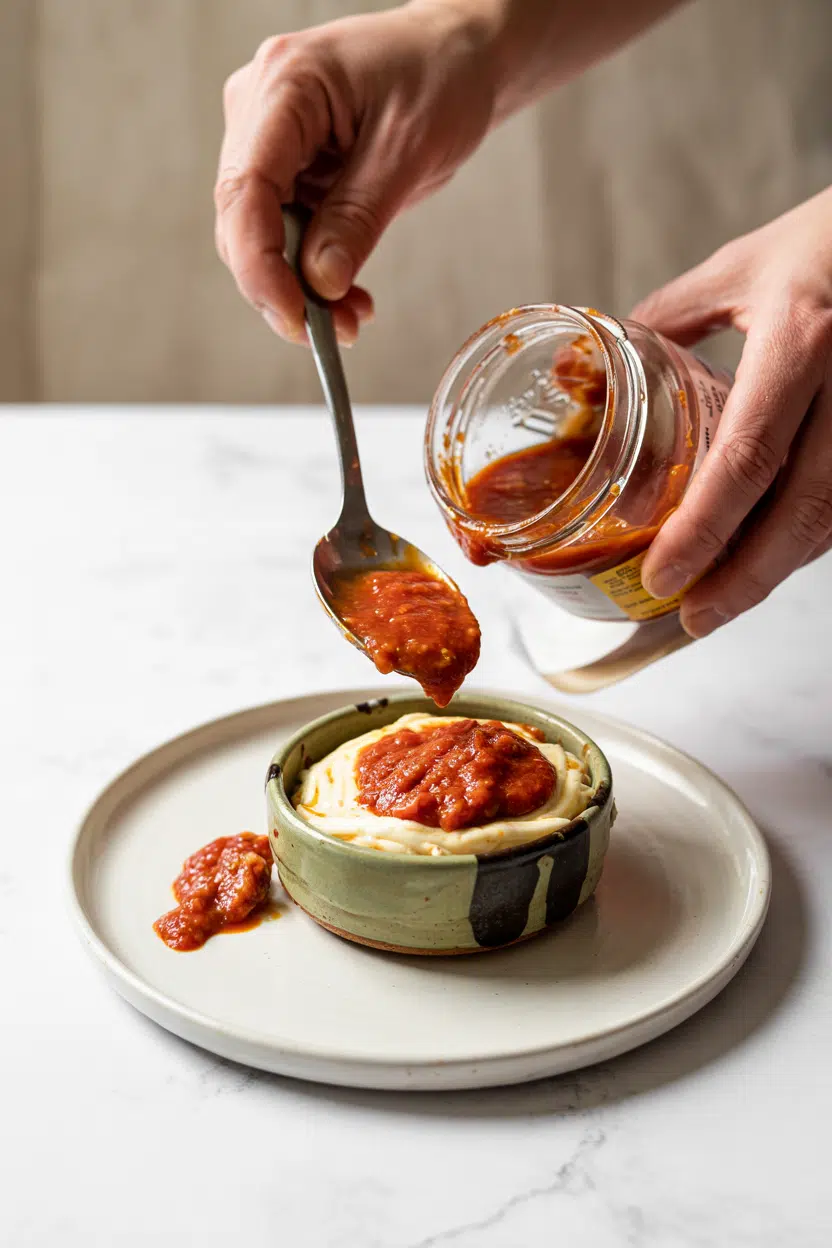
Marinara sauce tastes bright and tomato-forward, with a clean acidity that sets it apart from heavier cooked sauces. The tomato sweetness comes through without being sugary, balanced by the sharpness of raw or lightly sweated garlic and the mild herbal lift of basil or oregano.
Heat and cook time shift the profile noticeably.
A 10-minute simmer keeps the sauce lively and sharp; push past 30 minutes and the acidity rounds out, the garlic softens, and you lose some of that fresh-tomato character. Finishing with fresh basil off the heat - rather than cooking it in - preserves the herbal note that would otherwise cook away entirely.
How to Use Marinara Sauce
Marinara works across a wider range of dishes than most people use it for. The short cook time means it fits weeknight cooking without much planning, and its light body pairs with proteins and vegetables without drowning them.
The most direct use is spaghetti alla marinara - pasta tossed with the sauce and finished with good olive oil and fresh basil. Mozzarella on a pizza base needs a thin, not-too-wet layer of sauce, and marinara's restrained consistency works well there.
For something more substantial, braising mussels or clams directly in the sauce takes less than 15 minutes and gives the seafood a bright, garlicky broth to soak into.
| Method | Best For | Tip |
|---|---|---|
| 🥗 As-Is | Dipping calamari, garlic bread, mozzarella sticks | Warm gently; don't reboil or the texture thins |
| 🍳 Short Simmer | Pasta, pizza, polenta, chicken marinara | 10-20 minutes max to hold tomato brightness |
| 🦪 Seafood Braise | Mussels, clams, shrimp | Add shellfish directly to simmering sauce; cover and cook until opened |
| 🫕 Baked Dishes | Baked ziti, eggplant parmigiana | Use a slightly thicker batch - oven time will reduce it further |
Paired ingredients worth knowing: parmigiano-reggiano grated over the top adds a sharp, salty depth; anchovies or capers stirred in early create a richer umami base without making the sauce taste fishy. Roasted eggplant or zucchini folded in before serving keeps the sauce light while adding substance.
For full pairing ideas, side dishes for marinara sauce covers the options in detail.
How to Buy and Store Marinara Sauce
San Marzano tomatoes are the standard reference point for authentic marinara. They're lower in water content than most round tomatoes, with a thicker flesh and a natural sweetness that doesn't need correcting with added sugar.
For fresh tomatoes, choose deeply colored plum tomatoes with slight give at the stem end. Avoid any with green shoulders or mealy flesh - both signal underdevelopment and thin flavor.
Skip cans with dents along the seam or any visible bulging.
Storage is straightforward:
- Unopened cans - cool, dry pantry; shelf-stable for a year or more
- Opened or homemade sauce - airtight container in the fridge; use within 3-5 days
- Frozen sauce - portion into freezer bags flat; good for 3-4 months
For a full breakdown of marinara sauce freshness guide across storage conditions, including jarred commercial versions, see our dedicated guide. Jarred marinara varies significantly in sodium and added sugar content - check the label before buying if either matters to you.
Start Here for the Best Results
If you're making marinara for the first time, start with good canned tomatoes - that single choice matters more than technique. Crush them by hand into the pan for texture, sweat the garlic gently in olive oil before the tomatoes go in, and simmer for no more than 20 minutes.
Add the basil last, off the heat.
That version - four or five ingredients, under 30 minutes - is the benchmark. Once you have that down, the variations follow naturally.
Frequently Asked Questions
No. Marinara is a specific short-cooked style with garlic and herbs; plain tomato sauce is often cooked longer and may include onion, carrot, or celery. In Italian-American diners, "tomato sauce" sometimes refers to a heavier, slower-cooked version closer to a basic ragù base.
Ten to twenty minutes is enough for most versions. Longer cooking rounds the acidity and softens garlic, but it also fades the fresh tomato character that defines marinara. Stop simmering before it starts to taste flat.
Traditional marinara contains no meat - it's tomatoes, olive oil, garlic, and herbs. Some Italian-American recipes add anchovies for depth, but the sauce itself is plant-based and typically suitable for vegetarians.
DOP San Marzano tomatoes are the traditional choice for their low water content and thick flesh. High-quality canned plum tomatoes work well as a substitute - look for a short ingredient list with no added citric acid or puree padding.
Homemade marinara made from tomatoes, olive oil, garlic, and herbs contains no gluten. Jarred commercial versions are usually gluten free, but check the label for thickeners or modified starch that some brands add.



