
That first hit of lemon juice - sharp, clean, and almost electric on the tongue - is one of the fastest ways to wake up a dish that's fallen flat. Fresh-squeezed lemon juice does something no other acid quite replicates: it cuts richness, lifts sweetness, and signals freshness all at once.
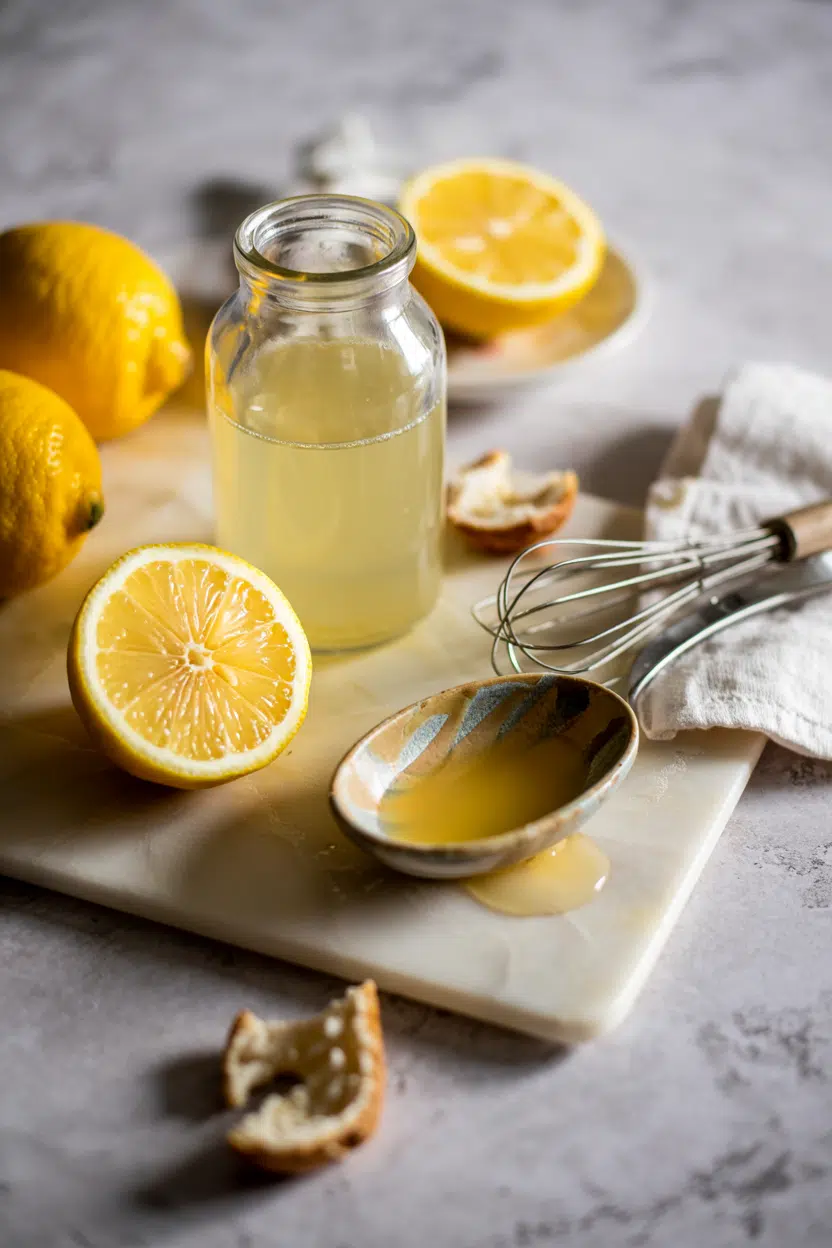
If you've ever reached for apple cider vinegar swaps that work when you ran out of lemons, you already know the gap.
This profile covers flavor, uses, and storage so you get the most out of every squeeze.
Lemon juice is a bright, strongly acidic citrus liquid used raw and cooked to add tang, balance fat, and prevent browning. It's a staple in Mediterranean, Middle Eastern, and Latin American cooking - and one of the most reliable finishing acids in any kitchen.
What Is Lemon Juice?
Lemon juice is the acidic, translucent liquid pressed from the pulp of Citrus limon, a small evergreen fruit tree with roots in Southeast Asia and a long cultivation history across the Mediterranean.
Remember it later
Planning to try this recipe soon? Save it for a quick find later!
It sits in the category of citrus juices alongside lime, grapefruit, and orange - though it stands apart for its high citric acid content, which gives it a sharper, more sustained sourness than most of its relatives.
The two most common commercial lemon varieties are Eureka and Lisbon, both producing juice with similar acidity. Meyer lemons, a hybrid, yield sweeter, lower-acid juice and aren't a straight swap in savory recipes.
You'll also see lemon juice listed as limón in Spanish-language recipes or juiced lemon in older cookbooks.
Worth noting: lemon extract is not the same product - it's an alcohol-based flavoring made from lemon oil, and comparing lemon extract vs lemon zest options shows exactly how they behave differently in baking.
Lemon juice is available freshly squeezed at home, sold as pasteurized bottled juice, or found as frozen concentrate. Fresh is the reference point for everything below.
What Does Lemon Juice Taste Like?
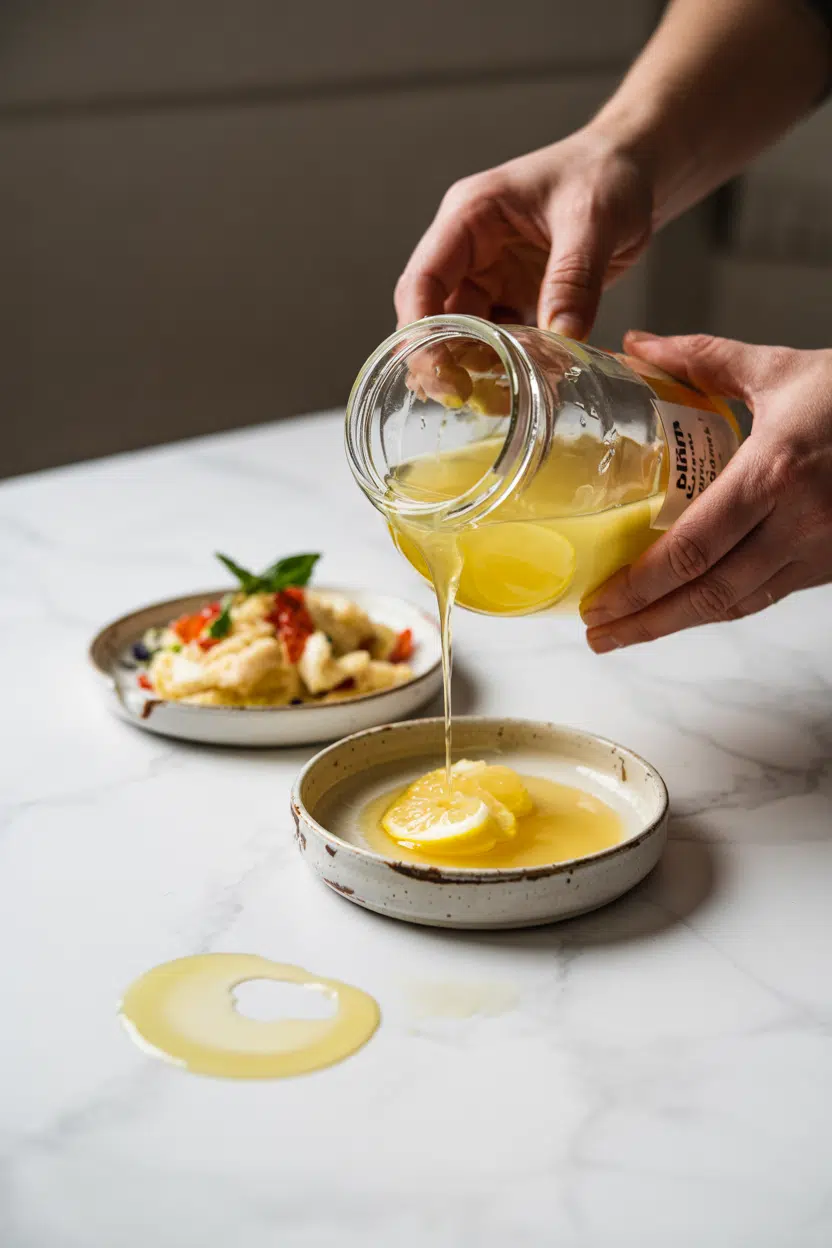
Lemon juice hits hard and fast. The dominant note is bright, sharp sourness - a clean citrus tang driven by citric acid at roughly 5-8% concentration in fresh juice.
Compared to lime juice, lemon is less floral and slightly less sharp. Against straight white vinegar, it's noticeably softer and more rounded - though still plenty acidic for balancing a rich dish.
Mild bitterness from the citrus peel oils can come through when lemons are over-squeezed or when the juice sits. Heat dulls the brightness noticeably, which is why most recipes add lemon at the finish rather than early in cooking.
How to Use Lemon Juice
Lemon juice earns its place at nearly every stage of cooking. Its primary job is acid balance - correcting dishes that taste flat, fatty, or overly sweet with a measured squeeze.
| Method | Best For | Tip |
|---|---|---|
| 🥗 Raw | Vinaigrettes, marinades, cocktails, dips | Whisk with olive oil immediately - it won't emulsify long without an emulsifier |
| 🍳 Finish | Soups, pan sauces, grilled proteins | Add off-heat or in the last 30 seconds to preserve brightness |
| 🧁 Baked | Lemon curd, cakes, tarts | Combine with eggs and butter carefully - high heat causes curdling |
| 🧴 Browning prevention | Avocado, cut apples, artichokes | Coat cut surfaces immediately; citric acid slows enzymatic browning |
In Mediterranean cooking, lemon juice pairs with olive oil and garlic constantly - in dressings, over roasted vegetables, or squeezed onto grilled fish to cut through its richness. Middle Eastern recipes rely on it to brighten hummus and tahini sauces.
In Greek avgolemono soup, it's stirred in at the finish with egg yolk for a silky, tangy broth.
Latin American cooks use it in marinades alongside chili and herbs.
Southeast Asian preparations sometimes call for lemon as a stand-in for lime - though if you need to go the other direction, a look at alternatives to lime juice can help you decide.
Lemon juice pairs well with honey, cream, parsley, soy sauce, and seafood.
It handles most kitchen duties where you'd reach for a mild acid, and knowing the replacements for lemon juice that hold up helps on the nights lemons run out.
How to Buy and Store Lemon Juice
At the store, weight matters more than size. A firm, heavy lemon with thin, glossy skin has more juice than a large, puffy one with thick rind.
Avoid any lemon with soft spots or dull, wrinkled skin.
For bottled lemon juice, check the ingredient list and choose pasteurized 100% lemon juice with no added preservatives if possible. It won't match fresh in brightness, however it's a reasonable backup for cooked applications.
Once squeezed, store the juice in a sealed glass container at the coldest part of your fridge - not the door.
Freshly squeezed juice holds well for 3-4 days before the flavor degrades.
The full breakdown of storing lemon juice correctly covers freezing options and when bottled juice genuinely holds up.
For browning prevention specifically, comparing fruit fresh vs citric acid options explains how lemon juice stacks up against commercial products.
Start With a Squeeze
Lemon juice is one of the last things you add and the first thing you'll miss when it's absent.
- 🍋 New to it? - Squeeze over grilled fish or roasted vegetables right before serving.
- 🥗 For dressings - Use a 3:1 ratio of olive oil to lemon juice as a base, then adjust.
- 🍲 For soups and stews - Add a small squeeze at the finish; taste before adding more.
- 🧪 For baking - Measure precisely - too much acid in curd or cake batter shifts the texture.
Fresh, used at the right moment, lemon juice does more work per drop than almost any other ingredient.
Frequently Asked Questions
Fresh lemon juice is the liquid extracted from the pulp of Citrus limon. Its sourness comes primarily from citric acid, which makes up 5-8% of the juice, along with water, small amounts of vitamin C, and trace sugars.
Lemon juice is less aggressive than white vinegar. White vinegar runs 5-8% acetic acid, which tastes sharper and more astringent; lemon juice's citric acid is perceived as softer and more rounded despite similar pH levels.
Yes, in most cases. Use a 1:1 swap in dressings, marinades, and sauces. The flavor shifts toward citrus rather than fermented tang, which changes the profile slightly but doesn't break the dish.
Fresh juice lasts 3-4 days refrigerated in a sealed glass container. After that, the bright citrus character fades and the juice takes on a flatter, slightly off flavor.
Yes. A single fluid ounce of fresh lemon juice provides roughly 14-18mg of vitamin C, about 15-20% of a typical daily target. Heat and prolonged storage both degrade vitamin C content noticeably.



