When you need a hands-off dinner that works for meal prep or a last-minute weeknight, Korean beef bulgogi delivers. One pan, minimal cleanup, and enough sweet-savory glaze to make plain rice taste worthwhile.

High heat sears the beef while the marinade caramelizes into a sticky coating. The thinly sliced ribeye or sirloin cooks in under 10 minutes.
Perfect for busy weeks when cooking feels like a chore but you still want something that looks intentional. This works for casual entertaining too-set out lettuce leaves and let people build their own wraps.
Korean beef bulgogi is thinly sliced beef marinated in soy sauce, sugar, garlic, and sesame oil, then seared over high heat until caramelized. The key is marinating at least 30 minutes and cooking in batches to get crispy edges instead of steamed meat. Pair it with rice and kimchi for a complete meal.
Why This Recipe Works
A good beef can make or break the plate. For a similar dinner recipe that uses different cuts, slow cooking works, but bulgogi relies on speed and surface area-thin slices mean more caramelization in less time.
Remember it later
Planning to try this recipe soon? Save it for a quick find later!
Prep Time
15 min (plus 30 min marinating)
Cook Time
5-7 min
Total Time
40 min
Servings
4 servings
Difficulty
Medium
Category
Main Dish
Quick Tip
Use very thin beef slices for fast cooking
Best For
Weeknight | Meal prep | Casual entertaining
Five reasons this bulgogi works:
- Sugar caramelizes the beef: The marinade's sugar content creates a shiny glaze and crispy edges without burning if you use medium-high heat
- Thin slices cook fast: ⅛-inch beef slices sear in 3-5 minutes, staying tender while developing charred spots
- Sesame oil adds depth: Adding it off heat preserves the nutty aroma instead of burning it away
- Garlic and soy build umami: The combination creates savory depth that makes plain rice taste intentional
- Marinating tenderizes: At least 30 minutes lets the soy sauce break down fibers while flavors penetrate the meat
What You'll Need
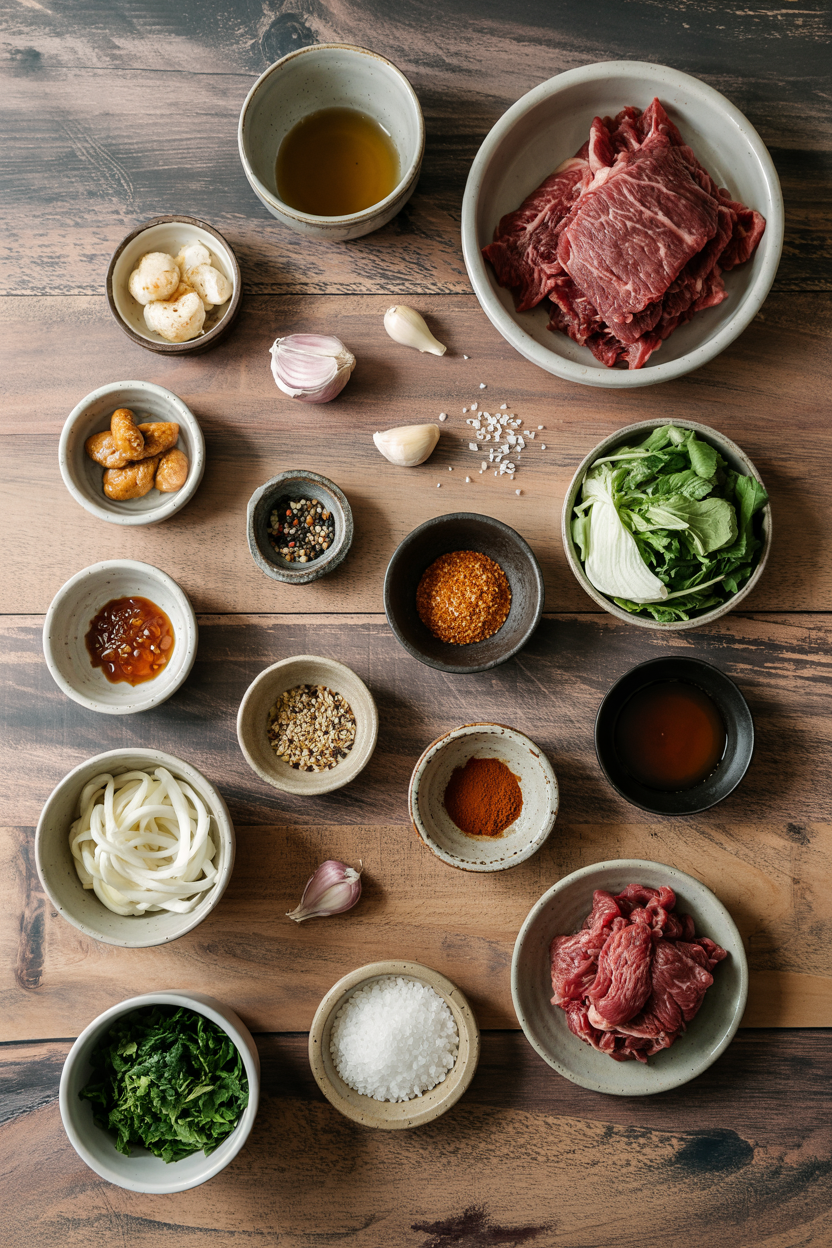
Most bulgogi shopping lists look the same. For simple homemade punch to serve alongside, you'll want drinks that don't compete with the sweet-savory beef-but first, the marinade ingredients matter more than the cut.
- 1½ lbs thinly sliced ribeye or sirloin beef
- ⅓ cup soy sauce
- 3 tablespoon sugar
- 2 tablespoon sesame oil
- 1 tablespoon neutral oil
- 6 cloves garlic, minced
- 4 green onions, sliced
- 1 small onion, thinly sliced
- 1 teaspoon ginger, minced (optional)
- ½ Asian pear or apple, grated (optional)
- ½ teaspoon black pepper
- 1 tablespoon toasted sesame seeds for garnish
Ingredient Details
- Thinly sliced beef (ribeye or sirloin)
Ribeye has more marbling and stays tender; sirloin is leaner but can dry out if overcooked-freeze 30 minutes before slicing for clean cuts - Soy sauce
Provides the savory backbone and tenderizes the meat-use low-sodium if you're watching salt intake, or swap for tamari for gluten-free - Sugar
Enables caramelization and balances the saltiness-brown sugar adds molasses depth, honey browns faster and can burn if heat's too high - Garlic
Fresh minced garlic gives pungent depth-jarred garlic works but tastes milder and slightly metallic - Sesame oil
Toasted sesame oil adds nutty aroma-add it after cooking off heat to preserve flavor instead of burning it away - Asian pear or apple
Grated fruit adds sweetness and natural enzymes that tenderize beef-skip if you don't have it, the marinade still works - Green onions
Adds mild onion flavor and freshness-slice white and green parts separately, add whites to marinade and greens as garnish
Ingredient Swaps
Bulgogi adapts to what's in your fridge. For fresh homemade salad recipe to serve alongside, cucumbers cut through the richness-but first, here's how to modify the marinade without losing the core flavors.
Four swaps that work:
- Soy sauce → tamari: Use 1:1 ratio for gluten-free version-flavor's nearly identical with slightly less sharp saltiness
- Sugar → honey or brown sugar: Swap equal amounts-honey caramelizes faster so watch for burning, brown sugar adds molasses undertones
- Ribeye → sirloin or flank steak: Use same weight but cook 1-2 minutes less-leaner cuts dry out faster and need careful monitoring
- Asian pear → apple or kiwi: Grate equal amount-kiwi tenderizes faster so marinate no more than 2 hours or meat gets mushy
Ribeye
Works for: Rich marbling keeps meat tender even if slightly overcooked
Skip if: You want leaner meat or lower fat content
Sirloin
Works for: Budget-conscious cooks who want less fat
Skip if: You tend to overcook-it dries out faster than ribeye
Chicken Thighs
Works for: Non-beef eaters who want similar texture
Skip if: You want authentic flavor-chicken needs longer marinating and different cook times
Instructions
Most people skip punch, but it balances the meal. For something crispy like fry to round out the plate, stir-fried vegetables work-but bulgogi itself takes only 5-7 minutes once the marinade's done its job.
Slice beef paper-thin: Freeze beef 30 minutes, then slice against the grain into ⅛-inch strips-uniform thickness ensures even cooking and prevents thick pieces from staying raw while thin ones overcook.
Mix marinade and marinate: Whisk soy sauce, sugar, garlic, ginger, sesame oil, black pepper, and grated pear in a bowl-add beef and sliced onion, toss to coat, cover and refrigerate minimum 30 minutes (up to 4 hours for deeper flavor).
Heat pan to medium-high: Warm cast-iron skillet or non-stick pan over medium-high heat with 1 tablespoon neutral oil until shimmering-pan must be hot before beef hits it or meat steams instead of sears.
Cook in two batches: Add half the beef in single layer, cook undisturbed 2-3 minutes until edges caramelize and turn deep brown-flip with tongs, cook 1-2 minutes more until no pink remains but meat stays juicy, then transfer to plate and repeat with remaining beef.
Rest and garnish: Let cooked beef rest 2 minutes off heat-sprinkle with sliced green onions and toasted sesame seeds, serve immediately over steamed rice with kimchi on the side.
What to Serve With It
A dollop of this dip takes each bite somewhere more interesting. For homemade dip recipe, hummus adds creamy contrast-but bulgogi needs sides that cut through the sweet-savory glaze without competing for attention. For more ideas on building a complete meal around hearty beef dishes, check out complete beef barley soup meal ideas.
| Side Dish | Prep | Why It Works | How to Serve |
|---|---|---|---|
| Steamed white rice | Easy | Neutral base soaks up glaze and balances saltiness | Serve hot in bowls, spoon bulgogi and sauce over top |
| Kimchi | Easy | Spicy fermented crunch cuts through richness | Serve cold in small dish on the side for contrast |
| Sautéed spinach or bok choy | Easy | Mild bitterness and freshness lighten the plate | Toss with garlic and sesame oil, serve warm alongside beef |
| Pickled radishes | Medium | Acidity and crunch refresh palate between bites | Slice thin, serve cold in small bowl as condiment |
| Lettuce leaves for wraps | Easy | Interactive eating and fresh crunch balance rich beef | Set out whole leaves, let diners build wraps with beef and rice |
Three ways to serve it:
- Rice bowls: Pile bulgogi over steamed rice, top with fried egg and kimchi for fast weeknight meal
- Lettuce wraps: Set out Boston lettuce leaves, cooked rice, bulgogi, and ssamjang for build-your-own wraps
- Meal prep: Pack bulgogi with rice and sautéed vegetables in containers for grab-and-go lunches
Store and Reheat
Bulgogi holds well for meal prep but texture changes with reheating. Store cooled beef in shallow airtight containers in fridge up to 3-4 days or freeze up to 1 month-separate rice from beef to prevent sogginess.
| Method | Time | Best For |
|---|---|---|
| 🍳 Stovetop | 3-5 min over medium heat | Small portions-quick reheating retains texture |
| 📦 Microwave | 1-2 min on medium power, covered | Single servings-fast but can toughen edges |
| 🔥 Oven | 10 min at 300°F (150°C) | Larger batches-gentle heat prevents drying |
For best results when storing:
- Cool completely before sealing: Hot beef creates condensation that makes meat soggy-spread on plate 10 minutes before packing
- Store sauce separately: Excess marinade makes beef mushy-drain before storing, save sauce in small container to drizzle when serving
- Reheat with splash of water: Add 1 tablespoon water or broth when reheating to restore moisture without making beef watery
- Freeze in single-layer portions: Spread cooled beef on parchment-lined sheet pan, freeze 1 hour, then transfer to freezer bag-prevents clumping
- Thaw in fridge overnight: Slow thawing preserves texture better than microwave defrost-plan ahead for best results
Frequently Asked Questions
Yes, flank steak works but slice it thinner than ribeye and marinate at least 2 hours-it's leaner and tougher, so longer marinating and careful cooking prevent dryness. Cook 1-2 minutes less than ribeye to avoid chewiness.
Store cooled bulgogi in airtight containers in fridge up to 3-4 days or freeze up to 1 month. Reheat on stovetop over medium heat 3-5 minutes with a splash of water to restore moisture-microwave works but can toughen the edges.
Bulgogi is done when the beef is no longer pink inside and edges turn deep brown with caramelized spots-thin slices cook in 3-5 minutes total. The meat should feel firm when pressed with tongs but still give slightly, not hard or bouncy.
Tough bulgogi usually means overcooking or slicing too thick-beef should be ⅛-inch thin and cooked no more than 5 minutes total. Marinating less than 30 minutes also causes toughness since the soy sauce doesn't have time to tenderize.
Yes, bulgogi scales easily-double all ingredients for 8 servings or halve for 2. When doubling, cook beef in 3-4 batches instead of 2 to avoid overcrowding the pan, which causes steaming instead of caramelization.
Korean Beef Bulgogi
Ingredients
Equipment
Method
- Freeze beef for 30 minutes to firm, then slice against the grain into ⅛-inch strips ensuring uniform thickness for even cooking.1.5 lbs beef
- Whisk together soy sauce, sugar, garlic, ginger, sesame oil, black pepper, and grated pear in a mixing bowl. Add sliced beef and onion, toss to coat. Cover and refrigerate for at least 30 minutes (up to 4 hours for deeper flavor).0.33 cup soy sauce, 3 tbsp sugar, 6 cloves garlic, 1 tsp ginger, 2 tbsp sesame oil, 0.5 tsp black pepper, 0.5 asian pear or apple, 1.5 lbs beef, 1 small onion
- Heat a cast iron skillet or non-stick pan over medium-high heat with 1 tablespoon neutral oil until shimmering to ensure it is hot before adding beef to avoid steaming.1 tbsp neutral oil
- Add half the beef in a single layer, cook undisturbed for 2-3 minutes until edges caramelize and turn deep brown, then flip with tongs and cook for 1-2 minutes more until no pink remains but beef is still juicy. Transfer to plate and repeat with remaining beef.1.5 lbs beef
- Let cooked beef rest off heat for 2 minutes. Sprinkle with sliced green onion tops and toasted sesame seeds. Serve immediately over steamed rice with kimchi on the side.4 green onions, 1 tbsp toasted sesame seeds
Notes
- Freeze beef before slicing to achieve thin, even strips.
- Cook beef in batches to avoid overcrowding and steaming; crispy edges develop with proper searing.
- Add sesame oil off heat to preserve its nutty aroma.