
Most people assume ketchup is just a basic table condiment - something you squeeze on fries without thinking.

That assumption causes it to get overlooked as a cooking ingredient, which is a mistake, since ketchup functions as a concentrated flavor shortcut in pan sauces, glazes, and baked dishes that tomato sauce swaps that work can rarely replicate with the same sweet-acid balance.
Ketchup is a thick, tomato-based condiment made from tomato concentrate, vinegar, sweetener, and spices. It delivers a sweet-tangy, mildly savory flavor at moderate intensity. Use it as a dipping sauce, sandwich layer, pan sauce base, or baked-in ingredient for ground beef dishes.
What Is Ketchup?
Ketchup is a smooth, pourable condiment built on tomato concentrate, distilled vinegar, a sweetener, salt, and warm spices such as onion, garlic, clove, and allspice.
Remember it later
Planning to try this recipe soon? Save it for a quick find later!
It originated in various fermented fish sauces before Dutch traders brought a proto-version to the West - the name traces back to the Hokkien Chinese word kecap or kechap, meaning a seasoned sauce.
The modern commercial form is an American invention, with Heinz standardizing the tomato-and-vinegar recipe in the late 19th century. That formula - tomato paste backbone, vinegar tang, sweetener balance - is now the global default.
You'll see it labeled catsup in older American recipes and regional contexts; it's the same product. A few distinct variants exist:
- 🍅 Standard tomato ketchup - the classic red, vinegar-sweetened version found worldwide
- 🍌 Banana ketchup - a Filipino variant made from banana, tomato paste, vinegar, and spices, with a sweeter and slightly fruitier profile
- 🌿 Reduced-sugar or organic versions - made with cane sugar instead of high-fructose corn syrup, or with lower added sugar overall
If you're tracking sweetener sources, it's worth comparing labels - swapping out corn syrup is relevant for anyone choosing between standard and natural-sweetener versions.
What Does Ketchup Taste Like?
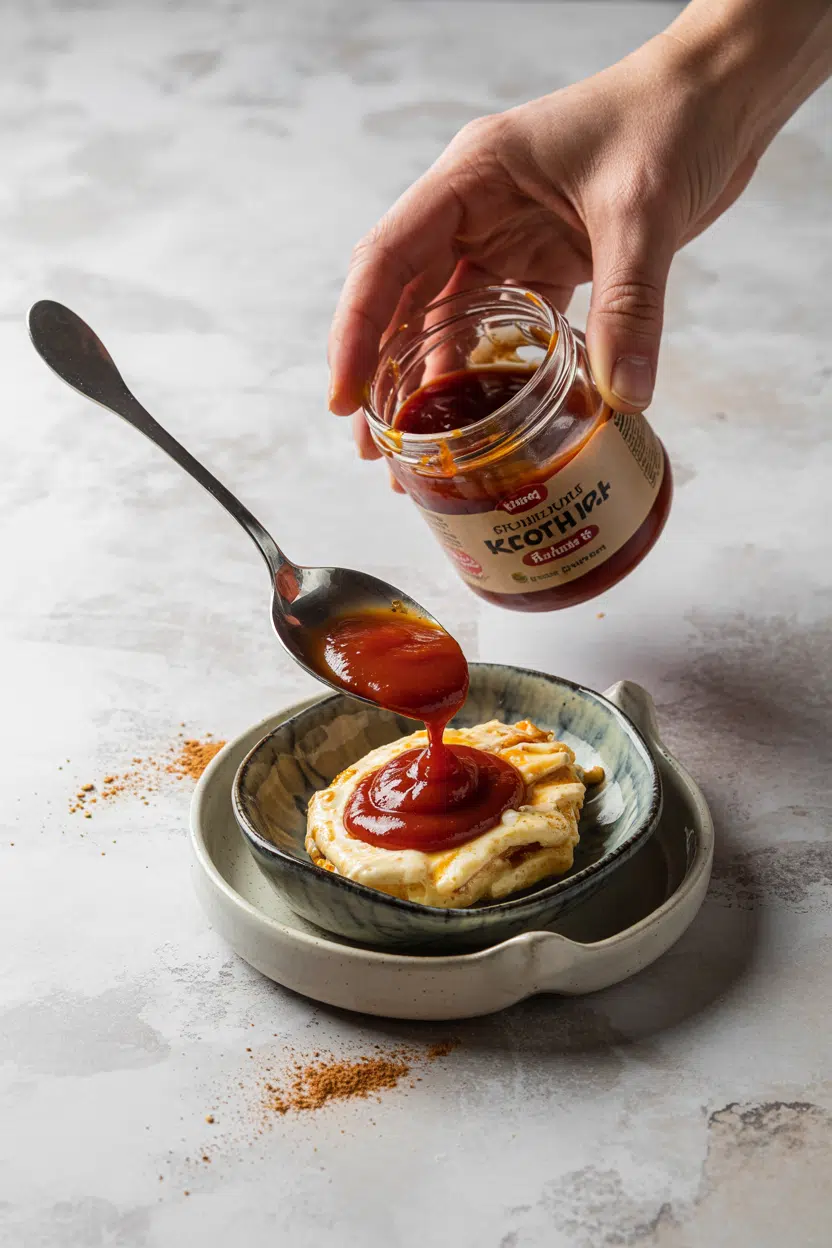
Ketchup tastes like concentrated tomato with a sharp vinegar backbone and noticeable sweetness - closer to a sweet-tangy tomato glaze than a fresh tomato sauce.
The flavor is rounder and more uniform than raw tomato, because the tomato concentrate cooks down the bright, grassy notes and leaves a caramel-adjacent depth.
The spice blend - clove, allspice, onion - adds a mild warmth that you notice more in the aroma than on the palate.
Heat changes ketchup noticeably. Baked or reduced, it loses some of its sharpness and the sugars caramelize into a stickier, more jammy glaze.
Straight from the bottle, the acidity is more pronounced - that's the version most people know from the diner table.
How to Use Ketchup
Ketchup works across a wider range of preparations than most people use it for. At the table, it's a dipping sauce and finishing condiment - fries, potato wedges, burgers, hot dogs, eggs.
That's the easy part.
Where it gets more interesting is in cooking.
Mixed into raw ground beef before forming patties or a meatloaf, ketchup adds moisture, sweetness, and a subtle tang that seasons the meat from the inside.
It also works as a quick BBQ sauce base - combine it with brown sugar, liquid smoke, and a splash of vinegar and you have a usable glaze in under five minutes.
| Method | Best For | Tip |
|---|---|---|
| 🥗 Raw (condiment) | Dipping fries, topping burgers and hot dogs | Serve cold or room temp; don't warm unnecessarily |
| 🍳 Reduced (pan sauce) | Glazing meatballs, making quick pan sauces for pork or chicken | Keep heat medium; sugars burn fast on high |
| 🔥 Baked in | Meatloaf topping, baked beans, casseroles | Spread a layer on top of meatloaf before the last 20 minutes |
| 🥣 Mixed in | BBQ sauce base, cocktail sauce, burger sauce | Combine with mustard, mayo, or horseradish for compound sauces |
In American diner-style cooking, ketchup is almost structural - it shows up in meatloaf, baked beans, and Thousand Island-adjacent dressings.
British and Australian casual dining uses it heavily alongside chips and fried breakfasts.
Filipino cuisine takes ketchup in a different direction entirely; banana ketchup is the dominant local variant, though standard tomato ketchup has influenced the flavor baseline of many pantry sauces.
Ketchup pairs well with potatoes in any form, ground beef, cheddar, mustard, mayonnaise, pickles, and eggs.
When you need a quick layered condiment, mixing ketchup with mayonnaise swaps that work or replacements for brown mustard gives you a fast burger or sandwich sauce without much effort.
Avoid using it with delicate raw seafood or alongside a well-made fresh tomato sauce - the sweetness and vinegar will drown out subtler flavors.
How to Buy and Store Ketchup
Look for a smooth, uniformly red product with no oil separation or watery pooling at the top. Check the ingredient list - tomato concentrate and vinegar should appear near the top.
If you're avoiding high-fructose corn syrup, compare labels carefully; many brands now offer cane sugar versions as a direct alternative.
Storage is straightforward:
- 🧴 Unopened bottles - store in a cool, dark pantry; shelf life runs up to a year from production
- ❄️ After opening - refrigerate immediately; quality holds for 6 to 12 months
- 🔒 Cap and position - keep the cap sealed and bottle upright to minimize surface exposure and slow oxidation
Knowing the ketchup spoilage signs is useful once a bottle has been open for several months - separation, off smell, and darkened color are the main signals that quality has dropped.
If you run out mid-recipe, there are solid replacements for ketchup that work across most cooking applications, though the sweet-acid balance will shift slightly.
Similarly, if a recipe calls for tomato paste as a starting point, tomato paste swaps that work covers the closest alternatives when the pantry is bare.
When to Reach for Ketchup
Start with the bottle in the fridge if you need a quick flavor fix for ground beef, a dipping sauce for potatoes, or a five-minute BBQ glaze base.
Move to it in cooking - not just at the table - when a recipe needs concentrated tomato flavor with built-in acid and sweetness.
Skip it where fresh tomato brightness matters or where delicate seafood flavors would get buried.
Frequently Asked Questions
It's both - technically a condiment by use and a sauce by composition. Most food categories define it as a table condiment, however it functions as a cooking sauce when reduced or baked into dishes like meatloaf or baked beans.
The sweetness comes from added sugar or high-fructose corn syrup combined with natural tomato sugars that concentrate during processing. Distilled vinegar provides the tangy backbone - the ratio of these two elements is what defines each brand's flavor signature.
Nothing - they're the same product with different spellings. "Catsup" is an older American variant that appeared on early commercial labels; "ketchup" became the dominant spelling by the mid-20th century and is now standard.
By tablespoon, yes - a standard serving contains roughly 4 grams of sugar, most of it added. Reduced-sugar versions cut that in half, and organic versions often swap high-fructose corn syrup for cane sugar without significantly lowering total sugar content.
Yes, with adjustments. Ketchup is thinner and much sweeter than tomato paste, so reduce the added sugar in your recipe and expect a slightly tangier result. It works best in sauces and braises where the extra liquid and acidity won't unbalance the dish.



