
Buttermilk is the closest kefir substitute: use 1 cup of buttermilk for every 1 cup of kefir. It has the acid that kefir brings to baking soda recipes, and it pours about the same.
For smoothies, marinades, and cold sauces, whisk ¾ cup plain yogurt with ¼ cup milk to make 1 cup. No swap copies kefir's live yeast and bacteria cultures, but baking kills those anyway, so they only matter in a drink or a cold dish.
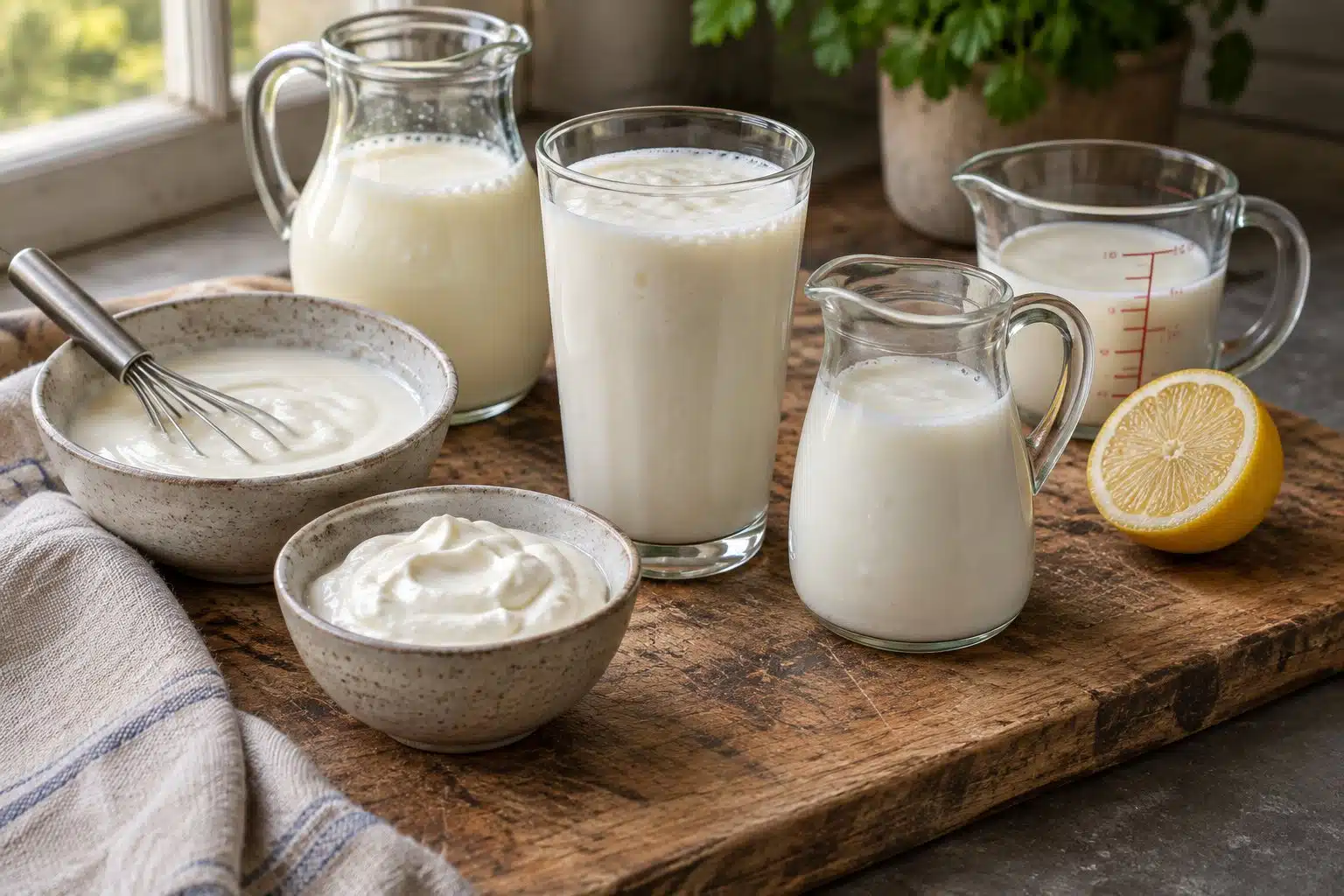
Buttermilk swaps for kefir 1 cup for 1 cup, with a slightly thinner batter and a milder tang.
Kefir has a pH of 4.0 to 4.5, and that acid lifts pancakes and muffins with baking soda. Any swap has to be acidic and pourable.
Baking heat kills the live cultures, so a muffin made with kefir keeps the tang but none of the probiotics.
What Does Kefir Do in a Recipe?
Kefir is a fermented milk drink that does four jobs in a recipe, and the swap you pick should cover the jobs your dish depends on.
Remember it later
Planning to try this recipe soon? Save it for a quick find later!
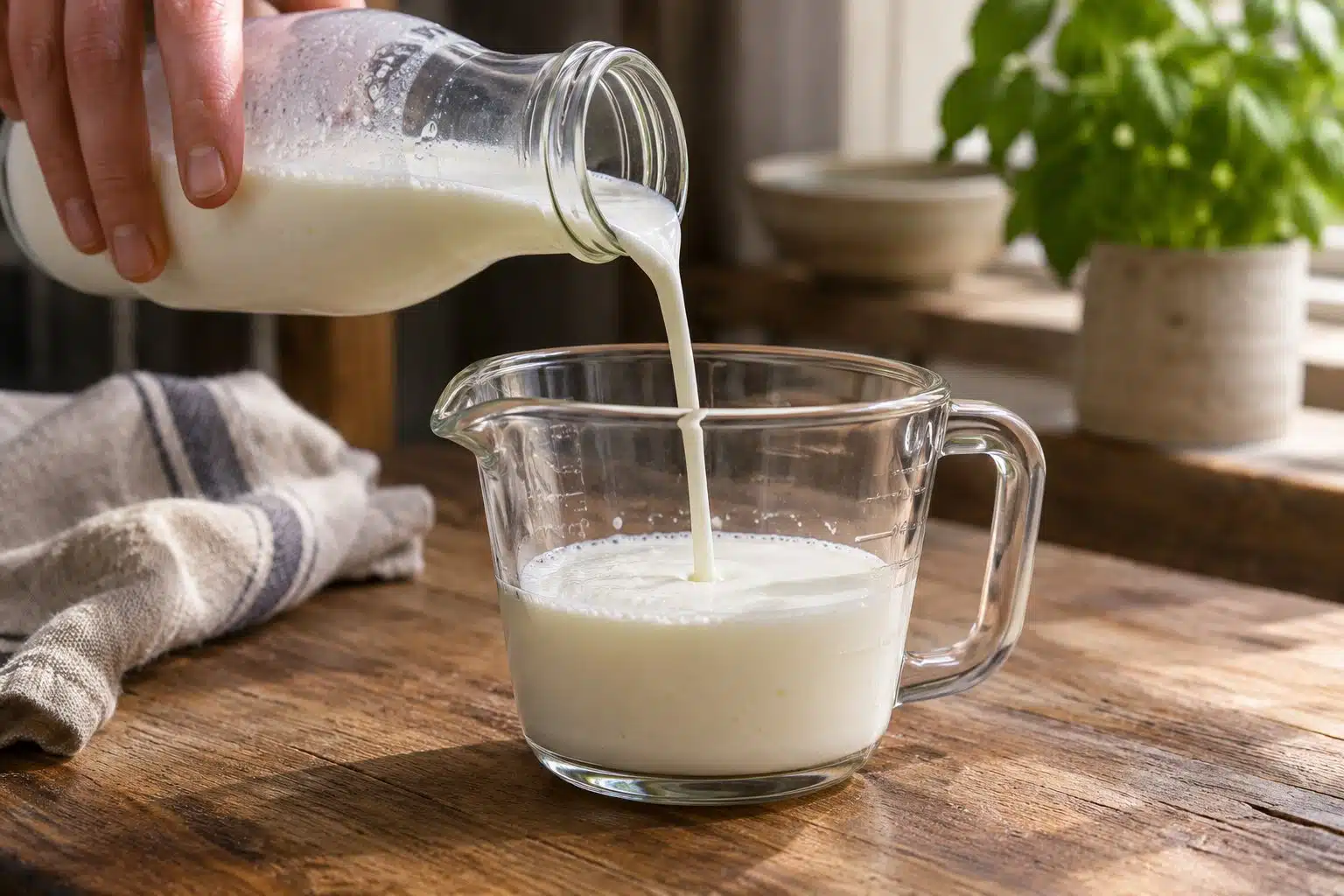
- Acid: Finished kefir has a pH of 4.0 to 4.5, which is acidic enough to react with baking soda and lift pancakes, muffins, and quick breads.
- Pourable body: It is slightly thickened but still pours, so it loosens a batter and blends into a smoothie without extra liquid.
- Tang: Lactic and acetic acids give it a sharper taste than buttermilk, and Milk Street testers also found it thicker.
- Cultures: Yeasts and bacteria ferment kefir, while yogurt is fermented by bacteria alone, and the yeasts are why some bottles are lightly fizzy.
In a baked recipe, the acid and the liquid matter most: the acid raises the batter and the liquid loosens it. In a smoothie or marinade, body and tang matter more.
Baking heat kills lactic acid bacteria, so a muffin made with kefir keeps the acid and the tang but none of the live cultures. The cultures only count in a dish you never heat.
The 7 Best Kefir Substitutes, Ranked
Every ratio below replaces 1 cup of kefir. The list runs from the closest match to the most compromised swap, with the dairy-free option last because it follows its own rules.
| # | Substitute | Best For | Ratio | Key Note |
|---|---|---|---|---|
| 1 | Buttermilk | 🥧 Baking | 1:1 | Milder, thinner |
| 2 | Plain Yogurt | ✨ Both | ¾ cup + ¼ cup milk | No fizz |
| 3 | Greek Yogurt | ✨ Both | ½ cup + ½ cup milk | Thin it first |
| 4 | Sour Cream | 🥧 Baking | ⅔ cup + ⅓ cup milk | Richer crumb |
| 5 | Milk + Lemon Juice | 🥧 Baking | 1 tablespoon acid, milk to 1 cup | Rest 10 min |
| 6 | Buttermilk Powder | 🥧 Baking | Follow the can | Less rich |
| 7 | Soy Milk + Lemon Juice | 🌱 Vegan | 1 tablespoon acid, soy to 1 cup | Rest 10 min |
Buttermilk and thinned yogurt cover most kitchens, and the other five fill the gap when those are missing.
1 – Buttermilk
Use 1 cup of buttermilk for 1 cup of kefir in pancakes, waffles, biscuits, muffins, and quick breads. Both are cultured, acidic dairy, so the baking soda reacts the same way.
Expect a slightly thinner batter and a milder tang, because kefir runs thicker and sharper than buttermilk. A smoothie made with buttermilk also comes out thinner than one made with kefir.
If your carton has been open a while, check how long buttermilk lasts before it goes into the batter.
2 – Plain Yogurt Thinned with Milk
Whisk ¾ cup plain yogurt with ¼ cup milk for each cup of kefir. Add milk a tablespoon at a time until it runs off a spoon the way kefir does.
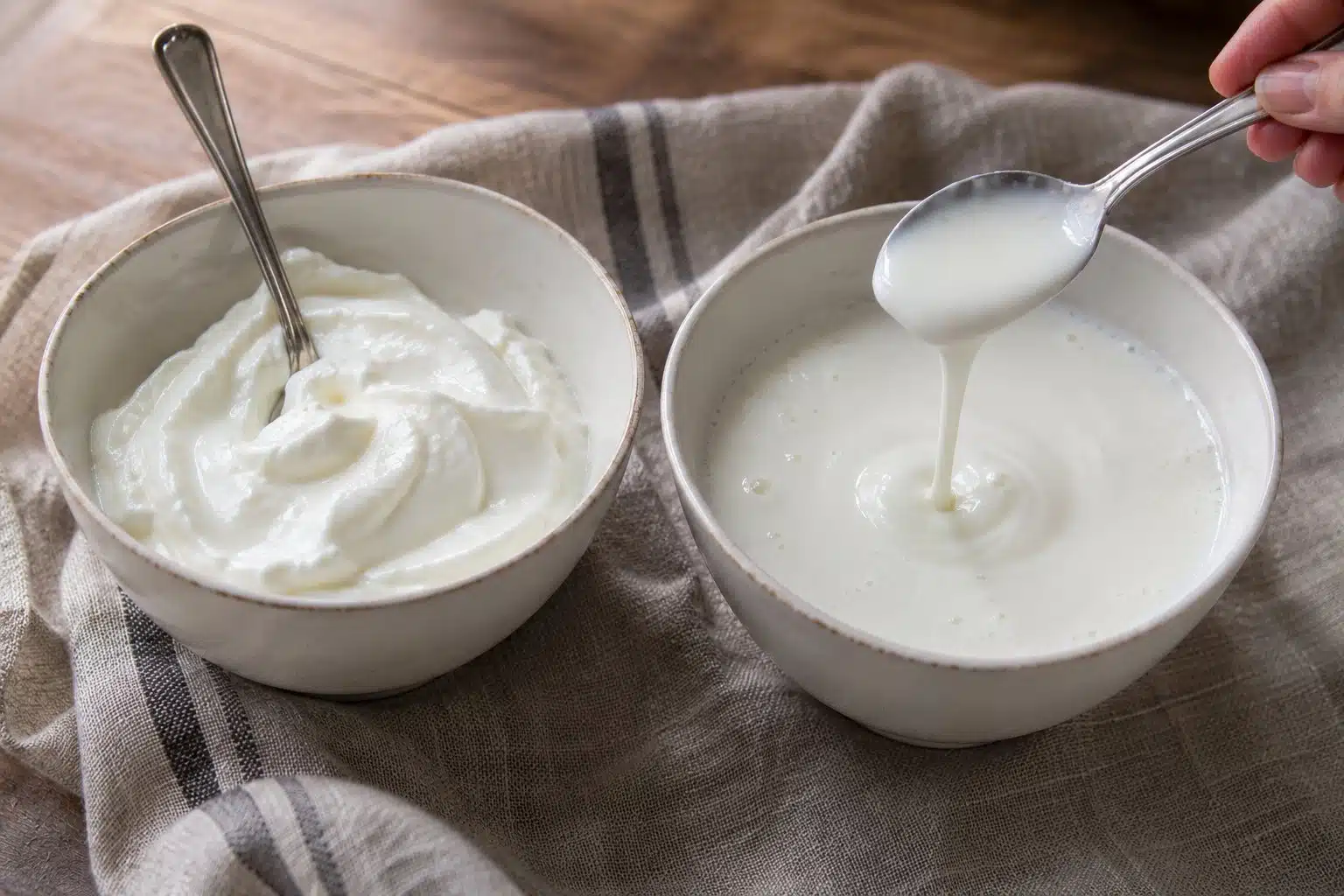
Whole-milk plain yogurt gives the creamiest result. Sweetened or vanilla yogurt only fits dessert batters and smoothies, because its sugar and flavor show up in a savory dish.
A marinade does not need to pour, so you can skip the milk and use the yogurt straight, as in the plain yogurt marinade for our tandoori chicken drumsticks.
Yogurt has no yeast, so it lacks the light fizz some kefir bottles have. That difference only shows in a raw drink.
3 – Greek Yogurt Thinned with Milk
Greek yogurt is strained, so it needs more thinning: stir ½ cup Greek yogurt into ½ cup milk or water to replace 1 cup of kefir. Add more liquid if the batter or smoothie still looks stiff.
Bob's Red Mill advises against using it undiluted, because it can pull moisture out of the recipe.
4 – Sour Cream Thinned with Milk
Whisk ⅔ cup sour cream with ⅓ cup milk per cup of kefir, until it pours like heavy cream.
Sour cream has more than four times the fat of yogurt, according to America's Test Kitchen, so cakes and muffins made with it stay moister than ones made with yogurt.
In a hot sauce or soup, stir it in after you take the pan off the heat, because high heat can make it curdle.
5 – Milk and Lemon Juice or Vinegar
Stir 1 tablespoon of lemon juice or white vinegar into a measuring cup, add milk up to the 1-cup line, and wait 10 minutes. The milk thickens slightly and curdles when it is ready.
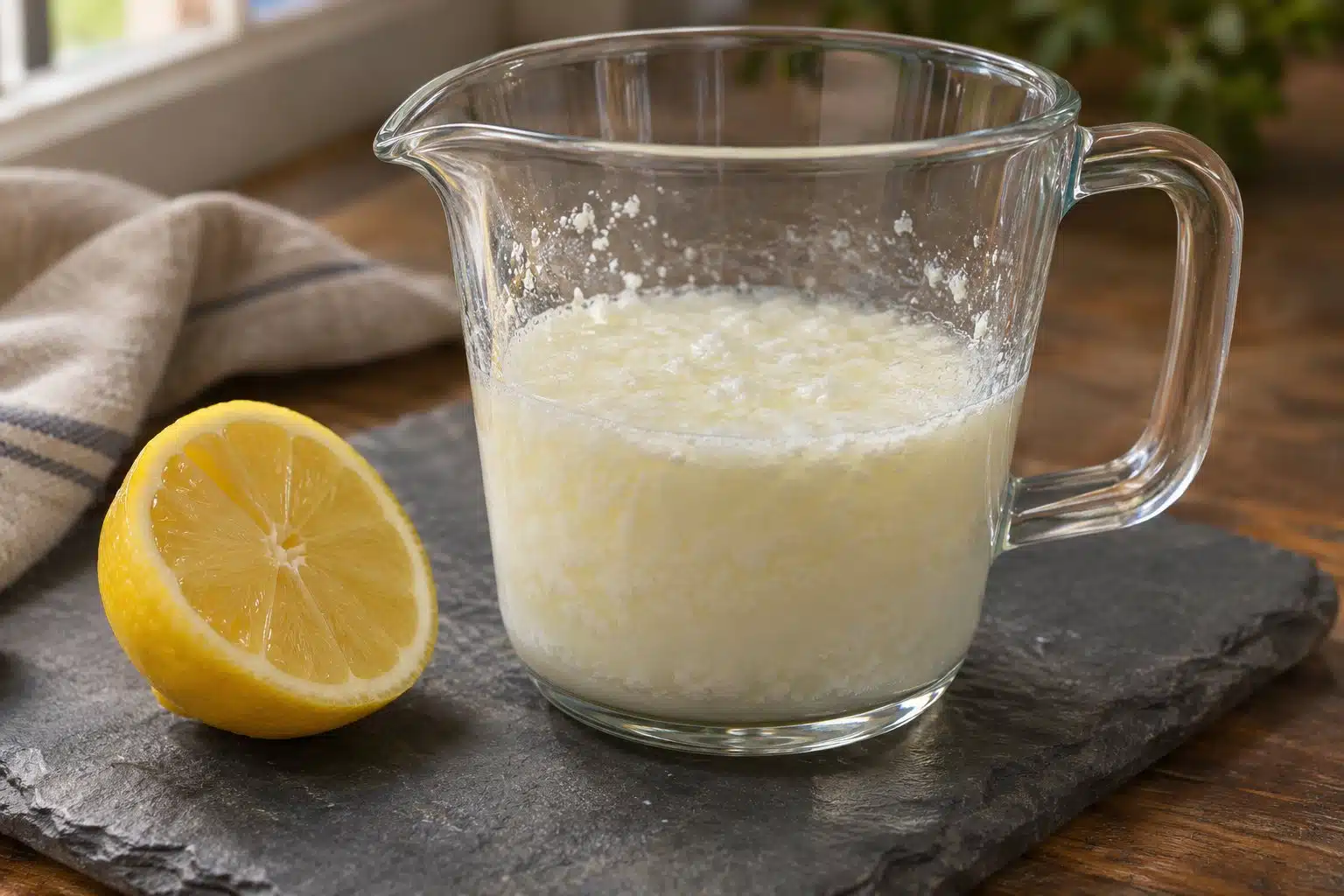
The mixture has enough acid for baking soda, but it is thinner than kefir. America's Test Kitchen found that soured milk made drop biscuits and pancakes spread too much when it replaced buttermilk, so keep it for when nothing else is in the fridge.
6 – Buttermilk Powder
Follow the ratio on the can, because brands differ. The Saco Pantry buttermilk blend, for example, calls for 4 tablespoons of powder in 1 cup of water.
Powder is a baking-only swap. King Arthur Baking found it performs about as well as milk with vinegar or cream of tartar, but it lacks fresh buttermilk's rich flavor.
7 – Soy Milk and Lemon Juice, or Plant Yogurt
For baking, stir 1 tablespoon of lemon juice or vinegar into unsweetened soy milk, fill to 1 cup, and rest it 10 minutes. Bob's Red Mill lists almond, coconut, cashew, and rice milk for the same method, and soy is the usual pick because it curdles well.
For smoothies and marinades, thin unsweetened plant yogurt like dairy yogurt: ¾ cup of yogurt to ¼ cup of plant milk. Coconut yogurt can taste of coconut, so pick another base for savory dishes.
Which Swap Fits Which Dish?
| If You Are Making | Pick | Why |
|---|---|---|
| Pancakes, waffles | Buttermilk, 1:1 | Same acid, slightly thinner batter |
| Biscuits, scones | Buttermilk | Keeps the dough acidic and tender |
| Cakes, muffins | Sour cream or yogurt, thinned | Sour cream adds fat, yogurt bakes drier |
| Cornbread | Buttermilk | Kefir gave Milk Street a gummier crumb |
| Smoothies | Plain yogurt, thinned | Matches kefir's body |
| Marinades | Plain yogurt, straight | Thick enough to cling to chicken |
| Dressings, dips | Buttermilk or sour cream | Buttermilk pours, sour cream thickens |
| Dairy-free baking | Soy milk and lemon juice | Soy curdles well with acid |
The table shows buttermilk covering most baked dishes and thinned yogurt covering most cold or pourable ones.
- Biscuits and scones: Buttermilk is the classic liquid, as in our cheddar and chive biscuits, which use ¾ cup of cold buttermilk.
- Pourable dressings: Buttermilk also suits a dressing like our blue cheese dressing with buttermilk, and sour cream or plain yogurt thickens a dip.
Where Do Kefir Swaps Go Wrong?
- Undiluted Greek yogurt: It pulls moisture from the batter, so thin it with milk first.
- Sweetened yogurt in savory dishes: The sugar and vanilla stay in the sauce or marinade, so use plain.
- Sour cream in a boiling sauce: High heat can curdle it, so add it after the pan leaves the burner.
- Expecting the probiotics: None of these swaps carry kefir's yeasts and bacteria, so if you want them in a smoothie, drink kefir on the side.
Frequently Asked Questions
Yes, 1 cup of kefir replaces 1 cup of buttermilk in most baking. America's Test Kitchen found it acceptable in pancakes and biscuits, with slightly faster browning. Milk Street testers preferred buttermilk in cornbread, fried chicken coating, and pie.
No. Both are tangy cultured dairy, but kefir is fermented by yeasts and bacteria and comes out thicker and sharper. Buttermilk is milder and thinner.
Not fully. Yogurt carries bacteria but no yeast, and baking kills the live cultures in any dairy. For a raw smoothie, plain yogurt with live cultures on the label is the nearest match.
Check how long kefir lasts first. It covers the fridge timing and the signs that a bottle has turned, and a bottle that has turned should be thrown out rather than baked into a batter.



