
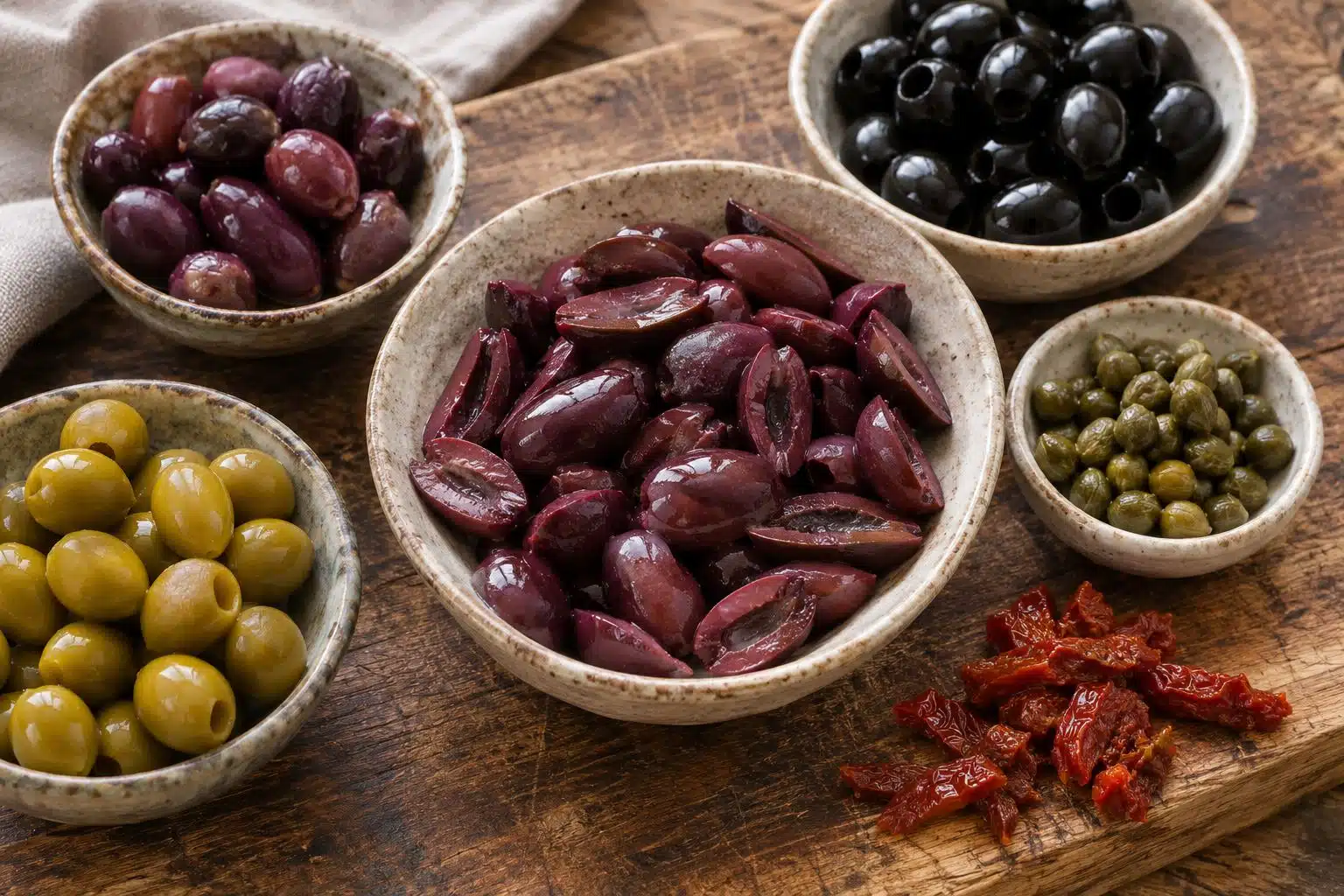
Gaeta olives are the closest swap for Kalamata olives. Use them 1:1, because they are also deep purple, soft and cured in brine. If you only have a can of black olives, use those 1:1 as well, but drain them and add a splash of red wine vinegar to bring back some tang.
For a sauce or tapenade, rinsed capers at 1 teaspoon per tablespoon of olives give you the salt and tang without the chew. If you want no olives at all in a cooked dish, chopped sun-dried tomatoes fill the space.
What Do Kalamata Olives Do in a Recipe?
Kalamata olives bring salt, a fruity wine-vinegar tang and a soft, shiny chew. They are brine-cured, then packed in a vinegar-heavy brine, and their almond shape and dark purple color show up in whatever they sit on.
Remember it later
Planning to try this recipe soon? Save it for a quick find later!
Which of those jobs matters depends on the dish, and that decides your swap:
- Greek salad and cold pasta: you notice the chew and the purple color, so choose a soft, dark olive and keep the vinegar.
- Tapenade and sauces: the olives get chopped or cooked down, as in a Provençal-style olive tapenade, so salt and tang matter and texture does not. Capers and green olives fit here.
- Pizza and flatbread: the olives bake on top, so any dark olive that holds its shape will do.
- Braises and chicken dishes: long cooking softens every olive, as in chicken Provençal with tomatoes and olives, so match the flavor and ignore the firmness.
If you want to know more about the olive itself, our page on what Kalamata olives are covers where they grow and how they are cured.
The 5 Best Kalamata Olive Substitutes, Ranked
Gaeta olives come first because they match both flavor and texture. The rest trade one of those away, and the table shows what you give up.
| # | Substitute | Best For | Ratio | Key Note |
|---|---|---|---|---|
| 1 | Gaeta Olives | ✨ Both | 1:1 | Soft, purple, tart |
| 2 | Black Olives | ✨ Both | 1:1 | Milder, add vinegar |
| 3 | Manzanilla Olives | 🍳 Cooking | 1:1 | Green and meaty |
| 4 | Capers | 🍳 Cooking | 1 teaspoon per 1 tbsp | Salty, no chew |
| 5 | Sun-Dried Tomatoes | 🍳 Cooking | Equal volume | No olive, no brine |
1 – Gaeta Olives
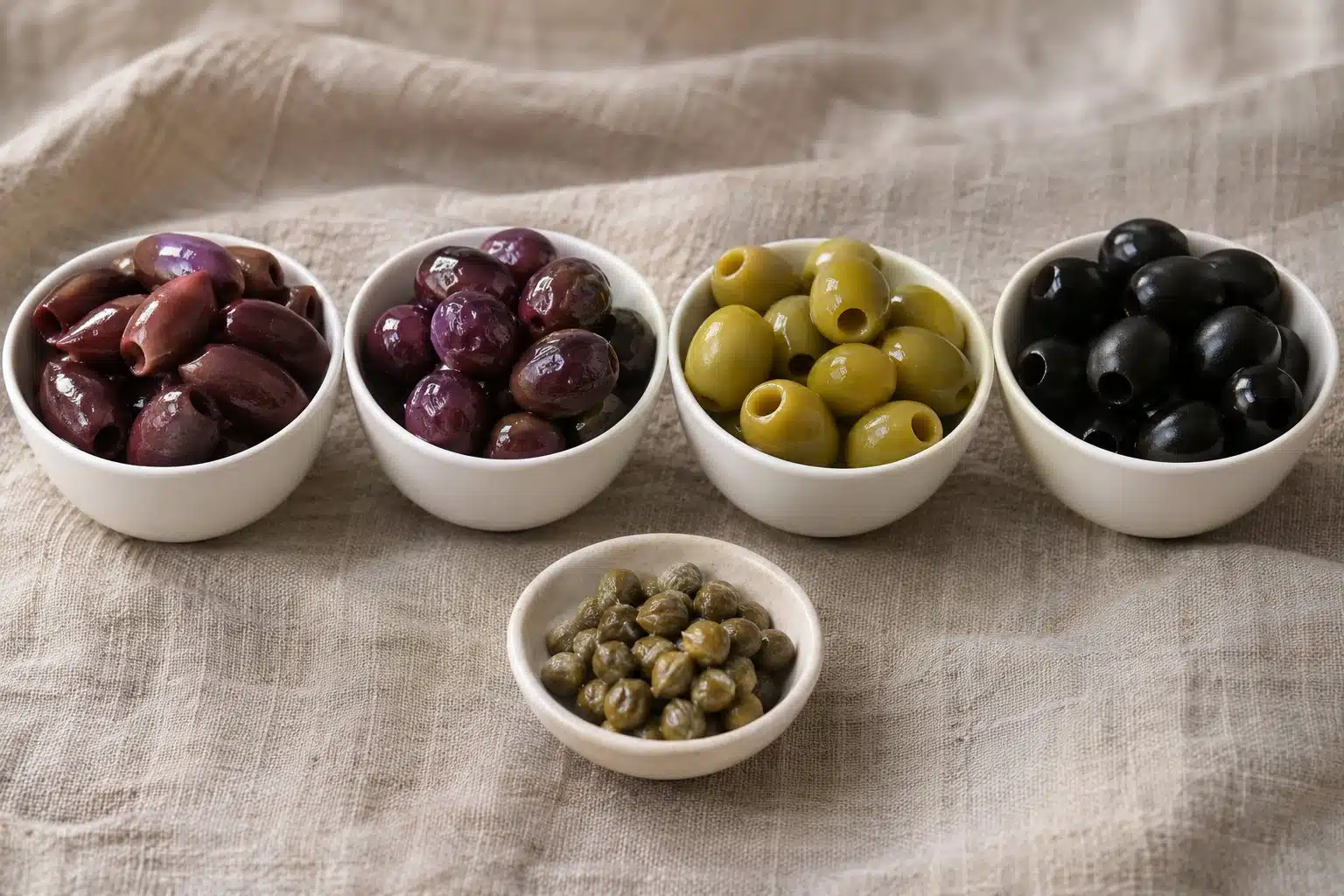
Use 1 tablespoon of Gaeta olives for 1 tablespoon of Kalamata. They are deep purple and soft, with a tart, wine-like tang, so a Greek salad or pasta sauce looks and tastes almost the same.
Gaeta olives are sold either brine-cured or dry-cured and wrinkled. Buy the brine-cured jar, because its soft flesh is closer to Kalamata than the drier wrinkled kind.
- Tart, not fruity: Gaeta leans tart and earthy where Kalamata leans fruity and smoky, so add a pinch of red wine vinegar if the dish tastes flatter than you expect.
- Skip it if the recipe is built around Kalamata alone, such as a plate of olives and feta, since the fruitier note is the whole point there.
2 – Canned Black Olives
Canned black olives go in 1:1 on pizza, in a quick pasta salad or in a sauce that has other strong flavors. They are milder and softer than Kalamata, so they add color and some salt but little tang.
- Season at the end: the olives are milder, so taste the finished dish before you add more salt or herbs.
- Add them late in cooking: soft olives turn mushy if they simmer for a long time.
Skip them if olives are the main flavor of the dish, because canned black olives will taste thin next to the other ingredients.
3 – Manzanilla Olives
Green Manzanilla olives are meaty, mildly tart and a little bitter. Use them 1:1 in cold dishes, and chop them finely in salads or grain bowls so the briny flavor spreads through the bowl.
In a hot dish, stir them in at the end. Long cooking brings out their bitterness.
- Less fruity: a squeeze of lemon juice or a splash of vinegar fills the gap.
- Green, not purple: the color changes how the dish looks, so they suit grain bowls and pasta better than a Greek salad.
- Pimiento stuffing: jarred Manzanilla are usually stuffed with pimiento, which adds red flecks and a sweeter note.
Skip them if the olives need to soften and blend into a sauce.
4 – Capers
Capers are flower buds, so they bring salt and sharp tang with none of the olive chew. Use 1 teaspoon of rinsed capers for every tablespoon of Kalamata olives, because they taste stronger than olives do.
They fit best in tapenade, whose name comes from the Provençal word for capers, and in dressings and pan sauces.
Skip them if you need olive pieces for texture or for looks, since capers dissolve into the sauce.
5 – Sun-Dried Tomatoes
Chopped sun-dried tomatoes are the swap for a cooked dish when you want no olives at all. They are chewy and sweet-tart rather than briny, so the flavor goes in a different direction.
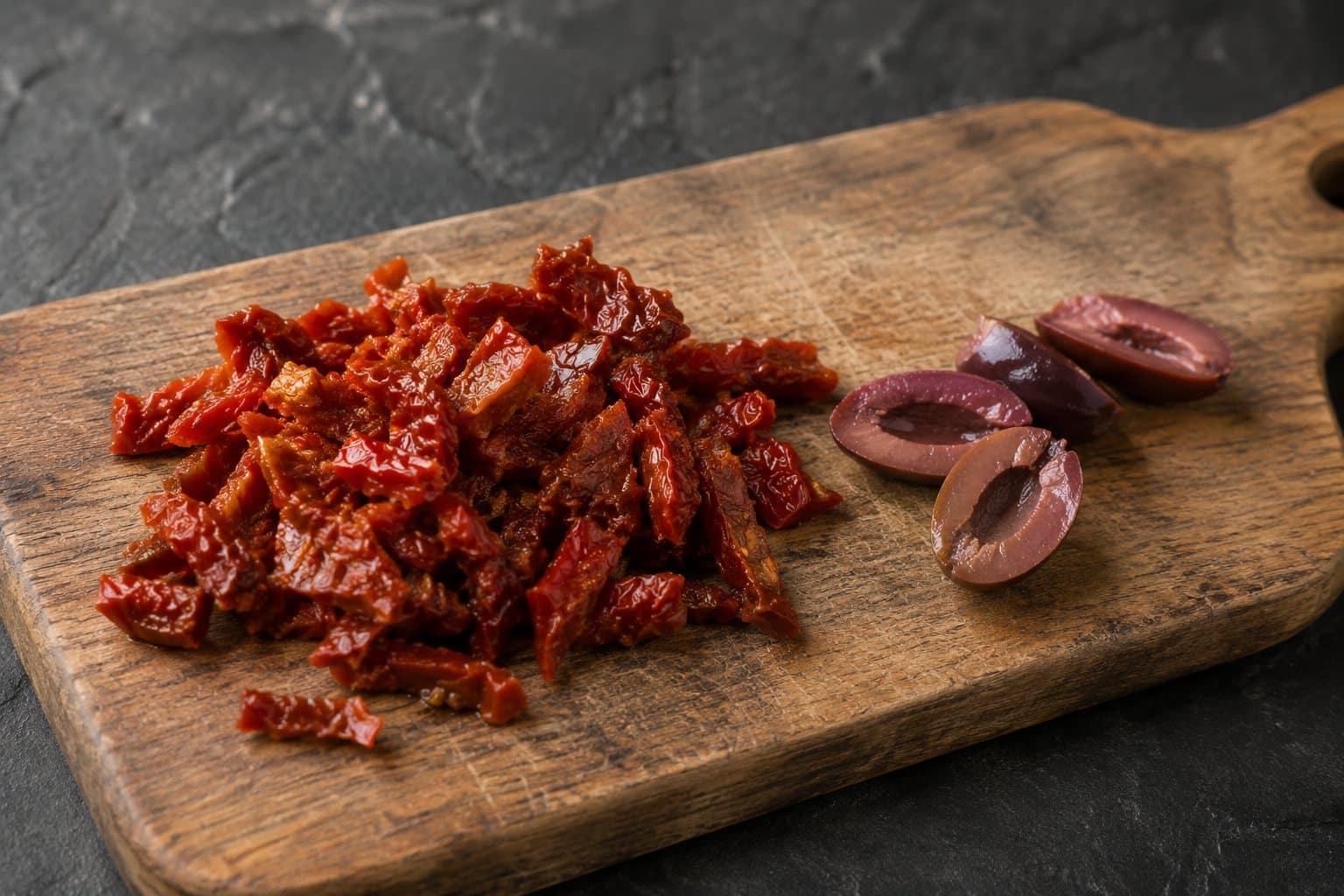
Chop them to the size of the olive pieces and use equal volume. Add a pinch of salt and a splash of lemon juice or vinegar to make up for the missing brine.
- Oil-packed: these add richness and go straight into the pan.
- Dry-packed: soak them in hot water until soft before chopping.
- Red, not purple: the color changes the look, but it blends well into pasta, grain salads and roasted vegetables.
Skip them if the dish depends on briny saltiness, as in a Greek salad.
Which Substitute Goes with Which Dish?
Match the swap to the job the olive does in your dish, as the table shows.
| If You Are Making | Pick | Why |
|---|---|---|
| Greek Salad | Gaeta, or canned black with vinegar | Soft purple olives keep the look and the chew |
| Tapenade | Gaeta, or black olives plus capers | Salt and tang survive chopping |
| Pizza | Canned black olives | They hold their shape in the oven |
| Braises | Gaeta, or Manzanilla at the end | Gaeta stays tart, Manzanilla turns bitter if cooked long |
| Grain Bowls | Chopped Manzanilla | Meaty green pieces spread the brine |
| No Olives | Capers or sun-dried tomatoes | Capers add salt, tomatoes add a savory chew |
A Greek village salad such as our horiatiki Greek village salad, which uses ½ cup of pitted Kalamata, is the place to hold out for Gaeta or at least a purple olive.
What About Niçoise, Castelvetrano, and Other Olives?
Any olive you already have can stand in, as long as you know what it changes:
- Niçoise olives: they are small and dark with an assertive, lingering bitterness, and a large pit for their size, so pit them and expect less flesh per olive. They are the olive in a classic salade niçoise with seared tuna.
- Cerignola and Castelvetrano: both are mild, buttery and meaty, so they give you the chew without the tang, and a splash of vinegar helps.
- Moroccan oil-cured olives: they are black, wrinkled, very salty and pleasantly bitter, so start with fewer than the recipe calls for and taste before adding more.
How to Keep the Dish Balanced After Swapping
Two more habits save a dish with a milder olive:
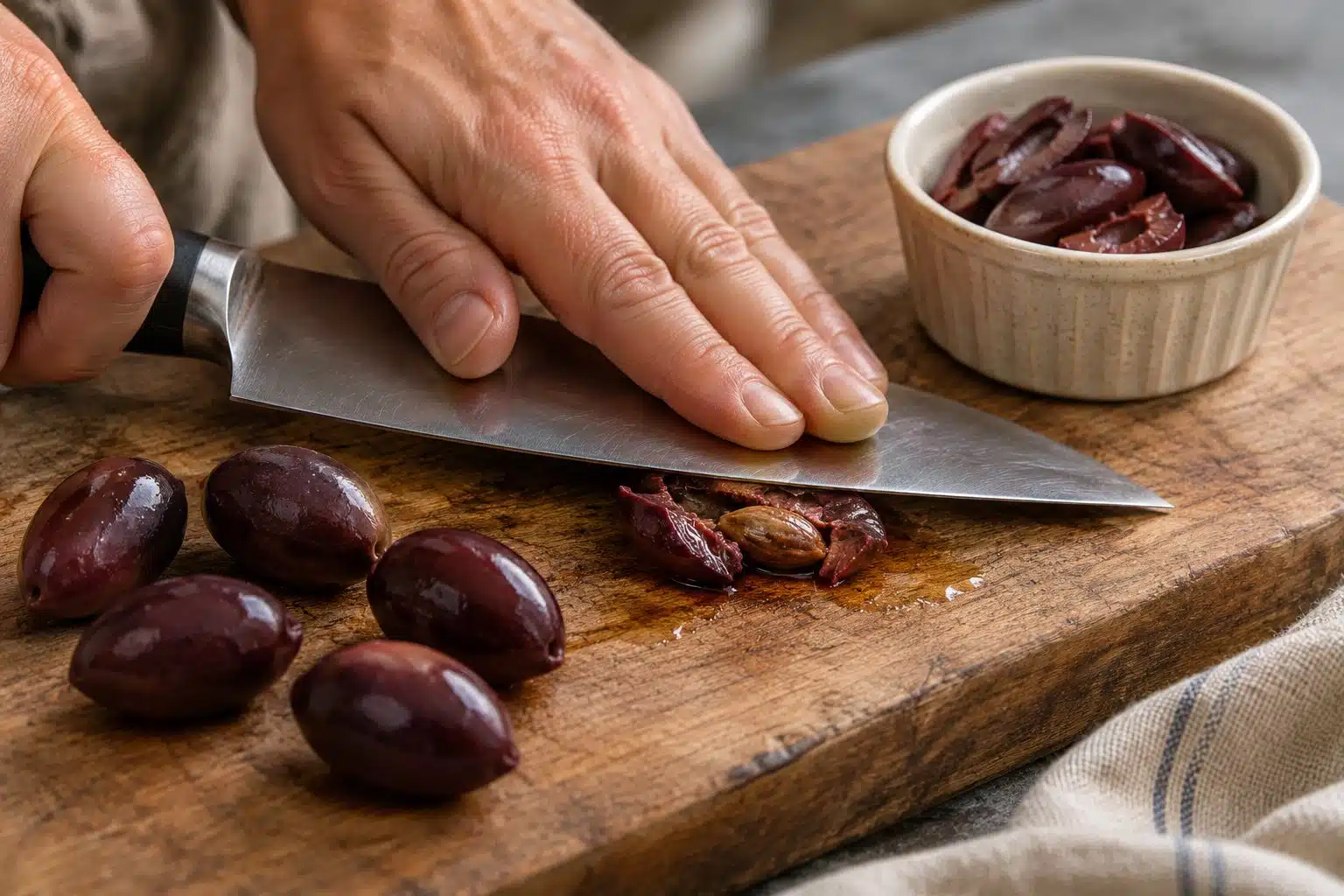
- Pit before you measure: every ratio here is for pitted olives, and pressing an olive with the flat of a knife splits it so the pit lifts out.
- Add acid last: a splash of red wine vinegar or lemon juice stirred in at the end replaces the vinegar-heavy brine Kalamata come packed in.
Frequently Asked Questions
Yes, use them 1:1. Manzanilla are the usual green olive, so chop them finely and add a splash of vinegar or lemon juice to make up for the missing fruitiness.
No. Kalamata is a Greek variety with an almond shape, a deep purple color and a salty, fruity flavor from its vinegar brine. Canned black olives are milder and softer, so they work in casual dishes like pizza but do not copy Kalamata's tang.
Gaeta olives, used 1:1, because they are soft, purple and tart. If you only have canned black olives, drain them, pat them dry and toss them with a little red wine vinegar first.
Yes. Use 1 teaspoon of rinsed capers for each tablespoon of olives and chop them. They add salty tang but no olive texture, so the sauce will taste similar and feel different.
Yes, in cooked dishes where you want a savory chew instead of brine. Use equal volume, chop them to olive size, and add a pinch of salt and a squeeze of lemon juice.



