
Jerk seasoning does something no single spice can manage on its own - it builds heat, sweetness, smoke, and floral warmth into one rub that changes everything it touches.

The blend anchors Jamaican cooking the way ras el hanout in cooking anchors North African food, or the way replacements for taco seasoning remind you how central a seasoning blend is to a whole cuisine.
No other spice mix delivers that specific combination of allspice warmth and Scotch bonnet fire in the same breath.
Jerk seasoning is a Jamaican spice blend built on ground allspice and Scotch bonnet pepper. It delivers strong heat, warm sweetness, and smoky depth as a dry rub or wet marinade, and works best on chicken, pork, and roasted vegetables over high heat.
What Is jerk seasoning?
Jerk seasoning is a Jamaican spice blend rooted in two non-negotiable ingredients: ground allspice (also called pimento) and Scotch bonnet pepper. You'll also find it sold as Jamaican jerk, jerk rub, jerk spice, or jerk seasoning blend.
Remember it later
Planning to try this recipe soon? Save it for a quick find later!
The blend traces back to the Maroon communities of Jamaica, who slow-cooked wild boar over pimento wood - a method that embedded both smoke and allspice flavor directly into the meat. Modern versions keep that DNA intact.
It comes in two forms depending on how you use it:
- Dry rub - a coarse, reddish-brown powder with visible herb flecks, rubbed directly onto meat before cooking
- Wet marinade - the same spices blended with citrus juice, soy sauce, or vinegar into a thick paste
Beyond allspice and Scotch bonnet, most blends include dried thyme, garlic, ginger, and cinnamon. Some add brown sugar or molasses for sweetness.
Commercial blends vary widely - the best ones list specific peppers and spices rather than vague "natural flavors."
What Does jerk seasoning Taste Like?
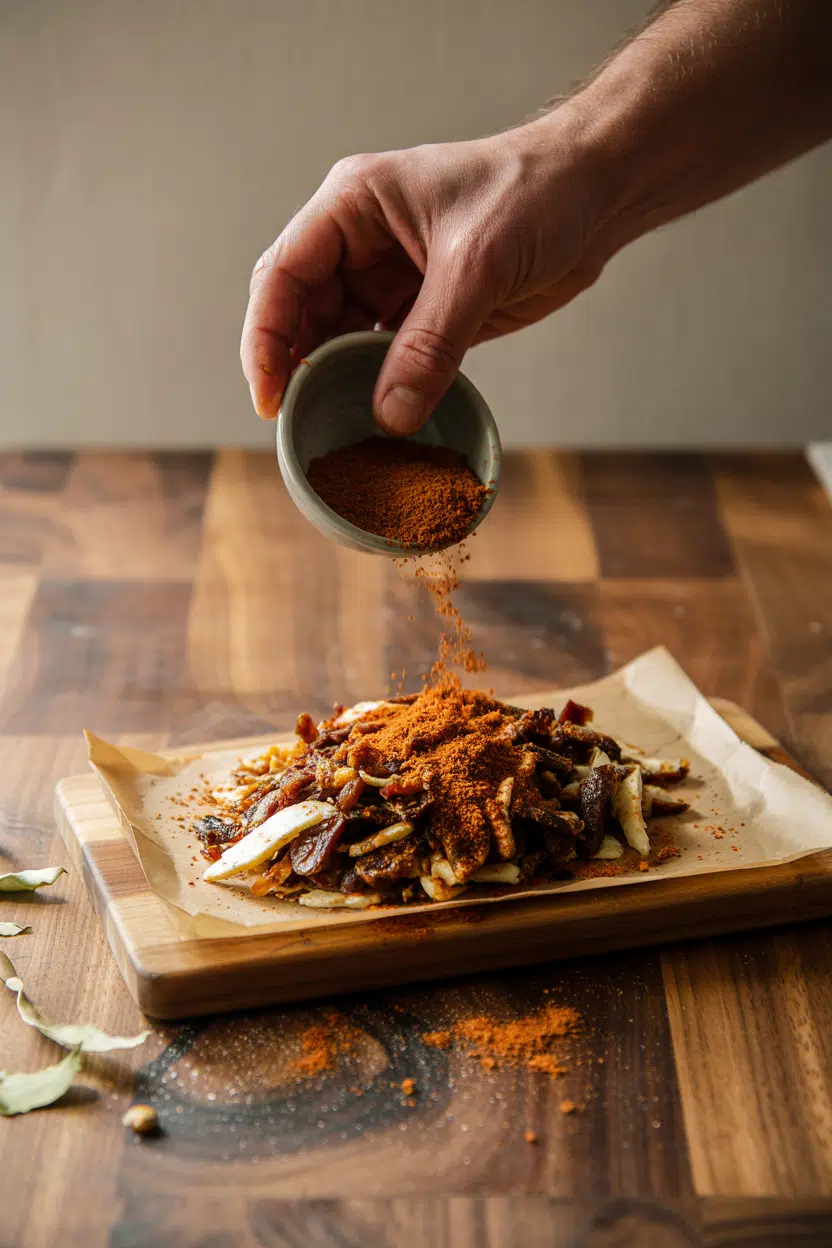
Jerk seasoning is strong and complex. The first thing you notice is heat from the Scotch bonnet pepper - sharper and more floral than cayenne, not just blunt fire.
Right behind it comes the warm, clove-like sweetness of ground allspice. That combination is what makes jerk taste unlike any other spice blend.
Think of a peppery barbecue rub crossed with warm baking spices, then sharpened with citrus tang.
Heat intensity changes with cooking method. High, direct heat over charcoal amplifies the smokiness and rounds the sharp pepper edges.
Slow roasting deepens the allspice sweetness and softens the burn slightly.
How to Use jerk seasoning
Jerk chicken is the entry point for most people, and it earns that reputation. Rub the dry blend onto bone-in pieces, let them sit overnight, then grill over charcoal.
Understanding the differences between bbq vs smoking matters here - true jerk uses indirect smoke from pimento wood, not direct flame alone.
Pork shoulder is the other classic. A wet jerk marinade - allspice, Scotch bonnet, thyme, garlic, lime juice - penetrates the meat over 12-24 hours before slow roasting or smoking.
If your oven setup needs adjusting, using swapping out roasting rack alternatives can still get you even airflow around the meat.
| Method | Best For | Tip |
|---|---|---|
| 🔥 Grilling | Chicken, pork chops, shrimp skewers | Use charcoal or wood for genuine smoke |
| 🫕 Slow-Roasting | Pork shoulder, whole chicken | Wet marinade; 12-24 hours before cooking |
| 🍳 Pan-Searing | Fish, shrimp, tofu | Marinate 30-60 minutes; high heat, short time |
| 🥘 Braising | Stews, pulled pork, Caribbean braises | Add wet marinade to braising liquid |
| 🥗 Dry Rub (No Heat) | Jerk bowls, roasted vegetables, tofu | Toss with oil before roasting sweet potato or plantain |
Beyond meat, jerk works well tossed with sweet potato or plantain before roasting - the sugar in those vegetables caramelizes against the warm spice.
Stir it into barbecue sauce for a Caribbean-leaning finish, or mix it into ground meat for jerk burgers.
If you can't find the blend locally, these jerk seasoning swaps that work cover the closest alternatives without losing the allspice-forward profile.
How to Buy and Store jerk seasoning
At the store, read the label before you buy.
A quality dry blend lists ground allspice (pimento) and Scotch bonnet or habanero clearly - not just "spices" or "natural flavors." The powder should be reddish-brown with visible dried herb flecks, and the jar should smell sharp and warm when opened.
Dry blends store well in an airtight jar in a cool, dark pantry. Keep wet marinades refrigerated in a sealed container.
Knowing the jerk seasoning spoilage signs helps you tell when a dry blend has faded beyond useful - weak aroma and dull color are the first signals.
- Dry blend shelf life - 6-12 months at peak flavor; technically safe longer but noticeably weaker
- Wet marinade shelf life - 3-5 days refrigerated in a sealed container
- Heat and light - both degrade volatile compounds fast; never store above the stove
Where to Start With Jerk Seasoning
Start with bone-in chicken thighs - they're forgiving, cheap, and hold the seasoning well against high heat. Rub, rest overnight, grill.
That single cook will tell you more about how jerk seasoning behaves than any description can.
From there, move to vegetables or tofu if you want a lighter introduction to the flavor profile.
For comparison against other spice blends, note that cajun seasoning swaps that work also highlights how differently heat-forward blends perform across cooking methods.
Also keep in mind that the differences between broiling vs grilling will affect char and smokiness on your final dish - grilling wins for jerk.
Frequently Asked Questions
Yes, it's genuinely hot. Scotch bonnet peppers sit between 100,000 and 350,000 Scoville units - significantly hotter than jalapeño. Blends using habanero instead are still spicy but slightly more manageable.
The two core ingredients are ground allspice (pimento) and Scotch bonnet or habanero pepper. Most blends also include dried thyme, garlic, ginger, cinnamon, and sometimes brown sugar or scallion.
It tastes like a peppery barbecue rub crossed with warm baking spices and a sharp citrus edge. The allspice gives it a clove-like sweetness that balances the Scotch bonnet heat.
Yes. Blend the dry spices with lime juice, soy sauce, garlic, and a little oil to make a wet paste. It works especially well on pork shoulder with at least 12 hours of contact time.
It does, particularly on dense, starchy vegetables. Sweet potato, plantain, and cauliflower hold up well to its strong flavor profile. Toss with oil before roasting at high heat for the best result.



