You spot Swiss cheese layered into a croque-monsieur at a café and wonder why it melts so cleanly without turning rubbery or greasy. Swiss cheese - properly called Emmental - has been doing that job for centuries, and it's not by accident.

Its low-acid profile and semi-hard structure make it one of the most reliable melting cheeses available, whether you're building a sandwich or anchoring a fondue pot.
Swiss cheese (Emmental) is a pale yellow, semi-hard cow's-milk cheese with a mild nutty flavor and signature round holes. It melts cleanly, slices well, and works across sandwiches, baked dishes, and fondue blends. Shelf life runs up to two months unopened.
What Is Swiss Cheese?
Swiss cheese originated in the Emmental valley of Switzerland, where cheesemakers have been producing it since at least the 15th century.
Remember it later
Planning to try this recipe soon? Save it for a quick find later!
It belongs to the semi-hard fermented dairy category, made from cow's milk and aged anywhere from a few weeks to several months depending on the producer.
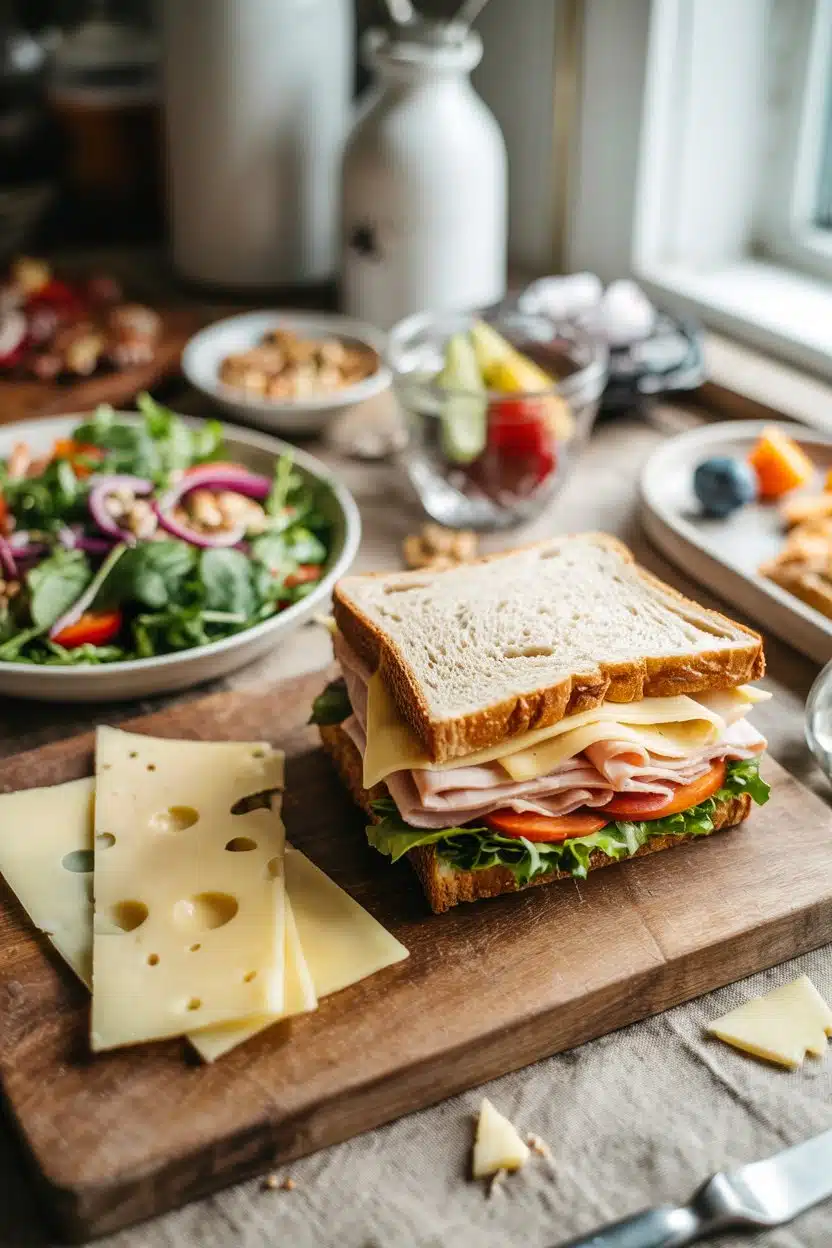
The cheese is pale yellow with a smooth, pliant paste and its most recognizable feature: evenly spaced round holes called eyes. These form during aging when carbon dioxide gas, released by Propionibacterium bacteria, gets trapped inside the curd.
Longer aging generally produces more pronounced eyes and a slightly sharper flavor.
It's sold under several names - Emmental, Emmentaler, Swiss Emmental, or simply Swiss - and American "Swiss" is typically a milder, faster-aged version of traditional Swiss Emmental.
Flavor
Texture
Aroma
Mild
What Does Swiss Cheese Taste Like?
Swiss cheese reads as mildly nutty up front, followed by a faint sweetness that sits somewhere between fresh hay and warm cream.
The acid level is low - noticeably lower than cheddar - which keeps each bite clean rather than sharp.
The closest comparisons are young Gruyère and a mild aged Gouda. Gruyère shares the nutty backbone but carries more earthiness and a stronger finish.
Gouda brings similar sweetness without the hay notes that distinguish Swiss.
Heat changes it. Melted Swiss loses some of its structural firmness and becomes noticeably creamier, while the nuttiness intensifies slightly against the backdrop of whatever it's paired with.
Cold from the fridge, the flavor is subtler and the texture firmer - good for thin-sliced sandwiches where you want presence without dominance.
How to Use Swiss Cheese
Swiss cheese handles both cold and hot applications without much fuss. Its low-acid structure prevents the stringy, greasy separation you get from higher-acid cheeses at cooking temperatures, making it a reliable choice for gratins and baked dishes.
| Method | Best For | Tip |
|---|---|---|
| 🥗 Raw / Sliced | Reuben sandwiches, turkey melts, cheeseboards | Slice thin - flavors are subtle and stack better in layers |
| 🍳 Melted | Croque-monsieur, French onion soup, omelets, quiches | Keep heat between 325-375°F for smooth, lump-free melt |
| 🫕 Fondue Blends | Classic Swiss fondue base with Gruyère | Cube or grate before adding to the pot for even melting |
| 🍝 Grated | Macaroni and cheese, casseroles, baked gratins | Grate fresh - pre-shredded bags contain anti-caking agents that affect melt |
Swiss cheese is the traditional anchor in fondue - if you're curious about the differences between fonduta vs fondue, the cheese choices between them matter more than most people expect.
🇫🇷 French
🇩🇪 Germanic / Alsatian
🇺🇸 American Deli
deli ham and roast beef
apples and pears
cornichons
mustard
Pinot Noir
bock beer
How to Buy and Store Swiss Cheese
At the counter or in the case, look for a smooth, pale yellow paste with evenly distributed eyes and no dry cracks or sticky patches on the surface.
Pre-sliced Swiss is fine as long as it's vacuum-sealed - once the pack is open, drying and off-odors set in within a week.
Wrap opened cheese in wax paper first, then loosely in a resealable bag. This lets it breathe while limiting moisture loss - a fully sealed airtight container traps humidity and encourages surface mold faster. Opened blocks last 2-3 weeks refrigerated; sliced portions are best within five to seven days.
When Swiss Cheese Is the Right Call
Swiss cheese earns its place when you need a mild, reliable melt that won't overpower leaner ingredients like turkey, ham, or vegetables. It's the default when the other components of a dish need to lead.
If a recipe calls for Gruyère and you're looking at options for swapping out Gruyère cheese, Swiss is usually the first substitution worth considering - same family, lower intensity. Reach for it when subtlety is the requirement, not a compromise.
Frequently Asked Questions
Swiss cheese is lower in sodium than most cheddar - roughly 50-60 mg per ounce versus 170-180 mg in cheddar - which is a meaningful difference for sodium-restricted diets. Both cheeses offer similar protein and calcium per ounce, and both contain comparable levels of saturated fat. The better choice depends on which nutritional factor matters most to you.
Yes - Swiss is among the lower-sodium options in the semi-hard cheese category, sitting well below cheddar, American, and most blue cheeses. This is partly due to how Emmental is made: less salt is added during production compared to many other styles. It's a useful option for people monitoring sodium without giving up cheese entirely.
Many people with lactose intolerance tolerate Swiss cheese in moderate amounts because the aging process breaks down most of the lactose. The residual lactose content is very low compared to fresh cheeses like ricotta or mozzarella. However, sensitivity varies individually, so starting with a small portion is the sensible approach.
A one-ounce slice of Swiss cheese contains approximately 106-111 calories, with around 8 grams of fat and 7-8 grams of protein. This is broadly comparable to cheddar at the same portion size. The calorie count stays consistent across most standard Swiss varieties, though reduced-fat versions run lower at roughly 70-80 calories per ounce.
The holes - called eyes - form during aging when Propionibacterium shermanii bacteria consume lactic acid and release carbon dioxide gas. That gas forms bubbles inside the curd, which set into round cavities as the cheese firms up. Wheel size, aging temperature, and duration all affect how large and numerous the eyes become.