
Most cooks treat garam masala like a background spice - a pinch tossed in early and forgotten. That's the wrong move. Garam masala is a finishing spice, added in the last few minutes of cooking to deliver its full aromatic punch without burning off.
Garam masala is a dry spice blend of toasted whole spices - cardamom, cinnamon, cloves, cumin, coriander, and black pepper - ground to a fine powder. It delivers warm, sweet-spicy, and earthy notes and works best added late in cooking or stirred into finished dishes.
What Is garam masala?
Garam masala translates roughly to "hot spice mixture" in Hindi, though "hot" here refers to warmth rather than chili heat. It originates from the Indian subcontinent, with deep roots in North Indian cooking - particularly Punjabi and Awadhi cuisines - and later Mughlai court cooking.
Remember it later
Planning to try this recipe soon? Save it for a quick find later!
Unlike a single-note spice, garam masala is a blend. Most versions combine cardamom, cinnamon, cloves, cumin, coriander, and black pepper, with some regional recipes adding mace, bay leaf, or nutmeg.
The ratio shifts dramatically depending on who's grinding it.
That variation matters. A Kashmiri blend leans heavily on cardamom and fennel, producing a sweeter, floral result.
A Punjabi blend tilts toward cumin and pepper, landing earthier and sharper. There's no single canonical recipe, which means two jars labeled "garam masala" can taste noticeably different.
It's sold as a pre-ground powder or as whole-spice blends you grind yourself. The whole-spice version holds aroma far longer.
You may also see it spelled "garam masaala" or labeled as garam masala powder - same product, different packaging conventions.
What Does garam masala Taste Like?
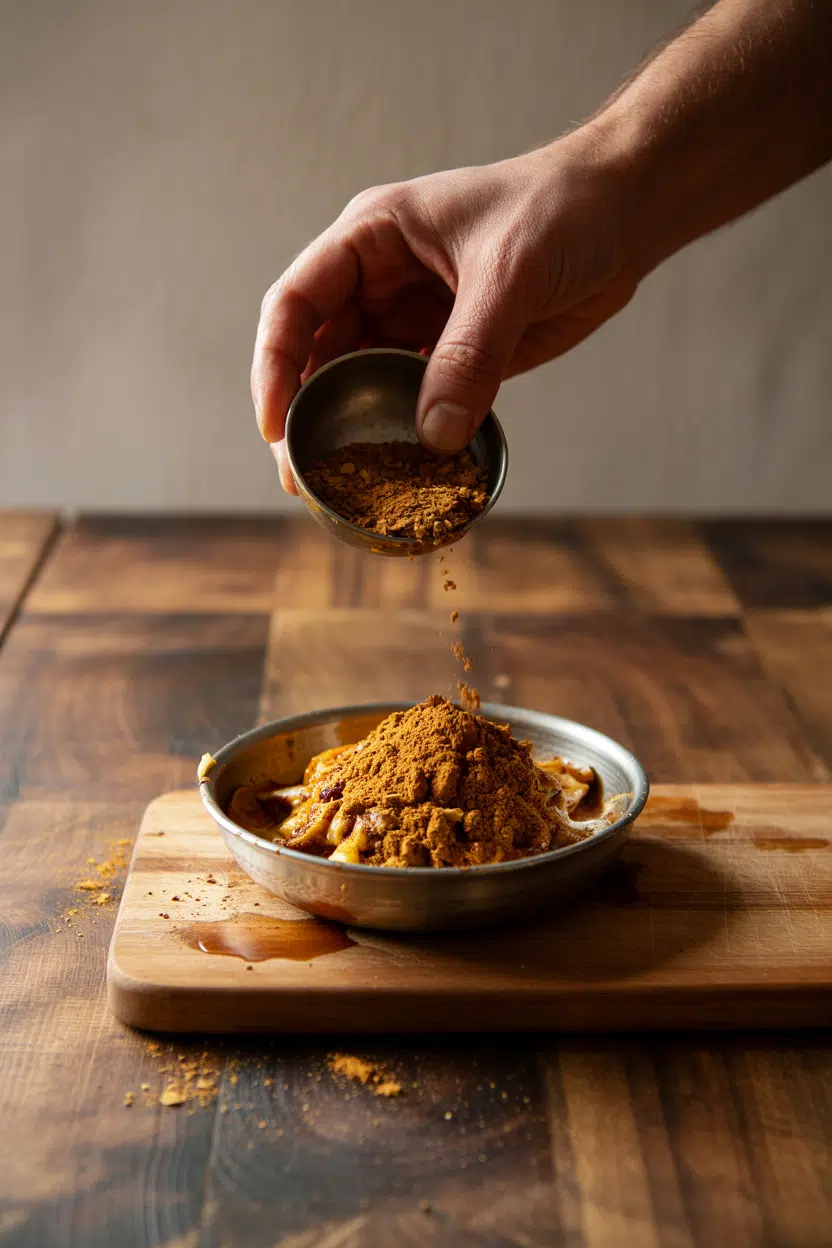
Garam masala tastes closest to a warm cinnamon-pepper blend with savory cumin running underneath. It's aromatic before it's spicy - the first note you get is resinous and sweet from cardamom and cinnamon, followed by a mild, earthy bitterness from cumin and coriander.
Heat changes the blend's behavior. Added early, the volatile aromatics from cardamom and cloves burn off, leaving only the duller base notes of pepper and cumin.
Added late - or stirred into a warm finished sauce - the full spectrum stays intact.
Compared to curry powder, garam masala is more aromatic and less savory. It has no turmeric, which means it contributes no color and very little of that earthy, slightly medicinal note that curry powder carries.
Think of it as the fragrant layer on top, not the foundation.
How to Use garam masala
Garam masala earns its place as a late-stage spice. The standard approach is to add it in the last 3-5 minutes of cooking, or directly over a finished dish just before serving.
This preserves the cardamom's bright citrus lift and the clove's resinous depth.
It also works as a dry rub component or marinade ingredient, especially for tandoori-style chicken or roasted cauliflower. In marinades, it sits against yogurt and acid, which moderate its intensity before the meat ever hits heat.
| Method | Best For | Tip |
|---|---|---|
| 🍲 Finishing | Curries, dal, gravies | Add in last 3-5 minutes; stir and taste |
| 🥣 Marinade | Chicken, lamb, paneer | Combine with yogurt and acid to temper intensity |
| 🥄 Tadka/Bloomed | Lentil dishes, rice, sauces | Bloom briefly in hot ghee - no more than 20-30 seconds |
| 🥦 Dry Rub | Roasted vegetables, potatoes | Mix with oil and salt; coat evenly before roasting |
Garam masala pairs naturally with yogurt, tomato, ghee, lentils, chicken, and lamb. It also lifts biryani and pilaf when stirred into the rice just before the lid goes on for its final steam.
Avoid it in very sweet desserts or delicate floral teas - the clove and black pepper clash rather than complement. For dishes that need a different warm-spice direction, ras el hanout is a North African blend worth comparing.
If you're thinking about what to pair your finished curry with, the right side dishes make a real difference in how the spice blend reads on the plate.
How to Buy and Store garam masala
At the store, look for jars that list cardamom, cinnamon, cloves, cumin, and coriander near the top of the ingredient list - that signals a balanced blend, not filler-heavy powder. A fresh jar, when lightly tapped, should release an immediate warm, resinous smell.
Whole-spice blends you grind at home last 12-24 months unopened. Pre-ground blends are best within 3-6 months of opening.
Store either format in an airtight container, away from heat and direct light - above the stove is the worst spot in the kitchen.
For a deeper look at freshness timelines, the full breakdown on garam masala storage guide covers how to test potency before cooking.
- Buy whole-spice - grind small batches to order for maximum aroma
- Check the date - look for a packaging or best-by date; skip undated bulk jars
- Smell before buying - if the store lets you open the jar, that's your best quality test
Where to Start With garam masala
If you haven't cooked with garam masala before, start with dal. Add a half-teaspoon to simmering lentils in the last five minutes, finish with a pat of butter.
That single step shows exactly what this blend does: it rounds harsh edges and adds depth without announcing itself.
From there, use it as a finishing spice on any curry or roasted vegetable. If you find you want a bolder or different warm-spice character, the garam masala swaps page maps out what works and when.
Frequently Asked Questions
Most blends combine cardamom, cinnamon, cloves, cumin, coriander, and black pepper. Regional versions add mace, nutmeg, bay leaf, or fennel, which is why two different brands can taste noticeably distinct.
No. Curry powder contains turmeric, giving it color and a distinctly earthy, savory flavor. Garam masala has no turmeric - it's more aromatic and is typically added at the end of cooking, not the beginning.
Add it in the last 3-5 minutes of cooking, or directly over the finished dish. Early addition burns off the volatile aromatics - the cardamom and clove notes that make the blend worth using.
In a pinch, yes - but the result will be sweeter, more aromatic, and lack the golden color turmeric provides. Reduce the quantity by about a third, since garam masala is more concentrated in fragrance.
A pre-ground blend stays at peak aroma for 3-6 months after opening. Beyond that, it won't spoil, but the fragrance fades significantly - smell it before use to gauge whether it's still worth adding.



