
You spot a Fuji apple at the market - deep red blush over a yellow-green base, heavier in the hand than it looks - and it's easy to assume it'll taste like every other supermarket apple.

It won't.
Much like the taste of braeburn apple rewards a closer look, the Fuji has a flavor profile that sets it apart from most varieties on the shelf, and knowing what makes it distinct changes how you use it.
If you're reaching for warm baking spices to go with it, a quick check of replacements for apple pie spice can save a mid-recipe scramble.
The Fuji apple is a dense, very sweet, crisp pome fruit developed in Japan. It has low acidity, a mild honeyed flavor, and holds its texture well in both raw and baked applications. Best for snacking, salads, and pies where you can cut back on added sugar.
What Is Fuji Apple?
Fuji is a late-season apple variety bred at the Tohoku Research Station in Aomori Prefecture, Japan, released commercially in 1962 after roughly three decades of development.
Remember it later
Planning to try this recipe soon? Save it for a quick find later!
It crosses Ralls Janet - an old American heirloom - with Red Delicious, inheriting sweetness and density from both parents while shedding most of Red Delicious's mealiness.
Classified as a pome fruit under Malus domestica, it's sold in markets under several labels - simply "Fuji," "Fuji Red," or occasionally "Aomori Fuji" for premium Japanese-grown fruit. Outside Japan, most commercial supply comes from Washington State, Chile, and China.
Fuji runs large compared to mid-season varieties. The skin is thin and smooth, showing a characteristic red blush streaked over a yellow-green background.
High natural sugar content - among the highest of any widely grown variety - is the defining trait that separates it from sweeter-seeming but less sugary options like Gala.
What Does Fuji Apple Taste Like?
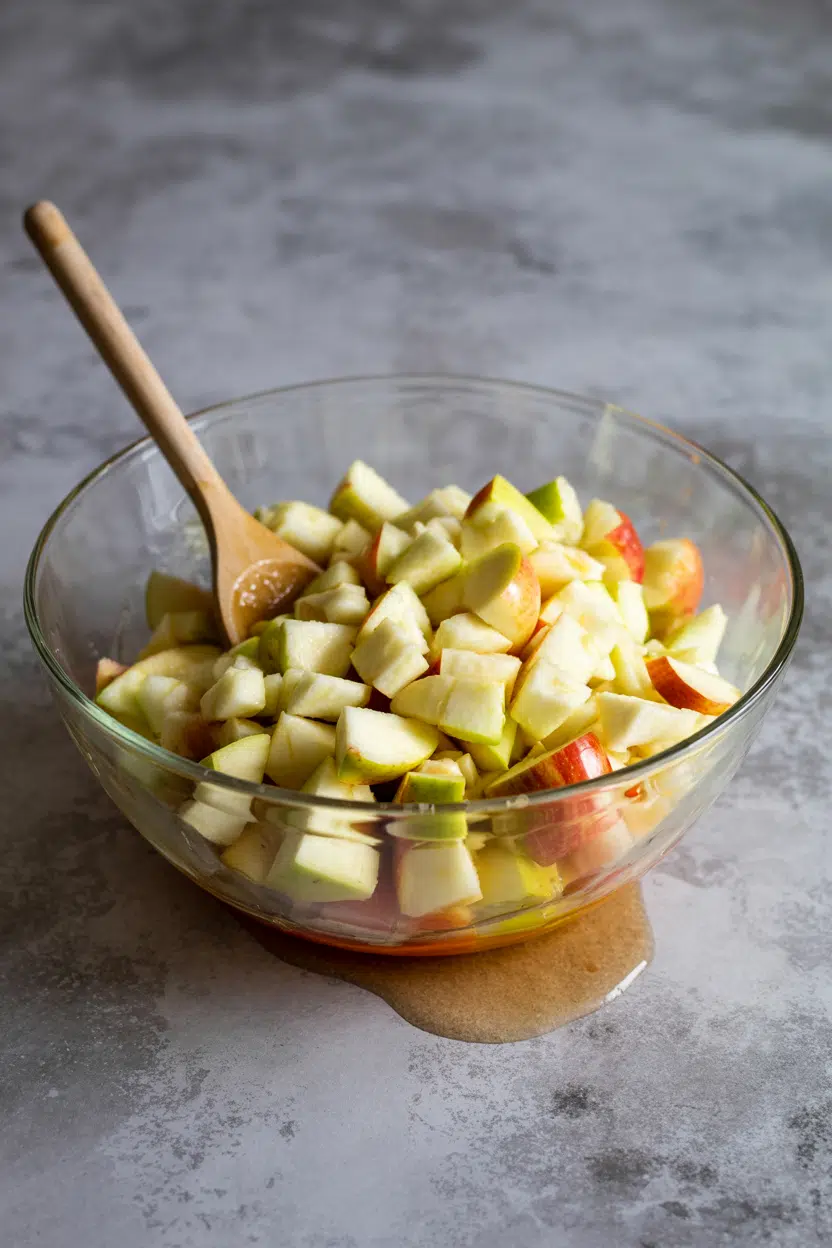
Fuji leads with pronounced sweetness - not a simple one-note sugar hit, but a layered quality with a subtle honeyed finish that lingers.
Acidity is low to moderate, giving it only a mild tang rather than the sharp bite you'd find in a Granny Smith.
Think of it as a sweeter, denser cousin to Gala, with more structural integrity and less wateriness than Red Delicious. The honeyed note also edges it toward fruit like Asian pear in character, though the crunch is firmer.
Heat softens the sweetness slightly and concentrates the sugars, so baked Fuji reads richer than fresh - useful context if you're adjusting added sugar in a recipe.
Because sugar's shelf life affects final pie sweetness, it's worth keeping pantry sugar fresh when Fuji's natural sugars are doing heavy lifting.
How to Use Fuji Apple
Fuji's firm texture and high sugar content make it genuinely useful across a range of preparations - not just raw snacking. Its density means it holds shape under heat better than softer varieties, which matters in baked applications.
| Method | Best For | Tip |
|---|---|---|
| 🥗 Raw | Cheese boards, salads, lunchbox slices, morning bowls | Toss cut pieces in lemon juice to slow browning |
| 🥧 Baked | Apple pies, crisps, tarts, galettes | Reduce added sugar by 25% - Fuji brings enough sweetness |
| 🍳 Roasted | Root vegetable trays, alongside pork or chicken | Quarter and add in the last 20 minutes to preserve texture |
| 🔥 Sautéed | Caramelized tarts, pan sauces, galettes | Medium-high heat, brief contact - Fuji caramelizes fast |
| 🍢 Grilled | Skewers with pork, fruit salsa bases | Brush with a ginger-soy glaze for a savory contrast |
In American kitchens, Fuji is the go-to for apple pie and apple crisp precisely because the fruit's natural sugar lets bakers dial back added sweeteners.
Japanese fresh fruit culture prizes it for decorative sliced presentations, where cut precision and firm texture matter more than softness.
Modern fusion cooking uses Fuji thinly sliced in slaws and grain salads, where its crunch offsets creamy dressings.
For pairings, sharp cheddar or aged gouda alongside raw Fuji slices is a classic combination - the cheese's salt and funk balance the sweetness cleanly. Pork, bacon, walnuts, cinnamon, and a squeeze of lemon juice all work well.
Avoid pairing Fuji with delicate white fish; its sweetness overwhelms mild proteins.
If you need a swap mid-recipe, knowing your replacements for fuji apple keeps dinner on track. Honeycrisp is the closest match for raw use - though a look at honeycrisp apple stand-ins shows how differently it performs under heat.
How to Buy and Store Fuji Apple
A good Fuji feels heavy and solid for its size - any give under light pressure signals internal softening. Skin should be smooth and taut, with a bright red blush spread over a yellow-green base.
Avoid fruit with wrinkled skin, visible bruising near the stem, or dull coloring.
- 🧊 Refrigerator crisper drawer - best option; keeps Fuji crisp for 4-8 weeks whole and unwashed
- 🏠 Cool cellar or pantry - works if below 60°F; expect 2-4 weeks maximum
- 🌡️ Room temperature - fine for 4-7 days, but texture degrades faster than refrigerated
- 👃 Away from strong aromatics - apples absorb odors; keep away from onions and garlic in storage
For longer storage, freezing fuji apple is a practical option - slice first, as whole frozen apples lose their signature crunch on thawing.
Where to Start With Fuji Apple
Fuji is the right apple if you want maximum sweetness and crunch with minimal effort.
Raw is where it excels most - no prep beyond slicing, and the texture holds without any treatment except a lemon juice toss to prevent browning.
Try it on a cheese board first alongside sharp cheddar and walnuts. From there, baking is the natural next step - start with a caramel apple crisp recipe to see how well Fuji holds its shape and sweetness under heat.
Frequently Asked Questions
Predominantly sweet. Fuji has among the highest natural sugar levels of any widely sold variety, with only mild background acidity. It's noticeably less tart than Granny Smith and less balanced than Honeycrisp.
Yes - their density means they hold shape in pies and crisps without turning to mush. The trade-off is high sweetness, so reduce added sugar in your recipe by roughly 20-25% to compensate.
Whole, unwashed Fuji apples keep 4-8 weeks in the crisper drawer. Store them away from strong-smelling foods, as the thin skin absorbs odors quickly.
Honeycrisp is the closest for raw eating - similar crunch and sweetness, though with more acidity. For baking, Pink Lady holds its shape comparably and offers a slightly more tart profile.
Yes. Fuji skin is thin and non-waxy compared to some varieties, so it's easy to eat without peeling. Most of the apple's fiber content sits just under the skin, making it worth keeping on.



