
Opening a jar of fig jam, you get that first warm hit - honey, molasses, and something faintly earthy underneath. Fig jam is one of the few preserves that works equally well on a breakfast table and a charcuterie board, and understanding why starts with what's actually inside the jar.
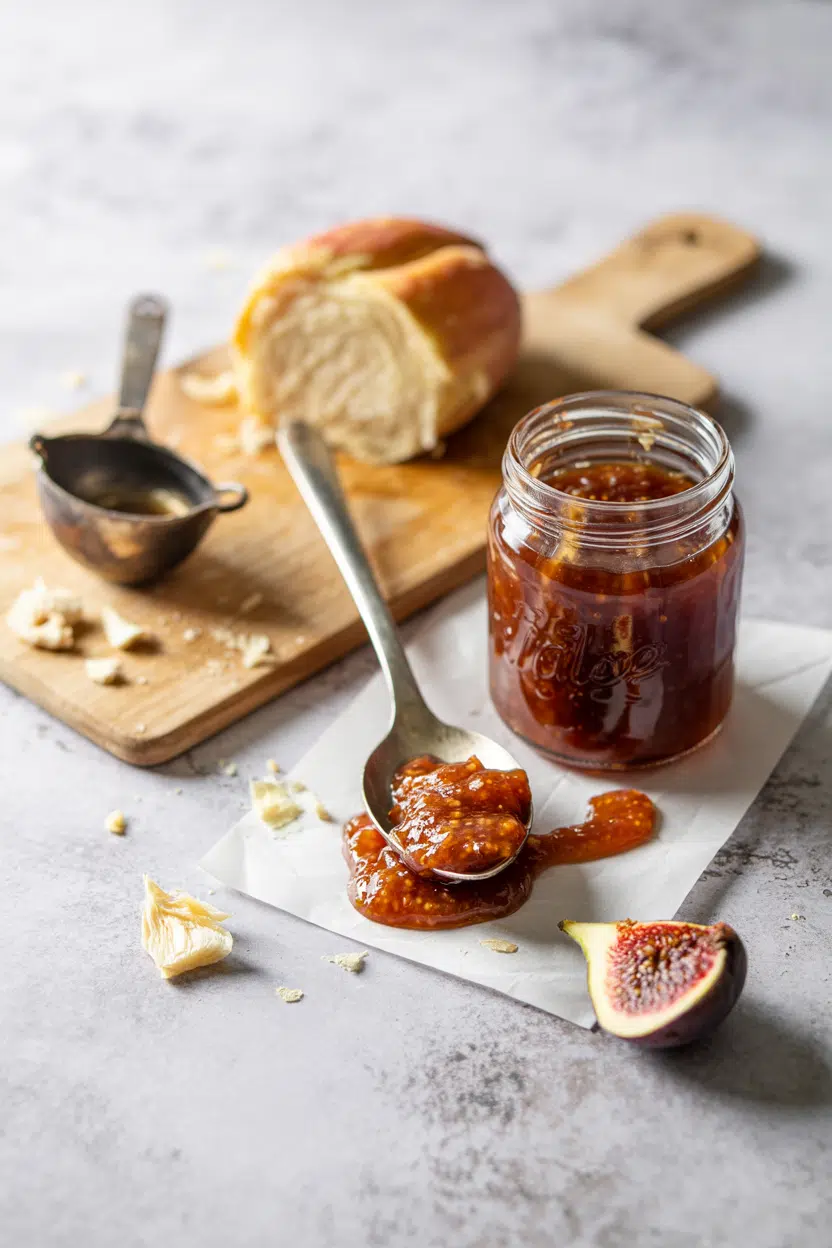
The seeds, the sugar concentration, the occasional dash of lemon juice - each element shapes how it behaves in cooking.
Fig jam is a cooked fruit preserve made from figs, sugar, and lemon juice. It delivers honeyed sweetness with caramel depth, works across sweet and savory dishes, and keeps up to 6 months refrigerated after opening.
What Is Fig Jam?
Fig jam is a cooked fruit preserve from the Mediterranean and Middle East, regions where figs have been cultivated for thousands of years.
Remember it later
Planning to try this recipe soon? Save it for a quick find later!
At its core, it's fresh or dried figs broken down with sugar and usually lemon juice until the mixture gels and concentrates.
The result is thick, spreadable, and dotted with the small, crunchy seeds figs are known for. Those seeds aren't a flaw - they're a textural signature that distinguishes fig jam from smoother preserves like jelly or curd.
You'll find it sold under several names depending on origin.
French labels say confiture de figue, Italian ones say marmellata di fichi, and American packaging often alternates between fig jam, fig spread, and fig preserves - all referring to roughly the same product.
- 🫙 Fig jam - cooked with sugar until it gels; spreadable, seed-studded
- 🫙 Fig conserve - tends to have larger fruit pieces or added nuts; chunkier texture
- 🫙 Fig spread - often a lower-sugar, sometimes smoother commercial product
- 🫙 Fig preserves - typically contains more whole or large fig pieces suspended in syrup
What Does Fig Jam Taste Like?
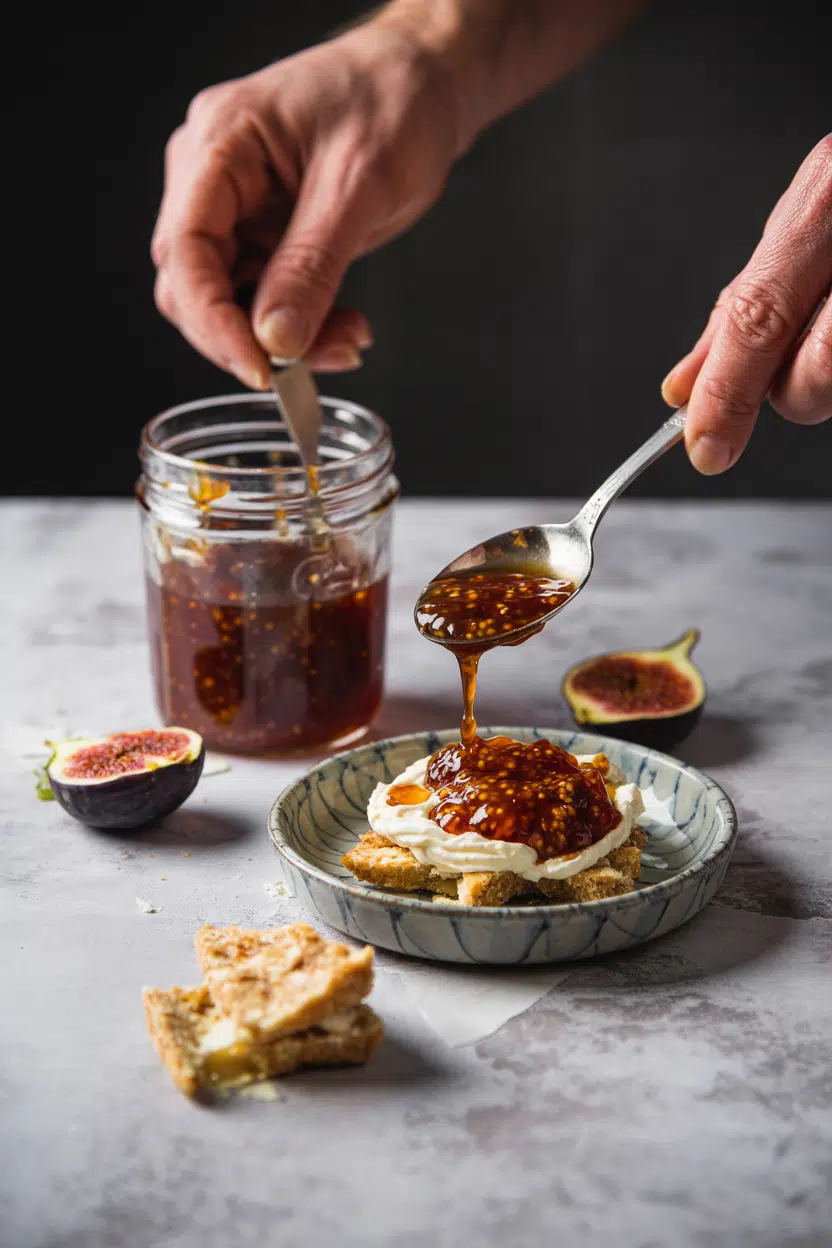
The dominant note is honeyed sweetness, but fig jam carries more complexity than most fruit jams.
Caramel undertones develop during cooking as the sugars deepen, and there's a mild tannic quality - a faint dryness on the finish - that comes from the fig skin and seeds.
Think of it as somewhere between a sweeter apricot jam and a honeyed prune spread, with an earthiness that neither of those has.
When lemon juice is included, a bright citrus note cuts through the richness and keeps the sweetness from feeling heavy.
Warmed in a pan, the caramel and molasses notes intensify noticeably. Cold from the jar, the sweetness is rounder and the earthiness more present.
How to Use Fig Jam
Fig jam spans a wider range of applications than most people expect from a jar of preserves.
Its moderate intensity means it holds up in savory cooking without overwhelming other ingredients, and it adds depth where blander sweeteners would fall flat.
On the savory side, glazing roasted or grilled meats is where fig jam earns the most respect. Brushed over pork loin in the last 15 minutes of roasting, it caramelizes into a lacquered crust.
Heated with a splash of balsamic vinegar swaps that work the same way balsamic does, fig jam becomes a pan sauce for duck breasts in minutes.
The cheese board application is well-known for good reason.
Spooned next to goat cheese or a sharp blue, fig jam bridges the gap between tangy dairy and cured meat.
If you're working without goat cheese, our guide to replacements for goat cheese covers options that hold up equally well alongside fig jam. Prosciutto in cooking pairs naturally with fig jam - layered in a sandwich with arugula, it's one of the simplest combinations that consistently works.
For sweet applications, swirl fig jam into ricotta or Greek yogurt, bake it into thumbprint cookies, or layer it inside pastry tarts.
Jam bars are a natural fit - the same technique used in raspberry jam bars translates directly with fig jam for a richer, earthier result.
| Method | Best For | Tip |
|---|---|---|
| 🥗 Cold/Spread | Cheese boards, toast, yogurt bowls | Serve at room temperature - flavor opens up as it warms |
| 🍳 Glaze | Pork loin, duck breast, grilled chicken | Apply in the last 10-15 minutes to avoid burning |
| 🍳 Pan Sauce | Duck, lamb, pork chops | Deglaze with vinegar or wine first, then stir in jam |
| 🥧 Baked | Tarts, jam bars, thumbprint cookies | Reduce sugar elsewhere in the recipe - jam adds plenty |
How to Buy and Store Fig Jam
At the store, check the ingredient list before anything else. Good fig jam lists figs first, followed by sugar and lemon juice - nothing else is required.
Avoid jars where "fig puree concentrate" leads the list, or where the jam looks watery and pale rather than deep amber.
At farmer's markets, look for visible whole seeds and a natural amber color - signs the jam was made from real fruit at proper concentration. Storage is straightforward once you're home:
- Unopened jars - store in a cool, dark pantry; commercially sealed jars last 12-24 months
- After opening - refrigerate in the original jar with the lid tight; keeps 3-6 months
- Extended storage - [freezing fig jam](https://forkliftkitchen.com/fig-jam-shelf-life/) extends shelf life beyond the fridge window if you have surplus
Where to Start With Fig Jam
If you've never cooked with fig jam before, start on a cheese board - it requires no technique and shows you exactly how the flavors behave.
Once you understand its sweetness and depth, move to glazing pork or stirring it into yogurt.
If a recipe calls for it and you don't have any, a rundown of alternatives to fig jam covers what holds up in both sweet and savory contexts.
Fig jam rewards people who treat it as an ingredient rather than a condiment.
Frequently Asked Questions
Fresh or dried figs, sugar, and usually lemon juice - that's the standard formula. Some commercial versions add pectin to speed up gelling, but high-quality jams rely on the fruit's natural pectin and long cooking time.
It's sweet by default, but it functions well in savory cooking. The earthy, tannic undertones and moderate intensity make it compatible with cured meats, aged cheeses, and roasted meats without tasting like dessert.
Fig conserve typically has larger fruit chunks and sometimes includes nuts or spices. Fig jam is cooked until smoother and more uniformly gelled, making it easier to spread.
Goat cheese and blue cheese are the strongest pairings - their sharpness and funk contrast the sweetness directly. Aged manchego, pecorino, and sharp cheddar also work well on a cheese board.
Yes. Dried figs work well when rehydrated first in water or juice before cooking. The resulting jam is darker and more intensely flavored than fresh-fig versions, with less natural pectin activity.



