
You spot it tucked between the instant coffee and the cocoa powder, a small jar labeled espresso powder that most shoppers walk past.

That's a mistake, because this concentrated, finely ground dried coffee does something liquid coffee never can - it adds a deep, roasty intensity to food without adding a single drop of moisture.
Whether you're reaching for it in a brownie batter or a steak rub, dishes alongside coffee suddenly have a whole new depth when this ingredient enters the mix.
If ganache is on your list, note that alternatives to heavy cream in ganache pair just as well with an espresso boost as the classic version does.
Espresso powder is a dry, concentrated coffee flavoring made from dark-roasted beans or dehydrated brewed espresso. It delivers intense roasty bitterness without liquid, making it ideal for baking, rubs, and chocolate desserts. A little goes a long way.
What Is Espresso Powder?
Espresso powder - also sold as instant espresso powder or concentrated coffee powder - is made by roasting dark coffee beans, brewing them into espresso, then dehydrating and grinding that brewed coffee into a very fine powder. It originated from Italian espresso culture but became a globalized pantry staple through commercial production, most notably via brands like Medaglia d'Oro and King Arthur.
Remember it later
Planning to try this recipe soon? Save it for a quick find later!
It is not the same as ground espresso beans or standard instant coffee granules, and that distinction matters. Instant coffee is milder, lighter in roast, and dissolves more readily into cold liquids; espresso powder is darker, denser in flavor, and engineered for concentrated intensity in small doses.
Several subtypes exist worth knowing:
- ☕ Instant espresso powder - the most common form; fully soluble in hot water or fat
- 🍫 Espresso extract powder - a more concentrated version sometimes used in professional pastry kitchens
- ⚠️ Ground espresso (not powder) - whole-bean grind, does NOT dissolve; a common but costly mix-up at the store
What Does Espresso Powder Taste Like?
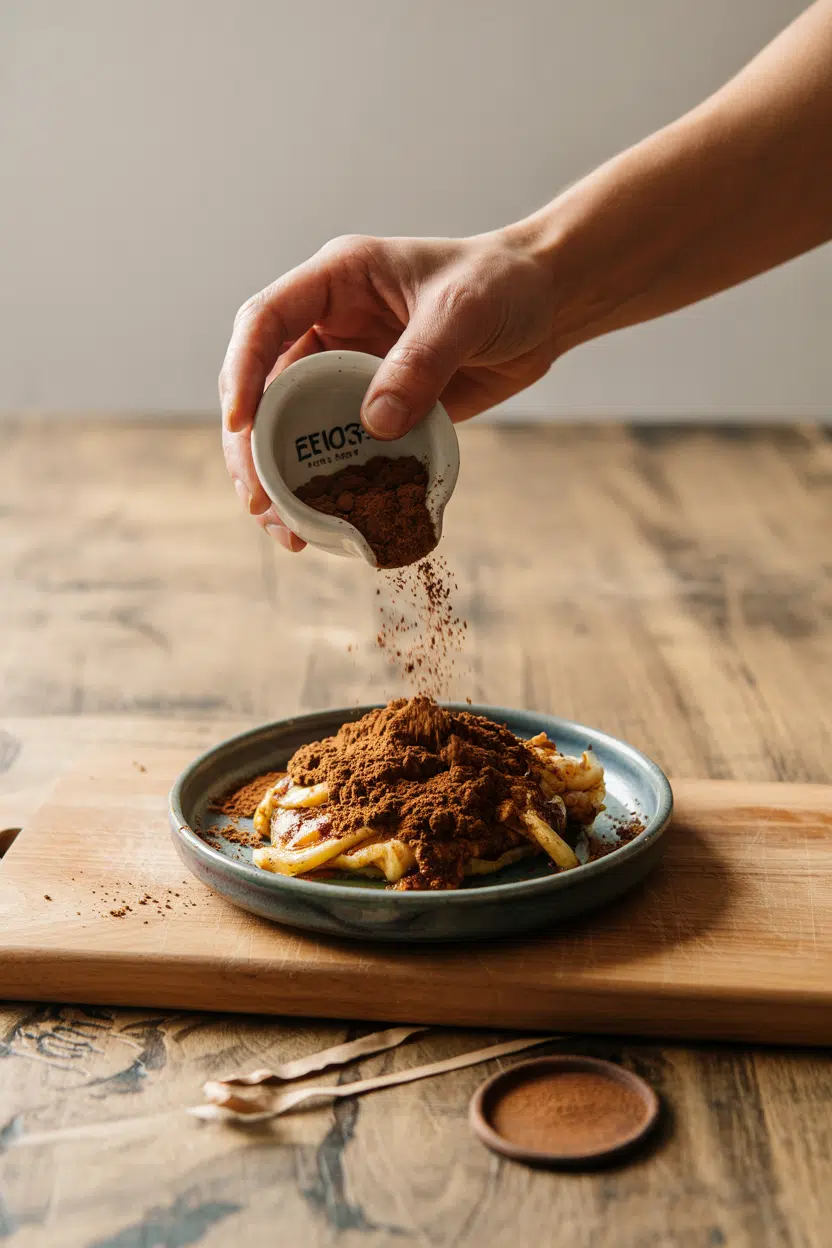
On its own, espresso powder tastes intensely bitter with a deep, dark-roast character - think the concentrated hit of a well-pulled espresso shot, but drier and sharper.
There's a cocoa-like bitterness underneath, plus a faint smoky undertone that sets it apart from milder instant coffee.
Heat amplifies its roasty edge and melds it into surrounding flavors rather than announcing itself loudly. In chocolate cake or ganache, you won't taste coffee outright - you'll taste chocolate that seems richer and more complex than usual.
How to Use Espresso Powder
One to two teaspoons is the standard working dose for most baking recipes, enough to deepen flavor without pushing the coffee note into the foreground. Fold it dry into batters, whisk it into dry rubs, or dissolve it in a small amount of hot water first when making sauces and ganache.
In baking, it pairs brilliantly with dark chocolate and cocoa powder - the bitterness frequencies align and reinforce each other.
A batch of brownies, a chocolate layer cake, or chocolate chip cookie dough all benefit from a small addition.
For savory applications, stirring it into a dry rub for steaks or ribs gives roasty umami depth; its earthiness also works well in a Mexican mole or chili blend.
Much like making memphis dry rub ribs at home shows, a bold spice profile is what separates a great rub from a forgettable one - espresso powder earns its spot there.
| Method | Best For | Tip |
|---|---|---|
| 🎂 Dry into batter | Chocolate cakes, brownies, cookies | Add with dry ingredients; no dissolving needed |
| 🍫 Dissolved in liquid | Ganache, sauces, frostings | Dissolve in 1 teaspoon hot water first for even distribution |
| 🥩 Dry rub | Steaks, ribs, brisket spice blends | Combine with brown sugar and smoked paprika to balance bitterness |
| 🌶️ Spice blends | Mole, chili, BBQ sauces | Start with half a teaspoon; add more to taste |
Avoid pairing it with delicate floral desserts or light teas - the intensity overwhelms subtle flavor profiles. Strong partners are what it needs: butter, brown sugar, vanilla, cream, mascarpone, mushrooms, and beef.
How to Buy and Store Espresso Powder
Look for packages labeled "instant espresso powder" or "espresso extract powder" made from dark-roasted beans. The texture should be uniformly fine - no visible clumps - and the aroma should hit immediately when you open the jar.
Skip anything that smells flat or stale at the shelf, and don't grab a bag of ground espresso by mistake; it won't dissolve.
For storage, an airtight, opaque container in a cool pantry is sufficient for everyday use. Refrigerating in a sealed jar extends freshness noticeably, especially in humid climates - a principle that applies broadly to ground coffee products, as how long coffee keeps makes clear.
Full guidance on keeping espresso powder fresh covers pantry versus fridge scenarios in detail.
- 📦 Unopened - 12-24 months at room temperature
- 🫙 Opened, pantry - 6-12 months in an airtight container
- ❄️ Refrigerated - up to 18 months; bring to room temperature before measuring to avoid condensation
Start With Chocolate
If you've never used espresso powder before, chocolate baking is the right entry point. Add one teaspoon to your next brownie or chocolate cake recipe and note the difference - it's subtle but real.
From there, branching into dry rubs or spice blends feels natural.
If your pantry is already stocked with comparing cocoa powder vs baking cocoa options, espresso powder becomes a logical next step in building chocolate depth.
And when a recipe calls for it but you're out, espresso powder stand-ins can bridge the gap without derailing the dish.
Frequently Asked Questions
No. Espresso powder is darker, more concentrated, and made from dark-roasted beans specifically. Instant coffee uses a lighter roast and produces a milder, thinner flavor that doesn't deliver the same depth in baking.
Dissolve one teaspoon in two tablespoons of hot water for a rough equivalent to one espresso shot. It won't replicate the crema, but the flavor intensity is comparable for cooking purposes.
Yes, but use about twice the amount to compensate for lower intensity. The flavor will be slightly milder and less roasty, which works in most baking recipes but falls short in dry rubs.
Yes, though the amount per teaspoon is small - roughly 30-50mg depending on the brand. Spread across an entire baked dish, each serving contains a trace amount, well below a standard coffee serving.
It depends on the recipe. In dry rubs or batters that bake, it disperses fine without pre-dissolving. In no-bake desserts or cold creams, dissolve it first in a small amount of warm liquid to prevent graininess.



