
You spot a small jar labeled doubanjiang - or maybe "toban djan" or "broad bean chili paste" - on the shelf at an Asian grocery, deep red-brown through the glass with a slick of oil pooling at the top.

It's the kind of paste that rewards the curious and quietly dominates Sichuan cooking in a way that swapping out sichuan peppercorn or any other single ingredient simply can't replicate.
Fermented broad beans and chilies are its backbone, and what happens to gluten during fermentation guide explains why the fermentation process also matters for anyone watching their diet.
This article tells you exactly what it is, how it tastes, and how to put it to work.
Doubanjiang is a fermented broad bean and chili paste from Sichuan, China. It delivers deep umami, salty heat, and a pungent fermented aroma. Used as a stir-fry base or braising seasoning, it's the defining flavor of mapo tofu. Opened jars keep up to 12 months refrigerated.
What Is doubanjiang?
Doubanjiang is a fermented paste built on salted broad (fava) beans and dried red chilies, with fermented soy typically added alongside. It originates from Pixian county near Chengdu in Sichuan province, which is why premium versions are sold as Pixian doubanjiang - a label worth seeking out. The paste is aged in clay pots under the sun, sometimes for two or more years, which develops its characteristic deep red-brown color and layered, complex character.
Remember it later
Planning to try this recipe soon? Save it for a quick find later!
It goes by several names: toban djan, douban sauce, and broad bean chili paste are the most common in Western markets. Not all products sold under these names are equal, however.
Cheaper versions skip the long fermentation and rely on fresh chili rather than properly aged beans, producing a thinner, less developed result.
Two main styles exist: the standard version (spicy and fermented) and a non-spicy variant called sweet bean paste, which is a different product entirely. For Sichuan cooking, always confirm the label includes chilies and notes fermented broad beans specifically.
- 🌍 Origin - Pixian county, Chengdu, Sichuan province, China
- 🫘 Base ingredients - Broad (fava) beans, dried chilies, fermented soy, salt
- ⏳ Aging - Premium Pixian paste is aged 1-3 years in open-air clay pots
- 🏷️ Alternate names - Toban djan, douban sauce, broad bean chili paste
What Does doubanjiang Taste Like?
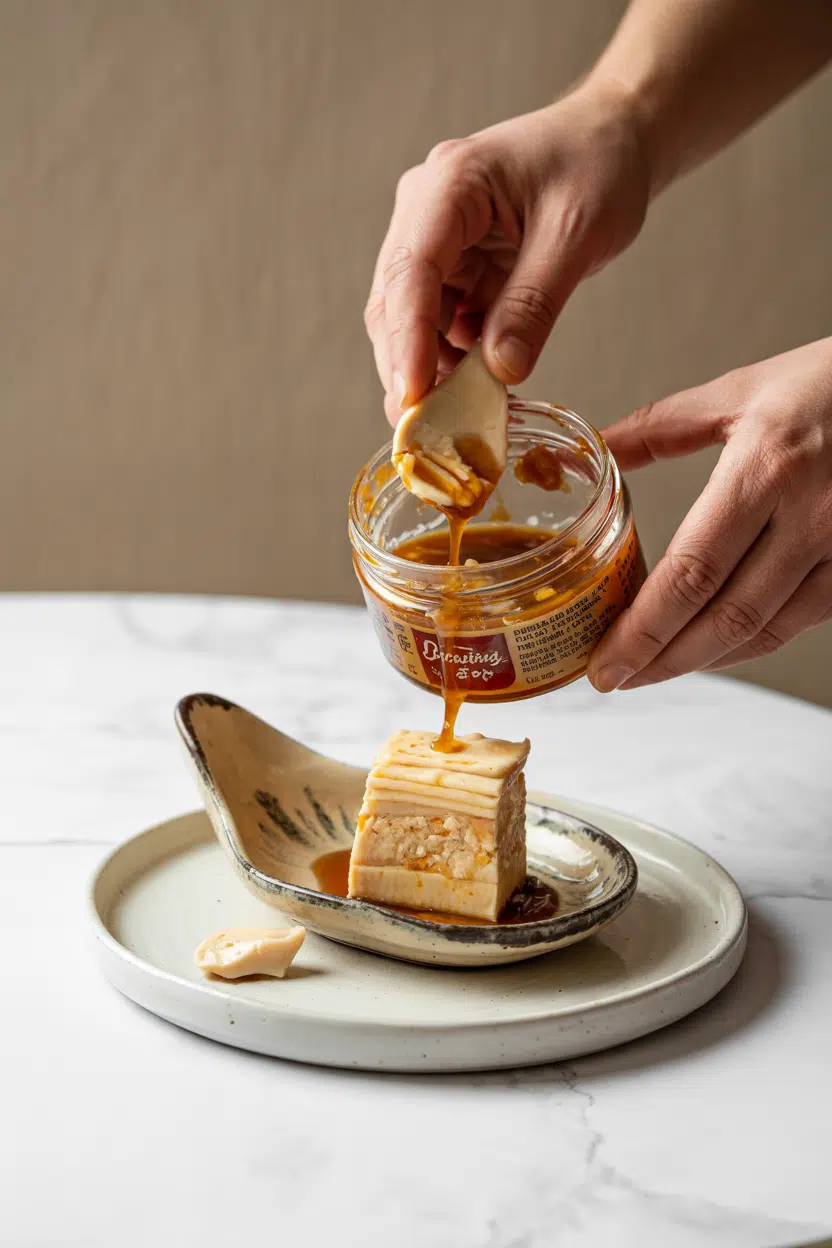
Think of a saltier, earthier miso blended with a chunky chili paste - then push the fermented character further and add an oily, almost lacquered finish.
That's the closest shorthand. Salty and umami-forward are the dominant registers, with chili heat that lands mid-palate rather than at the tip of the tongue.
The flavor also changes with heat. Frying doubanjiang in hot oil - a technique called stir-frying the paste - drives off sharper raw fermented notes and develops a toasty, rounded depth.
Raw from the jar, the tang and salt are more upfront; cooked, it softens into the dish's backbone rather than standing apart.
Longer braising mellows the heat further without erasing the umami core.
That slow fade is why the paste works in hour-long braises as well as five-minute stir-fries - it behaves differently at each cooking stage.
Note that chili's shelf life can affect heat intensity in dried chili products generally, so older or degraded paste may taste flatter than a freshly opened jar.
How to Use doubanjiang
Doubanjiang earns its place at the start of a dish, not the end. In classic mapo tofu, the paste hits the wok first in peanut or vegetable oil alongside garlic and scallions, creating a spiced fat base before any protein or tofu enters the pan. That first sizzle is where the flavor compounds develop.
| Method | Best For | Tip |
|---|---|---|
| 🔥 Stir-fried in oil | Mapo tofu, kung pao sauces, stir-fry bases | Use medium-high heat; 60-90 seconds is enough before adding aromatics |
| 🍲 Braising liquid | Spicy pork belly, beef shank, whole tofu blocks | Add early so the paste has time to dissolve and integrate |
| 🍜 Simmered in broth | Spicy noodle soup bases, hotpot dipping broths | Simmer at least 10 minutes to reduce the raw salt spike |
| 🥣 Blended into dressings | Cold noodle sauces, dumpling dipping condiments | Balance with sesame oil and a small amount of sugar or rice vinegar |
Beyond Sichuan dishes, the paste integrates well into contemporary fusion applications wherever a fermented chili element is needed.
Stir it into marinades for grilled eggplant or pork ribs, or whisk a small amount into a warm vinaigrette for roasted vegetables.
It pairs directly with soft or silken tofu, ground pork, and fermented black beans - ingredients that can hold up to its salt and intensity.
If a recipe calls for a different fermented chili product and you're out of options, reviewing alternatives to doubanjiang covers what substitutes preserve the umami depth versus what only approximates the heat.
One important note: doubanjiang overwhelms delicate dairy sauces and has no place in sweet preparations.
How to Buy and Store doubanjiang
At the store, prioritize jars labeled Pixian or those that specifically list fermented broad beans and chilies as the first ingredients.
A deep red-brown color with visible oil pooling at the top is a good sign; so is a pronounced, pungent fermented aroma when you crack the lid at home.
Avoid jars with musty smells or visible fuzzy white mold on the surface - surface oil is fine, surface mold is not.
Store unopened jars in a cool, dark pantry for up to 24 months.
Once opened, press the paste down with a clean spoon, ensure a layer of oil covers the surface, seal tightly, and refrigerate.
For a full breakdown of exactly how long doubanjiang keeps under various storage conditions, that guide covers edge cases like partially dried jars and freezing.
Refrigerated and properly sealed, opened paste stays good for 6-12 months.
Start Here if You're New to It
Pick up one jar of Pixian doubanjiang and use it in a single dish first - mapo tofu is the straightforward entry point because the paste is the structural foundation, not a background note.
You'll learn what "frying the paste in oil" means and how the flavor compounds once it hits heat.
Start with one teaspoon less than the recipe calls for. Doubanjiang is salty enough to throw off seasoning fast, and you can always add more at the end.
Once you know its output, building from there is straightforward.
Frequently Asked Questions
Yes, but the heat level varies by brand and age. Pixian doubanjiang carries moderate chili heat - noticeable but not overwhelming. Longer-aged versions tend to have deeper, mellower heat rather than sharp immediate burn.
Not directly. Gochujang is sweeter, smoother, and fermented soy-forward rather than broad bean-forward. If you need gochujang itself, check [alternatives to gochujang](https://forkliftkitchen.com/gochujang-substitutes/) - but for doubanjiang, a closer swap is miso blended with sambal oelek.
Most recipes use 1½ to 2 tablespoons for two servings. Start at 1 tablespoon if your paste is particularly salty, then taste before adding more - mapo tofu also gets salt from soy sauce and fermented black beans.
The paste itself - broad beans, chilies, soy, salt - is vegan. However, some brands add shrimp paste or use equipment shared with shellfish products. Check individual labels if this matters for your diet.
Pixian doubanjiang is the premium regional variety made in Pixian county, Sichuan. It uses a longer sun-aged fermentation - often 1-3 years - which produces a deeper color, richer umami, and more complex fermented character than standard versions.



