
A spoonful of demi glace dropped into a hot pan after searing short ribs transforms the drippings into something a home cook rarely achieves without it.

This classical French reduction is one of the few ingredients in a professional kitchen that does the work of hours in a single tablespoon. Concentrated, glossy, and intensely savory, it belongs in far more home kitchens than it currently occupies.
Demi glace is a deeply reduced brown stock and espagnole sauce from classical French cuisine. It delivers concentrated umami, roasted bone depth, and a silky, glossy texture that enriches pan sauces, braises, and plated meats with minimal effort.
What Is Demi Glace?
Demi glace (also written demiglace or demi-glace) is a classical French sauce base built from two foundational components: brown veal or beef stock and espagnole sauce, a rich mother sauce made with brown roux and tomato paste.
Remember it later
Planning to try this recipe soon? Save it for a quick find later!
The two are combined and simmered together - sometimes for hours - until the liquid reduces by roughly half, producing a glossy, nearly syrupy concentrate.
The name comes from French: demi means "half," referencing that final reduction. Escoffier codified the technique in the late 19th century, and it became a cornerstone of haute cuisine.
A further reduction yields glace de viande, a firmer, more intensely flavored product used in even smaller quantities.
Commercial versions now come as jarred concentrates, frozen blocks, or shelf-stable tubs, which make the ingredient accessible without the multi-day kitchen process. Regardless of form, the defining characteristic is the same: collagen-rich gelatin from reduced bones gives demi glace its signature body and glossy coat.
What Does Demi Glace Taste Like?
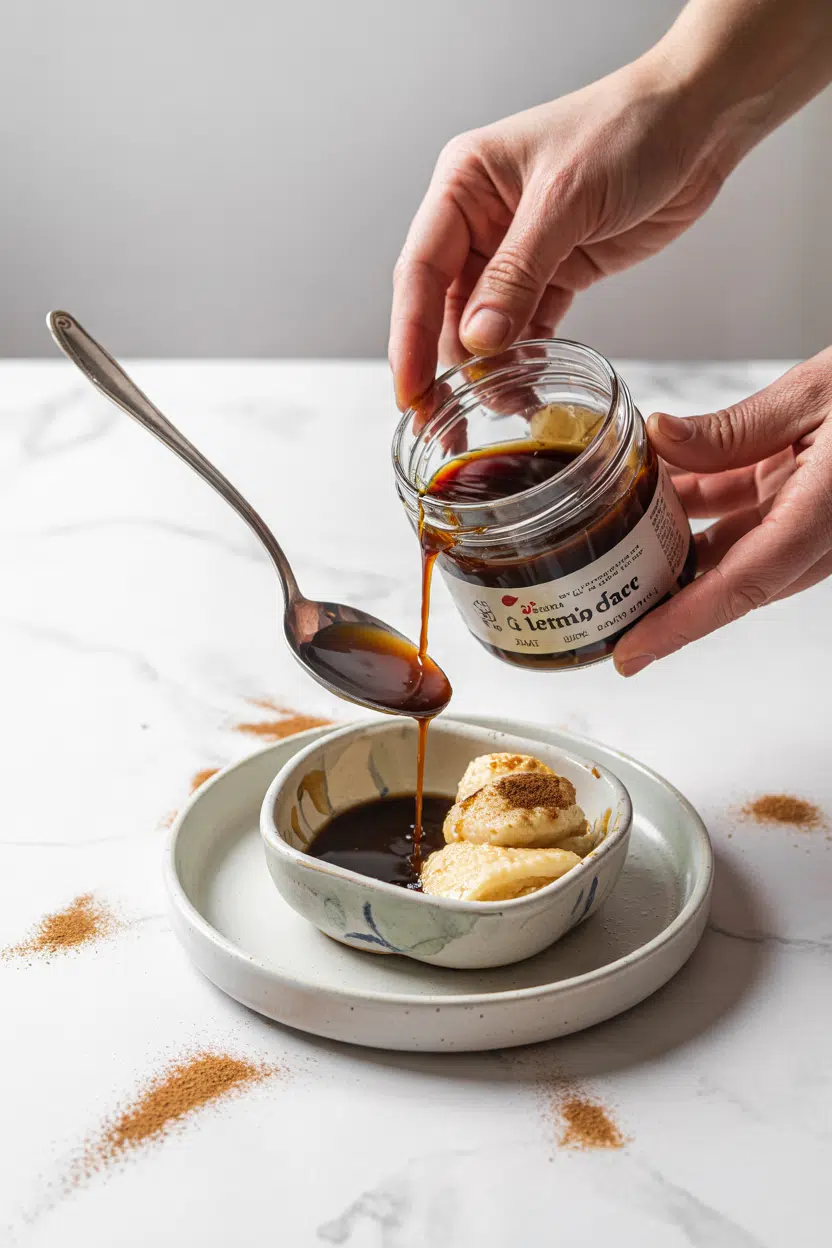
Think of a very concentrated beef gravy - then strip away the starchy thickness and replace it with something cleaner, more mineral, and far more intense.
That's the baseline. Roasted bone depth sits at the core, layered with a slightly bitter caramelized sweetness from the browning process and a subtle acidic lift from wine or tomato used in the espagnole component.
Straight from a spoon, demi glace is almost overwhelmingly savory. In cooking, that intensity is the point - a tablespoon or two is enough to deepen an entire sauce.
Heat amplifies the roasted notes; mounting with butter at the end rounds everything out and pulls the acidity into balance.
How to Use Demi Glace
Demi glace earns its place most visibly in pan sauces. After searing a steak or lamb chop, deglaze the pan with red wine or cognac, scrape up the fond, and whisk in a spoonful of demi glace.
The sauce tightens, glosses, and clings to the meat within minutes - no long reduction required.
| Method | Best For | Tip |
|---|---|---|
| 🥩 Pan Deglazing | Glossy pan sauces for steak, lamb, duck | Add after wine reduces; whisk off heat |
| 🍲 Braising Liquid | Short ribs, oxtail, osso buco enrichment | Use sparingly - it concentrates further as it cooks |
| 🧈 Butter Mounting | Finishing composed sauces, restaurant-style jus | Remove from heat before adding cold butter cubes |
| 🥕 Glazing | Roasted root vegetables, mushrooms | Thin with a little stock; brush on before final roast |
Beyond the pan, demi glace works as an enrichment layer in longer braises. Stirred into beef bourguignon or added to the braising liquid for osso buco, it adds color, body, and depth that plain stock can't match.
Wild mushrooms and shallots are natural partners - their earthiness amplifies the roasted notes without competing.
For composed sauces, demi glace pairs with cream or butter to create velouté-style finishes, or with fresh thyme and bay leaf for a cleaner, herb-forward jus. Avoid pairing it with delicate fish or bright citrus preparations - the heavy roast character overwhelms both.
How to Buy and Store Demi Glace
Good commercial demi glace should be deeply brown and glossy - avoid anything pale, cloudy, or thin in the jar. Frozen versions should arrive as solid, uniform blocks without visible freezer burn crystals.
Check ingredient labels: quality products list stock and espagnole components, not primarily salt or starch.
Storage is straightforward but time-sensitive once opened. Unopened commercial jars keep in a pantry for months to a year; after opening, refrigerate in a sealed container and use within one to two weeks.
For the full picture on how long opened and frozen portions stay good, see our guide to demi glace storage guide. Frozen portions hold well for three to six months - vacuum bags or rigid airtight containers prevent flavor loss.
The gelatin content makes frozen demi glace firm up completely, which is normal and a good sign of quality.
Where to Start With Demi Glace
If you're new to this ingredient, skip the elaborate composed sauces for now. Sear a good beef cut, deglaze with whatever wine is open, and whisk in a tablespoon of demi glace.
That single move shows you what it does - and why chefs keep it close.
- Already comfortable with pan sauces? Move to braising: add two tablespoons to your next short rib braise for noticeably deeper color and body.
- Want to experiment with demi glace replacements? Reduced beef stock with a little tomato paste gets close, though the gelatin-driven texture won't fully match.
Start with a small jar before committing to a larger frozen block. One jar goes further than you'd expect.
Frequently Asked Questions
No. Gravy is typically thickened with flour or cornstarch and made from roasting drippings. Demi glace gets its body from collagen-rich gelatin released during long bone reduction - no starch required. The flavor concentration is also far higher than most gravies.
Brown veal or beef stock is combined with espagnole sauce - a mother sauce made from brown roux, mirepoix, and tomato - then simmered until reduced by roughly half. The process extracts gelatin from the bones, creating the glossy body.
Yes - freezing is the preferred storage method for homemade batches. Portion it into ice cube trays first, then transfer the frozen cubes to airtight bags. Each cube gives you a ready, measured amount without thawing the whole batch.
Standard demi glace is not - it's made from veal or beef bones and meat. A few commercial brands produce mushroom-based or vegetable stock reductions sold as vegetarian alternatives, but these differ significantly in flavor and gelatin content.
One to two tablespoons per portion is typical for a pan sauce serving two. Because the flavor is highly concentrated, more than that risks an overly salty, heavy result - especially with commercial products that already contain added sodium.



