
Country-fried steak showing up on a diner menu is almost always cube steak underneath that breaded crust - and what to serve with chicken-fried steak matters just as much as the cut itself. Cube steak is one of the more approachable beef cuts you'll find at a grocery store, but it's easy to overcook or undercook if you don't understand what's been done to it before it hit the package.

This profile covers what it is, how it tastes, and how to get the most out of it.
Cube steak is a tenderized top round or top sirloin cut with a mildly beefy, savory flavor that absorbs sauces and breading well. Best for pan-frying, quick braises, and diner-style comfort dishes. Use within 2-4 days or freeze up to 4 months.
What Is Cube Steak?
Cube steak starts as top round or top sirloin - two of the leaner, tougher sections of the animal - then gets run through a mechanical tenderizer or hand-pounded with a meat mallet.
Remember it later
Planning to try this recipe soon? Save it for a quick find later!
That process leaves a grid of small indentations across the surface, which is where the name "cube" comes from.
The cut goes by several names depending on region and context. Minute steak is the most common alternate name, though there are subtle differences worth knowing - see our breakdown of minute steak vs cube steak for specifics.
You'll also see it labeled as cubed steak or tenderized round at the butcher counter.
Most cube steaks are sold pre-tenderized, already cut thin - usually around a half-inch thick. That uniform thinness is what makes them cook quickly and what earns the "minute steak" nickname.
Unlike ribeye or strip, there's very little marbling, so the tenderizing process does a lot of the work that fat would otherwise do in a richer cut.
What Does Cube Steak Taste Like?
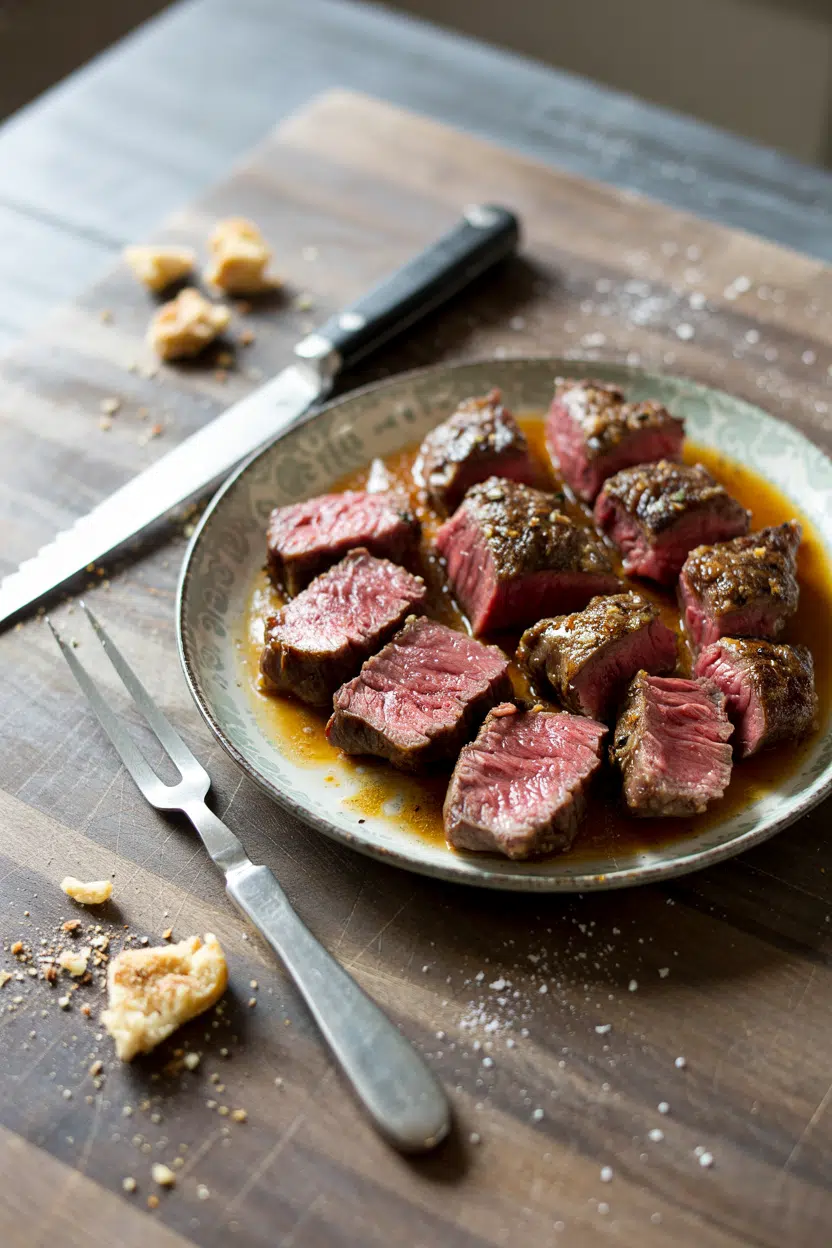
Cube steak has a mild, straightforwardly beefy flavor - closer to a lean sirloin than anything rich or fatty. There's a faint iron note you get with leaner beef, but it's not sharp or off-putting.
Mostly it tastes like a clean, neutral steak.
That neutral base is actually what makes cube steak work in so many dishes. It absorbs pan sauces, gravies, and batters more readily than a well-marbled cut, because there's less competing fat flavor.
Sear it hot and you get a proper roasted beef crust; finish it in cream gravy and it takes on that richness completely.
Texture is where cube steak succeeds or fails. Done right, the tenderized fibers stay soft and yielding. Push it a minute too long and the lean meat tightens into something tough and stringy - that's the main thing to watch.
How to Use Cube Steak
The most well-known use is country-fried or chicken-fried steak - dredged in seasoned flour, dipped in buttermilk batter, and shallow-fried until the crust sets golden. That preparation suits cube steak specifically because the tenderized surface holds breading better than a smooth cut would.
Outside of frying, it's equally at home in quick braises. A short simmer in tomato sauce, mushroom gravy, or French onion-style broth softens the fibers further without drying them out.
Knowing pairings for cube steak makes a difference here - mashed potatoes and roasted vegetables absorb the sauce and round out the plate.
| Method | Best For | Tip |
|---|---|---|
| 🍳 Pan-Fried | Country-fried steak, breaded cutlets | Use a buttermilk soak for better batter adhesion |
| 🥘 Quick Braise | Gravy dishes, stroganoff-style, tomato sauces | Keep liquid shallow and time short - 20-30 min max |
| 🥩 Pan-Seared | Steak sandwiches, Philly-style with peppers and onions | High heat, fast sear - don't crowd the pan |
| 🌮 Marinated & Sliced | Tacos, fajitas, Tex-Mex applications | Brief acid marinade (30 min) adds flavor without over-tenderizing |
For sandwiches, a griddle sear with sautéed onions and bell peppers gets the job done fast. Sliced thin after cooking, cube steak works in fajitas and tacos too - a brief mustard and Worcestershire marinade sharpens the flavor before it hits the pan.
How to Buy and Store Cube Steak
At the store, look for steaks with uniform tenderize marks across the full surface - uneven patterning can mean the tenderizing was inconsistent, which affects how the meat cooks. The meat should be a clean, lean red with minimal dark spots and only a thin fat margin around the edge.
Avoid packages with excessive liquid pooled inside or any sour smell.
Store it in its original packaging and refrigerate immediately. Use within 2-4 days for best results.
For longer storage, rewrap tightly in plastic wrap and a layer of foil before freezing - freezer burn hits lean cuts faster than fatty ones. Frozen cube steak keeps well for up to 4 months; see our full guide on cube steak storage guide for thawing tips.
If you ever need a swap, cube steak swaps covers the closest alternatives by cooking method.
Start With the Pan
If you're cooking cube steak for the first time, skip the grill and reach for a heavy skillet instead.
The controlled heat lets you manage the thin cut without overshooting doneness, and a pan sauce or simple gravy turns whatever fond you build into a finished dish with no extra effort.
- 🍳 First cook - Pan-sear in oil over medium-high, 2-3 minutes per side, then deglaze with beef broth for an easy pan gravy.
- 🥘 Second cook - Try a short braise in mushroom or tomato sauce once you know how the steak behaves in your pan.
- 🌮 Branch out - Once comfortable, slice it thin for fajitas or build a Philly-style sandwich on a griddle.
The cut rewards quick, decisive cooking. Hesitate with the heat and it gets chewy - commit to it and it delivers every time.
Frequently Asked Questions
Cube steak comes from the top round or top sirloin - lean, relatively tough sections from the hindquarter. Mechanical tenderizing makes these otherwise chewy cuts quick-cooking and palatable without long braising times.
They overlap but aren't identical. Both are thin, fast-cooking beef cuts, however minute steak may not always be mechanically tenderized the way cube steak is. The crosshatch pattern is the reliable distinguishing mark of cube steak.
The name refers to the small square indentations left by the mechanical tenderizer - not the shape of the steak itself. Those cube-shaped marks are the visual signature of the cut.
Keep the heat high and the time short - 2-3 minutes per side is enough for a sear. Alternatively, a brief braise in liquid (under 30 minutes) works well. Avoiding dry, prolonged heat is what keeps it from toughening.
Yes, but it needs a brief marinade first and very high, direct heat for a fast sear. The thin cut and lean muscle dry out quickly on a grill, so pull it after 2 minutes per side at most.



