
Most people assume creamed corn is just blended or pureed corn - it isn't.
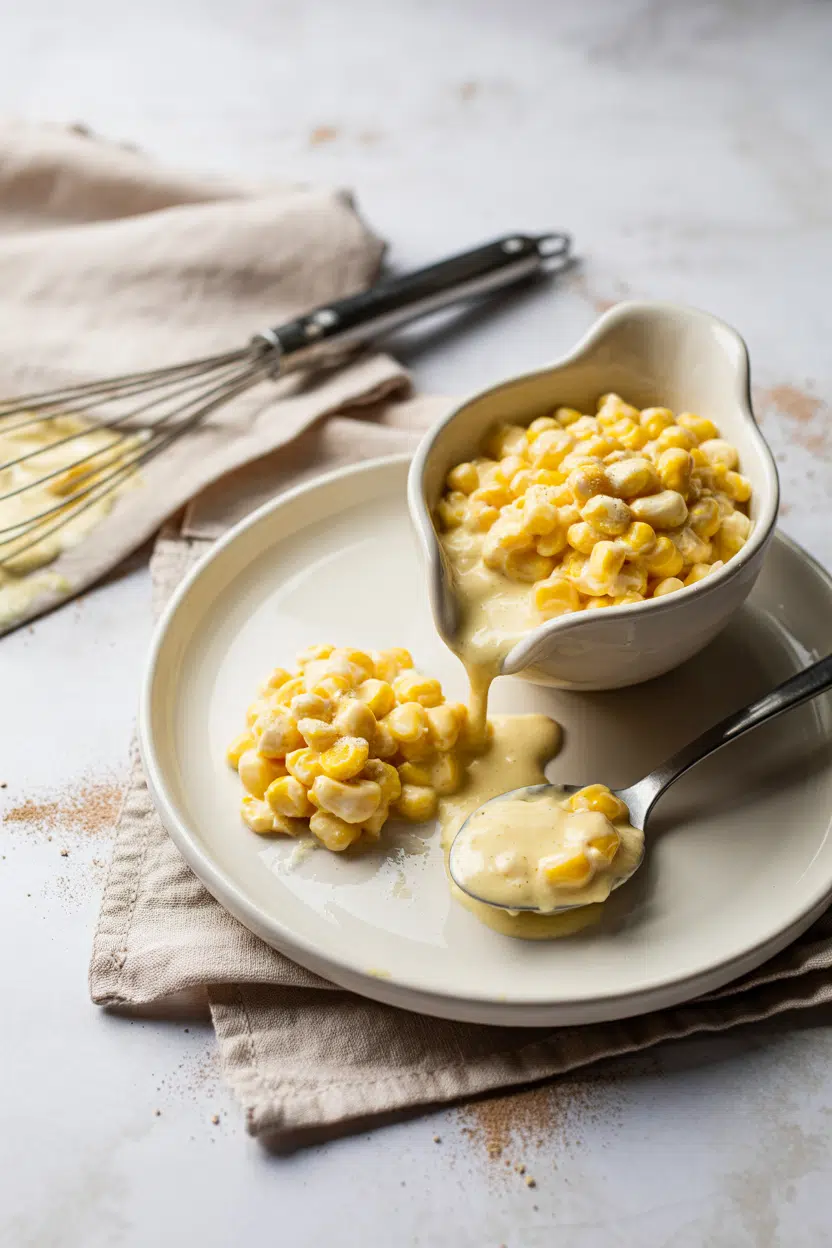
The real product is whole or partially broken kernels suspended in a thick, milky liquid scraped from the corn's inner endosperm, and that distinction changes how it behaves in a recipe entirely.
If you've ever planned dishes alongside corn pudding and wondered why the batter turned out richer than expected, creamed corn is usually why.
Creamed corn is whole and partially broken corn kernels in a thick, starchy-milky liquid. It tastes like a mild, sweet corn chowder base - soft, slightly grainy, and gently sweet. Used in casseroles, soups, cornbread, and holiday sides.
What Is Creamed Corn?
Creamed corn - also sold as cream-style corn - is a stewed corn preparation made by cutting whole kernels from the cob and then scraping the cob's surface to release the milky, starchy endosperm liquid underneath.
Remember it later
Planning to try this recipe soon? Save it for a quick find later!
That liquid is what thickens the mixture naturally, with or without added dairy.
Canned versions have been a staple of American pantries since the early 20th century, most commonly associated with Southern and Midwestern home cooking.
Fresh or homemade cream corn starts with plump ears; after kerneling, cooks scrape the cob with the back of a knife to extract every drop of that thickening juice.
There are two broad forms worth knowing:
- Canned cream-style corn - pre-cooked, shelf-stable, consistent texture; may contain added sugar, salt, or starch
- Homemade creamed corn - made from fresh sweet corn ears; brighter flavor, looser texture, no additives
Understanding corn chowder spoilage signs is useful context here, since the dairy and starch in creamed corn follow similar spoilage timelines once opened.
What Does Creamed Corn Taste Like?
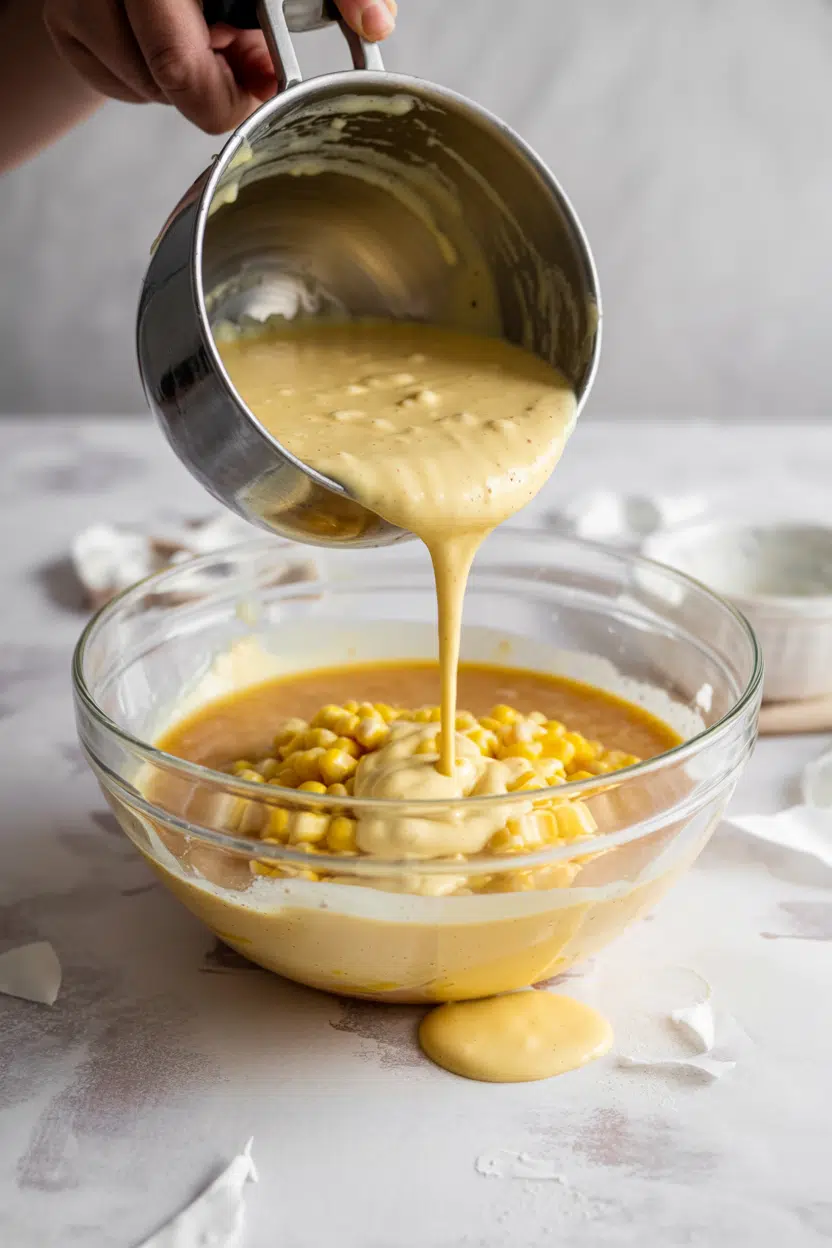
Creamed corn reads as genuinely sweet - that's the natural corn sugar - layered over a quiet, starchy creaminess that coats the palate without heaviness.
It doesn't taste like cream of corn soup; the sweetness is more forward, and the body is thinner.
Heat changes the profile. Gently simmered, the sweetness mellows slightly and the starch thickens into a fuller, more pudding-like body.
Overcooked, the kernels lose structure and the mixture becomes a monotone starchy paste - still edible, but flat.
The closest comparison is a sweet corn chowder base stripped of its savory seasonings, or a very thin corn pudding before eggs and flour enter the picture.
How to Use Creamed Corn
Creamed corn works in more contexts than the holiday table casserole most people associate it with. Its natural sweetness and built-in starch make it a functional ingredient across several cooking methods.
| Method | Best For | Tip |
|---|---|---|
| 🫙 Baked | Corn casserole, corn pudding, cornbread | Adds moisture and binds the batter without extra liquid |
| 🍲 Simmered | Corn chowder base, creamy corn soups | Stir in near the end - prolonged heat makes kernels mushy |
| 🍳 Pan-finished | Skillet creamed corn, side dishes with meat | Finish with butter and black pepper; add bacon for smokiness |
| 🌿 Stirred in raw | Cornbread mix, muffins, quick breads | Replace some of the liquid called for in the recipe |
In Southern cooking, it's the base of corn casserole - folded with eggs, sour cream, and a box of corn muffin mix, then baked until just set.
Midwestern cooks stir it into skillet sides with butter and thyme, finishing alongside roast chicken or pork.
It also folds into succotash; if you're making southern summer succotash at home, creamed corn adds body that whole-kernel corn alone won't provide.
Strong pairings include sharp cheddar, crispy bacon or pancetta, green chiles, and scallions. Avoid dropping it into high-acid raw salads - the starchy liquid breaks the texture of anything delicate.
For a full list of what works well beside it, dishes alongside creamed corn covers the full spread.
How to Buy and Store Creamed Corn
For canned cream-style corn, check for firm seams and no bulging or denting - a swollen can is a hard pass.
The contents should be pale yellow with visible whole kernels floating in a viscous liquid; uniform smoothness usually indicates too much added starch or blending.
For fresh ears destined for homemade batches, look for plump kernels that release milky juice when pierced with a fingernail.
Shriveled tips or dry, dented kernels mean the sugars have already converted to starch - the flavor won't recover on the stove.
Storage is straightforward: unopened cans live in a cool, dry pantry indefinitely within the printed date. Once opened, refrigerate in an airtight container and use within 3-4 days.
For homemade batches, the guidance on keeping creamed corn fresh covers freezing options, which extend the window to 2-3 months.
Start Here If You're New to Creamed Corn
Don't start with the casserole.
The skillet version - kernels simmered with butter, black pepper, and a splash of cream - gives you the clearest read on what this ingredient actually tastes like and how much liquid it adds to a dish.
Once you know that, swapping out creamed corn in a recipe or scaling it up into baked dishes becomes a straightforward call.
If the replacements for butter in your pantry are limited, olive oil works as a stand-in for the skillet version - the result is slightly less rich but still shows you the core flavor clearly.
Frequently Asked Questions
No. Creamed corn keeps whole and partially broken kernels intact; the "cream" comes from the scraped endosperm liquid, not from blending. Pureed corn is smooth throughout, while creamed corn has distinct kernel texture in a viscous liquid base.
Not always. The creaminess in standard canned cream-style corn comes from the corn's own endosperm starch, not added dairy. Homemade and some restaurant versions do add milk or cream, so check the label or recipe if dairy is a concern.
Yes. Homemade creamed corn freezes well for up to 2-3 months in a sealed container. Thaw overnight in the fridge and stir well before reheating, as the starch can separate slightly on thawing.
Simmer it uncovered over medium-low heat, stirring often, until the liquid reduces. A small slurry of cornstarch and cold water - about one teaspoon per cup - also works fast without changing the flavor.
Most canned cream-style corn is vegetarian and naturally gluten-free. Versions made with added cream or butter are vegetarian but not vegan - check the ingredient list, since some brands add lactic acid or other processing aids.



