
Roast turkey at Thanksgiving earns most of the glory, but cranberry sauce is what keeps the plate from tasting flat.
Understanding what makes turkey distinct as a protein helps explain why it pairs so naturally with a sharp, fruit-forward condiment - and why cranberry sauce has held that role for centuries.
Two teaspoons of sugar and a handful of cranberries sounds deceptively simple, though keeping sugar fresh matters more than most home cooks realize when building the sauce from scratch.
This is an ingredient that shows up in two very different forms and behaves differently in each - worth knowing before you buy or cook.
Cranberry sauce is a tart, lightly sweet condiment made from cooked cranberries and sugar. It comes as smooth jellied or chunky whole-berry versions. Most common at Thanksgiving alongside roast turkey, it also works as a glaze, spread, or vinaigrette base year-round.
What Is Cranberry Sauce?
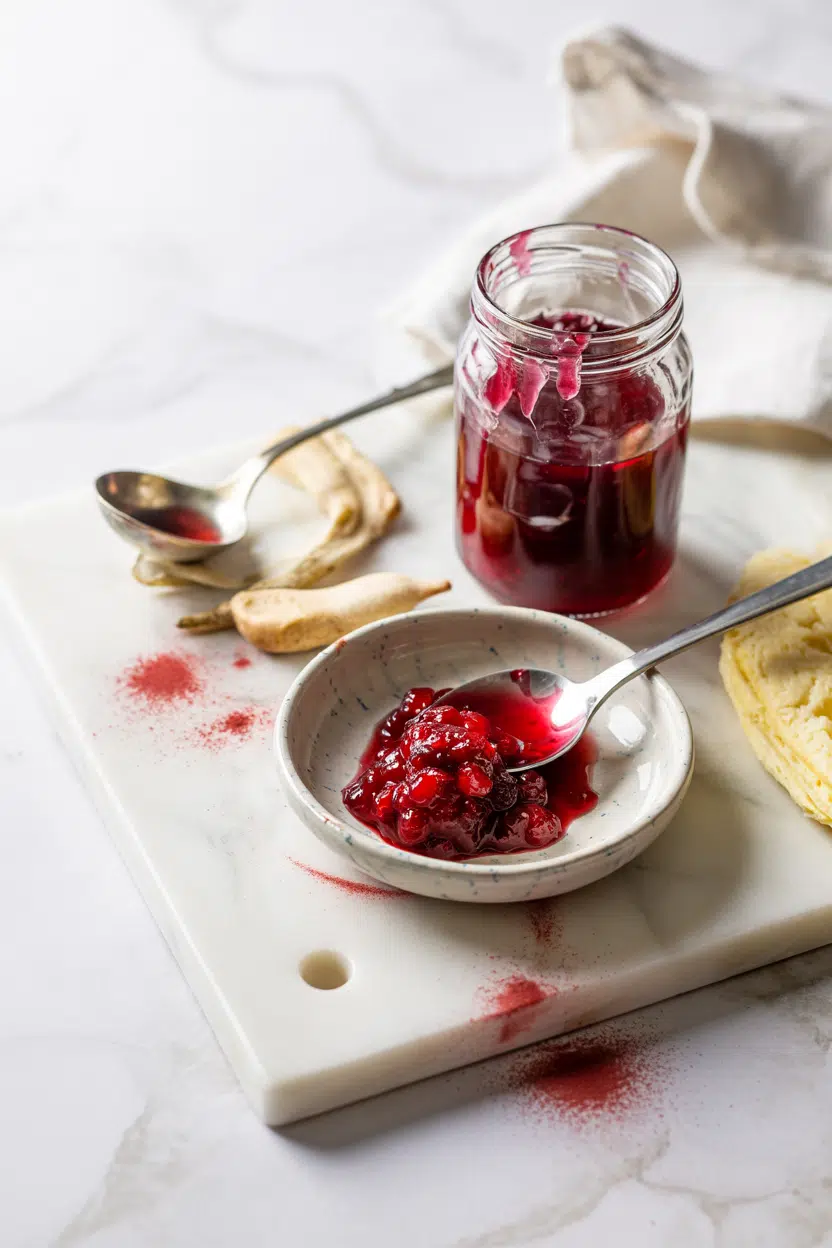
Cranberry sauce is a cooked fruit condiment originating in Northeastern North America, built on two core ingredients: fresh or frozen cranberries and sugar.
Remember it later
Planning to try this recipe soon? Save it for a quick find later!
The berries are simmered until they burst and release their natural pectin, which causes the sauce to thicken and set as it cools.
It goes by several names depending on form and preparation - cranberry relish, cranberry conserve, jellied cranberry sauce, or whole-berry cranberry sauce. Those last two describe the most important split in the category.
- 🫙 Jellied cranberry sauce - blended or strained smooth, gels into a firm, sliceable cylinder; the classic canned version
- 🍒 Whole-berry cranberry sauce - berries left intact or partially crushed, producing a chunky, spoonable relish with visible fruit
- 🍊 Cranberry conserve - a richer variation that includes citrus zest, nuts, or dried fruit cooked into the base
- 🥄 Raw cranberry relish - fresh cranberries pulsed with sugar and orange, uncooked, with sharper tartness and a coarser texture
The commercial canned version has existed since 1912, when Ocean Spray first produced it at scale, making it one of the earliest mass-market fruit condiments in the United States.
What Does Cranberry Sauce Taste Like?
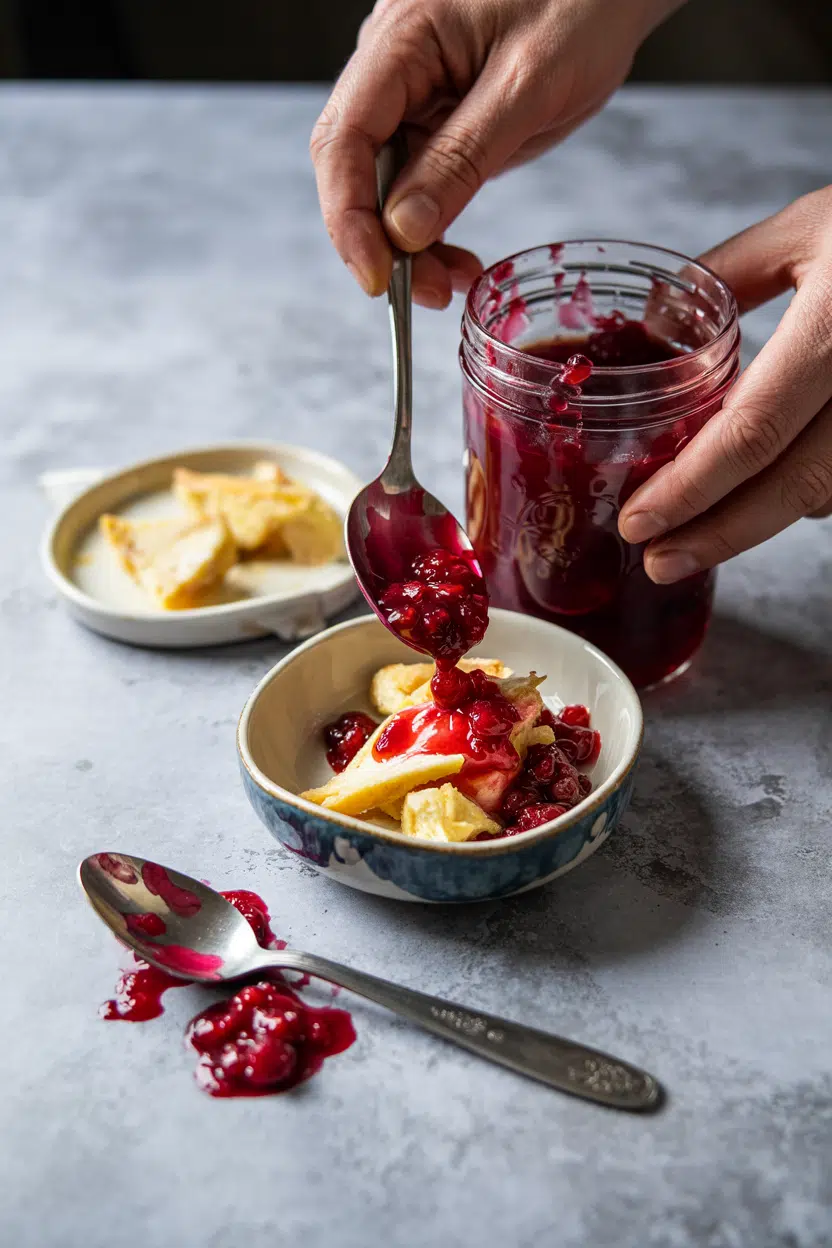
Cranberry sauce lands somewhere between a tart berry jam and a sharp fruit vinegar reduction - brighter and more acidic than strawberry jam, less sweet than applesauce.
The raw berry itself is aggressively sour, almost inedible without sugar; cooking with sweetener rounds that edge into a balanced, bright tang.
That faint bitter note from the cranberry skin is more pronounced in whole-berry versions, where the skins remain intact. Jellied sauce loses most of the bitterness during straining and sets with a cleaner, more uniformly sweet-tart profile.
Adding orange zest or juice - as many recipes do - pushes the aroma toward citrus and softens any harsh edges.
For a direct comparison of how that zest choice affects the final flavor, comparing dried orange zest vs fresh options breaks down the practical difference.
How to Use Cranberry Sauce
Cranberry sauce performs two distinct jobs in cooking: it acts as a condiment served alongside protein, and it functions as an acidic component that balances fat and richness. Knowing both roles opens up uses well beyond the Thanksgiving table.
| Method | Best For | Tip |
|---|---|---|
| 🥗 Condiment | Roast turkey, ham, pork loin, charcuterie boards | Serve chilled; the cold temperature sharpens the tartness |
| 🍳 Glaze | Roasted pork loin, baked ham, chicken thighs | Thin with orange juice and brush on during the last 15 minutes of roasting |
| 🧀 Topping | Baked brie, cream cheese, crostini | Warm slightly before spooning over brie to help it spread evenly |
| 🥣 Stir-In | Yogurt, oatmeal, overnight oats | Whole-berry versions add texture; jellied blends in more smoothly |
| 🥗 Vinaigrette base | Autumn salads, grain bowls | Whisk 1 tablespoon into olive oil and apple cider vinegar for instant dressing |
| 🍪 Baking filling | Thumbprint cookies, bar cookies, pastry | Use whole-berry for structure; jellied can bleed into the dough |
On a leftover turkey sandwich, cranberry sauce replaces both mustard and pickle - its acidity cuts through mayo, and its sweetness balances smoked or roasted meat.
Keeping track of turkey spoilage signs is worth doing before you reach for the leftover bird.
Cranberry sauce doesn't work alongside deeply spiced chilies or delicate Eastern desserts, where its sharp acidity overrides subtler notes. If you need something with less intensity for those contexts, alternatives to cranberry sauce covers several fruit-based options with softer profiles.
How to Buy and Store Cranberry Sauce
Fresh cranberries are seasonal - available roughly October through December in most North American markets. Choose berries that are firm, glossy, and deep red; a ripe cranberry bounces when dropped.
Soft, shriveled, or pale berries signal age.
For prepared commercial sauce, check that seals are intact and cans show no bulging or denting. Once opened, transfer to an airtight container and refrigerate immediately.
- Unopened commercial cans - store in a cool pantry for up to a year past production date
- Opened jarred or canned sauce - refrigerate and use within 7-10 days
- Homemade cranberry sauce - refrigerate and use within 5-7 days
- Freezing - both homemade and commercial versions freeze well for up to 2 months
For a closer look at maximizing refrigerator and pantry life, keeping cranberry sauce fresh covers the specifics in detail.
Note also that pectin - the natural thickener responsible for jellied texture - behaves differently at varying temperatures, which is why refrigerated sauce is firmer than room-temperature sauce; about pectin white coating avocado explains how this same compound appears across produce in unexpected ways.
Where to Start With Cranberry Sauce
New to cooking with it?
Start with a whole-berry sauce on roast pork - the fat in the pork absorbs the acidity better than lean turkey does, making the balance more forgiving.
Already comfortable with the basics?
Push into glazing territory: thin the sauce with orange juice and use it as a brush-on finish for ham or chicken in the last 15 minutes of oven time.
The result is deeper, slightly caramelized, and sharper than anything from a bottle.
Frequently Asked Questions
It's sharply tart and acidic, with sweetness that depends on how much sugar is used. The flavor sits between a sour berry jam and a mild fruit vinegar - brighter and less sweet than most fruit preserves.
Jellied cranberry sauce is blended and strained smooth, then cooked until the natural pectin sets it into a firm, sliceable gel. It has a cleaner, more uniform sweetness than whole-berry versions because the bitter skins are removed.
Yes - both homemade and commercial cranberry sauce freeze well for up to two months. Thaw overnight in the refrigerator; whole-berry versions may release extra liquid, which you can stir back in.
Substitute honey, maple syrup, or a zero-calorie sweetener like erythritol in equal amounts. The sauce will still set from pectin, however the texture may be slightly looser than a standard recipe.
Cranberries themselves contain vitamin C, fiber, and antioxidant polyphenols, but commercial cranberry sauce is high in added sugar. Whole-berry versions retain more fiber; reduced-sugar or homemade recipes offer better nutritional control.



