
Corn syrup pours slowly - thick, clear, and faintly sweet before it even hits your tongue.
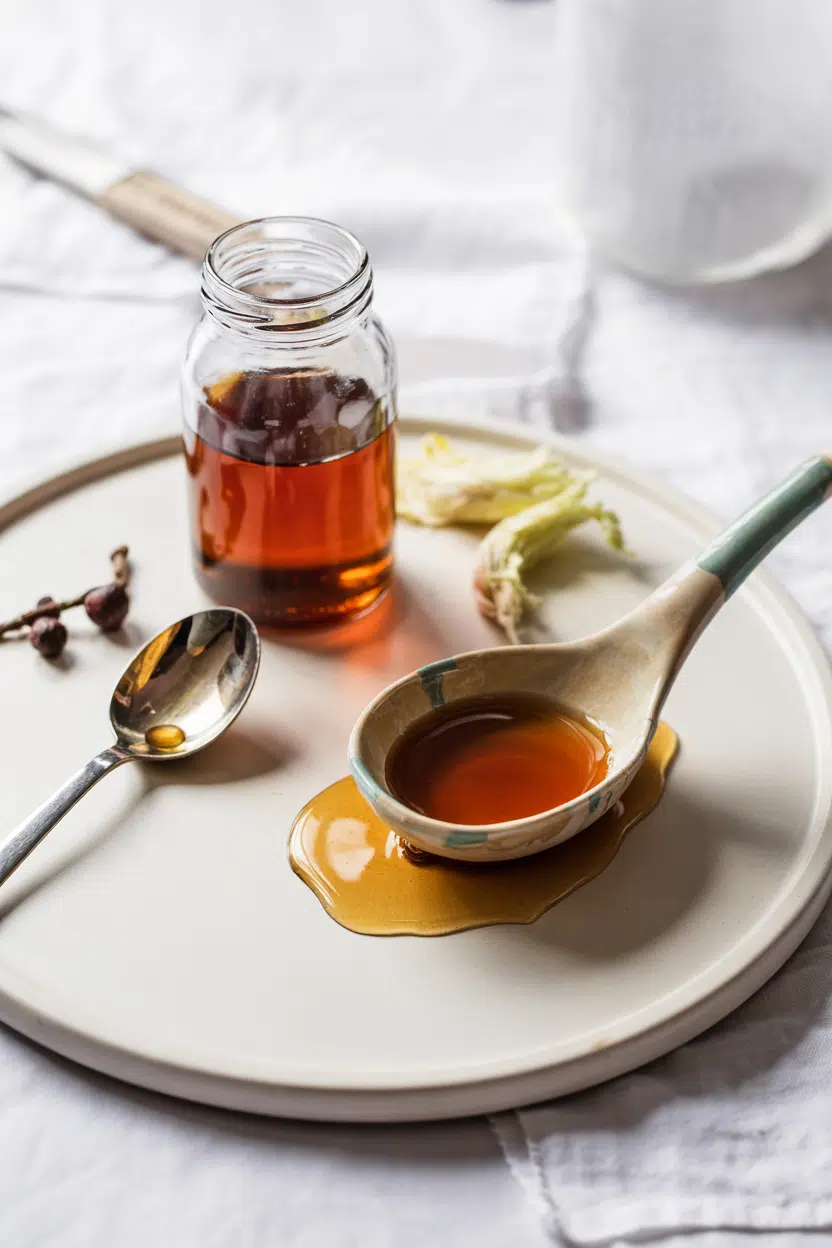
That glossy viscosity is the whole point: this liquid sweetener doesn't just add sugar, it changes the physical structure of whatever it enters.
Bakers reach for it when they need a frosting that won't crust over or a candy that won't turn grainy.
If you've ever looked for alternatives to maple syrup or weighed swapping out agave nectar, you've already circled the question of what corn syrup actually does that other sweeteners can't.
Corn syrup is a thick glucose-based liquid sweetener made from corn starch. It tastes clean and mildly sweet, with dark varieties adding molasses depth. Home bakers use it to prevent crystallization, add shine to glazes, and stabilize frostings and candies.
What Is Corn Syrup?
Corn syrup is a liquid sweetener derived from corn starch, produced by breaking that starch down into glucose using enzymes - specifically alpha-amylase and glucoamylase.
Remember it later
Planning to try this recipe soon? Save it for a quick find later!
It originated in the American Midwest, where corn belt agriculture made starch-based processing cheap and scalable.
The result is a thick, glossy syrup that functions primarily as glucose syrup in both home kitchens and industrial food production. You'll see it labeled several ways:
- 🌽 Light corn syrup - clear, mildly sweet, the standard home-baking version
- 🍯 Dark corn syrup - blended with molasses, darker in color, deeper in flavor
- ⚗️ High-fructose corn syrup (HFCS) - further processed to convert glucose into fructose; used almost exclusively in commercial food manufacturing
- 🏷️ Glucose syrup - the international equivalent, often used in confectionery and candy making
HFCS is a distinct product - sweeter and chemically different - not a direct substitute for the bottled corn syrup on grocery shelves.
What Does Corn Syrup Taste Like?
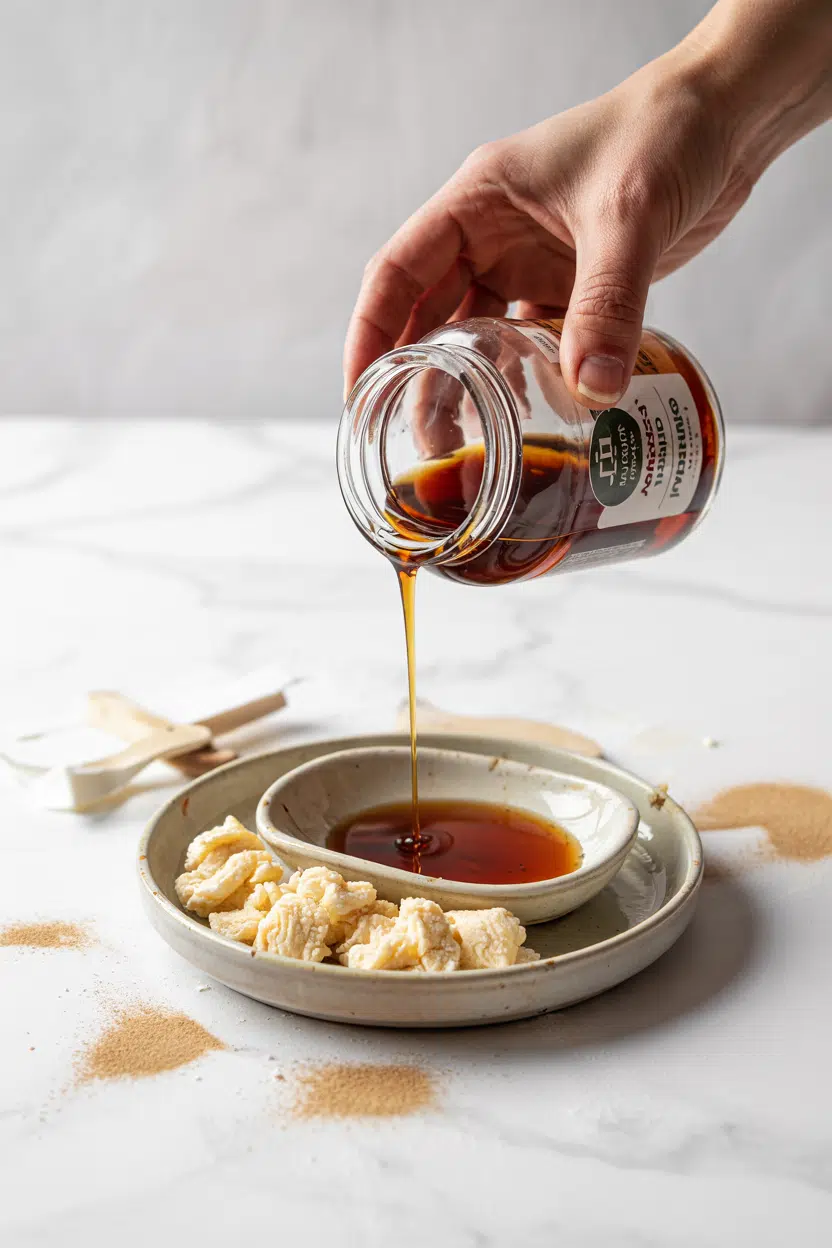
Light corn syrup tastes clean and straightforwardly sweet, with almost no background flavor to compete with other ingredients. It's comparable to simple syrup or a very lightly flavored honey - sweet, smooth, and neutral.
Dark corn syrup is a different experience. The added molasses pulls flavor toward something richer - lightly bitter at the edges, with a faint mineral warmth. Heated corn syrup develops a subtle caramel note, though it never reaches the complexity of true caramel made from granulated sugar.
How to Use Corn Syrup
Corn syrup earns its place through function, not flavor. Its main job is controlling sugar behavior - and it does that in several distinct ways depending on the application.
| Method | Best For | Tip |
|---|---|---|
| 🥄 Dissolved | Batters, syrups, beverages | Measure by weight when precision matters - it sticks to cups |
| 🔥 Heated | Candy tempering, caramel-style sauces, fudge | Heat gently and stir early; it scorches faster than granulated sugar |
| ✨ Brushed | Pie crusts, pastry glazes, baked goods | Thin with a drop of warm water for easier brushing |
| 🍦 Folded | Frostings, icings, fondant, nougat | Add gradually - too much makes frostings heavy and over-glossy |
Classic American confectionery is where corn syrup appears most often. Pecan pie is the textbook example -
the filling relies entirely on corn syrup's ability to set into a smooth, sliceable layer without crystallizing, and a pecan pie southern-style recipe shows how central that syrup texture is to the final structure.
Beyond pies, it appears in fudge and nougat (where it keeps candies chewy rather than grainy), barbecue glazes (where a neutral sweetener won't compete with smoke and spice), and commercial pie fillings.
It pairs naturally with butter for shiny glazes, with vanilla and warm spices like cinnamon and nutmeg, and with nuts, citrus zest, and chocolate.
Where it doesn't belong: creamed butter-sugar cake batters that depend on granulated sugar's sharp crystals for aeration, or yeast doughs where honey or table sugar gives more predictable fermentation results.
If you're short on corn syrup entirely, a look at alternatives to corn syrup will show which swaps hold up structurally.
How to Buy and Store Corn Syrup
At the grocery store, look for light corn syrup in a sealed plastic squeeze bottle - the pour spout design minimizes drips and reduces surface crystallization around the cap.
Choose dark corn syrup only when the recipe specifies it; the molasses flavor is noticeable and not always welcome.
Store bottles upright in a cool, dark pantry, cap tightly closed.
Unlike granulated sugar, whose longevity is covered in our guide to sugar's shelf life, corn syrup is more sensitive to heat and air exposure - both accelerate surface crystallization.
For everything you need to know about keeping corn syrup fresh, the shelf life details are worth reviewing before a big baking project.
Unopened bottles last up to two years. Once opened, plan to use the bottle within six to twelve months for best quality.
Start With Light, Add Dark Later
If you're new to corn syrup, buy light first. It's the more neutral option, and it handles the widest range of recipes - from pie glazes to candy work - without adding flavor you didn't intend.
Reach for dark corn syrup once you know a recipe specifically needs that molasses warmth.
And if a recipe calls for something adjacent - like molasses itself - knowing the molasses swaps that work helps you navigate what's interchangeable and what isn't.
Frequently Asked Questions
It's made from corn starch broken down by enzymes into glucose. The process uses alpha-amylase to liquefy the starch, then glucoamylase to convert it into simple sugars. The result is filtered and concentrated into syrup.
No. Standard corn syrup is primarily glucose; HFCS undergoes additional processing to convert some of that glucose into fructose, making it sweeter. HFCS is an industrial ingredient and is not sold in home-kitchen bottles.
Light corn syrup tastes sweet but less sharp than granulated sugar - closer to simple syrup. It lacks the slight edge that sucrose has, which is why it adds sweetness without changing the flavor profile of a recipe.
Yes, in a 1:1 ratio for most baking, but honey adds its own flavor and can make baked goods brown faster. It also doesn't prevent crystallization as effectively in candy work, so results may vary in fudge or nougat.
Dark corn syrup tastes like a mild, sweetened molasses - less bitter and sharp than pure molasses, but with a noticeable caramel-brown warmth. It works well in recipes that call for depth alongside sweetness, like barbecue glazes or dark baked goods.



