
Warm, faintly golden, and carrying the quiet depth of roasted bones and slow-cooked vegetables - chicken broth announces itself before it ever reaches your lips. That first smell when you crack open a carton or lift a lid off a simmering pot is immediately recognizable: savory, herbed, a little sweet from the carrots.
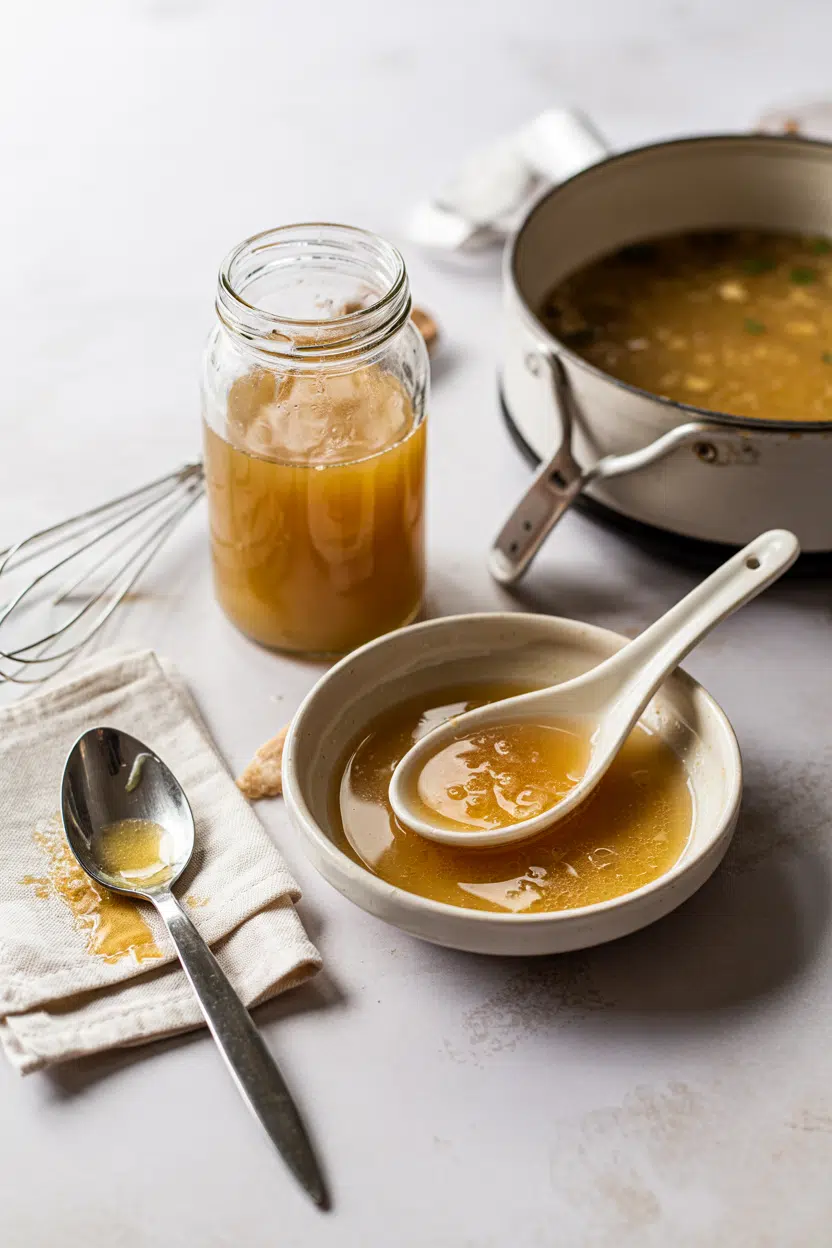
It's one of the most useful cooking liquids in a home kitchen, and understanding what it actually tastes like - and how to use it well - changes how you cook chicken and almost everything alongside it.
Chicken broth is a savory, golden cooking liquid made from simmered chicken, bones, and aromatics. It's mildly salty, umami-rich, and slightly sweet from cooked vegetables. Use it as a base for soups, sauces, and grains. Low-sodium versions give you the most seasoning control.
What Is Chicken Broth?
Chicken broth is a seasoned cooking liquid produced by simmering chicken meat, bones, vegetables, and aromatics - typically onion, carrot, and celery - in water for anywhere from one to several hours.
Remember it later
Planning to try this recipe soon? Save it for a quick find later!
It belongs to the broader category of stocks and cooking liquids used as foundational bases across dozens of cuisines.
The terms chicken broth and chicken stock are often used interchangeably, though technically broth is made with more meat and is seasoned, while stock leans on bones and is left unseasoned. Neither label is strictly enforced on commercial packaging, so the distinction matters more in professional kitchens than at home.
A longer-cooked, bone-heavy version that turns gelatinous when chilled is sometimes marketed as bone broth, which is higher in collagen.
Commercial versions come as shelf-stable cartons, cans, bouillon cubes, and concentrated pastes. Each varies in sodium content, intensity, and clarity.
Consommé sits at the refined end of the spectrum - a clarified, intensely flavored broth - while a standard bouillon cube sits at the most convenient, most heavily salted end.
What Does Chicken Broth Taste Like?
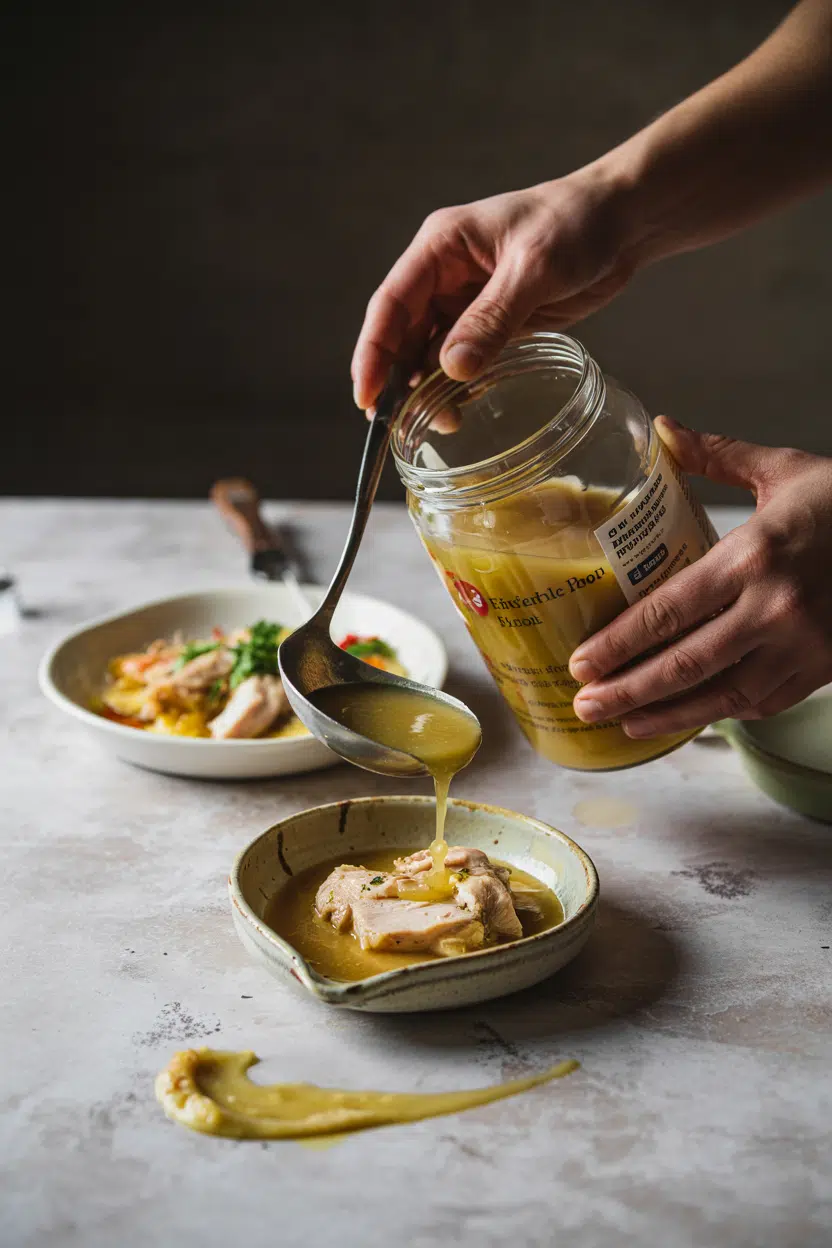
Chicken broth tastes savory and mild - umami-forward without being aggressive, with a faint sweetness from cooked carrots and onion underneath. It's lighter than a long-simmered beef stock and more approachable than beef consommé, which carries a much more concentrated, almost intense character.
Heat concentrates the flavor. Reducing broth by half over high heat produces something closer to a pan sauce base, with noticeably more body and salt intensity.
Homemade broth made from bones develops a slight gelatin quality when chilled - that gentle wobble signals collagen extraction and fuller mouthfeel once reheated.
How to Use Chicken Broth
Chicken broth earns its place in more dishes than most cooks realize. It's not just for soup - it functions as a deglazing liquid, a poaching medium, a thinning agent for cream sauces, and a flavor carrier for grains like rice and farro.
French cooking relies on it for veloutés and pan sauces; Chinese cooking uses it as the base for congee and clear soups; American comfort cooking builds chicken noodle soup and gravies on it.
| Method | Best For | Tip |
|---|---|---|
| 🍲 Simmering | Soups, congee, braising liquid | Start with cold broth for cleaner flavor extraction |
| 🥘 Deglazing | Pan sauces, gravies | Add to a hot pan immediately after removing the protein |
| 🫕 Poaching | Chicken breasts, dumplings, eggs | Keep at a bare simmer - boiling toughens delicate proteins |
| ⬇️ Reduction | Concentrated sauces, glazes | Use unsalted broth; sodium concentrates fast |
A classic mirepoix - onion, carrot, celery - pairs naturally with chicken broth because those same aromatics typically went into making it. White wine or dry sherry added alongside broth cuts through richness in pan sauces.
Butter stirred in at the end adds gloss and body. For everyday cooking, substituting broth for water when cooking rice or small pasta shapes like orzo adds quiet depth without extra effort.
How to Buy and Store Chicken Broth
Look for low-sodium or unsalted versions when buying commercial broth - they give you control over final seasoning. A good carton should show a clear, golden hue through the packaging window or once poured; avoid anything cloudy or with a dull, gray cast.
The aroma check matters too: fresh, roasted chicken smell is a positive sign. A flat or metallic smell is not.
Storage is straightforward. Unopened shelf-stable cartons keep in a cool pantry for months.
Opened broth goes into a sealed container in the refrigerator immediately. For details on how long both homemade and commercial versions last, the chicken broth freshness guide guide covers each scenario.
Freeze excess broth in portioned containers - it keeps well for three to six months and loses minimal flavor. Using a mirepoix base when making homemade broth significantly improves the depth of what you're storing.
Start with the Basics
New to cooking with broth? Start with a boxed low-sodium version and use it anywhere a recipe calls for water near savory ingredients. Cook your rice in it.
Deglaze your next pan of seared chicken thighs with it. Once you know how it behaves, explore homemade - even a simple batch from leftover bones pays off in flavor and cost.
If you need a stand-in, check the chicken broth swaps guide for the closest alternatives.
Frequently Asked Questions
Not exactly. Broth is made with more meat and is typically seasoned; stock relies on bones and is left unseasoned to preserve flexibility. In practice, commercial labels use both terms loosely - the real difference shows up in homemade versions.
Yes, in most savory applications. It adds umami and depth wherever water would be flat. The exception: if the recipe already has heavy seasoning, use low-sodium broth to avoid oversalting.
Refrigerated homemade broth keeps for 3-4 days in a sealed container. Frozen, it holds well for up to 6 months. Cool it fully before freezing to preserve clarity and prevent ice crystal damage to flavor compounds.
Bone-based broths do. When you simmer chicken bones long enough, collagen breaks down into gelatin - visible as a wobble or slight slick texture when the broth is chilled. Standard meat-only broths contain little to none.
Yes. Warm broth drunk on its own is common across many food traditions, particularly when someone is unwell. Low-sodium homemade versions work best for this - commercial broths can taste overly salty without food to balance them.



