
You spot a jar of cane syrup on a regional grocery shelf - amber, thick, labeled with a Louisiana brand name you don't recognize - and you wonder whether it's just a fancier version of swapping out brown sugar or swapping out maple syrup that you already know.

It isn't. Cane syrup occupies its own lane: a pourable, deeply caramelized sweetener with a raw-cane brightness that molasses loses and refined sugar never had.
Cane syrup is an amber, viscous sweetener made by evaporating pressed sugarcane juice without full crystallization. It delivers deep caramel and toffee notes with a faint vegetal brightness - richer than maple, lighter than molasses. Use it as a spread, glaze, or baking sweetener in Southern and Caribbean cooking.
What Is Cane Syrup?
Cane syrup starts as freshly pressed sugarcane juice, then gets cooked down until most of its water evaporates and its natural sugars concentrate into a thick, amber syrup.
Remember it later
Planning to try this recipe soon? Save it for a quick find later!
Unlike refined white sugar or even brown sugar and its flavor profile (shaped by added molasses), cane syrup never reaches the crystallization stage - it stays liquid and retains the vegetal compounds of raw cane.
It goes by several names depending on region.
In Louisiana, you'll see it labeled simply as sugarcane syrup or evaporated cane syrup; in Puerto Rico and the Dominican Republic, the near-equivalent is called melado; some older Southern labels call it cane molasses, though that's technically a misnomer.
There are mild differences across brands and origins:
- ⚫ Louisiana-style cane syrup - darkest and most intensely caramelized; Steen's is the benchmark brand
- 🌿 Melado (Caribbean) - slightly lighter in color, sometimes less cooked, with a fresher cane note
- 🍯 Light cane syrup - shorter cook time, paler amber, closer in flavor to raw sugarcane juice
What Does Cane Syrup Taste Like?
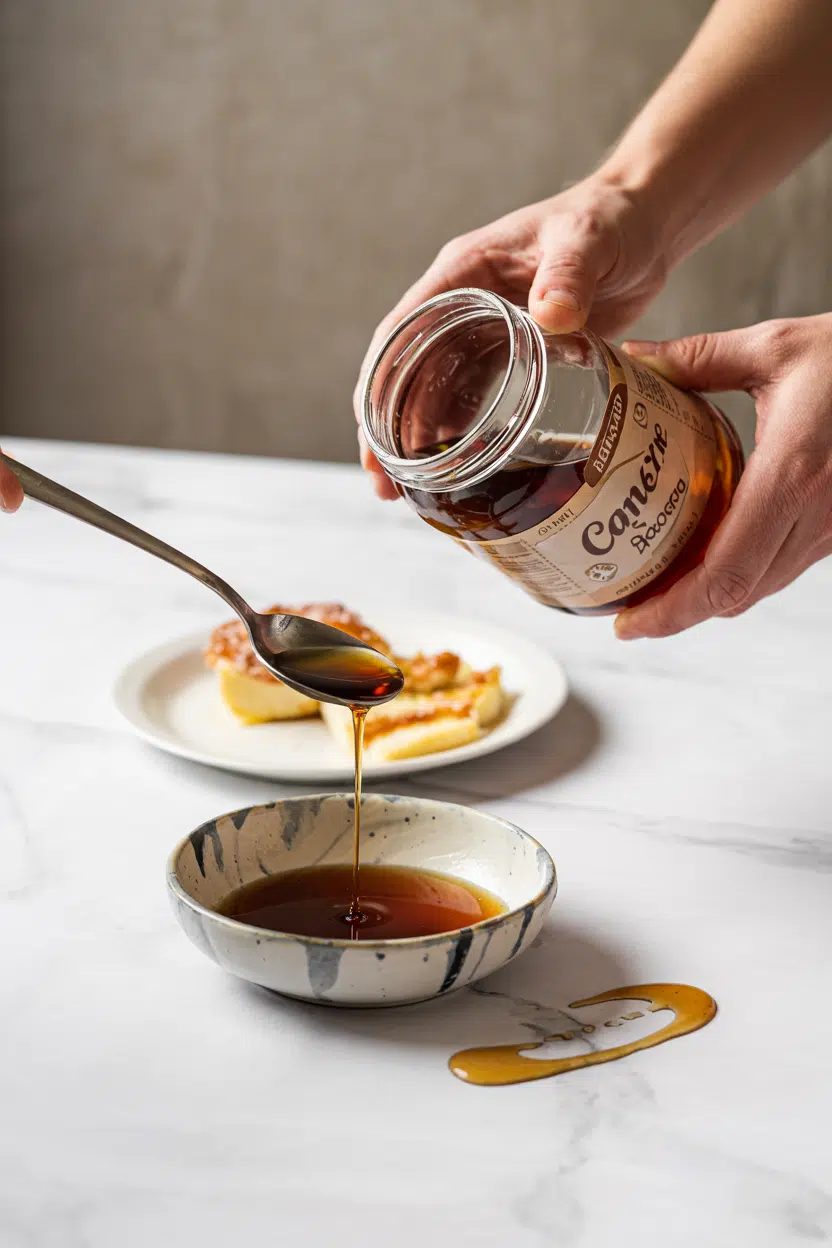
Cane syrup lands somewhere between dark brown sugar dissolved into syrup and a mild, unsmoked molasses. The dominant note is caramelized sugar - warm, round, with a toffee pull - followed by a distinctly green, grassy brightness from the raw cane that molasses simply doesn't carry.
That vegetal edge is the defining characteristic. Understanding brown sugar and its flavor helps here: brown sugar has molasses added back in, which means more bitterness and less of that fresh-cane quality.
Cane syrup keeps both sides of the equation in play - sweetness and a faint earthiness - without the heavy, bitter finish that blackstrap molasses delivers.
Heat intensifies the caramel notes and softens the vegetal edge, which is why cane syrup works well in glazes and baked goods - cooking rounds it out without flattening it entirely.
How to Use Cane Syrup
Southern and Caribbean kitchens treat cane syrup as an all-purpose sweetener, and its moderate intensity means it adds depth without overtaking everything else in the dish.
In Louisiana cooking, it goes straight onto hot buttered biscuits or cornbread, where the syrup soaks in and the toffee notes bloom against the fat.
For glazing, brush a thin layer over pork ribs or a roasted ham in the last 20 minutes of cooking. The syrup's natural sugars caramelize quickly, so watch the heat.
Folded into barbecue sauce, it contributes a vegetal sweetness that distinguishes it from plain sugar-based sauces.
Baking is where cane syrup earns the most ground. Swap it into gingerbread, spice cakes, or quick breads wherever the recipe calls for brown sugar dissolved in a liquid - the cane brightness pairs especially well with ginger, cinnamon, and black pepper. For a quick everyday use, stir a spoonful into oatmeal or grits for a toffee-forward morning bowl.
| Method | Best For | Tip |
|---|---|---|
| 🍯 Spread | Biscuits, cornbread, pancakes | Pair with salted butter to balance sweetness |
| 🔥 Glazing | Roasted ham, pork ribs | Apply in the last 20 minutes; watch for scorching |
| 🎂 Baking | Gingerbread, spice cakes, quick breads | Replace brown sugar by dissolving; reduce liquid slightly |
| 🥣 Stir-in | Hot grits, oatmeal, tea, café con leche | Add after cooking to preserve fresh-cane aroma |
| 🍖 Marinade | Jerk-style pork, Caribbean preparations | Combine with lime juice and black pepper for balance |
Avoid pairing cane syrup with delicate floral honeys or high-acid emulsions - the syrup's density can overwhelm mild flavors and seize in sharp-acid dressings.
If you need a swap in a recipe, the guide on swapping out cane syrup covers the closest options by use case.
How to Buy and Store Cane Syrup
Look for jars or tins labeled "pure cane syrup" with a deep amber color that pours freely when tilted.
The ingredient list should show only cane juice or evaporated cane juice.
Skip anything labeled just "molasses" without further specification - the taste of molasses is significantly more bitter, and the two aren't interchangeable.
Also check for added high-fructose corn syrup, which dilutes flavor and changes the texture.
Once opened, keep the jar tightly capped in the refrigerator. Full guidance on keeping cane syrup fresh covers the signs of spoilage and how climate affects the timeline.
- 🏪 Where to find it - Southern grocery chains, Caribbean markets, or online; Steen's is the most widely distributed Louisiana brand
- ❄️ Opened refrigerated - 6-12 months at consistent cold temperature
- 🌡️ Opened pantry (warm climate) - 3-6 months; watch for clouding or off-smell
- 📦 Unopened - up to 2 years in a cool, dark pantry
Start Here With Cane Syrup
New to cane syrup? Begin with the biscuit test - heat a biscuit, add salted butter, drizzle the syrup.
That single application shows you exactly what the ingredient does without any cooking technique getting in the way.
Once you understand the flavor, move to glazing pork or baking a spice cake. Anyone already comfortable with molasses swaps that work will find cane syrup an intuitive next step - same family, cleaner profile.
Frequently Asked Questions
No. Cane syrup is made by evaporating sugarcane juice before crystallization; molasses is the byproduct left after sugar crystals are extracted. Cane syrup is sweeter, lighter in bitterness, and retains a fresh vegetal note that molasses loses.
Cane syrup is slightly sweeter than pure maple syrup and more intensely flavored. Maple has a lighter, woodsy character; cane syrup's caramel and toffee notes are more forward and dense.
Yes, with a small adjustment. Use ¾ cup cane syrup per 1 cup packed brown sugar and reduce other liquids in the recipe by about 3 tablespoons. The flavor is comparable - cane syrup adds slightly more vegetal brightness.
It can. Opened jars left at warm room temperature may develop surface mold or begin fermenting within weeks, especially in humid climates. Refrigerating after opening prevents this reliably.
Steen's Pure Cane Syrup is the most available brand and ships nationally through major online retailers. Southern grocery chains stock it regionally; Caribbean markets often carry melado as a close equivalent.



