
Baked whole in its rind with a few slashed garlic cloves and a sprig of thyme, camembert transforms into something closer to a warm cheese fondue than a sliced table cheese.

That single preparation reveals what makes this small French wheel so distinct - a soft-ripened structure that behaves completely differently depending on how ripe it is, how you handle it, and whether heat is involved.
Unlike goat cheese stand-ins or replacements for blue cheese, camembert occupies its own lane: bloomy rind, earthy interior, cow's milk richness.
Camembert is a soft-ripened cow's milk cheese from Normandy, France, with a white bloomy rind and a creamy, earthy interior. It bakes beautifully, melts well, and works on cheese boards. Flavor ranges from mild and buttery when young to pungent and mushroomy at full ripeness.
What Is camembert cheese?
Camembert is a small, wheel-shaped soft-ripened cheese produced from cow's milk, originating in Normandy, France.
Remember it later
Planning to try this recipe soon? Save it for a quick find later!
Cheesemakers ripen it from the outside in - a surface mold called Penicillium camemberti forms the distinctive white bloomy rind and slowly breaks down the interior paste to a creamy, yielding consistency.
The most protected form is Camembert de Normandie AOC, which requires raw (unpasteurized) milk from Normande cows and hand-ladling of the curd.
Most supermarket versions outside France are made from pasteurized milk and carry looser production standards, which affects both depth of flavor and texture.
A young wheel has a chalky, firmer center with mild flavor. As it matures toward the rind, the paste softens and the character deepens considerably.
Thinking about camembert in dairy recipes helps clarify which ripeness stage suits each application - a barely ripe wheel slices cleanly; a fully ripe one collapses into sauce.
Camembert is often compared to brie, its closest relative among bloomy rind cheeses, though the two differ in size, milk fat content, and overall intensity.
What Does camembert cheese Taste Like?
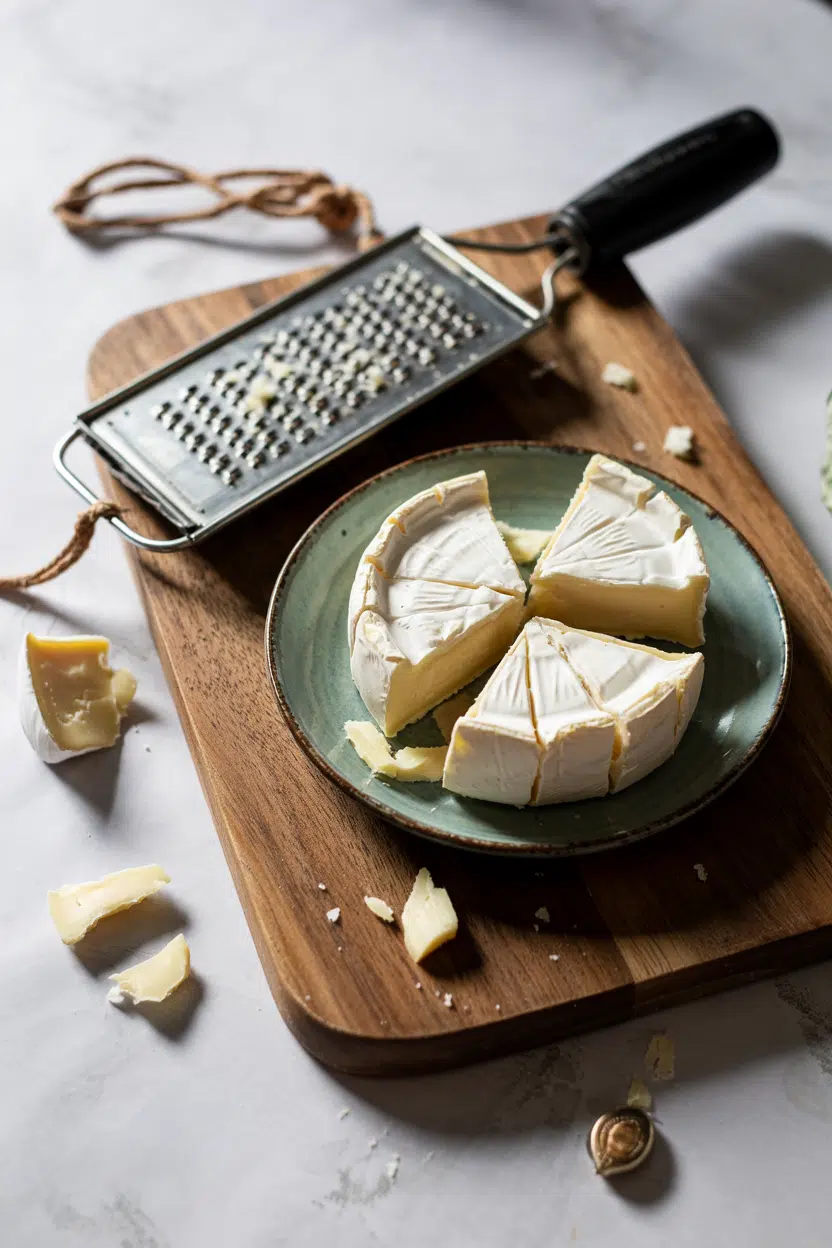
Camembert leads with buttery, earthy notes and a mild mushroom quality that comes directly from the Penicillium camemberti rind. The paste carries a gentle tanginess, more pronounced near the outer edge where enzymatic activity is highest.
Ripeness shifts everything. A younger wheel tastes mild, almost milky, with clean dairy fat on the finish.
A fully ripe wheel is noticeably more pungent, the earthiness amplified, and a faint ammonia note may appear in the aroma - normal, though a sharp ammonia smell signals overripeness.
Heat rounds out the tang and coaxes the fat into a liquid, nutty richness.
Baked camembert tastes noticeably milder than the same wheel at room temperature, which is why the baked format appeals to people who find raw camembert too assertive.
Compared to brie, camembert is generally more intense - earthier and more pungent at equivalent ripeness.
How to Use camembert cheese
Baking the whole wheel is the most forgiving and crowd-friendly method. Score the top rind, add sliced garlic and fresh thyme, wrap in the wooden box or foil, and bake at 375°F (190°C) for 20-25 minutes until the center is fully molten. Rustic baguette or country bread makes the natural dipper.
Beyond baking, camembert covers several practical applications across French and European cooking. For anyone needing a swap, camembert cheese swaps that work includes options by texture and application - though using brie cheese for creaminess covers the closest like-for-like substitution.
| Method | Best For | Tip |
|---|---|---|
| 🔥 Baked Whole | Cheese dip, sharing starter | Keep the rind intact - it holds the melted paste together |
| 🥗 Room Temperature | Cheese boards, fruit pairings | Rest 20-30 minutes out of the fridge before serving |
| 🍳 Pan-Seared | Warm salads, open-faced tartines | Use medium heat; high heat splits the fat before the center melts |
| 🧅 Melted | Grilled cheese, stuffed chicken, pasta | Add late in cooking - camembert needs little time to melt through |
On a cheese board, pair it with crisp apple or pear slices, walnuts, and a drizzle of honey or fig jam. Normandy dry cider is the regional pairing - it cuts through the fat cleanly.
A light-bodied Pinot Noir also works well. Avoid strong salty cured meats alongside it, since they drown out the cheese's more delicate earthiness.
How to Buy and Store camembert cheese
Choose a whole small wheel with a uniformly white, intact bloomy rind - no green or black spots, no excessively wet or sticky surface. Press the center gently with one finger: ripe camembert yields slightly without feeling liquid.
A rock-hard center means it needs more time; a wheel that collapses under light pressure is at late-stage ripeness.
Store it loosely wrapped in waxed paper or its original packaging inside a breathable container in the coldest part of the fridge. Airtight plastic traps moisture and accelerates rind breakdown.
For full detail on timing and signs of overripeness, how long camembert cheese keeps covers the shelf life by stage. An unopened wheel lasts 2-3 weeks refrigerated; once cut, use it within 5-7 days.
Start Here With Camembert
Pick your entry point based on what you actually want from the cheese.
- 🔥 You want something shareable and low-effort - bake it whole with garlic and thyme, serve with bread.
- 🧀 You want a cheese board centerpiece - buy a ripe wheel, bring it to room temperature, pair it with apple, honey, and dry cider.
- 🍳 You want it in a cooked dish - use it as a filling for chicken breast or layer it into a grilled cheese; add it late so it doesn't overcook.
- 🧑🍳 You're not sure camembert is right - read about [the role brie cheese plays](https://forkliftkitchen.com/brie-cheese/) in similar recipes to compare the two before committing.
The cheese rewards a small amount of attention to ripeness and temperature. Get those two right, and most applications handle themselves.
Frequently Asked Questions
Camembert is smaller, more intense, and generally earthier than brie at equivalent ripeness. Brie typically has a higher fat content and milder flavor. The two share the same bloomy rind mold but differ in milk ratios, wheel size, and regional production rules.
A ripe camembert smells earthy and mushroom-forward, with a faint barnyard note. A light ammonia smell is normal but should dissipate within minutes of unwrapping; persistent sharp ammonia signals overripeness.
Yes - baking is one of the most effective ways to use it. Place the whole wheel in its wooden box or foil, score the rind, and bake at 375°F for 20-25 minutes. The rind holds the molten paste together like a natural bowl.
It depends on origin. Camembert de Normandie AOC is made from raw unpasteurized milk, which is why it's restricted in some countries including the US. Most supermarket versions sold outside France use pasteurized milk and have a milder, more consistent flavor.
Use it within 5-7 days once cut, rewrapped in waxed paper and refrigerated. It continues to ripen after cutting, so flavor intensifies and the paste softens further each day.



