
Broccoli does something few vegetables manage: it works at every temperature, every texture, and in nearly every savory context.

Raw, it contributes crunch and a clean bite to slaws and crudité platters; roasted hard, it turns slightly sweet with crisp, browned edges; pureed, it gives soups a thick, vegetal body.
It sits in the same cruciferous family as brussels sprout stand-ins and cauliflower - the air fryer cauliflower cooking methods that work so well for that vegetable translate directly to broccoli florets, too.
Few ingredients deliver this kind of range from a single grocery run.
Broccoli is a green cruciferous vegetable with a mild bitter flavor, crisp texture when raw, and slightly sweet notes when roasted. It works steamed, stir-fried, pureed, or raw, pairing well with garlic, lemon, Parmesan, and soy. Fresh heads keep 5-7 days refrigerated.
What Is Broccoli?
Broccoli is a cruciferous vegetable in the Brassica oleracea species, the same broad species that gave us cabbage, cauliflower, and kale.
Remember it later
Planning to try this recipe soon? Save it for a quick find later!
Originally cultivated in Italy - calabrese broccoli, named for Calabria, is the variety most common in Western markets - it has been eaten in the Mediterranean for over 2,000 years.
You may also see it labeled as broccoli florets when sold pre-cut, or encounter broccolini, a hybrid with thinner stalks and a milder flavor (for alternatives to broccolini, most crucifer swaps apply equally).
The plant is essentially an immature flower head: what we eat is the cluster of tightly closed buds before they bloom.
Both the dark-green florets and the pale-green stalk are edible, though the stalk takes longer to cook and has a slightly firmer bite.
Purple-tinged varieties exist and behave the same way in the kitchen - the color fades to green once cooked.
- 🌿 Calabrese broccoli - the standard supermarket variety with large, compact heads
- 🌿 Broccolini - a broccoli-gai lan hybrid with thin stalks and smaller florets
- 🌿 Romanesco - a relative with fractal-patterned heads and a nuttier flavor
- 🌿 Purple sprouting broccoli - multiple small heads on one plant, sweeter and more tender
What Does Broccoli Taste Like?
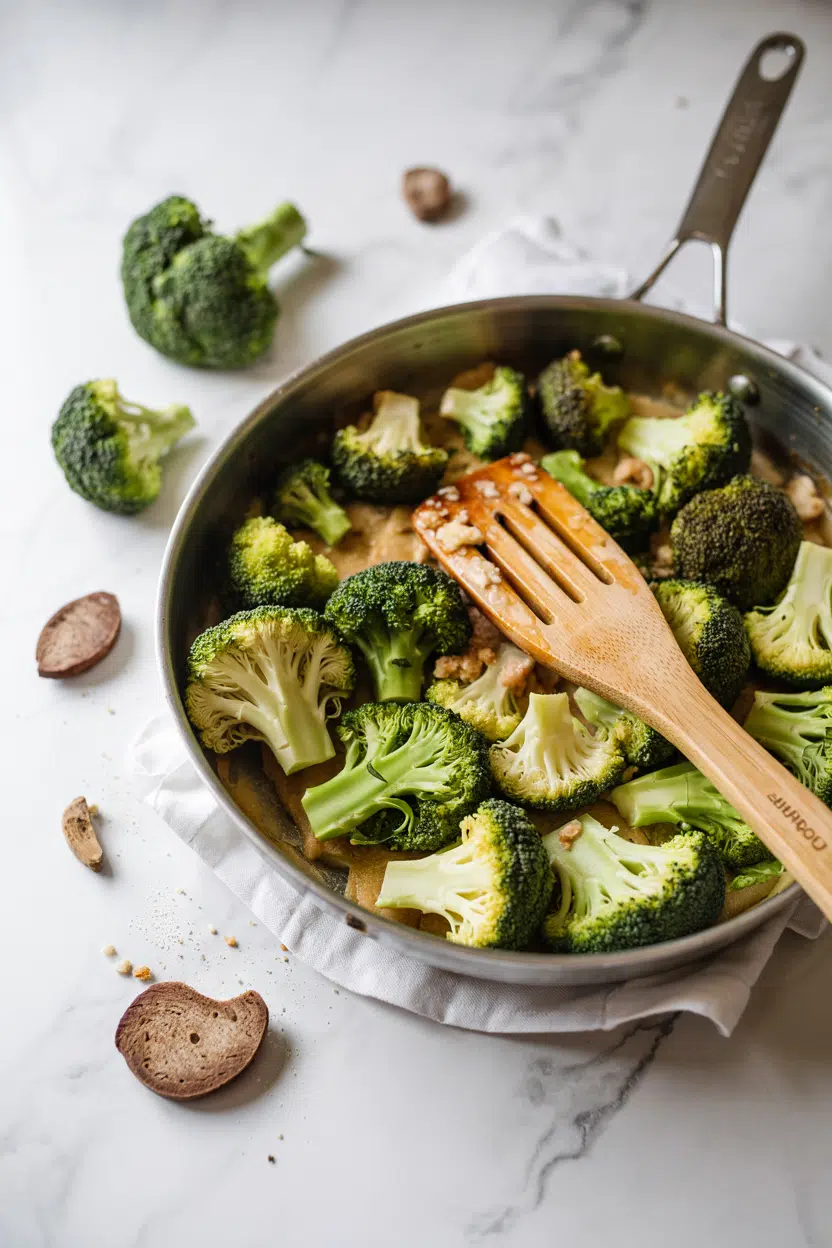
Raw broccoli has a clean, mildly bitter bite - green and slightly astringent, with a faint sulfurous undertone shared by all brassicas. It tastes similar to cabbage and Brussels sprouts, though with less earthiness than kale.
Understanding what preparing kale properly looks like helps here - broccoli requires far less attention to tame its bitterness.
Heat transforms the flavor. Steaming or blanching softens the bitterness into a more neutral, grassy sweetness. Roasting pushes further: at high heat, natural sugars caramelize and the floret edges turn slightly nutty.
Overcooking is the only real risk - too much moisture and high heat activate sulfur compounds (glucosinolates) that produce the distinct boiled-broccoli odor most people find unpleasant.
How to Use Broccoli
Broccoli is one of the most method-flexible vegetables in a savory kitchen. It holds its structure through dry heat and breaks down cleanly with moisture - knowing which method to reach for changes the result significantly.
| Method | Best For | Tip |
|---|---|---|
| 🥗 Raw | Slaws, crudité platters, salads | Cut florets small; slice stalk thin against the grain |
| ♨️ Steamed | Simple sides, pasta additions | Steam 4-5 minutes max; finish with lemon and olive oil |
| 🔥 Roasted | Salads, sheet-pan sides, grain bowls | 425°F, single layer, don't crowd - edges need dry heat to brown |
| 🥢 Stir-fried | Asian-style dishes, quick weeknight dinners | High heat, small florets, add soy and garlic in the last 60 seconds |
| 🫕 Pureed | Broccoli cheddar soup, creamy sauces | Blanch first, then blend with stock for smooth body without stringiness |
| 🔥 Grilled | Whole halved heads, charred sides | Brush cut sides with oil; grill over medium-high for 6-8 minutes |
Garlic, lemon, and Parmesan form the most reliable flavor base for broccoli in Italian and Mediterranean cooking. In Chinese-style stir-fries, soy sauce and sesame oil replace those - a classic beef and broccoli stir-fry uses high heat and oyster sauce to build a glossy coating around the florets. For umami depth in any preparation, anchovy or a strip of bacon added early in cooking makes the broccoli's bitter notes recede quickly.
In American cooking, broccoli is most often paired with cheddar cheese - broccoli cheddar soup being the standard - while roasted broccoli florets tossed with Parmesan have largely replaced steamed broccoli on restaurant menus.
The choice of what to serve dishes alongside broccoli depends heavily on the cooking method used, since roasted broccoli reads very differently from steamed on the same plate.
How to Buy and Store Broccoli
At the market, look for tight, dark-green florets with no yellowing or open blossoms - yellow florets signal the plant is past peak and will taste more bitter and less firm.
The stalk should feel solid and pale green, not limp or hollow at the cut end.
A slight purple tinge on the florets is fine; black spots at the base are not.
At home, keeping broccoli fresh comes down to moisture control in the crisper.
Whole heads last 5-7 days; pre-cut florets drop to 3-4 days because cut surfaces oxidize faster.
Cooked broccoli keeps 3-5 days in an airtight container.
If broccoli is out of season or unavailable, a guide to replacements for broccoli covers the closest options, including cauliflower and replacements for green cabbage that share similar texture behavior when cooked.
Start Here With Broccoli
Roast it first. A hot oven at 425°F with olive oil, salt, and a single layer of florets is the fastest path to understanding why broccoli has staying power in serious kitchens.
- 🔥 New to broccoli - roast at high heat until the edges crisp; finish with lemon
- 🥢 Want speed - stir-fry with garlic and soy takes under 10 minutes
- 🥣 Want comfort - blanch and blend into broccoli cheddar soup for a classic result
- 🥗 Keeping it raw - cut small, toss with a sharp vinaigrette to cut bitterness
Don't start with steaming. It's not wrong, however it's the method least likely to show you what the vegetable can do.
Frequently Asked Questions
Both, technically. The part we eat is an immature flower head - tightly clustered buds that haven't yet bloomed. It's classified and sold as a vegetable, however botanically it's the reproductive structure of the plant.
Overcooking breaks down glucosinolates into sulfur-containing compounds - the same chemistry that gives boiled cabbage its odor. Keep cook times under 6 minutes with wet methods, and the smell stays minimal.
Whole unwashed heads keep about 5-7 days in the crisper. Pre-cut florets go faster - expect 3-4 days before texture and color degrade noticeably.
Yes. The stalk is fully edible - peel the outer fibrous layer and the interior is mild and slightly sweeter than the florets. Slice it thin for stir-fries or cut into batons for crudité.
Yes, and some nutrients - particularly vitamin C - are higher in raw broccoli since heat degrades them. Raw florets are also a source of intact glucosinolates, which cooking partially breaks down.



