
Bittersweet chocolate announces itself before you even take a bite - the roasted cocoa aroma hits first, dense and dry, with a faint whisper of something fruity underneath.

Then comes the snap, firm and clean, followed by a slow melt that coats the palate with deep, only slightly sweet chocolate.
It's the kind of intensity that makes bakers reach for it deliberately, not by default.
Bittersweet chocolate is a high-cocoa dark chocolate with deep roasted flavor and restrained sweetness. Most bars fall between 60-70% cocoa solids. It's the go-to for ganache, mousses, and baked goods where pronounced chocolate bitterness matters.
What Is Bittersweet Chocolate?
Bittersweet chocolate belongs to the dark chocolate family, distinguished by its high cocoa solids content - typically 60-70% or above - and a noticeably lower sugar ratio than semisweet.
Remember it later
Planning to try this recipe soon? Save it for a quick find later!
It's made from cocoa mass (ground cacao), cocoa butter, and sugar, with no milk solids in most standard formulations.
The name "bittersweet" doesn't have a legally standardized definition in most markets. In the United States, the FDA requires only that dark chocolate contain at least 35% cocoa solids, so labeling varies between brands.
Cacao originates from West Africa and South America, and where those beans were grown directly shapes the bar in your hands. Single-origin bittersweet chocolate from Ecuador or Madagascar can carry distinct fruity or winey notes that commodity blends don't show.
You may also see it labeled as bittersweet dark chocolate or simply listed with its cocoa percentage. For coating and enrobing work, professionals often specify couverture, a higher-fat version with more cocoa butter that flows more smoothly when melted.
- 🌍 Origin: Cacao-growing regions in West Africa and South America
- Category: Dark chocolate (cocoa solids + cocoa butter + sugar)
- Also called: Bittersweet dark chocolate, dark bittersweet, high-percentage dark
- Key distinction: Less sugar than semisweet; no milk solids in standard versions
What Does Bittersweet Chocolate Taste Like?
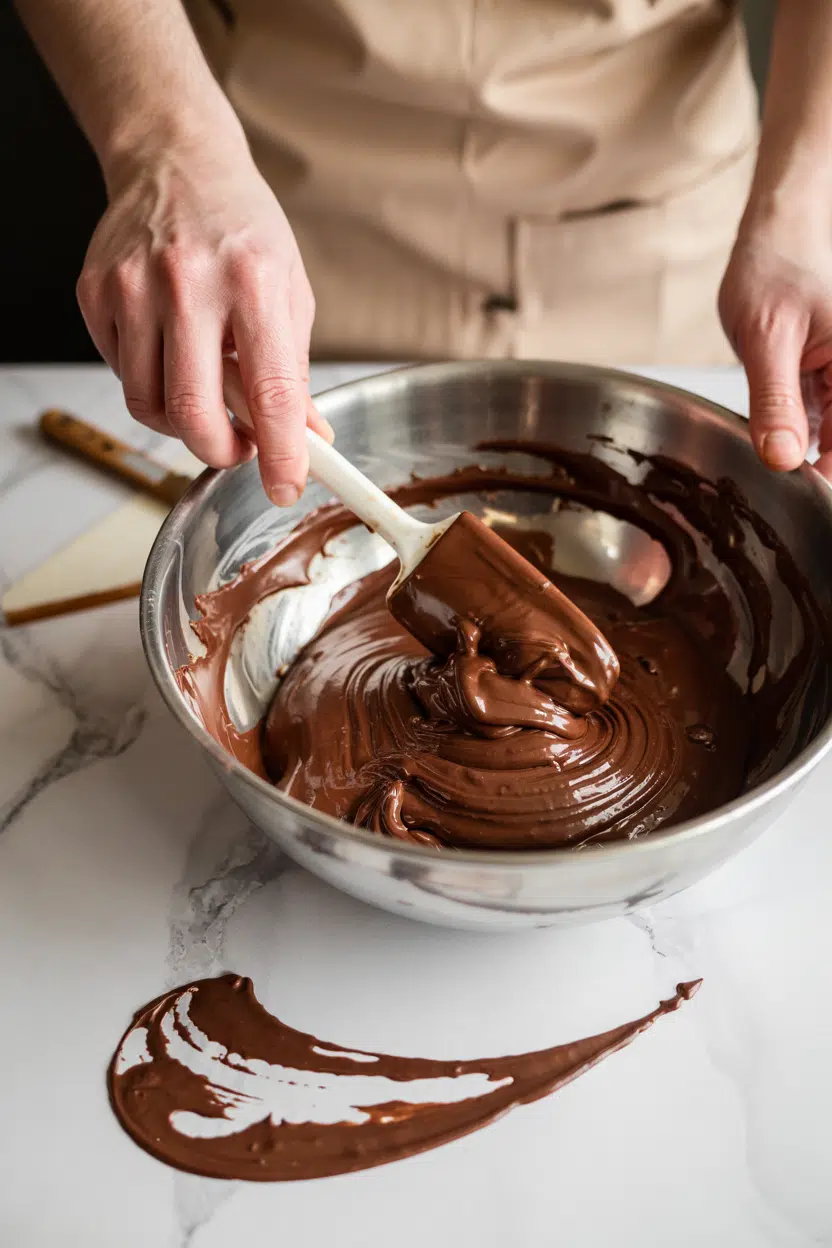
The dominant note is roasted cocoa - dry, slightly astringent, and noticeably less sweet than semisweet chocolate. Think of it as unsweetened cocoa powder with added cocoa butter smoothing out the rougher edges.
Heat changes the profile noticeably. Melted bittersweet chocolate loses its firm astringency and opens up into a rounder, more concentrated cocoa flavor with a glossy, fluid texture.
Single-origin bars add another dimension entirely. A Madagascan bar might carry raspberry or red-fruit brightness; an Ecuadorian one leans toward earthy, almost tobacco-like depth.
Those nuances largely disappear once the chocolate is cooked into a brownie, however - heat simplifies the profile back toward core roasted cocoa.
How to Use Bittersweet Chocolate
Ganache is where bittersweet chocolate performs best. The high cocoa fat content creates a stable, glossy emulsion with heavy cream, and the restrained sweetness lets you control the final sugar level of truffles or glazes independently. If you're working through cream alternatives, knowing which heavy cream in ganache swaps that work will save a failed batch.
| Method | Best For | Tip |
|---|---|---|
| 🫕 Melting | Ganache, glazes, hot chocolate, sauces | Use a double-boiler; keep water off the chocolate to prevent seizing |
| 🍫 Tempering | Bonbons, molded chocolates, dipped fruit | Seed method or marble slab; target 88-90°F working temp |
| 🔪 Chopping | Brownie and cookie batters, muffins | Rough chop creates uneven pockets that melt differently - intentional |
| ✨ Shaving | Citrus salads, plated desserts, drinks | Use a warm peeler for curls; a cold bar produces fine shards |
In French pâtisserie, bittersweet chocolate anchors classic chocolate mousse, where its bitterness balances whipped egg and cream. American baking leans on it in brownies and cookies, where chopped pieces create concentrated chocolate pockets.
Mexican-influenced savory cooking uses melted bittersweet chocolate in mole-style sauces - a small amount stirred into a chile-based braise adds depth without reading as sweet.
Pairing follows the logic of contrast and amplification. Espresso, sea salt, and toasted nuts amplify the roasted bitterness. Citrus - particularly blood orange - cuts through the fat and lifts the fruity notes already in the chocolate. Red wine and dried stone fruit extend those winey undertones found in single-origin bars.
Avoid pairing with delicate floral teas; the cocoa simply overwhelms them. Highly acidic fresh dairy added unwarmed can also seize unmixed melted chocolate instantly.
How to Buy and Store Bittersweet Chocolate
Look for bars labeled "bittersweet" or carrying a cocoa percentage of 60% or higher - that number is the most reliable signal.
A good bar should have a glossy surface, a clean audible snap when broken, and no white dusty or streaky patches.
For coating and enrobing, couverture-grade bars are worth the premium. They contain more cocoa butter than standard baking chocolate and melt to a thinner, more workable consistency.
Store bars at 60-68°F in an airtight container or tightly rewrapped in their original foil. Keep them away from coffee, spices, or other strong-smelling foods - cocoa butter absorbs odors readily.
Understand bittersweet chocolate's shelf life before buying in bulk, since a 12-24 month window only holds if storage conditions stay consistent.
Where to Start With Bittersweet Chocolate
Start with ganache. A 2:1 chocolate-to-cream ratio at 60-65% cocoa gives you a baseline that's rich without being harsh - from there you adjust percentage up or down based on how much bitterness you want.
If a recipe calls for semisweet and you only have bittersweet, a small reduction in added sugar usually corrects the balance; knowing your bittersweet chocolate stand-ins makes that swap straightforward.
Frequently Asked Questions
Bittersweet is a category within dark chocolate, not a separate thing. All bittersweet chocolate is dark, but not all dark chocolate qualifies as bittersweet - the term implies a higher cocoa percentage and lower sugar than generic dark or semisweet bars.
Most bars labeled bittersweet fall between 60-72% cocoa solids. There's no universal legal standard, so the percentage on the label is the most reliable guide - 60% sits at the sweeter end, while 70%+ is noticeably more bitter.
Noticeably more bitter. Semisweet chocolate typically runs 45-60% cocoa solids with more sugar; bittersweet starts around 60% and pushes higher. Side by side, bittersweet has less sweetness and a drier, more roasted finish.
Not always. Standard bittersweet chocolate made from cocoa mass, cocoa butter, and sugar is dairy-free and often vegan. Some brands add milk solids or use shared equipment - always check the label if dairy is a concern.
Yes. Ganache doesn't require tempered chocolate - you simply melt it into warm cream. Tempering only matters when you need the finished chocolate to set hard and glossy, as with molded bonbons or dipped confections.



