
You're scaling up the batch and the drawer only has one biscuit cutter-not enough to keep pace. Biscuit cutters give you clean, even rounds that rise tall and bake evenly, but any sharp-edged cylinder can do the same job.
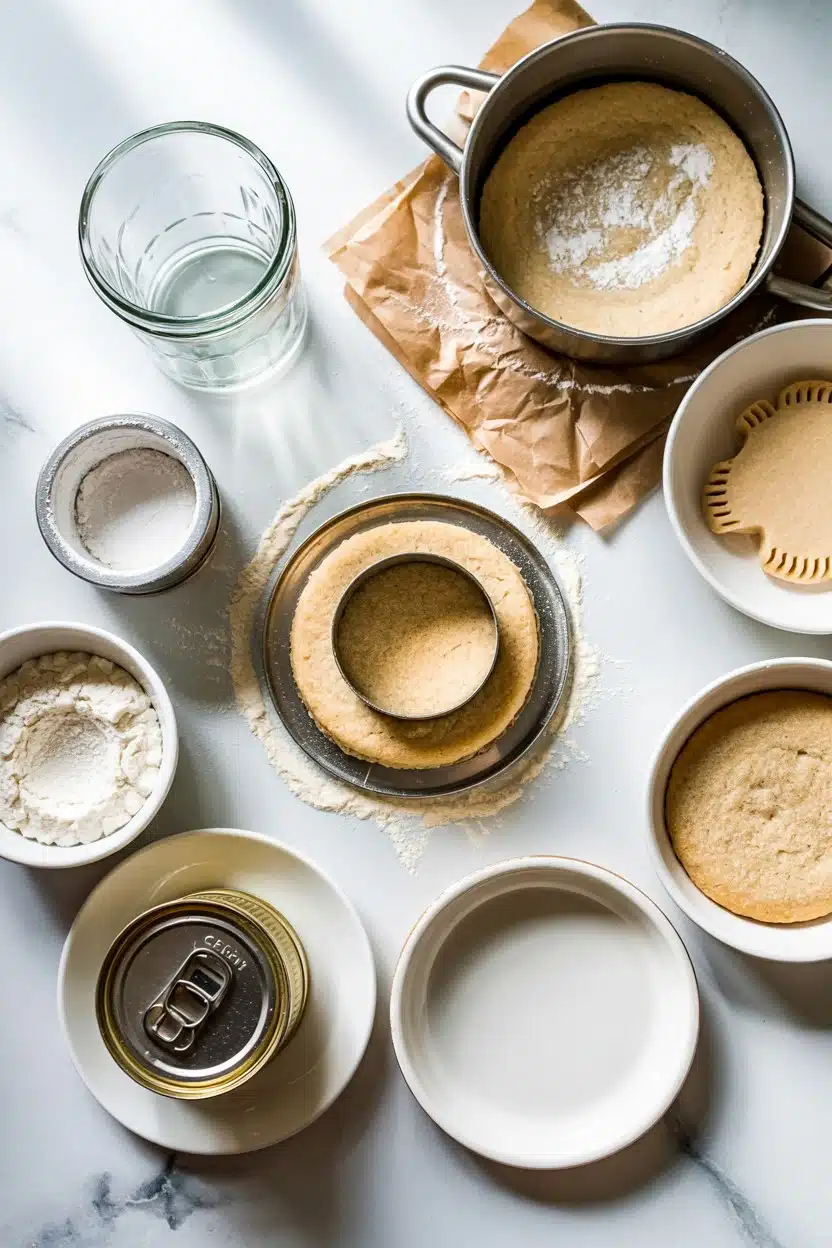

Glass and cookie cutters offer the cleanest cuts for biscuit dough. Prioritize a sharp edge to avoid squashing the dough. Using a metal measuring cup can work well in a pinch-just press firmly and twist gently for best results.
P>The right substitute depends on edge sharpness and diameter, not the tool itself. A dull rim compresses dough instead of slicing it, which kills the rise. Match the size you need and keep the edge thin.
| # | Substitute | Best For | Ratio | Key Note |
|---|---|---|---|---|
| 1 | Glass | ✨ Both | Same diameter | Thin rim works best |
| 2 | Cookie Cutter | 🥧 Baking | Match size | Metal cuts cleaner than plastic |
| 3 | Knife/Pizza Cutter | 🥧 Baking | Cut to size | Square biscuits rise fine |
| 4 | Jar Lid | 🥧 Baking | Match diameter | Press straight down |
| 5 | Measuring Cup | 🥧 Baking | Match diameter | 1-cup size fits most recipes |
| 6 | Egg Ring | 🥧 Baking | Match diameter | Makes smaller biscuits |
| 7 | Pastry Wheel | 🥧 Baking | Cut strips | Best for layered dough |
7 Top Biscuit Cutter Alternatives That Hold Up
Some of these cut just as cleanly as the real thing, while others require a slightly different approach. The choice comes down to what's in your kitchen and whether you care about perfectly round edges.
Remember it later
Planning to try this recipe soon? Save it for a quick find later!
1 - Glass
A thin-rimmed drinking glass works nearly as well as a metal cutter. The key is finding one with a sharp enough edge to slice rather than squash.
Dip the rim in flour before each cut to prevent sticking. Press straight down without twisting-twisting seals the edges and stops the rise.
Here's what to know:
- Flip the glass upside down and use the open end for cutting.
- Thinner glass rims cut cleaner than thick ones.
- Chill the glass first if your kitchen runs warm.
Skip if: the glass has a rounded or rolled rim.
Thin-Rimmed Glass
Works for: All biscuit doughs, scones, shortcakes
Skip if: Rim is thicker than 2mm
Standard Drinking Glass
Works for: Softer doughs that cut easily
Skip if: Dough is stiff or cold
2 - Cookie Cutter
Metal cookie cutters with straight sides substitute directly for biscuit cutters. Round ones match the traditional shape, but any shape cuts dough cleanly.
The main limitation is size. Most cookie cutters run smaller than standard biscuit cutters, so your biscuits will be bite-sized unless you find a larger one.
The essentials:
- Metal cuts cleaner than plastic-plastic tends to drag.
- Look for cutters without intricate details that trap dough.
- A 3-inch round cutter matches most biscuit recipes.
- Flour the cutter between cuts to keep edges sharp.
3 - Knife/Pizza Cutter
Sharp knives and pizza wheels skip the round shape entirely. Square or rectangular biscuits rise just as tall and bake just as evenly.
Roll your dough into a rectangle, then cut straight lines. No re-rolling scraps means every biscuit comes from the first roll, which keeps them tender.
Key details:
- Use a bench scraper for the cleanest straight cuts.
- Pizza wheels work fastest on large batches.
- Avoid sawing-one firm press cuts better.
Skip if: you need uniform rounds for presentation.
4 - Jar Lid
Wide-mouthed canning jar lids cut firm doughs effectively. The metal edge is thin enough to slice without compressing.
Use the flat inner lid, not the screw band. The band's ridges create uneven edges that affect how biscuits bake.
Quick specs:
- Standard wide-mouth lids measure about 3 inches.
- Regular mouth lids work for smaller biscuits.
Press firmly and lift straight up. A quick twist at the end helps release the dough from the lid.
Skip if: you only have the screw band without the flat lid.
| Lid Type | Diameter | Best For |
|---|---|---|
| Wide-mouth flat lid | 3 inches | Standard biscuits |
| Regular flat lid | 2.5 inches | Slider-sized biscuits |
| Screw band only | Varies | Not recommended |
5 - Measuring Cup
A metal measuring cup with a thin rim doubles as a cutter in a pinch. The 1-cup size matches most biscuit recipes perfectly.
Flip it upside down and use the open end. Plastic cups work but drag more than metal, so flour them generously.
What to expect:
- 1-cup measures cut roughly 3-inch rounds.
- Half-cup measures work for mini biscuits.
Skip if: your measuring cups have thick, rounded rims.
6 - Egg Ring
Metal egg rings cut smaller biscuits or slider-sized rounds. They're already designed to withstand heat and cut cleanly through soft mixtures.
The diameter runs smaller than standard biscuit cutters-usually around 3 inches. Good for appetizer-sized biscuits or biscuit sandwiches.
Here's what to know:
- Remove any silicone coating before using on dough.
- The thin metal edge cuts cleaner than most improvised tools.
Egg rings work especially well when you want uniform mini biscuits for a party spread.
Skip if: you need full-sized biscuits-most egg rings are too small.
7 - Pastry Wheel
Pastry wheels excel at cutting dough into strips, squares, or diamonds. They don't make rounds, but they handle laminated doughs beautifully.
For biscuits, roll dough into a rectangle and cut straight lines. The fluted edge adds a decorative touch to each piece.
The essentials:
- Fluted wheels leave pretty crimped edges.
- Straight wheels cut cleaner for stacking.
- Roll fast and firm-hesitation tears dough.
- Keep the blade clean between cuts.
Skip if: round biscuits matter for your recipe.
Final Thoughts on Swapping Biscuit Cutter
Any thin-edged cylinder cuts biscuit dough cleanly-the shape matters less than the sharpness. Start with a drinking glass if you want rounds, or grab a knife for squares that skip the scrap re-rolling problem entirely.
- Closest match - Glass with thin rim for clean rounds
- Easiest grab - Knife or pizza wheel already in the drawer
- Best for mini biscuits - Egg ring for uniform small rounds
Frequently Asked Questions
The rim is probably too thick or you're twisting as you cut. Press straight down with a thin-rimmed glass and lift without rotating to keep the layers intact.
No difference in taste or texture. Square biscuits actually come out more tender because you skip re-rolling the scraps, which toughens the dough.
Plastic works but drags more through dough. Flour it generously and press firmly rather than twisting to get cleaner cuts.
Look for something around 2.5 to 3 inches in diameter. A 1-cup measuring cup or wide-mouth jar lid hits this range perfectly.
Dip the cutting edge in flour before each cut. If dough still sticks, chill the cutter in the freezer for a few minutes between batches.
7 Best Substitutes for Biscuit Cutter
Ingredients
Method
- Choose your substitute based on the biscuit shape and size you need: glass or round cutters for rounds, knife or pastry wheel for squares or strips.
- For glass, dip the rim in flour before each cut to prevent sticking, press straight down without twisting, and chill if kitchen is warm.
- If using a cookie cutter, select a metal one in the right size and flour edges between cuts to maintain sharpness.
- Use a sharp knife or pizza cutter to roll dough into a rectangle and cut straight lines; avoid sawing motions and press firmly.
- Press flat jar lids firmly straight down on the dough and lift with a slight twist to release; avoid screw bands.
- Flip measuring cups upside down and use the open end to cut, flour rim after every two cuts, and choose size accordingly.
- Remove any silicone coating from egg rings before use; they work best for smaller biscuits or sliders with uniform size.
- Roll dough fast and firm with a pastry wheel to cut strips or shapes; clean blade between cuts and let dough warm if stiff.
- Avoid twisting the cutter during cutting to ensure biscuit layers remain intact and the rise is not compromised.



