
Stir-fried pork with bamboo shoots is one of those dishes where a single ingredient quietly holds everything together - the shoots absorb the soy sauce and ginger while keeping a crunch that softens but never disappears.
Most home cooks encounter them in canned form first, which is a decent starting point but nowhere near the full picture.
Fresh and fermented varieties change the equation significantly, and knowing which form to reach for - and what to do with it - makes a real difference.
If you're already building a stir-fry around these, good pairing ideas for stir fry can round out the plate, and whenever soy sauce anchors the dish, knowing your soy sauce swaps that work is worth a few minutes.
Bamboo shoots are young edible sprouts harvested before the bamboo stem hardens. They have a mild, slightly bitter flavor similar to artichoke heart, hold their crisp texture through most cooking methods, and appear fresh, canned, or fermented across East and Southeast Asian kitchens.
What Is Bamboo Shoot?
Bamboo shoots are the young, emerging growth of bamboo plants, cut from the base before the stem hardens into woody cane. They grow across East and Southeast Asia and have been harvested for food for thousands of years.
Remember it later
Planning to try this recipe soon? Save it for a quick find later!
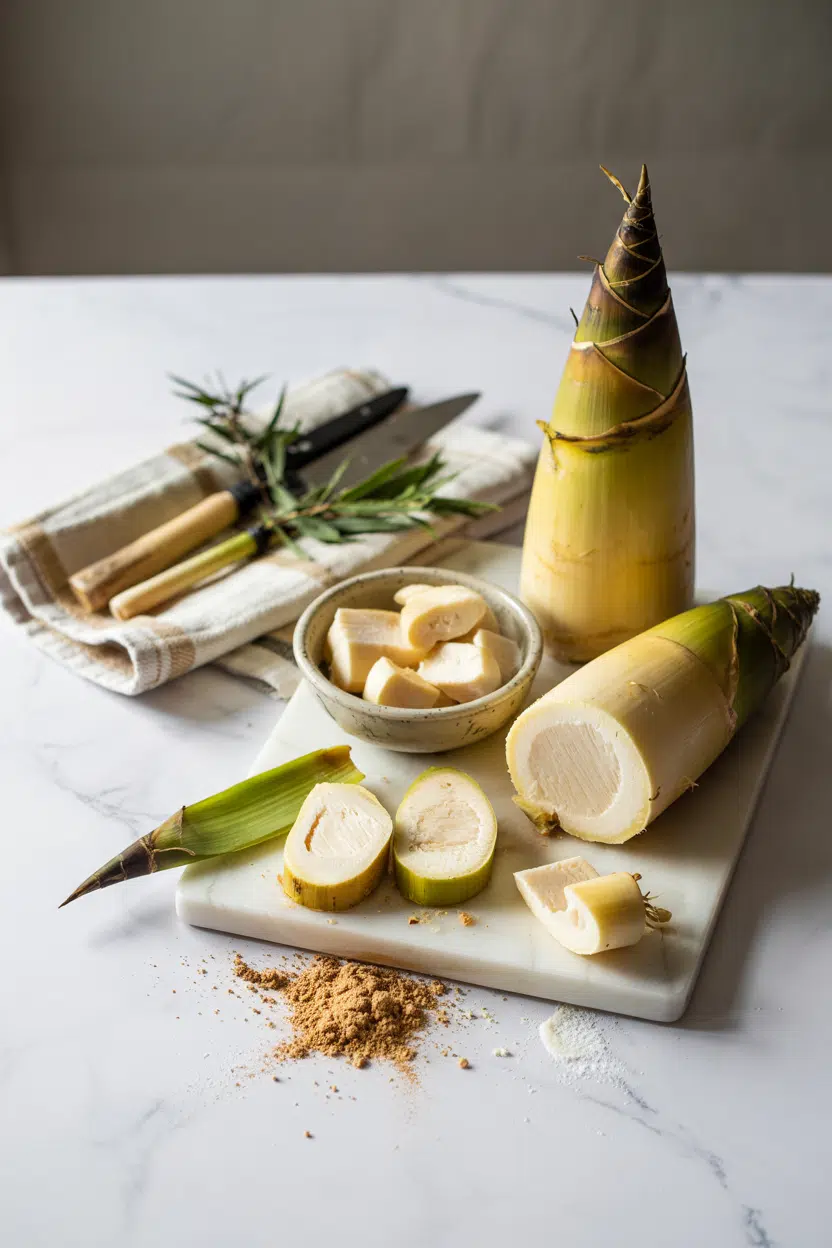
The shoot itself is a conical spear wrapped in overlapping papery sheaths. Strip those away and the inner core - pale yellow-white and firm - is what ends up in the pan.
Takenoko is the Japanese term, referring specifically to the spring-harvested shoots prized in that cuisine. In other contexts you'll see them called bamboo sprouts, mesu, or simply bambusa shoots depending on regional dialect.
Several varieties reach the market:
- 🌿 Moso bamboo - the most common commercially; large, mild, widely available fresh and canned
- 🌿 Phyllostachys varieties - smaller, more tender; common in Japanese spring dishes
- 🥫 Canned bamboo shoots - pre-boiled and packed in water; convenient but softer than fresh
- 🫙 Fermented/pickled shoots - sharp, funky, used as a condiment or side in Burmese and Vietnamese cooking
What Does Bamboo Shoot Taste Like?
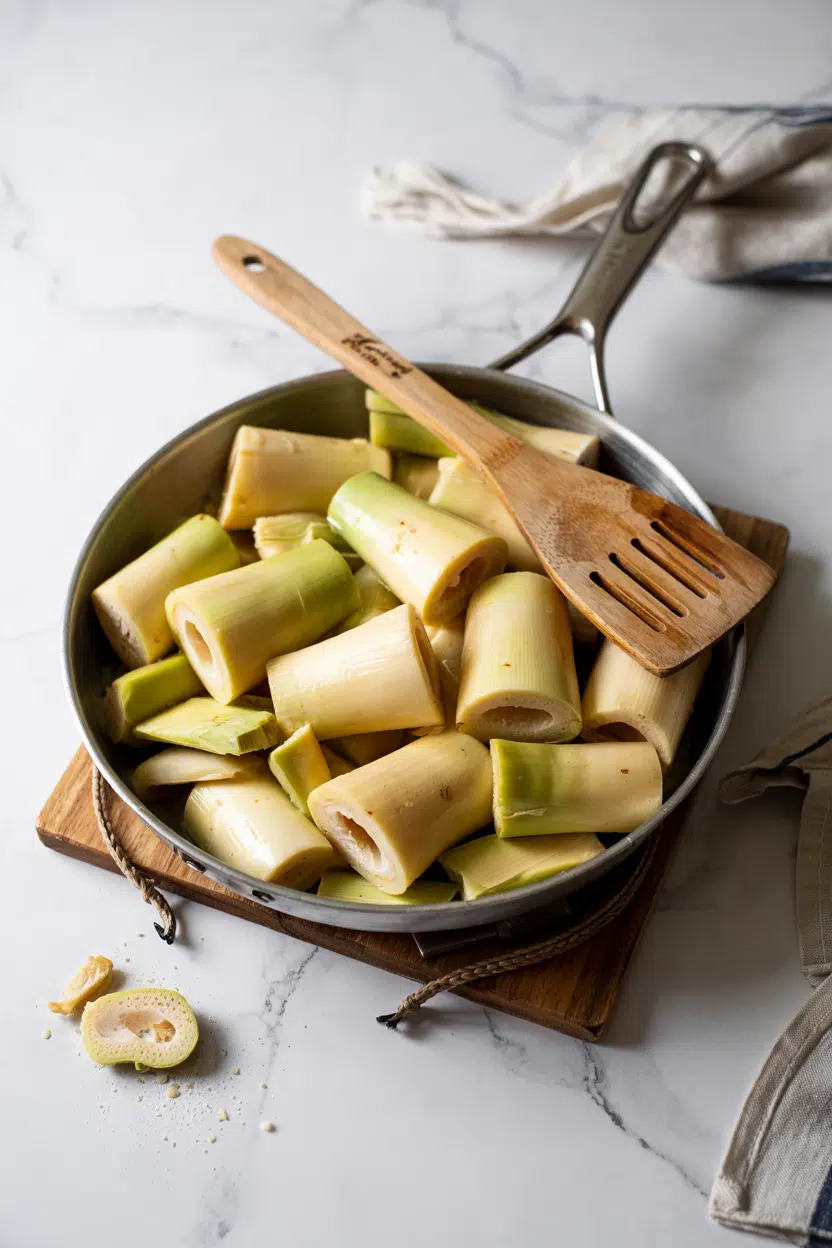
Fresh bamboo shoot has a mild, slightly sweet earthiness with a faint bitterness that sits toward the back of the palate.
It's closest in character to a young artichoke heart - and if you've worked with artichoke heart stand-ins before, many of the same flavor dynamics apply here.
Raw shoots carry that bitterness more sharply, which is why blanching is standard practice. Heat mellows it considerably.
Cooked in broth or a stir-fry, the shoot absorbs surrounding flavors readily without losing its own mild profile. Fermented shoots are a different animal - sharper and more pungent, functioning almost like a condiment rather than a background vegetable.
How to Use Bamboo Shoot
Bamboo shoots appear across Chinese, Japanese, Thai, Vietnamese, and Burmese cooking in ways that reflect each cuisine's priorities. The ingredient is a structural player - it adds texture and absorbs flavor rather than announcing itself.
| Method | Best For | Tip |
|---|---|---|
| 🥘 Blanching | Removing bitterness; prep step for all fresh shoots | Boil 20+ min in plain water; discard water after |
| 🍳 Stir-frying | Pork and soy dishes; quick weeknight cooking | Slice thin for faster cook and better soy absorption |
| 🍲 Simmering | Miso soup, dashi-based takenoko dishes, coconut curries | Add shoots in the last 10 min to preserve some firmness |
| 🫕 Braising | Chinese clay-pot dishes with mushrooms and pork | Long braises work well - shoots soften but hold shape |
| 🫙 Pickling | Preserved side dishes; condiment in Burmese cuisine | Use rice vinegar or brine; fermented version has sharper bite |
In Japanese cooking, takenoko rice (takenoko gohan) simmers the shoots with dashi and soy before folding them into rice - a spring dish where the shoot is the centerpiece, not a supporting player.
Southeast Asian cooks add sliced shoots to coconut milk curries, where the fat and spice round off any residual bitterness.
Knowing how to keep that base sauce fresh matters too - advice on keeping coconut milk fresh applies directly when building these dishes ahead.
Pairing-wise, soy sauce, ginger, garlic, and mushrooms are natural companions. Miso-based broths suit the shoot's mild earthiness well; if you're short on miso, the approach covered in swapping out miso paste keeps the dish balanced.
Avoid heavy dairy sauces - cream mutes the shoot's texture and flavor without adding anything useful.
How to Buy and Store Bamboo Shoot
Fresh shoots should feel heavy and firm with tight, intact outer sheaths. Pass on anything with soft spots, darkened patches, or sheaths that have already started separating.
The inner core, when you peel back a layer, should be pale and clean - not gray or slimy.
For canned bamboo shoots, check that the liquid is clear and the can shows no bulging or dents. Once opened, cover the shoots in their brine and store in an airtight container in the refrigerator.
Storage by form:
- Whole fresh shoots - wrap in a damp cloth, refrigerate in the crisper, use within 5-10 days
- Blanched fresh shoots - store submerged in cold water in the fridge; change the water daily
- Opened canned shoots - keep in brine in an airtight container; use within 4-7 days
- Unopened canned shoots - shelf-stable for months to years per the label
For a full breakdown, the guide on storing bamboo shoot correctly covers every form in detail. If dashi is part of your broth base and you need an alternative, swapping out dashi powder keeps that component covered.
Start with Canned, Then Go Fresh
If you haven't cooked with bamboo shoots before, canned is the practical entry point - pre-boiled, ready to slice, and available year-round at most Asian grocery stores.
Once you're comfortable with the flavor and how it behaves in stir-fries or soups, fresh shoots in spring are worth seeking out. They have noticeably more texture and a cleaner flavor.
And if you find yourself without shoots mid-recipe, the bamboo shoot swaps that work covers the closest alternatives without rebuilding the dish from scratch.
Frequently Asked Questions
Some varieties contain cyanogenic glycosides that can cause nausea if eaten raw in quantity. Boiling or blanching for at least 20 minutes in plain water neutralizes these compounds. Canned shoots are already processed and safe to eat without further cooking.
Fresh whole shoots last 5-10 days wrapped in a damp cloth in the crisper. Opened canned shoots stored in their brine in an airtight container keep for 4-7 days.
Not quite. Canned shoots are softer and have a more neutral flavor since they've already been boiled and stored in water. Fresh shoots have more pronounced earthiness and a firmer, snappier texture.
A mild sour or slightly tangy smell is normal - it comes from the acidified packing liquid used to extend shelf life. Rinse them under cold water before using; a sharp or sulfurous smell, however, means the product has spoiled.
Freezing is possible but degrades the texture significantly - shoots become mushy after thawing. Blanch first, then freeze in an airtight container if you must; use within one month and add directly to cooked dishes rather than eating as-is.



