
You spot a tall, dark bottle at the back of the spirits shelf, its label dense with botanical names and a green-tinted liquid glowing behind the glass. That's absinthe, and if you've only heard the myth - that it causes hallucinations, that it's banned everywhere, that it's basically poison - you're working with bad information.
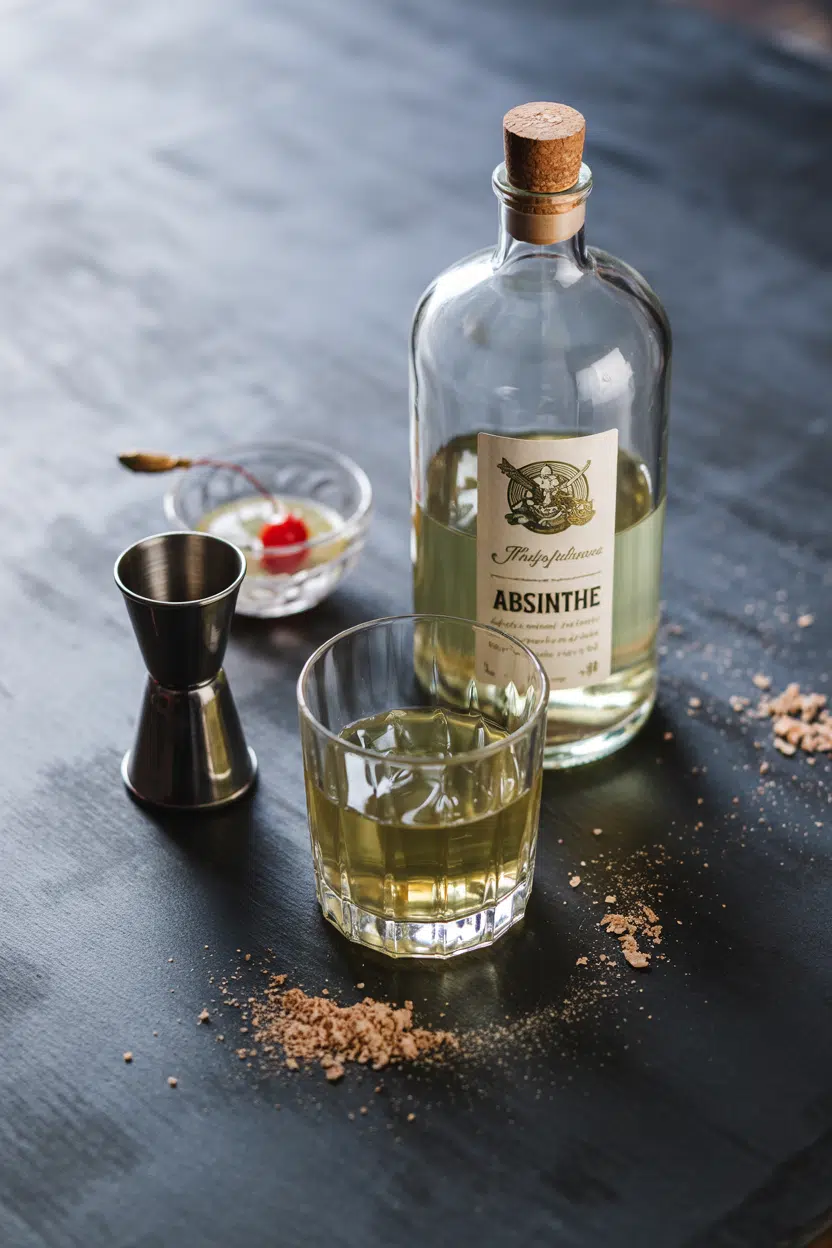
This guide covers what absinthe actually is, how it tastes, and how to use it in both drinks and cooking.
Absinthe is a high-proof, anise-forward spirit distilled with wormwood, fennel, and green anise. Its flavor is licorice-sharp and bitter herbal, softened by louching with water. Used sparingly, it adds serious depth to cocktails, sauces, and desserts.
What Is Absinthe?
Absinthe originated in Switzerland and France in the late 18th century, built around a trio of core botanicals: grand wormwood (Artemisia absinthium), green anise, and florence fennel. It's a distilled spirit, not a liqueur - there's no added sugar in the traditional formula.
Remember it later
Planning to try this recipe soon? Save it for a quick find later!
Two main styles exist. Verte (green) gets its color from a post-distillation chlorophyll maceration, giving it a fresh herbal green hue and additional aromatic complexity. Blanche (clear or "white") skips that step, producing a clean, bright spirit that's slightly more neutral in aroma.
Absinthe is also called la fée verte - "the green fairy" - a nickname from 19th-century Parisian café culture. You'll sometimes see it spelled absinth or absynthe, though those are variant spellings rather than separate products.
- Verte style - Green-tinted, complex herbal aromatics from chlorophyll maceration
- Blanche style - Clear, slightly cleaner profile, often lighter in botanical character
- Thujone content - A compound found in wormwood; heavily regulated brands exist for those seeking traditional-style production
- ABV range - Typically 45-74%, making it one of the strongest common spirits
What Does Absinthe Taste Like?
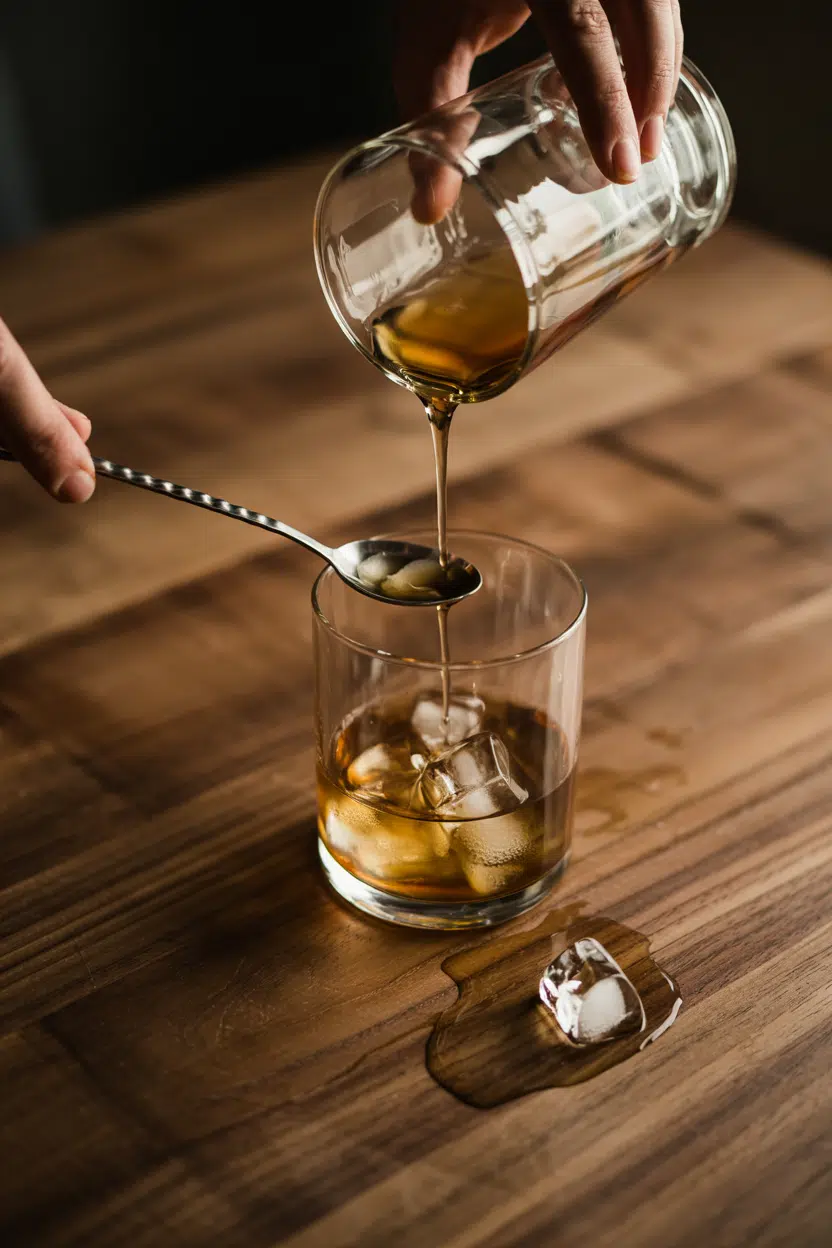
Anise dominates the first impression - sharp, clean licorice that fills the mouth immediately. Behind it sits the wormwood bite: a dry, herbal bitterness that lingers without sweetness.
Compared to pastis or ouzo, absinthe carries a sharper, more bitter backbone from the wormwood -
pastis is sweeter and less aggressive, while ouzo skews toward pure anise without the herbaceous edge. Louching - diluting with cold water - turns absinthe milky and softens the harshness considerably, pulling forward the floral and fennel notes that stay hidden at full proof.
How to Use Absinthe
Restraint matters here. A few drops or a small splash is often all a dish or drink needs. Going heavy kills the balance.
For cocktails, absinthe works as a rinse or accent rather than a base spirit. The classic Sazerac from New Orleans uses it as a glass rinse - perhaps 5ml - to coat the inside before discarding the excess.
The Corpse Reviver #2 adds a float for anise lift without overwhelming the citrus and Cointreau underneath.
In the kitchen, absinthe pairs exceptionally well with briny shellfish - raw oysters, crab, lobster - and with rich meats like lamb and duck. A small splash deglazes a hot pan after searing duck breast, lifting the fond into a sharp herbal sauce. Cream infusions work well too: steep a few teaspoons into warm cream for 15 minutes, then strain into a custard or pastry cream for a restrained anise note.
Brushing charred citrus rind with absinthe before serving adds green anise aroma without adding liquid volume.
| Method | Best For | Tip |
|---|---|---|
| 🥂 Louched | Classic absinthe drip ritual, straight sipping | 3-5 parts cold water; add slowly to control louche |
| 🍸 Cocktail rinse/splash | Sazerac, Corpse Reviver #2, Death in the Afternoon | Use 5ml max; discard rinse or float on top |
| 🔥 Pan deglaze | Sauces for duck, lamb, shellfish | Add off-heat first; alcohol cooks off fast at high temp |
| 🥛 Cream infusion | Custards, pastry cream, ganache | 15-minute steep, then strain - don't boil or the volatiles vanish |
Avoid pairing absinthe with delicate white fish or heavy chocolate in large amounts. Both clash with strong anise at any meaningful volume.
How to Buy and Store Absinthe
Read the label before buying. Authentic absinthe lists Artemisia absinthium (grand wormwood) as a botanical - if it's not there, it's flavored spirit, not true absinthe. Check whether the bottle states distillation origin; Swiss and French producers generally hold to traditional methods.
Color tells you the style: green (verte) vs clear (blanche). Neither is superior - it depends on use.
Verte suits sipping and complex cocktails; blanche works well where color contamination matters, such as light cream sauces.
Store absinthe upright, capped tight, away from heat and sunlight. The high ABV protects it from spoilage, but the volatile botanical aromatics do degrade with air exposure.
More detail on absinthe storage guide is worth reading if you're working through a bottle slowly. If you can't source absinthe, the absinthe alternatives cover the closest options for both cocktails and cooking - pastis alternatives are also worth checking if you need a sweeter anise alternative.
Where to Start With Absinthe
Start with the louching ritual - cold water added slowly to a measure over a sugar cube. It's the most forgiving introduction and reveals what this spirit actually tastes like at its intended dilution.
From there, try a single-use cocktail application: a glass rinse for a Sazerac, or a drop in a cream sauce for duck. Those two uses will tell you how far you want to take it in your kitchen.
Frequently Asked Questions
No. Absinthe is legal in the US, EU, UK, and most countries that regulate it. The US lifted its ban in 2007 under rules that cap thujone levels. Some countries have specific ABV or thujone limits, but commercial absinthe sold today meets those standards.
Louching is the clouding effect that happens when cold water is added to absinthe. Aromatic oils in anise and fennel become insoluble at lower alcohol concentration, forming a milky white emulsion. It's not a defect - it's how absinthe is meant to be served.
Thujone is a naturally occurring compound found in grand wormwood. Historic accounts blamed it for absinthe's supposed hallucinogenic effects, but modern research shows thujone levels in traditional absinthe were far too low to cause that. Regulators now cap it at 10-35mg/kg depending on country.
Significantly stronger. Standard vodka runs 40% ABV; absinthe typically ranges from 45-74% ABV. That's why it's always diluted before drinking and used in tiny amounts for cooking.
Yes, though amounts should stay small - typically 1-2 tablespoons per dish. Its high ABV means alcohol cooks off quickly in a hot pan, leaving behind the herbal anise notes. Cream sauces, shellfish, and lamb are the most compatible applications.



