
The store isn't an option-the pantry has to cover this one. Oat bran adds fiber and a mild nutty flavor to baked goods, porridge, and smoothies, but when it's missing, you need swaps that deliver similar texture without changing how the recipe behaves.
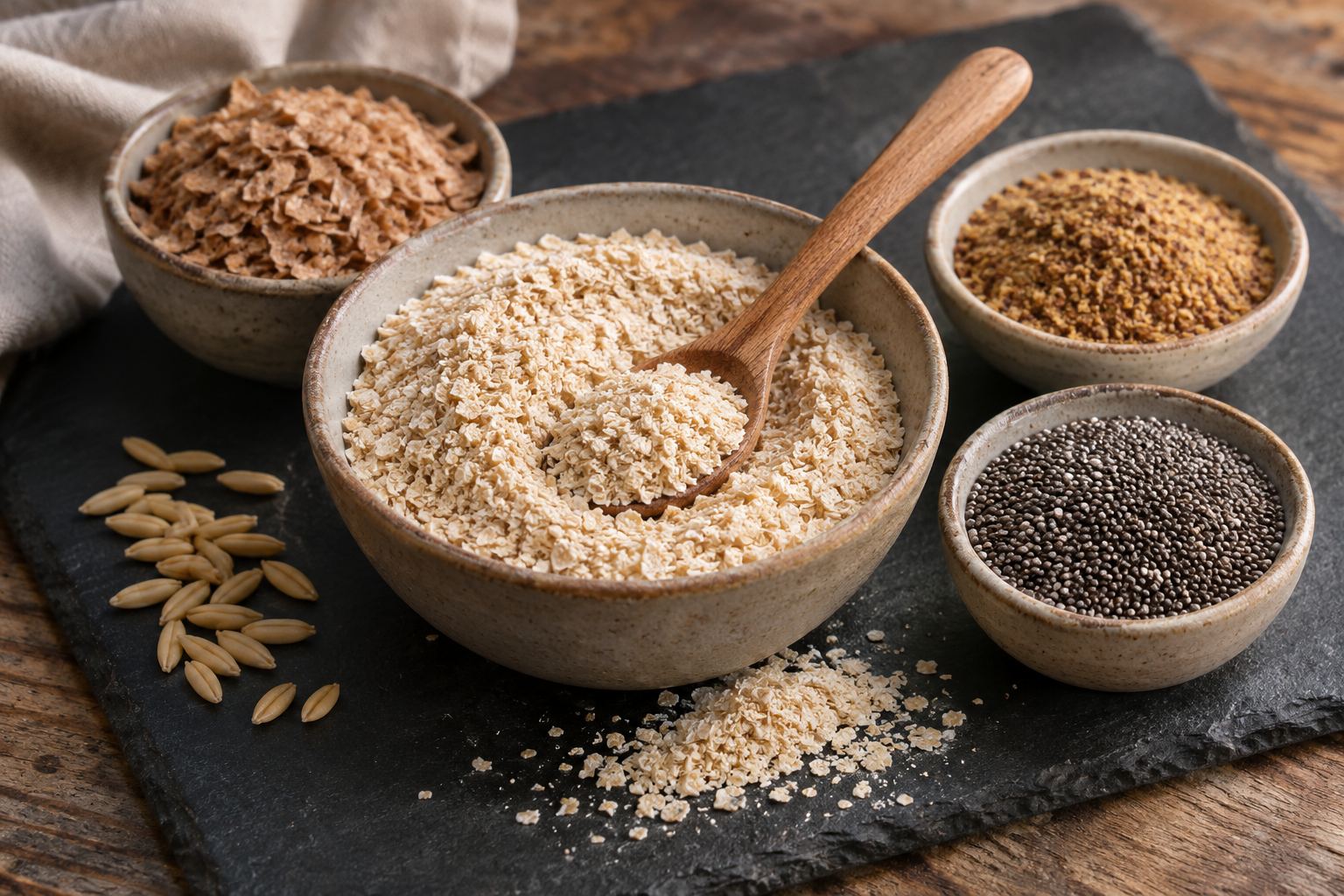
The right substitute depends on whether you are baking, cooking porridge, or blending a smoothie. Some options absorb liquid like oat bran does, while others add bulk or binding power instead.
| # | Substitute | Best For | Ratio | Key Note |
|---|---|---|---|---|
| 1 | Wheat Bran | ✨ Both | 1:1 | Less sweet, nuttier |
| 2 | Ground Flaxseed | ✨ Both | 1 tablespoon per 1 tbsp | Earthier, binds well |
| 3 | Chia Seeds | 🥧 Baking | 1 tablespoon (soak first) | Gelatinous when wet |
| 4 | Psyllium Husk | 🥧 Baking | 1 teaspoon per 1 tbsp | Strong binder |
| 5 | Ground Rolled Oats | ✨ Both | 1:1 | Milder, less fiber |
| 6 | Corn Bran | ✨ Both | 1:1 | Sweeter, grainier |
| 7 | Wheat Germ | 🥧 Baking | ¾ cup per 1 cup | Nutty, richer |
Wheat bran is the closest swap. Use 1:1; it is less sweet and nuttier, and it contains gluten.
Ground flaxseed goes 1 tablespoon per 1 tablespoon and binds well, but it is earthier, so use it where strong spices or fruit cover it.
For binding in baking, chia seeds need soaking first and psyllium husk goes 1 teaspoon per 1 tablespoon.
7 Oat Bran Substitutes Without Big Changes
The following options work best in different recipe situations. Pick based on what you're making and what's already in the pantry.
Remember it later
Planning to try this recipe soon? Save it for a quick find later!
The swaps also differ on fiber. Per USDA data, a cup of oat bran has about 14.5 g of fiber and a cup of wheat bran about 24.8 g, so the swaps below are not equal on fiber even when the ratio is 1:1.
1 – Wheat Bran
Wheat bran delivers the same fibrous texture and works in a straight swap. The flavor skews less sweet and more nutty, which blends into whole-grain breads and muffins without standing out.
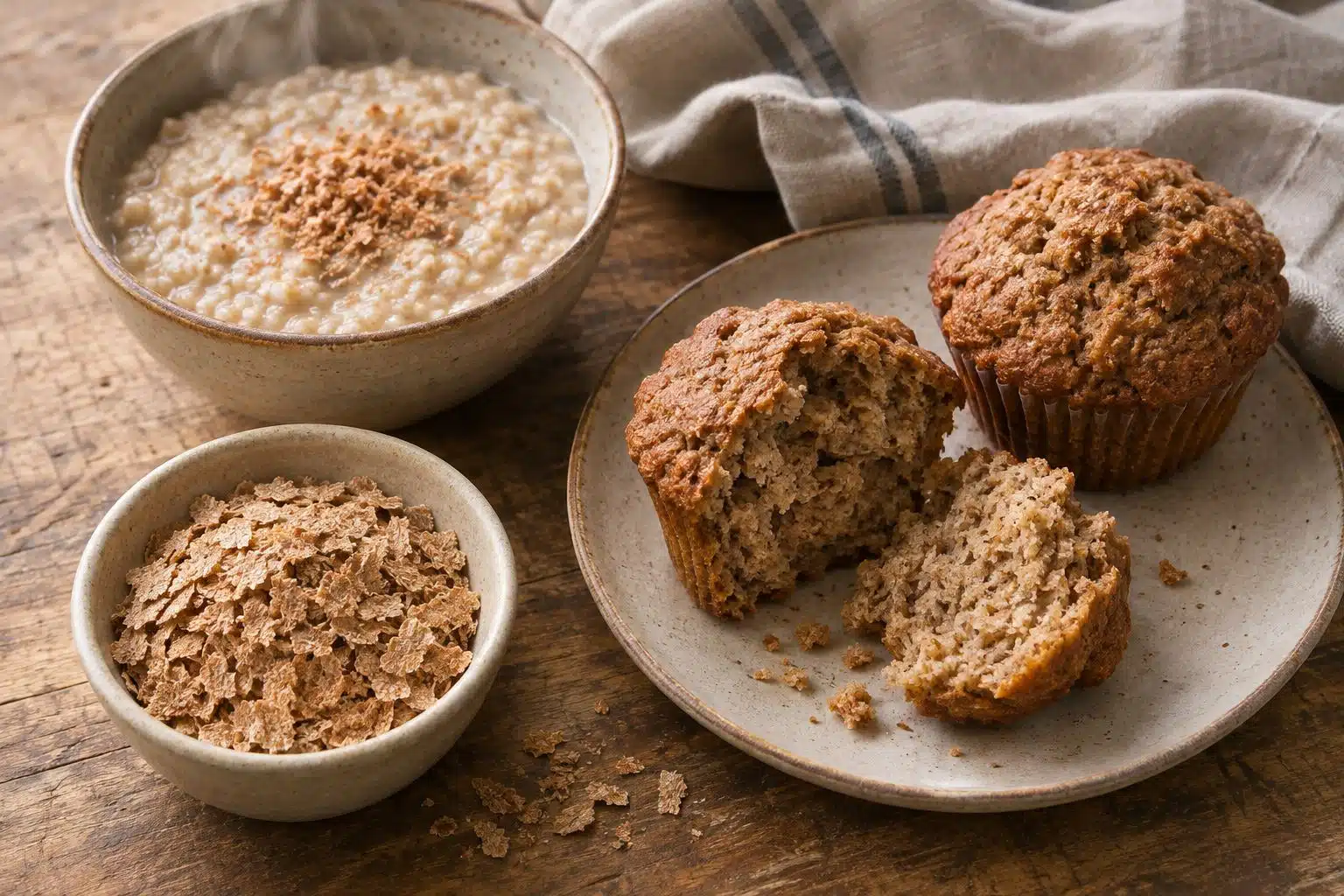
Use it anywhere oat bran would go-porridge, baked goods, or sprinkled over yogurt.
Wheat bran is coarser and carries more fiber per cup than oat bran, so muffins come out a little denser and the batter can look stiffer. If it does, add a splash of milk or water a spoonful at a time.
Skip if: you need a gluten-free option-wheat bran contains gluten.
Wheat Bran
Works for: whole-grain baking and hot cereals
Skip if: gluten-free is required
Ground Flaxseed
Works for: binding and boosting omega-3s
Skip if: you want a coarse texture
2 – Flaxseed
Ground flaxseed brings fiber and a slight binding effect, making it ideal for smoothies and baked goods where moisture matters. The flavor leans earthier and nuttier than oat bran, so it suits recipes with strong spices or fruit.
Buy it ground, or grind flaxseeds yourself. Whole seeds stay whole in a batter and add no binding.
Here's what to know:
- Use 1 tablespoon ground flaxseed per 1 tablespoon oat bran.
- Flaxseed absorbs liquid quickly, so add a bit more water to batters if they thicken too much.
Skip if: you're making something that needs a coarse, chewy texture-flaxseed dissolves more than it adds bulk.
3 – Chia Seeds
Chia seeds absorb liquid and form a gel, which adds moisture and helps bind ingredients in baking. The flavor stays neutral, so they don't interfere with other tastes in the recipe.
They hydrate quickly, so soak them in water for a few minutes before adding them to batter or dough.
Ground flaxseed forms a similar gel, so it can stand in for chia here, and chia seed substitutes lists other options.
- Use 1 tablespoon chia seeds for 1 tablespoon oat bran.
- Soak chia seeds in 3 tablespoons water for 5 minutes before using.
- Chia seeds add a slight crunch if left unsoaked, which works in granola or energy bars.
Skip if: you want a smooth, uniform texture-chia seeds stay intact and add visible speckles.
4 – Psyllium Husk
Psyllium husk binds ingredients tightly, which makes it a go-to for gluten-free baking where structure matters. The flavor stays neutral, so it doesn't shift the taste of breads or muffins.
At 1 teaspoon per tablespoon, a full cup of oat bran works out to about ⅓ cup of psyllium, which is a lot for one batch. In a big batch, use psyllium for part of the bran and fill the rest with wheat bran or ground oats.
Without psyllium, ground flaxseed or chia gel does a lighter version of the same job, and the psyllium husk substitutes list ranks the other options.
- Use 1 teaspoon psyllium husk per 1 tablespoon oat bran.
- Add liquid gradually-psyllium absorbs more than oat bran and can thicken batter fast.
- Let the batter rest for 5 minutes before baking to allow the husk to hydrate fully.
- Too much psyllium turns the texture gummy, so stick to the recommended ratio.
Skip if: you're making something light and airy-psyllium creates a denser crumb.
5 – Ground Rolled Oats
Ground rolled oats offer a milder flavor and a softer texture than oat bran, making them a safe choice for muffins and quick breads. They lack the concentrated fiber of oat bran, so they won't add as much bulk.
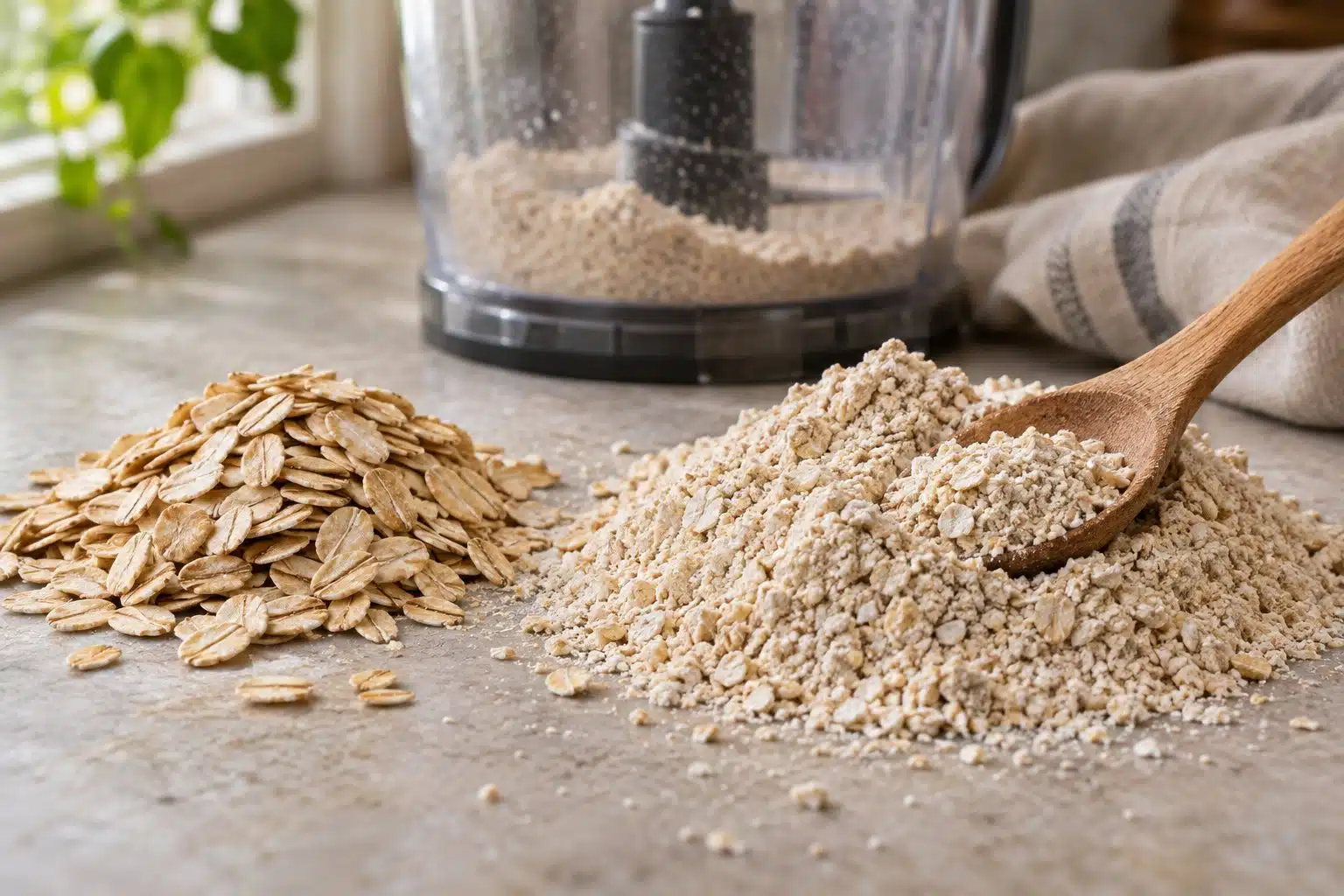
Grind rolled oats in a blender or food processor until they resemble coarse flour. Use the same amount you would use for oat bran, but expect a slightly lighter texture in the finished product.
Old-fashioned and quick oats both work here, and the oatmeal guide explains how the oat types differ. Ground oats keep some of the oat fiber, since raw rolled oats have 10.4 g per 100 g against 15.4 g for oat bran.
| Use | Ratio | Notes |
|---|---|---|
| Baking | 1:1 | Milder flavor, less fiber |
| Porridge | 1:1 | Creamier, softer texture |
| Smoothies | 1:1 | Blends easily, less gritty |
The ratio stays 1:1 for baking, porridge and smoothies, but the notes show that flavor and fiber change too.
Skip if: you need maximum fiber-ground oats don't match oat bran's concentration.
6 – Corn Bran
Corn bran adds fiber and a slightly sweeter, grainier texture compared to oat bran. It works in cereals, muffins, and breads where a subtle corn flavor won't clash with other ingredients.
Use it in the same ratio as oat bran, but keep in mind that corn bran doesn't absorb liquid as quickly, so batters may stay wetter longer.
Skip if: you're sensitive to corn products or want a completely neutral flavor-corn bran has a distinct taste.
7 – Wheat Germ
Wheat germ is the embryo of the wheat kernel, which is why it tastes nutty and rich in baked goods. It doesn't replace the fibrous texture of oat bran exactly, but it adds body and a toasted taste.
Use ¾ cup wheat germ for every 1 cup of oat bran. Grains absorb liquid at different rates, so add water a little at a time if the batter looks dry.
Out of wheat germ too? The wheat germ substitutes include options with similar richness.
- Use ¾ cup wheat germ per 1 cup oat bran.
- Wheat germ browns faster than oat bran, so lower the oven temperature by 25°F if baking.
- Store wheat germ in the fridge-it spoils quickly at room temperature, and a bitter or off smell means it has gone rancid.
- The flavor is stronger than oat bran, so use it in recipes with bold spices or sweeteners.
Skip if: you want a mild flavor-wheat germ's nutty taste stands out more than oat bran's.
Making Oat Bran Substitutes Work
The right choice depends on what you're making. For baking, wheat bran and ground rolled oats come closest in texture.
For smoothies or porridge, ground flaxseed or chia seeds add fiber without changing consistency much.
Flax and chia both turn to gel when wet, which is also why bakers use them as vegan egg substitutes. In an oat bran recipe that already has eggs, they add moisture and binding but do not replace the oat bran's bulk.
- Closest match - Wheat bran for direct swap
- Easiest grab - Ground rolled oats already in pantry
- Dietary option - Psyllium husk for gluten-free baking
For a recipe that calls for 1 cup of oat bran, use 1 cup wheat bran, 1 cup ground rolled oats, 1 cup corn bran, or ¾ cup wheat germ.
Flax, chia and psyllium soak up far more liquid than bran, so they work best for part of the amount rather than the whole cup.
For gluten-free baking, check the label:
- Wheat bran and wheat germ contain gluten.
- Oat bran and ground rolled oats count as gluten-free only when the package carries a third-party gluten-free certification, because oats can pick up gluten from nearby grains before processing.
- Corn bran, flaxseed, chia seeds and psyllium husk are naturally gluten-free; check the label for cross-contact warnings.
Frequently Asked Questions
Yes, but grind them first. Whole oats don't absorb liquid as quickly as oat bran, so grinding them into a coarse flour helps them work the same way in recipes.
Yes. Oat bran tastes slightly sweeter and milder, while wheat bran has a nuttier, more pronounced flavor that stands out more in plain recipes.
Yes, but expect a denser result, because flaxseed binds more than oat bran and does not add bulk. Replace part of the oat bran rather than the whole amount, and add liquid if the batter looks thick.
Yes, because psyllium husk binds gluten-free ingredients better than most other swaps. Use 1 teaspoon per 1 tablespoon oat bran and increase the liquid slightly to avoid dryness.
Yes, for example wheat bran with ground flaxseed balances fiber and binding power. Keep the total amount equal to the oat bran called for in the recipe.
Yes, cup for cup, with a milder, slightly sweeter result and less fiber (about 14.5 g per cup against 24.8 g). For other options, see the wheat bran substitutes.



