You reach for pumpkin seed oil mid-recipe and it's not there. That nutty, earthy richness defines certain dressings and finishing touches, but swapping it successfully depends on matching its intensity and how you're using it.
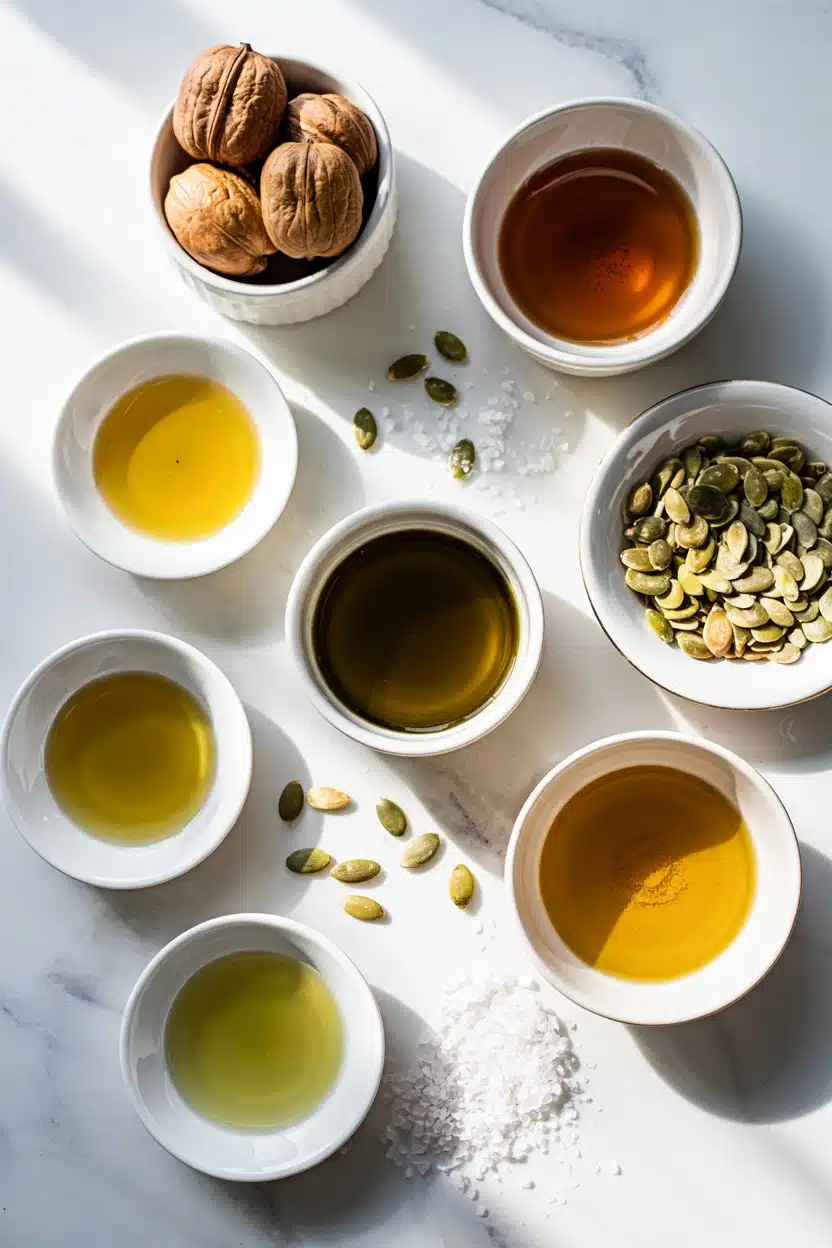
What matters most is flavor strength and smoke point, so pick a swap that fits the dish and the heat you're applying. Some oils bring similar nuttiness but can't handle high temperatures. Others work as a neutral base but need extra flavor layering to match.
| # | Substitute | Best For | Ratio | Key Note |
|---|---|---|---|---|
| 1 | Walnut Oil | ✨ Both | 1:1 | Milder nutty flavor |
| 2 | Hazelnut Oil | 🍳 Cooking | 1:1 | Sweet and delicate |
| 3 | Pumpkin Seed Butter Mix | 🍳 Cooking | 1:1 diluted | Thicker, richer texture |
| 4 | Olive Oil & Seeds | 🍳 Cooking | 1 tablespoon + 1 teaspoon seeds | Fruity with nutty hints |
| 5 | Safflower Oil Mix | 🍳 Cooking | 1:1 infused | Neutral base, light flavor |
| 6 | Pumpkin-Avocado Blend | ✨ Both | 1:1 blend | Balanced, creamy finish |
| 7 | Light Sesame Oil | 🍳 Cooking | 1:1 | Strong aroma, different profile |
7 Pumpkin Seed Oil Replacements for Better Texture
These swaps range from pantry basics to specialty picks. The closest matches come first, followed by options that shift the flavor or texture slightly.
Remember it later
Planning to try this recipe soon? Save it for a quick find later!
1 - Walnut Oil
Walnut Oil
Works for: Dressings and finishing dishes where mild nuttiness balances the recipe
Skip if: You need high-heat cooking or must avoid nut allergens
Pumpkin Seed Oil
Works for: Bold, earthy drizzles over roasted vegetables and soups
Skip if: The recipe needs a neutral base or high smoke point
Walnut oil brings similar nuttiness but runs milder and more buttery. It fits dressings and finishing touches where you want depth without overwhelming the other flavors.
Use it 1:1 in place of pumpkin seed oil. The flavor stays subtle, so double-check seasoning before serving.
Here's what to know:
- Swap directly in vinaigrettes and drizzles over roasted vegetables
- Works best when used raw or at low temperatures
- Stores in the fridge to prevent rancidity
- Adds a smooth, slightly sweet finish to grain salads
If you're also out of walnut oil, Walnut Oil swaps by recipe type covers options for matching nutty depth.
Skip if: you're avoiding tree nuts or need an oil that handles high heat.
2 - Hazelnut Oil
Hazelnut oil brings sweet, rich nuttiness with a delicate aroma. It works well for drizzling over roasted vegetables and salads where you want a softer, almost dessert-like finish.
Use 1 tablespoon per 1 tablespoon of pumpkin seed oil. The flavor shifts sweeter, so adjust other sweet or acidic elements accordingly.
Don't have hazelnut oil either? For something that matches the delicate nuttiness, quick Hazelnut Oil replacements to try narrows it to similar finishing oils.
Skip if: the dish needs a neutral backdrop or you're cooking at high heat.
3 - Pumpkin Seed Butter Mix
Pumpkin seed butter mixed with neutral oil mimics the flavor while adding body. The texture runs thicker and creamier, making it ideal for dressings and dips where you want richness.
Mix 1 part pumpkin seed butter with 1 part neutral oil to replace 1 part pumpkin seed oil. Whisk thoroughly to avoid clumps.
The essentials:
- Blends well into creamy vinaigrettes and tahini-style dips
- Adds richer mouthfeel compared to straight oil
- Requires thorough whisking to reach smooth consistency
- Keeps in the fridge for up to a week once mixed
Missing pumpkin seed butter as well? When you need swaps that hold up in sauces, Pumpkin substitutes for cooking covers options that match earthy, nutty notes.
Skip if: you're making a light vinaigrette or cooking at high heat.
4 - Olive Oil & Seeds
Extra virgin olive oil mixed with crushed toasted pumpkin seeds brings fruity richness with subtle nutty hints. This combination works for salad dressings and finishing touches where you want layered flavor.
Use 1 tablespoon olive oil plus 1 teaspoon crushed toasted pumpkin seeds per 1 tablespoon pumpkin seed oil. Toast the seeds first to release their oils.
Quick specs:
- Adds textural interest from the crushed seeds
- Works best in vinaigrettes and grain salads
- Strain out seeds before serving if smooth texture is preferred
If you're short on pumpkin seeds too, simple Pumpkin Seeds substitutes list offers options for similar crunch and flavor.
Skip if: you need pure pumpkin seed oil flavor or a completely smooth finish.
5 - Safflower Oil Mix
| Use | Ratio | Notes |
|---|---|---|
| Dressings | 1:1 infused | Neutral base needs toasted seeds for flavor |
| Finishing drizzles | 1:1 infused | Faint nutty undertones, very light |
| High-heat cooking | Not ideal | Safflower handles heat, but loses infused flavor |
Safflower oil runs neutral and light, making it a clean base for infusing with toasted pumpkin seeds. The flavor stays faint, so this works best when you want a subtle nutty undertone rather than bold earthiness.
Use 1 tablespoon safflower oil infused with toasted pumpkin seeds per 1 tablespoon pumpkin seed oil. Infuse by gently warming the oil with the seeds, then strain.
Out of safflower oil as well? For neutral bases that take on flavors easily, simple Safflower Oil substitutes list covers options for mild, adaptable oils.
Skip if: you want strong nutty flavor or don't have time to infuse.
6 - Pumpkin-Avocado Blend
Mixing pumpkin seed oil with avocado oil balances the nutty flavor with creamy richness. This blend works for dressings and light cooking where you want milder flavor without losing all the nuttiness.
Mix half pumpkin seed oil and half avocado oil to replace 1 part pumpkin seed oil. The flavor stays present but less intense.
Key details:
- Works for vinaigrettes and drizzles over roasted vegetables
- Softens the bold earthiness of pure pumpkin seed oil
- Handles slightly higher heat than pumpkin seed oil alone
Missing both oils? When you need options that match earthy, nutty depth, simple Pumpkin substitutes list covers bases for similar flavor profiles.
Skip if: you need the full intensity of pure pumpkin seed oil.
7 - Light Sesame Oil
Light toasted sesame oil brings earthy, nutty flavor but with a stronger aroma and different profile. It works best in Asian-inspired dressings and finishing oils where you want boldness.
Use 1 tablespoon light toasted sesame oil per 1 tablespoon pumpkin seed oil. The flavor shifts more assertive, so start with less and adjust to taste.
Out of sesame oil as well? For swaps that match nutty depth without overpowering, Sesame Oil substitutes ranked covers options for balancing bold flavors.
Skip if: you need a neutral base or the dish already has strong Asian seasonings.
How to Choose a Pumpkin Seed Oil Substitute
The right choice depends on what you're making and how much flavor you want. For dressings and finishing drizzles, walnut or hazelnut oil comes closest. For creamy dips, pumpkin seed butter mixed with neutral oil matches the richness better.
Try a few and see which you prefer.
- Closest match - Walnut oil for similar nuttiness
- Easiest grab - Olive oil with seeds for layered flavor
- Bold alternative - Light sesame oil for stronger aroma
Frequently Asked Questions
Yes, but add crushed toasted pumpkin seeds to bring back some nutty flavor. Straight olive oil works as a neutral base but misses the earthy depth.
No, it has a low smoke point and loses flavor when heated too high. Use it for dressings, drizzles, or finishing touches instead.
Walnut oil matches the nutty flavor most closely. If you don't have that, mix olive oil with crushed toasted pumpkin seeds for similar depth.
Yes, but use walnut or hazelnut oil to keep similar flavor. Neutral oils work too, but you'll lose the nuttiness unless you add seeds or extracts.
Keep nut and seed oils in the fridge to prevent rancidity. Olive and neutral oils stay fresh in a cool, dark pantry for several months.
7 Best Substitutes for Pumpkin Seed Oil
Ingredients
Method
- Select your substitute based on dish type and cooking method: dressings and drizzles benefit from walnut or hazelnut oils; creamy dips work well with pumpkin seed butter mix.
- For solid blends, whisk or mix thoroughly to ensure even texture and integration, especially with pumpkin seed butter or infused oils.
- Apply substitute at the indicated ratio: typically 1:1 by volume or as specified; adjust seasoning as needed for flavor balance.
- For infused oils like safflower mix, gently warm the oil with seeds to extract flavor before use; strain to remove solids if smoothness is desired.
- Taste and adjust seasoning or texture after substitution to ensure the desired flavor intensity and consistency are achieved.