We're halfway through a sauce recipe and the tomato paste is gone. The dish needs that deep, concentrated tomato flavor to balance the other ingredients.
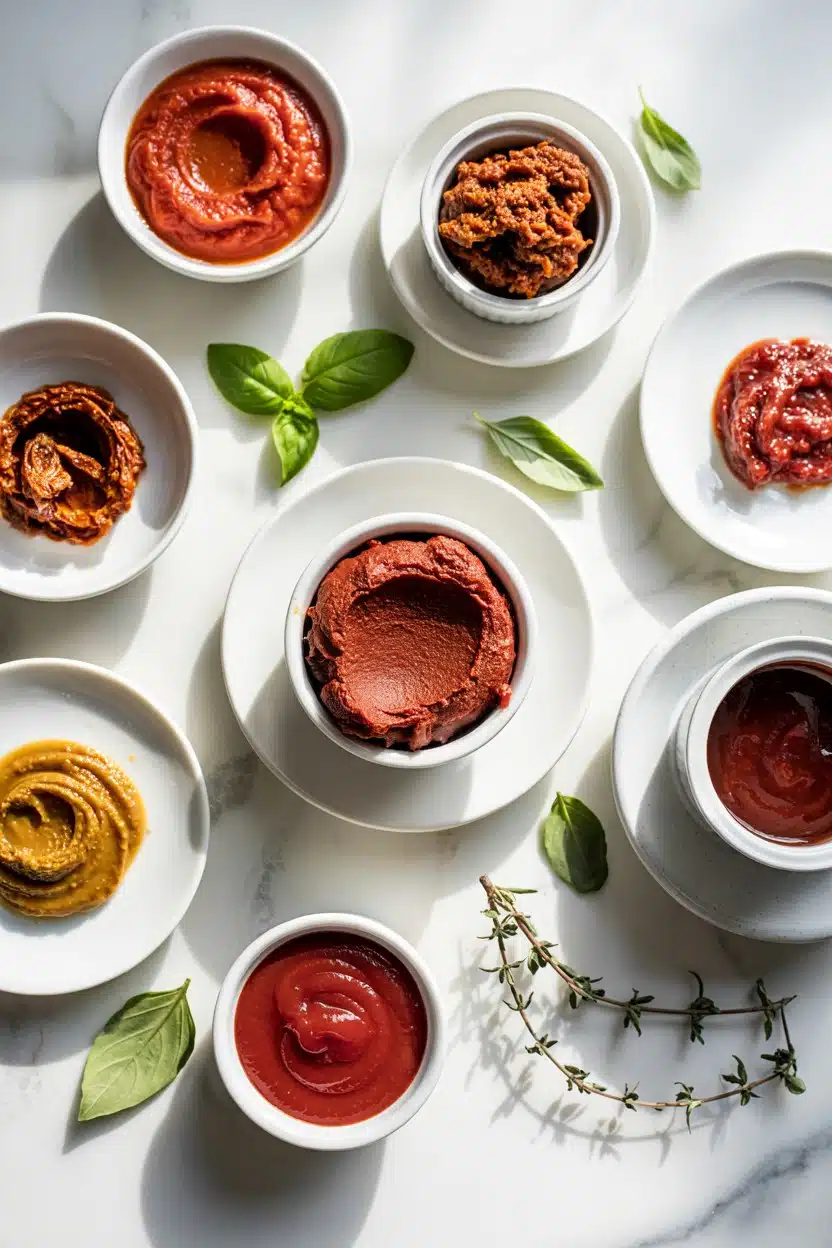
Tomato paste brings intensity and thickness, so the substitute has to deliver similar richness without turning the sauce watery. Some swaps add more liquid, which means adjusting the simmer time.
Others introduce flavor shifts that change the final taste.
Match the substitute to the dish and what you have on hand. The list starts with the closest match and moves toward options that need minor tweaks.
| # | Substitute | Best For | Ratio | Key Note |
|---|---|---|---|---|
| 1 | Tomato Sauce | 🍳 Cooking | 3:1 | More liquid, milder flavor |
| 2 | Tomato Puree | 🍳 Cooking | 2:1 | Smoother texture, less intense |
| 3 | Crushed Tomatoes | 🍳 Cooking | 3:1 | Chunkier, fresher taste |
| 4 | Red Pepper Paste | 🍳 Cooking | 1:1 | Spicy, fermented kick |
| 5 | Ketchup | 🍳 Cooking | 1:1 | Sweeter, tangy with vinegar |
| 6 | Sun-Dried Puree | 🍳 Cooking | 1:2 | Intensely savory, umami-rich |
| 7 | Roasted Red Peppers | 🍳 Cooking | 2:1 | Smoky sweet, less acidic |
Tomato sauce and tomato puree best replicate tomato paste's flavor and texture. Focus on matching thickness first to avoid watery sauces. Adjust simmer time when using more liquid substitutes for proper consistency.
7 Quick Tomato Paste Swaps for Cooking
These swaps range from pantry staples to bolder flavor options. Pick based on what the recipe needs and what's already in your kitchen.
Remember it later
Planning to try this recipe soon? Save it for a quick find later!
1 - Tomato Sauce
Tomato sauce stretches further than paste but delivers less intensity per spoonful. Use 3 tablespoons of sauce for every 1 tablespoon of paste your recipe calls for.
The extra liquid means you'll need to simmer longer to reach the right consistency. If you're short on tomato sauce too, Tomato Sauce substitutes for cooking covers swaps that match the thinness without losing the tomato base.
Skip if: the recipe demands a thick, concentrated texture and you can't extend the cooking time.
Tomato Sauce
Works for: Soups, stews, and braises where liquid adjusts easily
Skip if: You need a thick glaze or paste consistency right away
Tomato Puree
Works for: Smooth sauces and dishes needing a silky finish
Skip if: The recipe relies on intense, punchy tomato flavor
2 - Tomato Puree
Puree sits between sauce and paste in thickness. It gives a smooth texture without the chunky bits, making it ideal for dishes where silkiness matters more than intensity.
Use 2 tablespoons of puree per tablespoon of paste. The flavor runs milder, so taste and add a pinch of salt or a splash of vinegar if the dish needs more punch.
Here's what to know:
- Best for smooth, cooked dishes where texture is the priority
- Slightly sweeter than paste, so it softens acidic edges
If you're also out of puree, Tomato Puree alternatives to try narrows it to options that keep the silky finish.
Skip if: the recipe depends on deep, concentrated tomato flavor to balance bold spices or rich fats.
3 - Crushed Tomatoes
Crushed tomatoes bring a fresher, less processed taste. The texture stays chunkier, so they work best in stews, chili, and chunky sauces where bits of tomato aren't a problem.
Use 3 tablespoons of crushed tomatoes for every tablespoon of paste. Simmer uncovered to reduce excess liquid and concentrate the flavor.
- Chunkier texture adds body to rustic dishes
- Less acidic than paste, so it balances sweeter ingredients
- Works well in dishes with long cooking times
- Not suited for smooth sauces or glossy glazes
Skip if: the recipe needs a dense, smooth paste or you're making a polished sauce where texture matters.
4 - Red Pepper Paste (Gochujang)
Red pepper paste adds heat and fermented depth. The spice level varies by brand, so start with less and adjust as you taste.
Use 1 tablespoon of red pepper paste per tablespoon of tomato paste. The heat shifts the flavor toward savory and spicy, which works in dishes with bold seasonings.
If you're missing red pepper paste too, swaps when Gochujang runs out keeps you in the fermented, spicy lane.
Skip if: the recipe leans sweet, neutral, or relies on classic tomato flavor without heat.
| Use | Ratio | Notes |
|---|---|---|
| Soups and stews | 3 tablespoon sauce : 1 tablespoon paste | Simmer longer to reduce liquid |
| Smooth sauces | 2 tablespoon puree : 1 tablespoon paste | Add salt or vinegar for balance |
| Chunky dishes | 3 tablespoon crushed : 1 tablespoon paste | Best for rustic, long-cooked recipes |
5 - Ketchup
Ketchup works in marinades, quick sauces, and glazes where sweetness and tang aren't dealbreakers. It's thicker than sauce but sweeter than paste, so it changes the flavor direction.
What to expect:
- Adds sweetness and vinegar tang, which can overpower delicate dishes
- Thicker than tomato sauce, so it reduces faster
- Best in savory-sweet contexts like barbecue or stir-fry glazes
- Contains sugar and vinegar, so skip additional sweeteners
Use equal parts ketchup for tomato paste. Taste before adding salt or sugar-ketchup includes both.
If you're short on ketchup too, Ketchup substitutes ranked for swaps that match the tangy-sweet balance.
Skip if: the recipe demands pure tomato flavor or relies on precise seasoning control.
6 - Sun-Dried Tomato Puree
Sun-dried tomato puree delivers concentrated, umami-rich flavor. The intensity runs higher than regular paste, so you need less to hit the same depth.
Use half the amount of sun-dried puree compared to tomato paste. Blend rehydrated sun-dried tomatoes with a splash of their soaking liquid or olive oil until smooth.
- Intensely savory with a slightly tangy finish
- Works best in sauces, dips, and dishes with bold flavors
- Too strong for mild recipes or dishes needing subtle tomato notes
If you're also out of sun-dried tomatoes, what to use for Tomato Puree for options that keep the smooth, concentrated texture.
Skip if: the recipe calls for mild, background tomato flavor or you're cooking for picky eaters who avoid strong tastes.
7 - Roasted Red Peppers Blended
Roasted red peppers add smoky sweetness without the acid punch of tomatoes. Blend them smooth and use 2 tablespoons per tablespoon of paste.
The flavor shifts away from classic tomato, so this works best in dishes where smoky, sweet notes fit the profile-think roasted vegetable sauces or creamy soups.
Skip if: the recipe depends on pure tomato flavor or you're making a dish where sweetness doesn't belong.
How to Choose a Tomato Paste Substitute
The right substitute depends on your recipe's flavor and texture needs. For soups and stews where liquid adjusts easily, tomato sauce or crushed tomatoes work fine.
For dishes demanding intense tomato flavor, sun-dried tomato puree hits closest without adding extra liquid.
Start with the swap that matches your dish's consistency requirements, then adjust seasoning to balance flavor shifts.
- Closest match - Sun-Dried Puree for intense flavor
- Easiest grab - Tomato Sauce for liquid-heavy dishes
- Bold alternative - Red Pepper Paste for spicy depth
Frequently Asked Questions
Yes, use 3 tablespoons of tomato sauce for every 1 tablespoon of paste. Simmer longer to reduce the extra liquid and concentrate the flavor.
Ketchup works in savory baked dishes like meatloaf but not in recipes needing pure tomato flavor. The added sugar and vinegar change the taste too much for most baking applications.
Tomato paste is cooked longer to remove more water, making it thicker and more concentrated. Puree has more liquid and a milder flavor, so you need twice as much to match paste's intensity.
Yes, use 3 tablespoons of crushed tomatoes per tablespoon of paste. Simmer uncovered to let the liquid evaporate and the flavors concentrate.
Freeze leftover paste in tablespoon-sized portions on parchment paper, then transfer to a freezer bag. This keeps it ready to use without thawing the whole can.
7 Best Substitutes for Tomato Paste
Ingredients
Method
- Choose the substitute based on your dish's texture and flavor needs, ranging from liquid-heavy to bold and intense.
- Simmer tomato sauce or crushed tomatoes uncovered longer to reduce extra liquid and concentrate flavors.
- Blend sun-dried tomatoes with liquid or olive oil for a smooth puree before measuring the reduced amount.
- Use the specified ratio for each substitute to replace 1 tablespoon of tomato paste exactly.
- Adjust seasoning after tasting, adding salt or vinegar if needed, especially when using milder options like puree or sauce.
- Avoid substitutes like ketchup in recipes needing pure tomato flavor due to added sugar and vinegar impacting taste.