
You measure out Green Curry Paste for a quick weeknight curry, then realize the jar is empty. The dish needs that herbal heat to balance coconut milk and protein.
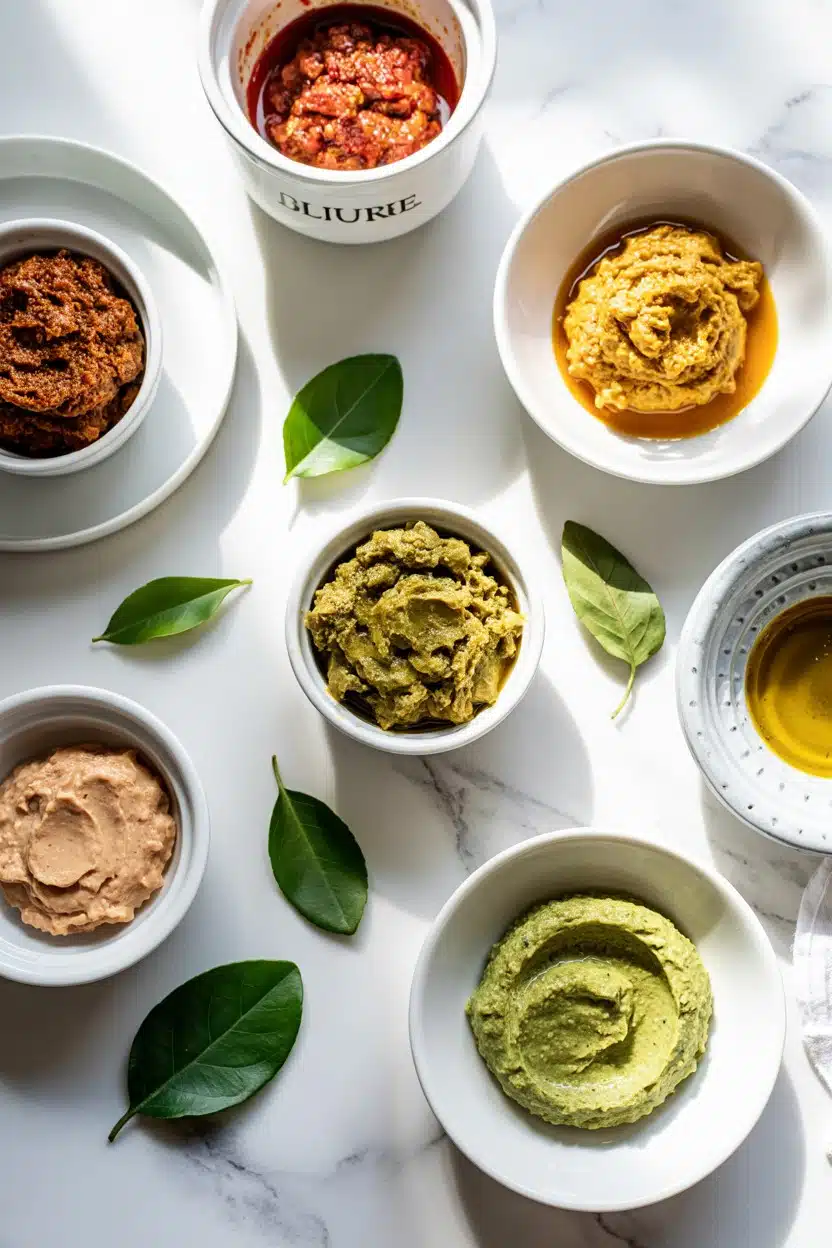
Green Curry Paste drives flavor in Thai curries, soups, and stir-fries. It combines green chilies, lemongrass, galangal, and makrut lime for layered heat and citrus brightness.
Swaps vary in spice level, herbal intensity, and how well they hold up during cooking.
Start with the closest match if you want minimal changes. For milder dishes, pick a substitute with less heat.
For bold flavors, lean toward options with concentrated spice.
| # | Substitute | Best For | Ratio | Key Note |
|---|---|---|---|---|
| 1 | Red Curry Paste | 🍳 Cooking | 1:1 | Spicier, less herbal |
| 2 | Yellow Curry Paste | 🍳 Cooking | 1:1 | Milder, earthy turmeric notes |
| 3 | Basil-Chili Blend | 🍳 Cooking | 1:1 | Fresh, less concentrated |
| 4 | Cilantro-Lime Paste | 🍳 Cooking | 1:1 | Bright, citrus-forward |
| 5 | Peri-Peri Sauce | 🍳 Cooking | ¾ tbsp | Smoky, tangier |
| 6 | Sambal Oelek | 🍳 Cooking | ½ tbsp | Pure chili heat |
| 7 | Homemade Green Curry | 🍳 Cooking | 1:1 (adjust) | Customizable intensity |
Red Curry Paste and Yellow Curry Paste are top substitutes; focus on matching flavor intensity first. Adjust spice levels by adding fresh herbs or citrus to balance. Use a small test batch to tweak heat and brightness before cooking the full dish.
7 Quick Green Curry Paste Swaps for Cooking
These options range from pantry staples to specialty pastes. Pick based on how much heat you want and what flavor fits your dish.
Remember it later
Planning to try this recipe soon? Save it for a quick find later!
1 - Red Curry Paste
Red Curry Paste matches the structure of Green Curry Paste but leans spicier and less herbal. It works in curries, soups, and marinades where you want bold heat without fresh citrus notes.
- Heat level - Higher than green, with dried red chilies driving the intensity.
- Flavor shift - Slightly sweeter, less lemongrass and makrut lime.
Use equal amounts. Taste as you cook and dial back if the heat builds too fast.
*Skip if:* You need a milder curry or want pronounced herbal brightness.
Red Curry Paste
Works for: Bold Thai curries and spicy stir-fries
Skip if: You want fresh herbal notes
Yellow Curry Paste
Works for: Mild dishes and coconut-based stews
Skip if: You need strong lemongrass flavor
2 - Yellow Curry Paste
Yellow Curry Paste brings turmeric and cumin to the front, creating an earthier, milder base. It works in stews, mild curries, and dishes where you want warmth without sharp heat.
The flavor runs less herbal than Green Curry Paste. Lemongrass and galangal take a backseat to spices like coriander and cumin.
Here's what to know:
- Ratio - Use 1 tablespoon per 1 tablespoon of Green Curry Paste.
- Heat - Noticeably milder; add fresh chilies if you want more kick.
- Color - Turmeric tints the dish golden yellow.
- Best use - Coconut milk curries, braised chicken, or vegetable stews.
*Skip if:* The recipe relies on fresh herbal brightness or you want pronounced citrus notes.
3 - Basil-Chili Blend
Thai Basil and Chili Blend brings fresh herbal punch and heat to sauces and quick stir-fries. The flavor stays brighter and less concentrated than cooked pastes.
If you want to explore replacements similar to Basil and how they shift flavor in different recipes, that guide covers swaps by intensity and use case.
Use 1 tablespoon of the fresh blend per 1 tablespoon of Green Curry Paste. Stir it in at the end of cooking to preserve the herbal oils.
- Flavor - Fresh basil dominates, with chili adding background heat.
- Texture - Looser and wetter than paste; less concentrated.
- Best use - Finishing sauces, noodle dishes, or quick marinades.
*Skip if:* You need a paste that holds up during long simmering or want a deeply cooked curry flavor.
4 - Cilantro-Lime Paste
Cilantro and Lime Paste with Chili shifts the flavor toward bright citrus and fresh herbs. It works in marinades, cold sauces, and dishes where you want herbal punch without heavy spice.
The lime cuts through richness faster than Green Curry Paste. Heat stays moderate, making it easier to control in mild recipes.
*Skip if:* You need a traditional curry base or want the paste to deepen during cooking.
5 - Peri-Peri Sauce
Peri-Peri Sauce brings smoky, tangy heat to grilled dishes and marinades. The flavor leans toward vinegar and paprika instead of lemongrass and galangal.
Use ¾ tablespoon per 1 tablespoon of Green Curry Paste. The thinner consistency spreads faster, so start with less and taste as you go.
- Heat - Sharp and immediate; adjust with coconut milk or yogurt.
- Acidity - Vinegar sharpens the flavor; balance with sugar or honey.
- Best use - Grilled chicken, roasted vegetables, or spicy dipping sauces.
- Watch out - The smoky notes don't match Thai dishes; save it for non-traditional recipes.
*Skip if:* You want authentic Thai flavor or need a paste that blends into coconut-based curries.
| Use | Ratio | Notes |
|---|---|---|
| Thai Curries | 1:1 Red or Yellow Paste | Match heat level to dish |
| Quick Stir-Fries | 1:1 Basil-Chili Blend | Add at end for fresh flavor |
| Marinades | ¾ tablespoon Peri-Peri | Cut with lime or coconut milk |
6 - Sambal Oelek
Sambal Oelek adds pure chili heat and texture without the herbal complexity of Green Curry Paste. It works when you need spice but plan to build flavor with other ingredients.
Use ½ tablespoon per 1 tablespoon of Green Curry Paste. The heat hits harder without lemongrass or lime to soften it.
If you're short on Sambal Oelek too, quick Sambal Oelek replacements to try covers chili-forward options that match heat without extra aromatics.
- Flavor - Chili-forward with mild garlic; no herbal or citrus notes.
- Texture - Coarse and seedy; adds body to sauces.
- Best use - Stir-fries, fried rice, or dishes where you add aromatics separately.
*Skip if:* You need a complete curry base or want the paste to carry the dish's main flavor.
7 - Homemade Green Curry
Homemade Green Curry Mix lets you control heat, herbal intensity, and freshness. Combine ground coriander, cumin, green chilies, lemongrass paste, and lime zest to build a custom base.
Start with 1 tablespoon of your mix per 1 tablespoon of Green Curry Paste. Taste and adjust as you cook.
What to expect:
- Flavor - Variable; you set the balance of heat, citrus, and spice.
- Freshness - Ingredients stay brighter than jarred paste.
The mix works best when you have time to toast spices and prep fresh aromatics. Skip it if you're in a rush or missing key ingredients like lemongrass or galangal.
Before You Swap Green Curry Paste
Most of these swaps work without rewriting the recipe, but the best choice depends on what you're making. Red Curry Paste comes closest for traditional curries; Yellow Curry Paste works better in mild stews.
For quick dishes where you add aromatics separately, Sambal Oelek or Peri-Peri Sauce gets you there faster.
- Closest match - Red Curry Paste, with bolder heat
- Easiest grab - Sambal Oelek, then add herbs
- Mildest option - Yellow Curry Paste, earthy and balanced
Frequently Asked Questions
Yes, use a 1:1 ratio. Red Curry Paste brings more heat and less herbal brightness, so balance it with extra lime juice or coconut milk if the dish tastes too spicy.
No, Yellow Curry Paste runs milder and earthier with turmeric and cumin. It lacks the fresh lemongrass and citrus punch of Green Curry Paste but works well in stews and mild curries.
Yes, but use half the amount and add fresh herbs, lime zest, and garlic. Sambal Oelek delivers chili heat without the herbal complexity, so you'll need to build flavor separately.
Green Curry Paste concentrates flavors through cooking; Thai Basil-Chili Blend stays fresh and lighter. Use the blend for quick stir-fries or finishing sauces, not long-simmering curries.
Yes, combine ground coriander, cumin, green chilies, lemongrass paste, and lime zest. Toast the spices first for deeper flavor, then blend with fresh aromatics. Adjust heat and herbal intensity to match your dish.
7 Best Substitutes for Green Curry Paste
Ingredients
Method
- Choose your substitute based on desired heat and flavor profile for your dish.
- Prepare the substitute as needed: blend fresh blends or measure sauces accurately.
- Apply the substitute using the recommended ratio for green curry paste replacement.
- Adjust seasoning during cooking by tasting and modifying heat or brightness with lime or coconut milk.
- Add fresh herbs or aromatics separately when using simpler chili heat substitutes like Sambal Oelek.



