The cheese drawer looked fuller yesterday. Cambozola adds tangy creaminess with a hint of blue mold funk, but the container is empty now.
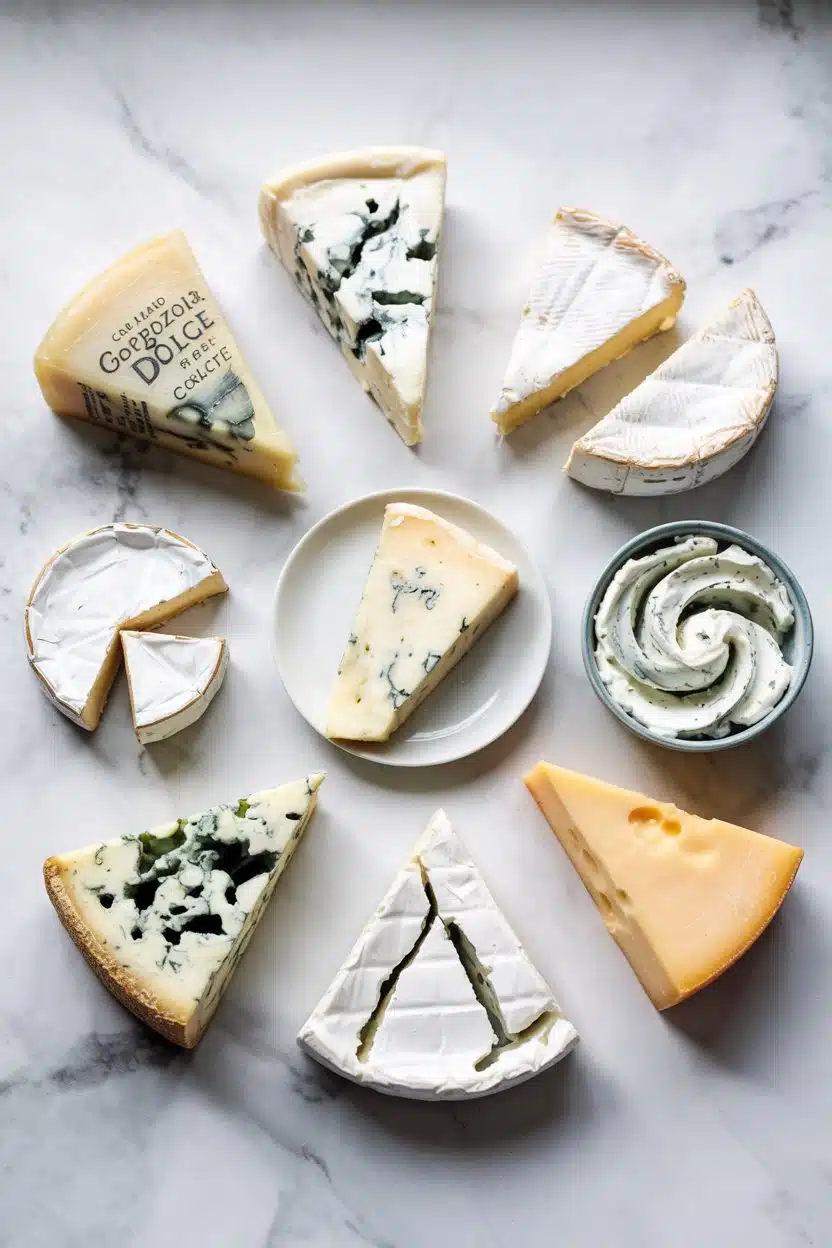
Swapping Cambozola means balancing two roles: the triple-cream richness of Brie and the blue cheese bite. Some substitutes lean creamy with no blue veining; others bring sharper tang without the soft, spreadable texture.
The swap depends on whether you need that blue mold punch or just want something luxurious on a cheese board.
These seven options cover different needs. Some work for baking, others for spreading on crackers or melting into pasta sauces.
Start with what you have, then adjust based on whether the blue cheese flavor matters or if creaminess is the priority.
Brie, Gorgonzola Dolce, and Saint Agur replace Cambozola best because they keep the creamy-rind + gentle blue experience. We use this as a cooking and board swap, so we match creaminess + blue strength first, then adjust salt and portion size. If the blue option feels too intense, we soften it by blending with a little cream cheese.
7 Cambozola Cheese Replacements for Cheese Boards
These substitutes range from mild and creamy to sharp and crumbly. Some mimic the blue mold tang; others focus on the triple-cream texture.
Remember it later
Planning to try this recipe soon? Save it for a quick find later!
Pick based on whether the dish needs that distinctive blue cheese bite or just wants something rich and spreadable.
| # | Substitute | Best For | Ratio | Key Note |
|---|---|---|---|---|
| 1 | Gorgonzola Dolce | 🍳 Cooking | 1:1 | Sweeter and tangier |
| 2 | Brie | ✨ Both | 1:1 | No blue mold flavor |
| 3 | Saint Agur | 🍳 Cooking | 1:1 | Richer, saltier blue |
| 4 | Bavarian Blue | 🍳 Cooking | 1:1 | Firmer texture, sharper |
| 5 | Cream Cheese-Blue Mix | 🍳 Cooking | 3:1 | Customizable tang level |
| 6 | Roquefort | 🍳 Cooking | ¾ amount | Much sharper, saltier |
| 7 | Camembert | ✨ Both | 1:1 | Earthy, no blue veining |
1 - Gorgonzola Dolce
Gorgonzola Dolce brings more pronounced blue veining with a sweeter, creamier base. The tang hits harder than Cambozola, but the texture stays soft and spreadable.
It melts beautifully into pasta sauces and spreads easily on crackers. The flavor is bolder, so start with less if you're used to Cambozola's milder profile.
Here's what to know:
- Ratio: Use equal amounts as a 1:1 replacement
- Best for: Cheese boards and creamy pasta sauces
- Texture: Creamier than Cambozola with more blue veining
- Flavor: Sweeter and tangier with stronger blue cheese punch
Skip if: You need a milder, less tangy blue cheese for guests who prefer subtle flavors.
On Cheese Boards
Works for: Pairing with sweet accompaniments like honey or fig jam
Skip if: You want a mild blue that won't overpower other cheeses
In Pasta Sauces
Works for: Creating creamy, tangy sauces with strong flavor
Skip if: You need a subtle blue note that stays in the background
2 - Brie
Brie removes the blue mold entirely but keeps the triple-cream richness. The texture is similar-soft, spreadable, with a bloomy rind-but the flavor stays buttery and mild.
It works for appetizers and baked dishes where you want that luxurious mouthfeel without the tang. If you're also out of Brie, Brie Cheese swaps by recipe type covers options with similar creaminess and mild profiles.
Use it when the blue cheese element isn't the star. The lack of tang means you might need to add a pinch of salt or a drizzle of honey to balance the dish.
- Ratio: Use equal amounts as a 1:1 replacement
- Best for: Appetizers and baked cheese dishes
- Texture: Milder and buttery without blue mold
- Flavor: Creamy and delicate, lacks tangy complexity
Skip if: You want the distinctive blue cheese flavor for salads or bold sauces.
3 - Saint Agur
Saint Agur delivers a richer, more intensely blue profile with extra creaminess. The salt level runs higher, so the flavor is bolder and more assertive.
It spreads beautifully on crackers and holds up well on cheese platters where you want something that stands out. Out of Saint Agur as well?
Blue Cheese swaps by recipe type ranks alternatives by how well they balance creaminess and blue mold intensity.
- Ratio: Use equal amounts as a 1:1 replacement
- Best for: Spreading on crackers and cheese platters
- Texture: Richer and creamier than Cambozola
- Flavor: More intensely blue with saltier profile
Skip if: You need a firmer, less creamy texture for crumbling over salads.
4 - Bavarian Blue
Bavarian Blue shares Cambozola's German roots but leans firmer in texture with a sharper, more hearty blue flavor. The creaminess is there, but it doesn't spread as easily.
Use it in traditional German dishes or on cheese boards where you want something with structure. If Bavarian Blue isn't available either, swaps when Blue Cheese runs out has similar options that hold their shape while still delivering tang.
Skip if: You prefer a softer, triple-cream texture that melts on the palate.
5 - Cream Cheese-Blue Mix
Blending three parts cream cheese with one part crumbled blue cheese lets you control the intensity. Start with less blue and add more until the tang matches your preference.
This works best for dips and spreads where you can taste and adjust. The texture stays creamy and spreadable, similar to Cambozola, but you're building the flavor from scratch.
- Ratio: Mix 3 parts cream cheese with 1 part crumbled blue cheese
- Best for: Dips and spreads where you control intensity
- Texture: Customizable tang level with creamy base
- Flavor: Adjustable blue cheese punch depending on ratio
Don't have cream cheese either? Swaps when Cream Cheese runs out covers options with similar richness and spreadability.
| Use | Ratio | Notes |
|---|---|---|
| Mild dips | 4:1 | Lighter blue cheese flavor |
| Medium tang | 3:1 | Closest to Cambozola |
| Bold spreads | 2:1 | Stronger blue punch |
Skip if: You're serving it as a standalone cheese on a board where presentation matters.
6 - Roquefort
Roquefort brings much sharper, saltier blue flavor with a crumbly texture. It's more pungent and assertive than Cambozola, so use three-quarters of the amount to avoid overpowering the dish.
It works well in salads and bold-flavored sauces where that intensity is an asset. Missing Roquefort too?
Simple Roquefort Cheese substitutes list has picks that deliver similar punch without the sheep's milk funkiness.
The texture won't spread like Cambozola-it crumbles instead. This makes it less suitable for cheese boards where you want something guests can easily knife onto crackers.
- Ratio: Use ¾ the amount due to stronger flavor
- Best for: Salads and bold-flavored sauces
- Texture: Crumbly rather than creamy
- Flavor: Much sharper and saltier, more pungent
Skip if: You need a mild, approachable blue cheese for guests unfamiliar with strong flavors.
7 - Camembert
Camembert shares the bloomy rind and soft texture but removes the blue mold entirely. The flavor is earthy and mushroomy with delicate, milky notes.
It bakes beautifully whole and looks elegant on cheese plates. If you're also short on Camembert, replacements similar to Camembert Cheese covers options with that same earthy profile and soft texture.
What to expect:
- Ratio: Use equal amounts as a 1:1 replacement
- Best for: Baking whole and elegant cheese plates
- Texture: Earthy and mushroomy without blue mold
- Flavor: Similar bloomy rind but milder and more delicate
Skip if: The blue cheese element is essential to the dish's flavor.
How to Choose a Cambozola Cheese Substitute
Most of these swaps work without major adjustments, but the right choice depends on whether you need the blue mold tang or just want something creamy and rich. For cheese boards, Gorgonzola Dolce or Saint Agur come closest to Cambozola's balance of creaminess and blue flavor.
For baking or spreading, Brie or Camembert deliver similar texture without the blue bite.
- Closest match - Saint Agur for creaminess with bold blue flavor
- Easiest grab - Brie for mild, triple-cream richness
- Bold alternative - Roquefort for sharp, assertive blue punch
Frequently Asked Questions
Regular blue cheese works but lacks the triple-cream richness. Mix three parts cream cheese with one part crumbled blue cheese to get closer to Cambozola's texture. The flavor will be sharper, so start with less and adjust to taste.
Saint Agur or Gorgonzola Dolce work best because they balance creaminess with blue mold tang. Both spread easily and pair well with sweet accompaniments like honey or fruit. Brie works if you want something milder without the blue cheese element.
Cambozola melts similarly to Brie-both become creamy and spreadable when heated. The main difference is flavor: Cambozola adds a blue cheese tang while Brie stays buttery and mild. Use the same temperature and timing for either cheese when baking.
Soft cheeses like Brie, Camembert, and Cambozola don't freeze well-they become grainy and lose their creamy texture. Harder blue cheeses like Roquefort freeze better but should be used in cooked dishes after thawing, not served fresh on cheese boards.
Use three-quarters of the amount called for and blend it with cream cheese or mascarpone to mellow the intensity. Adding a drizzle of honey or pairing it with sweet elements like figs or pears also balances the sharp, salty flavor.
7 Best Substitutes for Cambozola Cheese
Ingredients
Equipment
Method
- Use Gorgonzola Dolce as a sweeter, tangier 1:1 substitute for Cambozola in cooking and cheese boards.
- Substitute Brie 1:1 when you want creaminess without blue mold flavor in appetizers or baking.
- Choose Saint Agur 1:1 for a richer, saltier blue alternative that works well on crackers and cheese platters.
- Try Bavarian Blue 1:1 for firmer texture and sharper flavor in traditional dishes or on cheese boards.
- Make a Cream Cheese-Blue Mix by blending 3 parts cream cheese with 1 part crumbled blue cheese for customizable tang.
- Use Roquefort at ¾ the amount for a sharper, saltier, crumbly cheese good in salads and bold sauces.
- Replace with Camembert 1:1 for an earthy, mushroomy texture without blue mold, ideal for baking or cheese plates.