Product note: ForkliftKitchen may earn a commission from qualifying purchases made through product links on this page. Learn more.
De la Rosa Mazapan Original is the best Mexican candy for a first box. Its pressed peanut texture crumbles before it melts, making the category feel different from an ordinary gummy, lollipop, or chocolate bar in one bite.
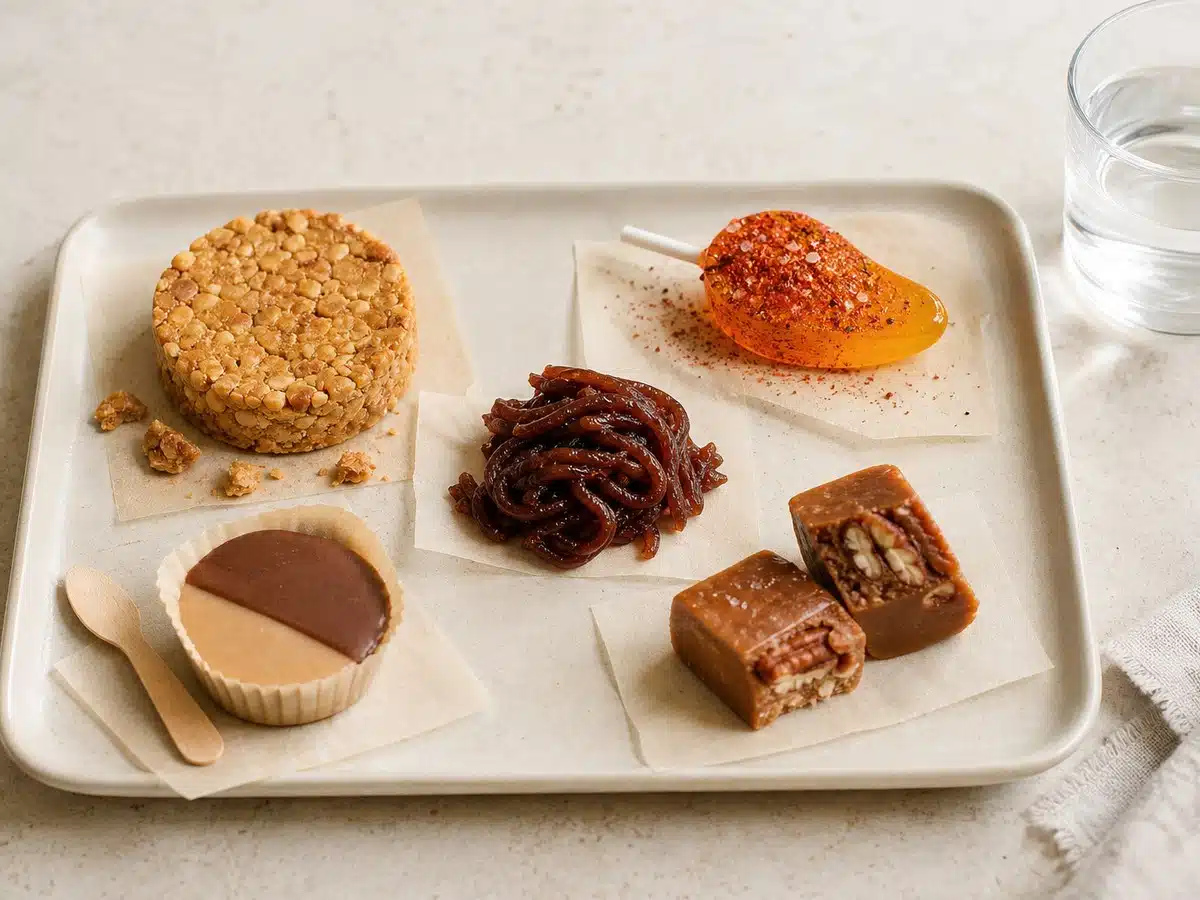
The wrapper is the least surprising part of Mexican candy. The real choice is whether you want a candy that breaks into peanut crumbs, changes from chile to hard mango candy, pushes out in tamarind strands, scoops like creme, or bends around pieces of pecan.
We compared five exact products by flavor sequence, texture, eating mechanism, package commitment, and how clearly each one opens a separate part of the shelf. Beverages, conventional candy bars, gummies, mixed assortments, and products without a stable purchase identity do not appear here.
A first order should create contrast instead of buying five forms of fruit candy.
Mazapan supplies the crumble, Vero Mango the seasoned hard candy, Pelon Pelo Rico the tamarind gel, Duvalin the spoonable creme, and Glorias the soft milk-and-pecan finish.
5 Best Mexican Candies for a Five-Texture First Box
Choose the texture before the wrapper. Mazapan leads because its pressed-peanut crumble gives a new shopper an immediate point of contrast, while the other four picks move through hard, soft, spoonable, and nut-studded formats.
Save this ranking
Comparing these products later? Save this ranking for a quick return.
These are complementary stops in a tasting flight, not five close substitutes. The ranking rewards a clear category lesson, manageable flavor progression, and an exact package that can be recognized again.
- 👀 Format clarity. The candy should tell you quickly whether it crumbles, dissolves, scoops, squeezes, or chews.
- 🔥 Flavor sequence. Chile, fruit, tamarind, nut, creme, and milk notes matter in the order they arrive, not only as a flavor list.
- 🧪 Texture contrast. Powdery crumbs, a hard center, soft gel, smooth creme, and pecan pieces create different reasons to keep each product.
- 📦 Package commitment. Counts from 10 to 36 change whether a product works as a trial, group flight, or pantry case.
| # | Product | Best For | Key Note |
|---|---|---|---|
| 1 | De la Rosa Mazapan Original | 🏆 Best Overall | Fragile peanut crumble |
| 2 | Vero Mango | 🥥 Fruit and Chile | Coating-to-center change |
| 3 | Pelon Pelo Rico | 🍒 Tamarind | Soft pushed strands |
| 4 | Ricolino Duvalin | 🥛 Spoonable Creme | Hazelnut and vanilla |
| 5 | Las Sevillanas Glorias | 🥜 Milk Candy | Soft candy with pecans |
1. De la Rosa Mazapan Original Peanut Candy

De la Rosa Mazapan earns first place because it changes the definition of marzipan before it changes the flavor. This version is made around peanuts and sugar, so it does not have the elastic, almond-paste feel many shoppers expect from the word.
The round piece breaks with very little pressure.
Fine crumbs arrive first, then the peanut fat softens them into a dense, almost powdery melt; there is no chocolate shell, gelatin pull, or hard-candy stage to get between those two textures.
That fragility is both the reason to try it and the reason to open it carefully. Peel the wrapper over a plate or napkin, especially if the box has traveled through a delivery network, because a cracked piece still tastes the same but will not stay tidy in your hand.
Choose Mazapan when nuts and shortbread-like crumble sound more appealing than fruit acid or chile. Duvalin is the calmer choice for a smooth dessert texture, while Glorias supplies a softer chew and visible pecan pieces.
The 30-piece box works well for sharing, but peanuts make label checking nonnegotiable for a mixed group. Keep the pieces wrapped until serving so their delicate structure stays contained.
- Unmistakable crumbly texture
- Direct roasted-peanut flavor
- Individually wrapped pieces
- Breaks easily in transit
- Can scatter fine crumbs
- Peanut-based product
2. Vero Mango Lollipops

Vero Mango is the pick for shoppers who want the candy to change as they eat it.
Chile powder, salt, and acid sit on the outside, so the first contact is dry and seasoned before the mango-flavored hard candy becomes the main event.
The surface dissolves unevenly, leaving pockets of stronger salt and chile around the molded fruit shape. Once that coating thins, the center becomes smoother, sweeter, and slower to eat, which gives this pop a clearer beginning and ending than a uniformly flavored sucker.
That outside-in progression separates Vero Mango from Pelon Pelo Rico.
Pelon stays soft and tamarind-led throughout; Vero asks you to wait through a rough, intense surface before the hard center settles into fruit candy.
A 10-count bag is the smallest piece count here, though each pop takes longer to finish than a creme cup or peanut disc. It fits a small tasting better than the 30- and 36-piece cases if everyone is comfortable with chile seasoning.
Skip it when salt, acid, or a gritty coating makes a lollipop unpleasant.
The stick keeps fingers away from most of the candy, but the seasoning can transfer once the surface becomes wet.
- Clear coating-to-center progression
- Slow hard-candy format
- Smaller 10-count commitment
- Gritty seasoned surface
- Salt and chile lead the first taste
- Coating can stain or transfer
3. Pelon Pelo Rico Tamarind Candy

Pelon Pelo Rico makes tamarind the experience rather than a background note. Pressing the dispenser forces the soft candy through small openings, producing thin strands that can be eaten a little at a time.
The texture sits closer to a thick gel or paste than to a gummy. It does not bounce, snap, or crumble; it yields immediately and keeps the sour-fruit character present from the first push to the last.
Control is the main advantage. A cautious shopper can press out a small amount, pause, and decide whether the tamarind concentration works before releasing more.
The same mechanism also creates residue around the top, so it is less suited to a spotless desk than an individually wrapped solid.
Pick Pelon when tart fruit depth matters more than the surface chile progression of Vero Mango. Choose Duvalin when you want a soft format without fruit acid, or Mazapan when a dry hand-held piece sounds simpler.
The 36-bottle case is the largest count in this ranking. That makes it useful for a group already familiar with the format, but it is a substantial blind buy for one curious eater.
- Distinct tamarind flavor
- Portion controlled by pressure
- No hard shell or gummy chew
- Largest case commitment
- Dispenser rim can get sticky
- Tamarind can polarize a group
4. Ricolino Duvalin Hazelnut Vanilla

Duvalin is the quiet contrast to every chile, tamarind, or crumbly product in the box. Each shallow cup holds adjacent hazelnut and vanilla cremes, letting you scoop one side alone or pull the spoon through both.
The texture is smooth and dense enough to cling to the included utensil, with none of Mazapan's falling crumbs or Pelon's pressed strands.
Hazelnut adds a cocoa-nut direction while vanilla keeps part of the cup pale and simpler.
This is not a wrapped solid that can disappear into a pocket. It needs the cup, lid, and spoon, so it works better at a table than while walking; the payoff is complete control over whether the two flavors stay separate or become marbled.
Serve Duvalin early in a flight, before chile or concentrated tamarind. Its mild profile gives the group a baseline for sweetness and creaminess before the louder surface seasonings arrive.
The 18-count display is easier to divide than the larger Mazapan and Pelon cases, but hazelnut and milk-related ingredients still require a check of the current package before sharing.
- Two flavors can be mixed or separated
- Smooth, spoonable texture
- Moderate 18-cup count
- Needs a spoon and stable surface
- Open cup is not portable
- Hazelnut narrows group fit
5. Las Sevillanas Glorias Pecan Candy
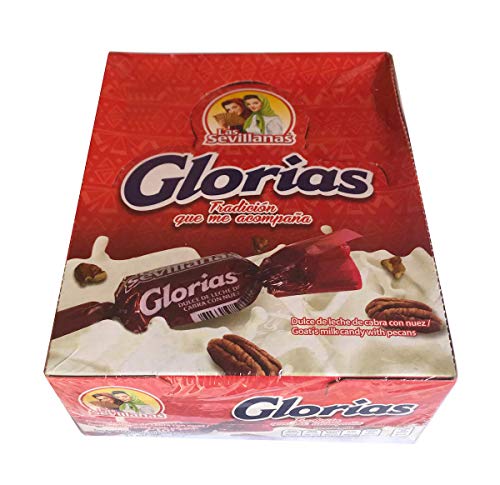
Glorias belongs in the flight for shoppers who want a soft candy with a nut texture rather than a nut candy that falls apart. The milk-candy base begins smooth and creamy, then pecan pieces add crunch and a firmer chew.
That makes it the clearest opposite of Mazapan. Both put nuts at the center of the decision, but Mazapan becomes fine peanut crumbs and Glorias keeps visible pecan pieces inside a cohesive candy.
The wrapped pieces are easier to pass around than Duvalin cups and cleaner to set down than an opened Pelon dispenser. They also eat faster than a hard Vero lollipop, so one piece can close a tasting without turning the final stop into a long wait.
Milk richness and pecans make this a better choice for caramel and nut fans than for people seeking fruit, salt, or chile.
The 21-ounce box is sized for sharing, and the exact piece count can vary by listing presentation, so buy by the labeled weight and current package.
Check both dairy and nut declarations before serving. A sealed wrapper helps with portioning, but it does not remove cross-contact or ingredient concerns printed on the box.
- Soft candy with firmer pecan pieces
- Individually wrapped for sharing
- No utensil or dispenser needed
- Dairy-and-nut profile
- Large 21-ounce box
- Heavier finish than fruit candy
Chile and Tamarind Do Not Hit the Same Way
Surface seasoning and tamarind concentration are different decisions. Vero Mango begins with chile, salt, and acid on the outside; Pelon Pelo Rico keeps tamarind inside a soft candy that stays consistent as you dispense it.
A Vero pop changes over time. The dry coating is strongest at the start, then the surface smooths and the hard mango center becomes sweeter and less gritty.
The stick also slows the pace because the candy is designed to dissolve rather than be finished in a few chews.
Pelon starts soft and remains soft. Its sour-fruit profile does not hide behind a shell, and the dispenser lets you control quantity more precisely than a lollipop coating does.
Neither format should be called mild for everyone.
Which Mexican Candy Format Fits the Way You Want to Eat It?
The container is part of the candy. Mazapan and Glorias arrive as individually wrapped pieces, but one can fracture into crumbs while the other stays cohesive and soft.
Duvalin turns eating into mixing.
Its shallow cup needs a small spoon and a level surface, yet it is the only pick that lets you control two flavors by drawing from one side or crossing the center line.
Pelon Pelo Rico uses pressure as portion control. Push gently for a few strands or farther for a larger tuft, then keep the cap and rim clean if the bottle will be saved.
Vero Mango is the slow hard-candy route. A stick keeps the center easy to hold, but dissolved seasoning and color can still move to lips, napkins, or nearby surfaces.
| Mechanism | Product | Likely Mess | Best Setting |
|---|---|---|---|
| Unwrap and crumble | Mazapan | Fine peanut crumbs | Plate or napkin |
| Hold and dissolve | Vero Mango | Wet seasoning | Slow personal taste |
| Press and portion | Pelon Pelo Rico | Sticky dispenser rim | Table with wipes |
| Scoop and mix | Duvalin | Open creme cup | Seated tasting |
| Unwrap and chew | Glorias | Low crumb risk | Shared tray |
Turn Bulk Packs Into a Fair Five-Candy Flight
A ranking order is not automatically a tasting order. Taste by intensity, not by rank.
Starting with the strongest surface seasoning can flatten the vanilla, milk, and peanut details that follow.
Begin with Duvalin, move to Glorias, then open Mazapan over a plate. Follow those with Vero Mango and finish with a small push of Pelon Pelo Rico, using water between the seasoned and tamarind stops.
The boxes are larger than a five-person sample. Keep the remaining 18 Duvalin cups, 30 Mazapan pieces, 10 Vero pops, 36 Pelon bottles, and wrapped Glorias separated in their original packages so flavor names, ingredient panels, and closures stay with the correct candy.
- Set one place per format. Give Duvalin a spoon, Mazapan a plate, and the sticky formats their own napkins.
- Open only what the group will use. Individually wrapped pieces and sealed cups are easier to save before they are exposed.
- Keep water neutral. A plain rinse reveals more than adding lime, chile, or soda between every stop.
- Separate declared allergens. Peanut, hazelnut, milk, and pecan products should keep their original wrappers and utensils.
- Match leftovers to the box. Do not move unmarked candy into a communal bag when labels matter.
Mexican Candy Questions Before You Open the Box
Match the exact package, flavor, and count before checkout. These five products differ as much in handling as they do in flavor.
Is De la Rosa Mazapan the same as almond marzipan?
No. The product ranked here is a pressed peanut-and-sugar confection. It crumbles readily and has a direct peanut flavor, so shoppers expecting smooth almond paste should treat it as a separate candy format.
Does every Mexican candy in this ranking contain chile?
No. Vero Mango has a seasoned chile surface, while Mazapan, Duvalin, and Glorias occupy peanut, creme, and milk-candy paths. Check the current Pelon Pelo Rico package for its exact formula rather than extending one product's ingredients to the category.
Is Pelon Pelo Rico a gummy candy?
No. The selected product is a soft tamarind candy dispensed through small openings. It behaves like a thick gel or paste rather than a springy molded gummy.
Do you need a spoon for Duvalin?
Yes. The hazelnut-and-vanilla candy comes as soft creme in an individual cup. Keep its spoon with the cup and use it at a stable surface instead of treating it like a wrapped solid.
How should opened Mexican candy be stored?
Follow the current package directions and keep each product in its own labeled container. Close dispensers, cover open creme, protect Mazapan from crushing, and avoid heat or moisture that can soften hard candy and make wrappers sticky.