Product note: ForkliftKitchen may earn a commission from qualifying purchases made through product links on this page. Learn more.
Tom yum paste can save dinner fast. It can also turn a pot of soup into salty red water with heat but no lift.
The good jar has three jobs: sour brightness, chili warmth, and enough savory depth to make mushrooms, shrimp, tofu, or noodles taste like they belong in the broth.
Dragonfly Gluten Free Thai Tom Yum Paste is the best tom yum paste to try first because the 8 oz jar gives a clear hot-and-sour soup base without forcing you into a giant pantry tub. It is the most useful first buy for a cook who wants repeat soup nights, not just one emergency packet.
This list includes only Amazon-available tom yum pastes and hot-sour soup bases. I kept out instant noodles, ready-to-eat soups, red curry paste, loose dried herb kits, and homemade recipes.
I judged the pastes by hot-sour balance, lemongrass and lime lift, savory base, chili heat, package format, ingredient constraints, and whether the paste can work outside a plain pot of soup. Think of it like choosing a jarred sauce: convenience only helps if the base flavor is strong enough to carry the meal.
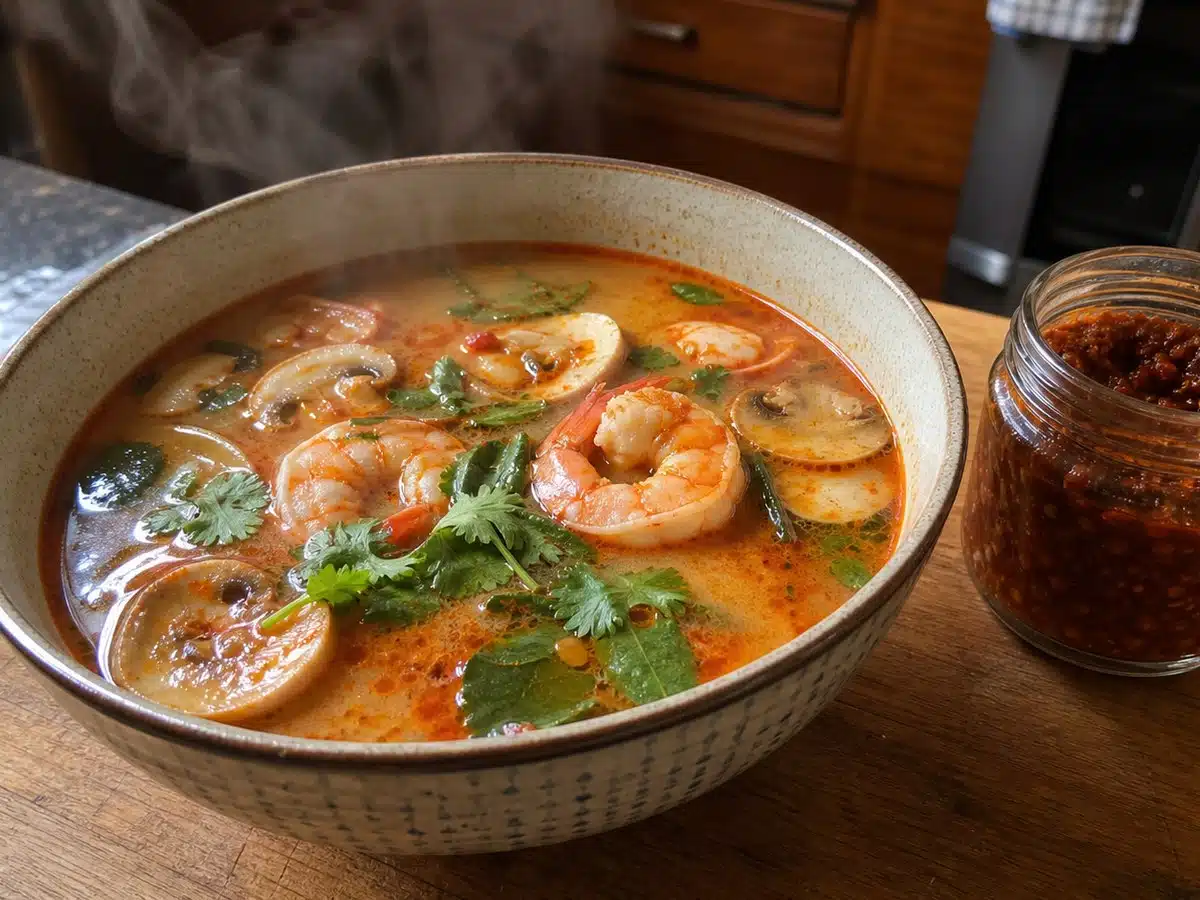
Best Tom Yum Pastes, Ranked for Soup, Noodles, and Hot-Sour Flavor
The first paste should make broth taste alive before you start fixing it. If you need to add lime, fish sauce, chili, and aromatics just to wake it up, the shortcut failed.
Save this ranking
Comparing these products later? Save this ranking for a quick return.
The ranking starts with jars that can handle repeat soup nights, then moves into packets and constraint picks. Packet shoppers, vegan kitchens, and cooks who want a bigger savory jar all need different answers.
Taste the broth first.
- 🌶 Hot-sour balance: the paste needed sour lift, chili heat, and enough salt to season broth without flattening it.
- 🍲 Aromatic identity: better picks point toward lemongrass, galangal, makrut lime, tamarind, or lime instead of plain red chili.
- 📦 Savory base: tom yum needs depth, but shellfish, fish, vegetarian, and vegan shoppers need clear lanes.
- 🔍 Format fit: jars suit repeat cooking, while packets suit a quick pot or a cautious first test.
- 🛒 Exact product match: each buy button points to the same brand, size, and format we compared.
| Rank | Tom yum paste | Best for | Key note |
|---|---|---|---|
| 1 | Dragonfly Gluten Free Thai Tom Yum Paste | 🏆 Best Overall | Repeat-use 8 oz jar with clear hot-sour soup-base identity |
| 2 | Maesri Tom Yum Paste | 🥬 Best Vegetarian Jar | Large hot-and-sour pantry jar with Thai aromatic cues |
| 3 | Aroy-D Tom Yum Paste | 🍲 Best Richer Jar | Full-size Thai tub for soup, noodles, and stir-fry seasoning |
| 4 | Lobo Tom Yum Paste | 📦 Best Packet | Small packets for one pot of soup without opening a jar |
| 5 | Mae Ploy Tom Yum Paste | 🎁 Best Small Pack Set | Familiar Thai paste brand in smaller 50 g packets |
| 6 | Mekhala Organic Thai Tom Yum Paste | 🌱 Best Vegan | Organic vegan jar with no fish sauce or shrimp paste |
| 7 | Por Kwan Tom Yum Paste | 🫙 Best Large Savory Jar | 16 oz pantry jar for bolder hot-and-sour seasoning |

1. Dragonfly Gluten Free Thai Tom Yum Paste Instant Hot and Sour Soup Base
Dragonfly takes the first slot because it gives most cooks the right amount of commitment. The 8 oz jar is large enough for more than one soup night, but not so big that it feels like a restaurant pantry purchase.
The flavor lane is direct: hot, sour, savory, and built for soup before anything else. That matters because tom yum paste should make broth taste complete after you add water, protein, mushrooms, and a fresh squeeze of lime.
It is also a good place to start if you are still learning the aroma of the category. Tom yum depends on ingredients like lemongrass, galangal, and makrut lime, and those flavors behave differently from the curry-paste shelf.
If your broth tastes flat, add fresh lime first. If it tastes thin, add mushrooms, shrimp, fish sauce, or a spoon of coconut milk depending on the soup you want.
The jar shows shrimp imagery, so shellfish-sensitive or vegan kitchens should not treat this as the safe pick. Go to Mekhala when that constraint matters.
- Useful first-buy jar size
- Clear hot-and-sour soup-base identity
- Works for repeat soup nights without a giant tub
- Not the vegan or vegetarian safety pick
- Still benefits from fresh lime and herbs at serving
🍤 Best with: shrimp, mushrooms, chicken, tofu, rice noodles, fresh lime, cilantro, and a side from a Thai soup pairing spread.
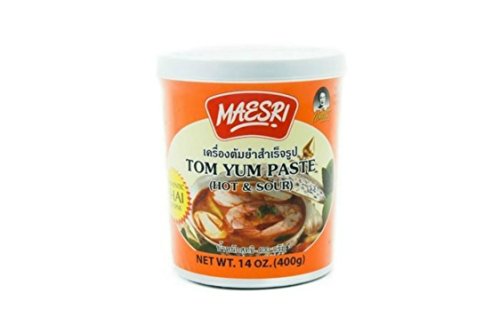
2. Maesri Tom Yum Paste, Hot & Sour Soup Base
Maesri is the better jar when vegetarian positioning matters and you still want real Thai aromatic direction. The listing points to lemongrass, tamarind, chili, garlic, lime, shallot, kaffir lime, and galangal cues instead of a vague spicy soup base.
The 14 oz jar makes sense if tom yum is part of your regular soup rotation. It is not a one-pot trial; it is a pantry ingredient.
That size is useful when you cook noodles, quick broth, or a vegetable-heavy soup and want the paste to anchor the pot. It also gives you room to adjust sourness and salt at the end instead of using the whole product in one shot.
Use this with mushrooms, tofu, tomatoes, and fresh herbs. If you are replacing fresh aromatics, check how lemongrass substitutes shift the flavor before you start adding extra citrus.
The caution is storage and commitment. If you are cooking tom yum once, Lobo or Mae Ploy packets are cleaner.
- Strong vegetarian pantry-jar lane
- Good aromatic ingredient profile for hot-sour broth
- Large enough for repeat cooking
- Too much jar for a one-time soup test
- Needs fresh garnish or lime to taste brightest
🍜 Best with: mushrooms, tofu, tomatoes, rice noodles, cilantro, scallions, lime wedges, and vegetable broth.

3. Aroy-D Tom Yum Paste
Aroy-D belongs in the top three because it feels like a working kitchen paste, not a novelty packet. The 14 oz tub gives you enough volume to season soup, noodles, and quick stir-fries without treating every spoonful like a limited resource.
The flavor lane is broader and richer than the small packets. That makes it useful when the paste needs to season more than water, especially noodle bowls or a coconut-leaning soup.
Use a small spoon first, then build. A concentrated tom yum paste can jump from helpful to salty fast, especially if fish sauce, shrimp, or broth already bring salt to the pot.
This is also a good pick if you cook Thai-adjacent weeknight food and already use pastes like green curry. The same pantry logic behind green curry paste substitutes applies here: the paste carries aromatics, but the final dish still needs balance.
The tub is less friendly for cautious buyers. Choose Lobo first if you want one pot before opening a larger container.
- Good full-size jar for repeat cooking
- Works beyond soup in noodles and stir-fries
- Richer pantry-paste feel than small packets
- Easy to overuse in a small pot
- Not the lowest-commitment first purchase
🍚 Best with: rice noodles, shrimp, chicken, mushrooms, coconut milk, Thai basil, and quick stir-fried vegetables.

4. Lobo Tom Yum Paste
Lobo is the packet pick because sometimes the best tom yum paste is the one you do not have to store afterward. Each small packet is built for a quick soup batch, which lowers the risk for first-time buyers.
The format changes how you cook. Instead of dipping into a jar and guessing, you start with a packet and adjust with lime, mushrooms, protein, and herbs.
That makes Lobo especially useful for small apartments, occasional Thai soup cravings, or a pantry that already has too many half-used jars. Keep a few packets around and you can make a fast hot-sour broth without rearranging the refrigerator.
The packet is also helpful when you want soup but not a full Thai pantry project. If you need noodles instead of soup, check texture first, much like choosing udon noodle substitutes by chew before flavor.
The tradeoff is flexibility. Packets give convenience, but jars give you finer control over strength.
- Lowest-commitment format
- Good for one quick pot of soup
- No open jar to manage afterward
- Less flexible than a jar
- Not the best value for frequent tom yum cooks
🐔 Best with: shrimp, chicken, mushrooms, tomato, cilantro, rice noodles, tofu, and a quick squeeze of lime.

5. Mae Ploy Tom Yum Paste
Mae Ploy earns the small-pack lane for people who trust Thai paste brands but do not want a large container open. The 50 g packets are bigger than a tiny seasoning sachet, yet still easier to manage than a 14 or 16 oz jar.
The flavor direction is classic tom yum: chili, sourness, aromatics, and enough savory base to carry seafood or mushrooms. It is a practical middle ground between Lobo's one-pot convenience and the full jars above it.
Use it when you know you like Thai soup but do not cook it weekly. A packet can carry a pot, then disappear.
Fresh aromatics still matter. If the soup needs more citrus perfume, kaffir lime leaf substitutes can help you decide whether to add lime zest, lemongrass, or another bright ingredient.
The limitation is packaging. If you want spoon-by-spoon control over heat and sourness, a jar gives you more control than a packet set.
- Useful small-pack format
- Recognizable Thai paste brand
- Good bridge between packets and full jars
- Less adjustable than an open jar
- Not ideal for frequent large-batch cooking
🍄 Best with: shrimp soup, mushroom soup, fish, squid, rice noodles, cilantro, lime, and quick Thai-style broth.

6. Mekhala Organic Thai Tom Yum Asian Cooking Paste
Mekhala is the constraint pick, and that is valuable. Tom yum often gets savory depth from fish sauce, shrimp paste, or seafood cues, so vegan shoppers need a product that solves the base-flavor problem without those ingredients.
The 3.53 oz jar is small, which makes sense here. Vegan and organic pastes can taste different from the shrimp-forward jars, so a smaller size lowers the first-buy risk.
Use this with tofu, mushrooms, vegetables, and a broth that has enough body. If the soup tastes too clean, add sautéed mushrooms, coconut milk, or a splash of soy sauce to build depth.
This is not the paste I would choose for the boldest seafood soup. It is the paste I would choose when the kitchen has a clear ingredient boundary.
For flavor context, it helps to know what fresh galangal contributes: sharp citrusy warmth, not the soft sweetness of ginger.
- Best vegan and organic lane in this set
- Small jar lowers commitment
- Good for tofu and vegetable soups
- Less seafood-style depth than shrimp-forward pastes
- Needs mushrooms, broth, or coconut milk for body
🌶 Best with: tofu, mushrooms, vegetable broth, coconut milk, rice noodles, baby corn, tomatoes, and fresh lime.

7. Por Kwan Tom Yum Paste
Por Kwan is the large-jar pick for cooks who want a heavier savory base. The 16 oz jar is not shy, and it makes more sense for someone who already knows tom yum belongs in the rotation.
The label frames it as instant hot-and-sour paste, but the appeal is bigger than one soup. Use it carefully in broth, noodle bowls, fried rice, or a quick seafood marinade where you want chili heat, sour lift, and a darker savory base in one spoon.
The 16 oz jar gives you room to season in small steps. A little can push broth body toward salty, seafood-friendly depth, so mushrooms, lime, tomato, and herbs should go in before you decide the pot needs more paste.
This is the pick I would keep for bolder cooking, not for a cautious first taste. Dragonfly and Maesri are easier starting points when you want the sour side to show faster.
If you like briny Southeast Asian paste flavors, the comparison to laksa paste substitutes is useful: seafood depth can pull a whole dish darker, saltier, and more aromatic in the finish.
- Large 16 oz jar for repeat use
- Bolder savory hot-and-sour lane
- Useful beyond soup when measured carefully
- Too much jar for occasional cooks
- Can dominate a small pot if overused
🥥 Best with: shrimp, fish, mushrooms, noodles, fried rice, seafood broth, lime, cilantro, and Thai chilies.
Pick the Right Format Before You Open the Jar
Format decides how risky the purchase feels. A packet solves one pot; a jar asks for storage space, repeat use, and a plan for the rest of the container.
Ingredient constraints come before flavor chasing. If a kitchen avoids seafood, fish sauce, shrimp paste, gluten, or animal products, the safest tom yum paste is the one that states the lane clearly.
Choose the container first.
| Format | Buy it when | Watch for |
|---|---|---|
| 8 oz jar | You want a first jar for repeated soup nights. | Check shellfish or seafood cues. |
| 14 to 16 oz jar | You cook Thai soup, noodles, or stir-fries often. | Large jars can sit too long after opening. |
| Small packets | You want one pot or a low-risk trial. | Packets give less spoon-by-spoon control. |
| Vegetarian jar | You want hot-sour soup without a seafood-forward base. | Still check the current label before buying. |
| Vegan/organic jar | You need the clearest plant-based boundary. | You may need mushrooms or coconut milk for body. |
What Tom Yum Paste Should Taste Like After You Add Water
Good tom yum paste should not taste like chili salt. It should open with sour lift, then give you lemongrass, lime leaf, galangal, chili, and enough savory base to make the broth feel built.
Fresh garnish still helps. Lime juice, cilantro, mushrooms, tomato, fish sauce, coconut milk, or Thai chilies can correct the final bowl without hiding the paste.
Adjust late.
- Flat broth: add lime juice, makrut lime leaf, cilantro, or lemongrass.
- Thin body: add mushrooms, shrimp, chicken, tofu, or coconut milk.
- Too salty: dilute with broth and add sourness at the end.
- Not enough seafood depth: finish with fish sauce, shrimp, or a sauce like nam jim seafood sauce on the side.
Frequently Asked Questions
Dragonfly Gluten Free Thai Tom Yum Paste is the best first pick for most shoppers because the 8 oz jar gives a clear hot-and-sour soup base without requiring a large pantry commitment. It is easier to repeat than a packet and less bulky than a 14 or 16 oz jar.
No. Tom yum paste is built for hot-and-sour soup, while red curry paste leans toward curry body and coconut-based sauces.
If a recipe needs tom yum's sour broth flavor, red curry paste will need lime, lemongrass, and extra seasoning to move closer.
Mekhala Organic Thai Tom Yum Paste is the vegan pick in this ranking because the brand positions it without fish sauce or shrimp paste. Always check the current product label before buying if seafood or animal ingredients are a strict concern.
Packets are better for one pot, travel pantries, and first tests. Jars are better when you cook tom yum, noodles, fried rice, or Thai-style broth often enough to use the paste before it fades.
Yes. Use a small amount in noodle bowls, fried rice, seafood marinades, stir-fries, or coconut broth.
Start with less than you think because concentrated paste can turn salty fast.
Which Tom Yum Paste Should You Buy First?
Start with Dragonfly if you want one practical jar for hot-and-sour soup. Choose Maesri for a vegetarian pantry jar, Lobo or Mae Ploy for packets, Mekhala for vegan cooking, and Aroy-D or Por Kwan when you already know you want a larger paste container.
The best shortcut is still a shortcut. Fresh lime, mushrooms, herbs, and the right protein decide whether the final bowl tastes bright or flat.
Finish sharp.