You've spotted white pepper on the spice rack beside its darker twin and probably reached for the black jar instead.
That's the common move. White pepper is the same berry - *Piper nigrum* - with its outer skin soaked and stripped away before drying, which changes its color, aroma, and the character of its heat in ways that matter in the kitchen.
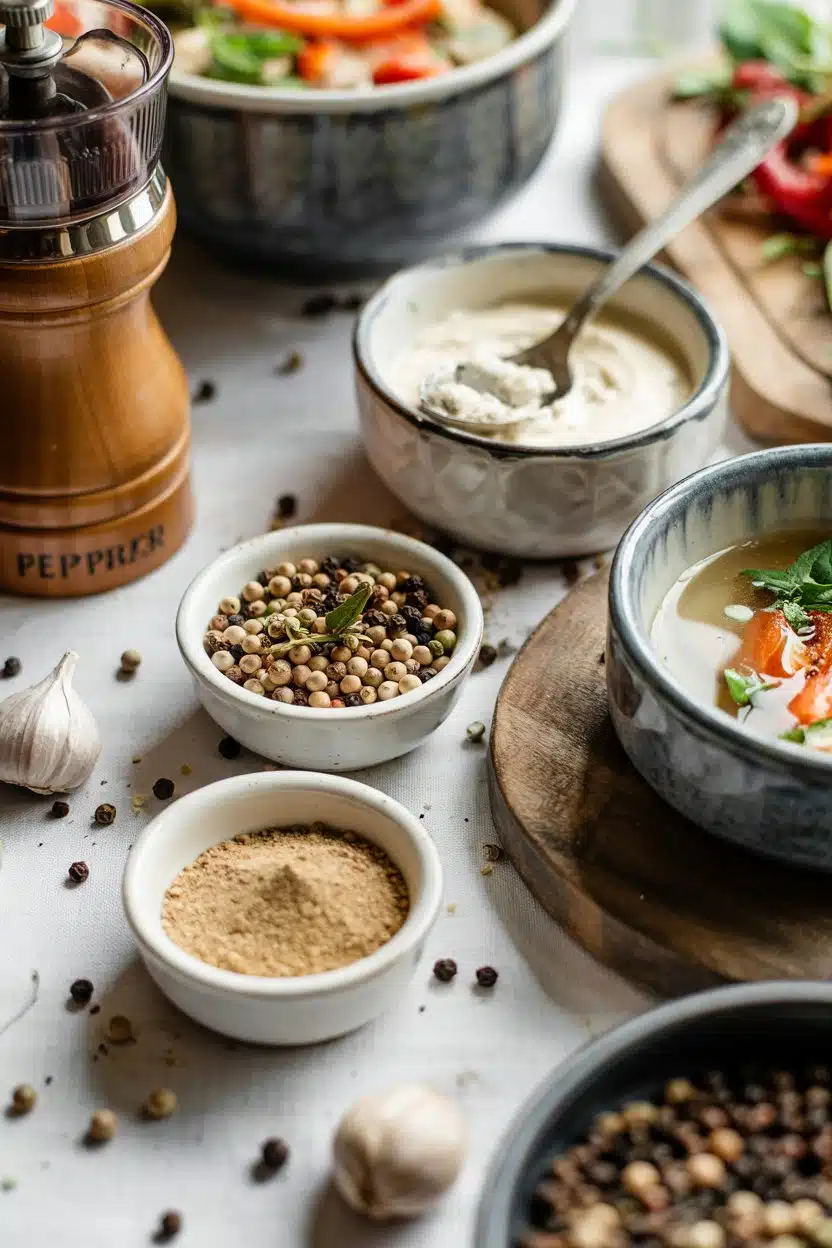
White pepper is the skinned, dried seed of the Piper nigrum berry. It delivers a sharper, earthier heat than black pepper with no piney top notes - and keeps pale sauces and purées free of dark specks.
What Is White Pepper?
White pepper starts as the same ripe berry that produces black pepper. The difference is processing: ripe red berries are soaked in water for one to two weeks - a step called retting - until the outer fruit layer softens and can be removed.
Remember it later
Planning to try this recipe soon? Save it for a quick find later!
What remains is the pale inner seed, which is then dried to produce the ivory-colored peppercorn.
The retting process is what sets white pepper apart from other forms of *Piper nigrum*.
It strips out the volatile oils concentrated in the outer husk, which is where black pepper gets its pine-forward, citrusy top notes.
White pepper retains the piperine - the compound responsible for heat - but sheds the aromatic complexity that makes black pepper smell sharp and bright.
Most commercial white pepper originates in Muntok, Indonesia, and Sarawak, Malaysia. These regions produce the benchmark product: clean, pale, and reliably consistent in heat level.
You'll see it sold whole as white peppercorns or pre-ground as white pepper powder, sometimes labeled ground white pepper. Whole is always the better purchase.
Flavor
Texture
Aroma
Moderate
What Does White Pepper Taste Like?
The heat lands differently than black pepper.
It's drier and more direct - less like biting into a fresh berry, more like the slow warmth of an aged chili.
There are no piney or citrusy high notes because those compounds left with the outer skin.
What you're tasting is mostly piperine doing its work, backed by an earthy mustiness that comes from the retting process.
That fermented quality is mild, not funky. It reads as depth rather than off-flavor in a finished dish.
Add white pepper early in cooking and the heat integrates into the background. Add it at the end and it stays bright and noticeable - useful when you want pepper presence without a visual signature.
Compared to green peppercorn's flavor and uses, white pepper is less floral and more austere. It won't announce itself the way black pepper does, which is precisely the point in recipes where the seasoning should support rather than lead.
How to Use White Pepper
White pepper earns its place in recipes where appearance matters as much as seasoning. A béchamel, a vichyssoise, a plate of mashed potatoes - these all benefit from pepper heat without dark flecks breaking the surface.
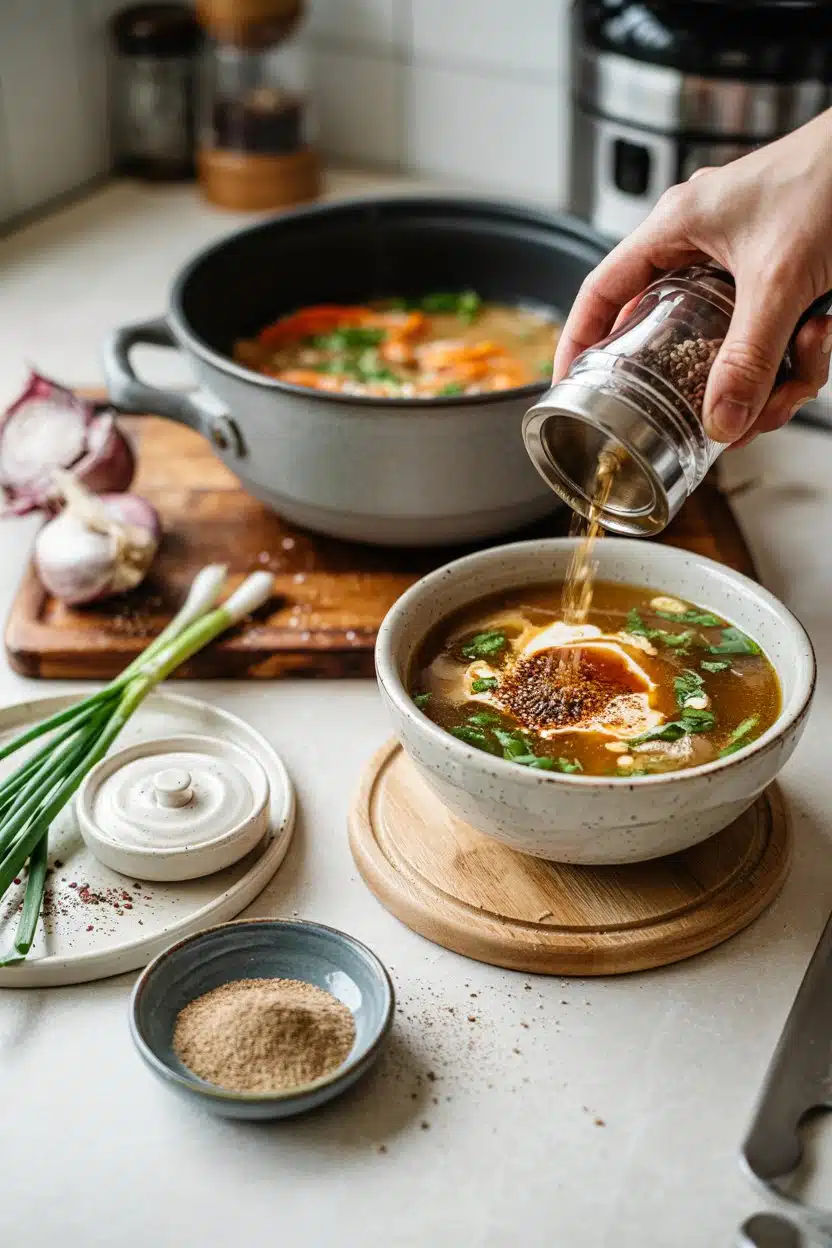
That's the primary practical reason white pepper exists in French and Scandinavian kitchens.
In Chinese cooking, it serves a different function.
Hot-and-sour soup relies on white pepper's direct heat rather than its visual neutrality - the sharp warmth is a structural part of the dish's identity.
If you want to try a hot-and-sour soup recipe that gets this balance right, white pepper is non-negotiable.
Cantonese-style steamed fish and Sichuan broth dishes use it the same way.
| Method | Best For | Tip |
|---|---|---|
| 🍳 Stirred In | White sauces, cream soups, purées | Add near the end to keep heat bright |
| 🥗 Finishing | Steamed fish, shellfish, plated dishes | Grind fresh directly over the plate |
| 🔥 Dry Rub | Poultry, pork, roasted vegetables | Blend with salt before applying |
| ♨️ Toasted | Sharpening aroma before grinding | 30 seconds in a dry pan - no longer |
🇫🇷 French
🇸🇪 Scandinavian
🇮🇩 Southeast Asian
fish and shellfish
potatoes and root vegetables
mushrooms and leeks
poultry and pork
soy sauce and vinegar
If a recipe calls for white pepper and you don't have it, replacements for white pepper exist - though none replicate the exact combination of pale color and dry heat.
How to Buy and Store White Pepper
Whole white peppercorns are the right purchase. Look for pale ivory spheres with a consistent color - no dark patches, no shriveling.
Pre-ground white pepper loses aroma faster than any other form of pepper, and a stale bag smells flat and musty in the wrong way, not the pleasant earthy way of fresh product.
Whole peppercorns keep well for 3-4 years under proper conditions. Ground white pepper starts losing its character after 6-12 months.
For a full breakdown of how long white pepper keeps under different storage conditions, the shelf life data is worth reviewing before you commit to a large purchase.
Start Here If You're New to White Pepper
Reach for white pepper when you're making any pale or cream-based dish and want pepper heat without dark specks.
That's the fastest way to understand its purpose.
Once that clicks, try it in a Chinese-style broth - the heat profile is noticeably different from black pepper and earns its place on its own terms.
Skip it in dishes where black pepper's aromatic top notes are part of the character you're after.
Frequently Asked Questions
White pepper is not significantly hotter, but its heat feels more direct and forward. Both contain piperine as the primary heat compound, however black pepper's aromatic oils create complexity that softens the perception of heat. Without those oils, white pepper's warmth lands more immediately on the palate.
Ripe red Piper nigrum berries are soaked in water for one to two weeks - a process called retting - until the outer fruit layer breaks down and can be rubbed away. The exposed inner seed is then dried, producing the pale ivory peppercorn. This is distinct from black pepper, which is dried with the outer husk intact.
Use white pepper in cream sauces, pale soups, mashed potatoes, and light-colored dishes where black specks would affect presentation. Also choose it for Chinese hot-and-sour soup and Cantonese steamed fish, where the dry, direct heat is part of the traditional flavor profile rather than a substitute.
It won't become unsafe, but it loses its aroma and heat over time. Ground white pepper becomes noticeably flat after 6-12 months; whole peppercorns hold their character for 3-4 years if stored in an airtight container away from heat and light. The clearest sign it's past its prime is a dull, cardboard-like smell.
In terms of heat level, yes - substitute at a 1:1 ratio. However, the flavor profile differs: black pepper adds piney, citrusy top notes that white pepper lacks, and white pepper's earthy mustiness has no equivalent in black. In pale dishes, the visual difference matters too, since black pepper will leave visible specks.